
Loading, please wait...


LOT 1955
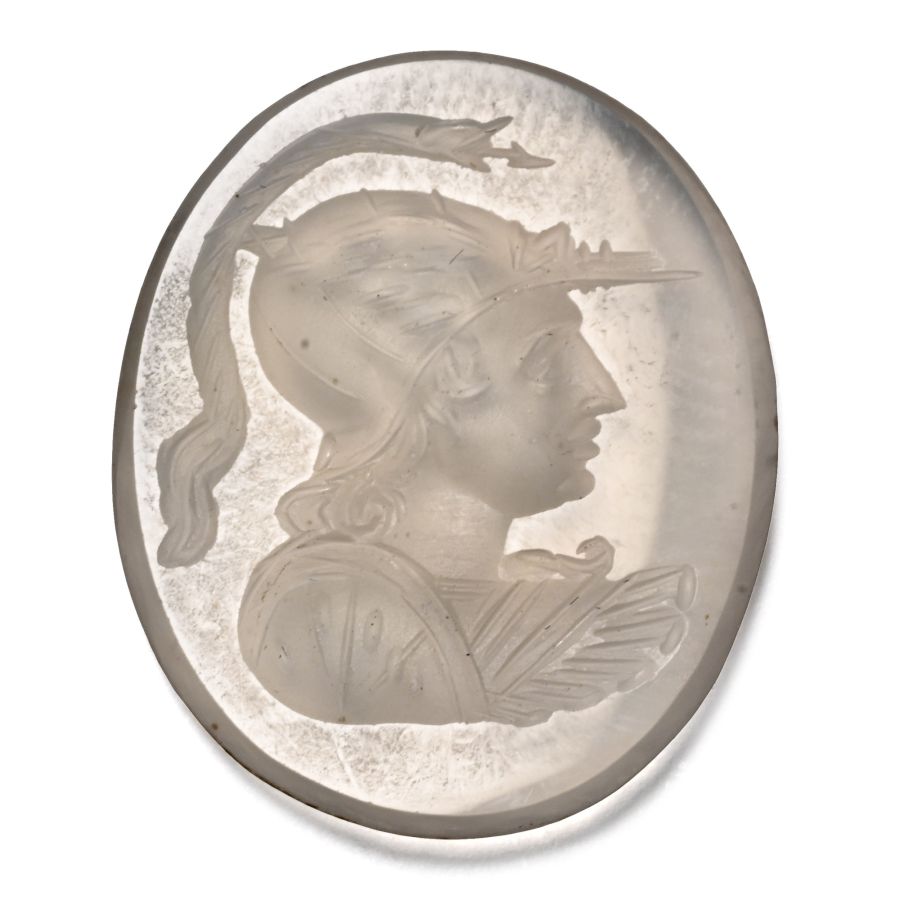
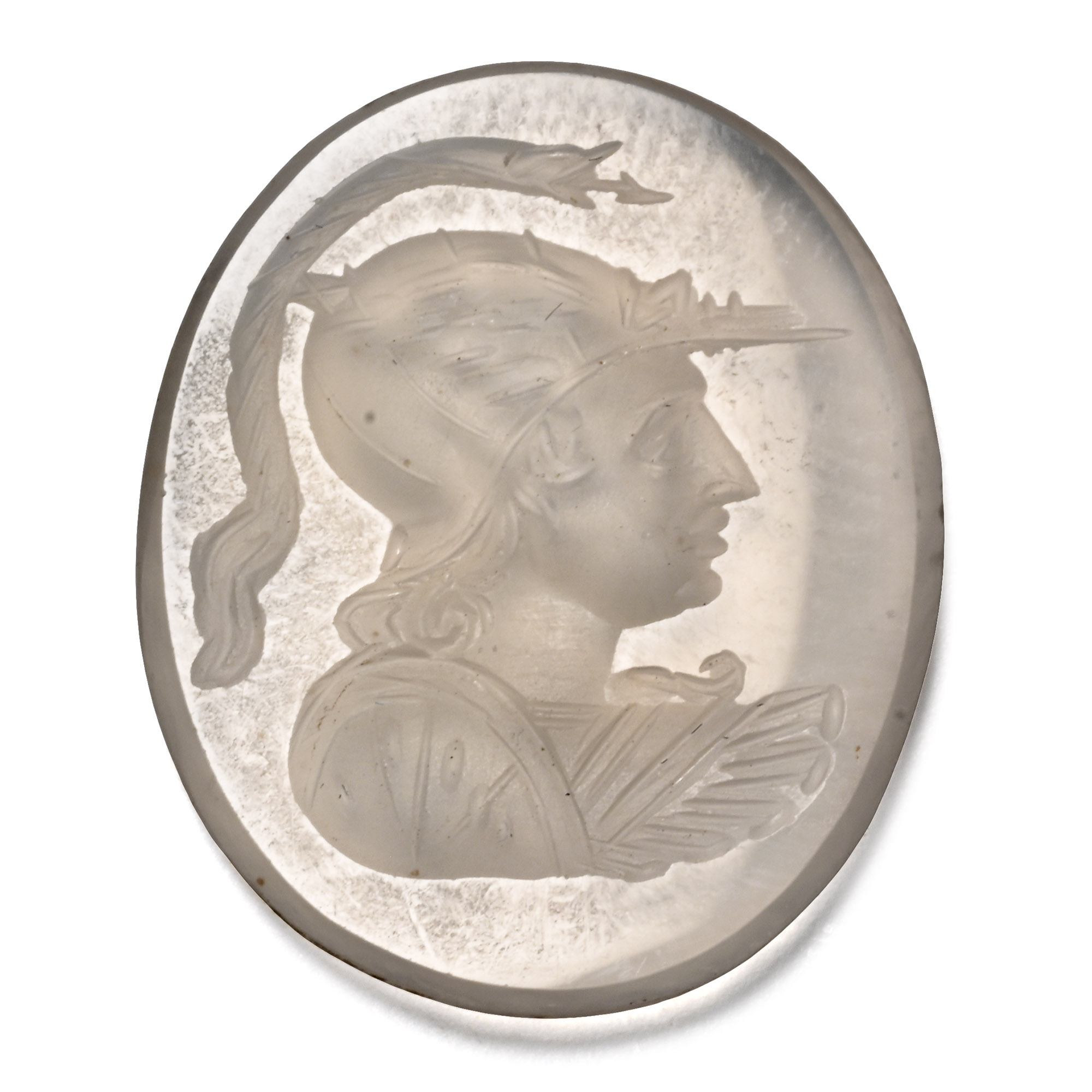
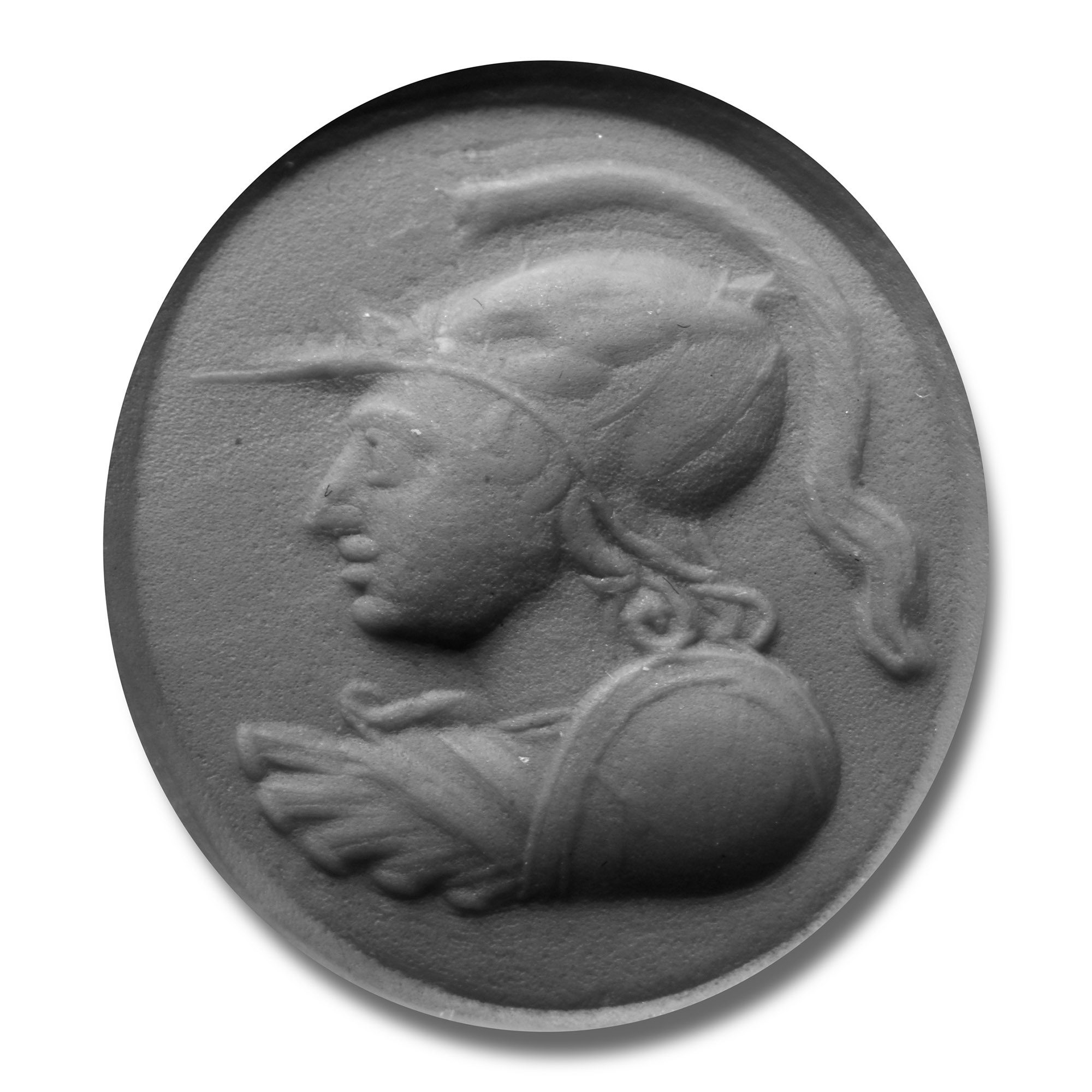
Chalcedony Gemstone with Helmeted Bust
18TH CENTURY A.D.
3/4 in. (1.04 grams, 19 mm).
Translucent intaglio showing a bust facing right with a corner of a round shield covering the shoulder, wearing a crested helmet with a snake-head finial. [No Reserve]
ProvenanceUK private collection, acquired on the English art market in the 2000s.
CONDITIONTimeLine Auctions follows a vetting process to ensure the authenticity and legality of all items, reinforcing our commitment to integrity and responsible trading. Each antiquity, antique, and coin lot undergoes thorough examination by a vetting committee of at least ten external specialists, professional trade association members, scientists, and archaeologists: Our Vetting Process
AUCTIONS:
TimeLine is a leading auction house specialising in antiquities, ancient art, collectables, natural history, coins, medals, and books. Our auctions offer museums, collectors, historians, and enthusiasts the opportunity to acquire unique and historically significant pieces.
-
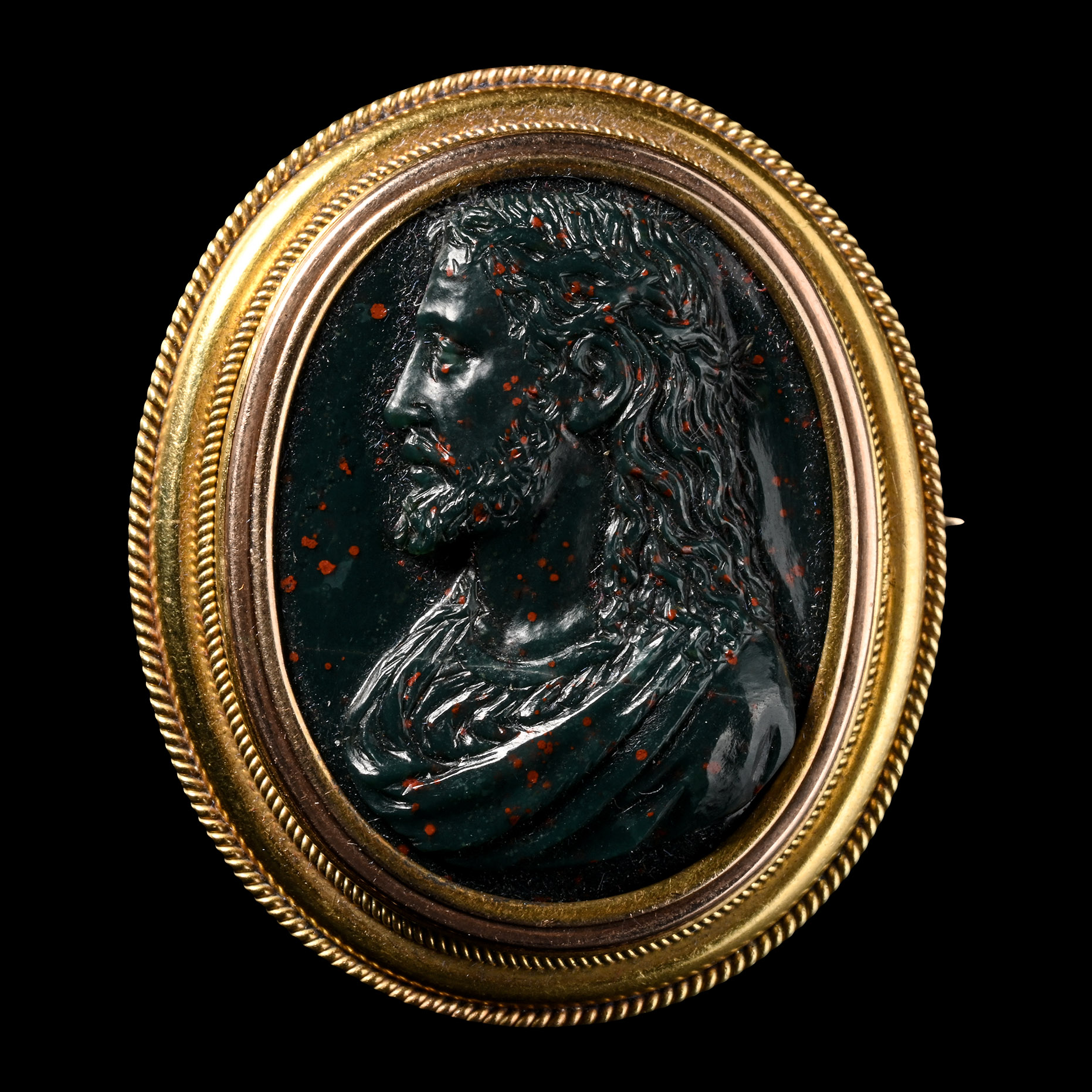
Heliotrope Cameo with Christ in Gold Mount
Italy, 17th century A.D.Estimate: £2,500 - 3,500 (+bp*)
Current Winning Bid: £1,250
Carefully rendered bust of Christ facing left, crown of thorns resting on his curly hair, short beard and pained expression on his face; set in a gold mount with applied ropework collars, pin and catch on the reverse. 16.3 grams, 42 mm
Acquired on the European art market. This lot has been checked against the Interpol Database of stolen works of art and is accompanied by search certificate number no.13404-257986.
It was believed that the scarlet flecks in the stone were the blood of Christ, hence its popular use for the subject of Christ throughout the Middle Ages until the 19th century. -
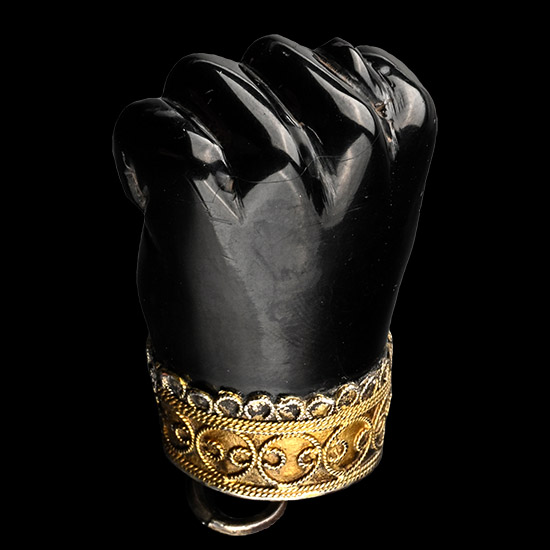
Silver-Gilt Mounted Jet 'Figa' Amulet
Spain, 17th century A.D.Sold for (Inc. bp): £715
Formed as a hand showing figa gesture, silver mount with applied twisted wires; attachment loop and ring to the top. 19.6 grams, 56 mm
Private collection, Europe. Acquired on the English art market.
Mano Fico, as protective amulets, have been used since antiquity. It was believed to protect from the evil eye and other dark and magical forces and to promote fertility. In ancient Rome, the fig sign, or mano fico, was made by the pater familias (father of the family) to ward off the evil spirits of the dead as a part of the Lemuria ritual. The ancient Greeks wore amulets of the gesture around the neck to protect from the evil eye, and also used the gesture in artwork. What they considered an overtly sexual gesture was expected to distract evil spirits from causing harm. The pendant would have been worn from a belt or from a chatelaine containing other protective talismans. This carving would have served as a token representing a person's pilgrimage to Santiago de Compostela, one of the very few places in which jet can be found and mined since at least the Middle Ages. -
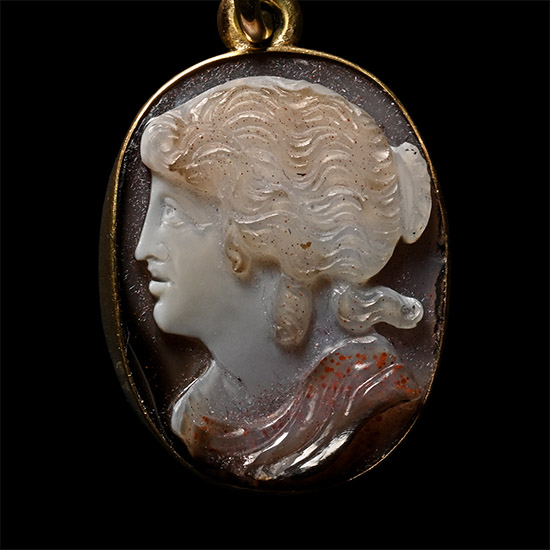
Post Medieval Agate Cameo of a Classical Muse in Gold Mount
Italy, 18th century A.D.Estimate: £700 - 900 (+bp*)
Opening Bid: £350
Gold cell with suspension loop, inset banded agate panel with reserved female profile bust with hair in a chignon. 7.8 grams, 38 mm
Private collection, Europe. Acquired on the English art market.
