
Loading, please wait...
LOT 0875
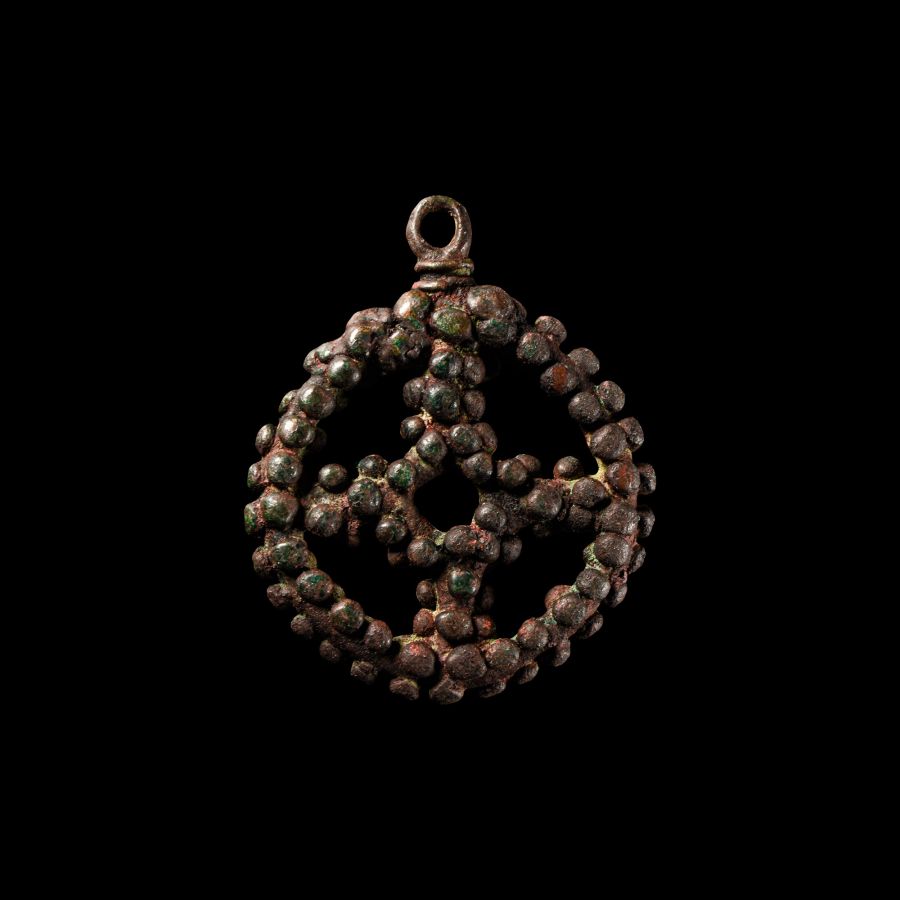
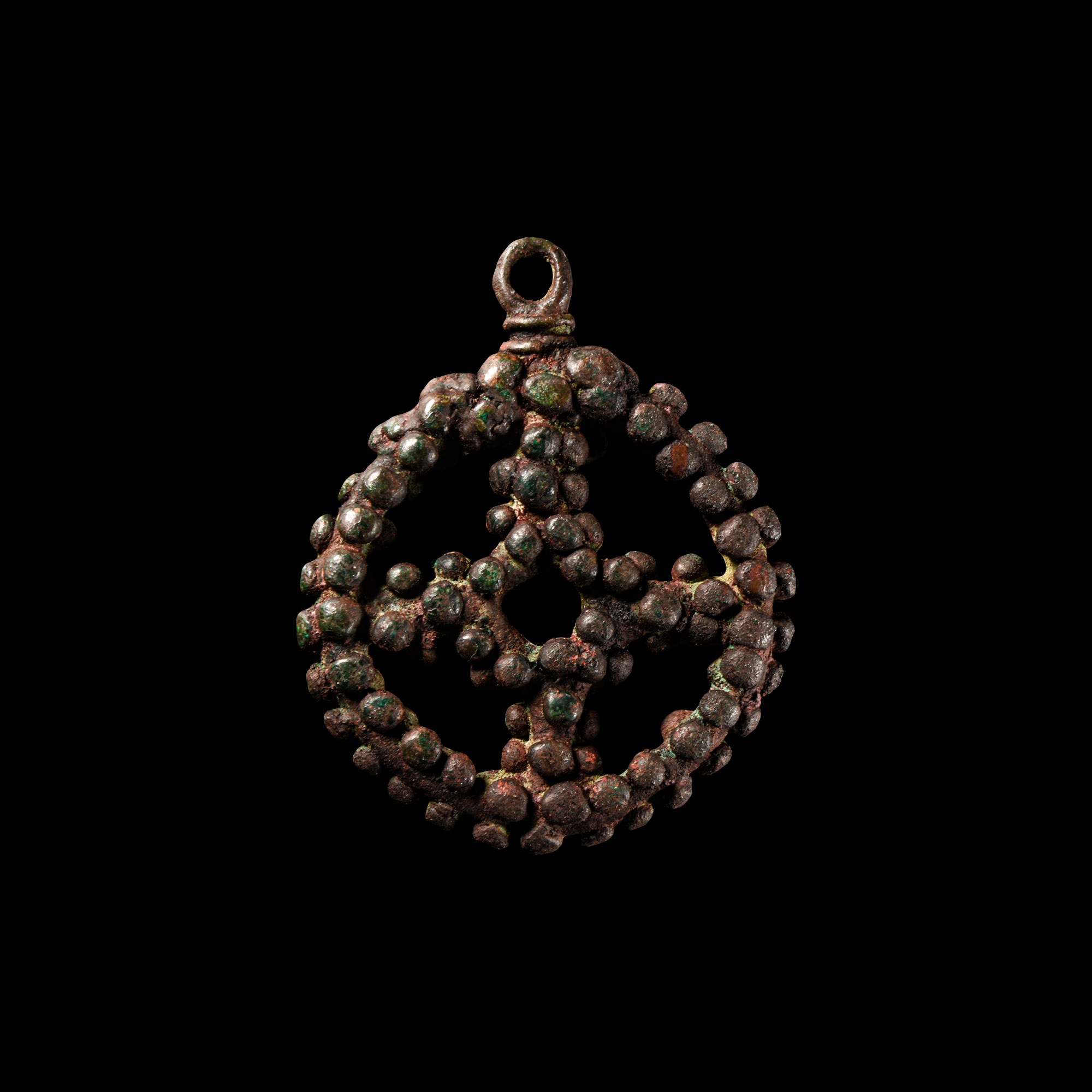
Central Asian Bronze Pendant with Pierced Cross
CIRCA 2300-2000 B.C.
3 in. (114 grams, 78 mm).
Of heavy openwork construction, the central cross and annular frame with applied pellets; integral collared suspension loop.
ProvenanceEx S Collection, London, UK, 1970-1990s.
Studied by Professor Wilfrid George Lambert FBA (1926-2011), historian, archaeologist, and specialist in Assyriology and Near Eastern archaeology, in the late 1980s and early 1990s with reference no.Y-268.
TimeLine Auctions follows a vetting process to ensure the authenticity and legality of all items, reinforcing our commitment to integrity and responsible trading. Each antiquity, antique, and coin lot undergoes thorough examination by a vetting committee of at least ten external specialists, professional trade association members, scientists, and archaeologists: Our Vetting Process
AUCTIONS:
TimeLine is a leading auction house specialising in antiquities, ancient art, collectables, natural history, coins, medals, and books. Our auctions offer museums, collectors, historians, and enthusiasts the opportunity to acquire unique and historically significant pieces.
-
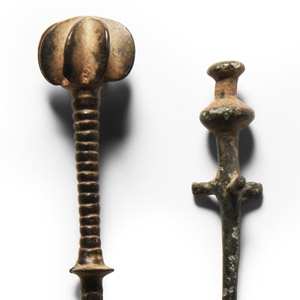
Luristan Bronze Pin Group
11th-8th century B.C.Sold for (Inc. bp): £65
Comprising: one with a tapering stem, three radiating knops beneath the biconical finial; the other with ribbed upper part of the stem with a flanged collar, large finial with eight radiating flanges. 30 grams total, 10-11 cm
From a UK private collection, before 1980. -
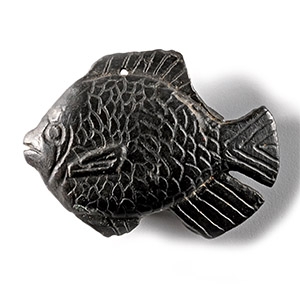
Western Asiatic Black Stone Fish Amulet
1st millennium B.C.Sold for (Inc. bp): £234
Modelled in the round with incised scale detailing, annular eyes and open slit mouth; pierced through the dorsal fin. 8.4 grams, 33 mm
Collected from 1969-1999. From the collection of the late Mr S.M., London, UK. -
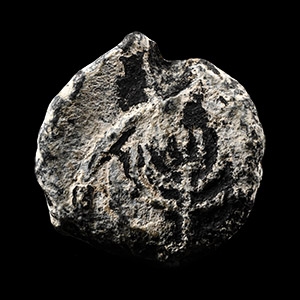
Judaean Lead Seal with Menorah
Circa 2nd century A.D.Estimate: £200 - 300 (+bp*)
Opening Bid: £100
The menorah design impressed to one face; impression of textile to the reverse. 3.9 grams, 13 mm
Collected from 1969-1999. From the collection of the late Mr S.M., London, UK.
