
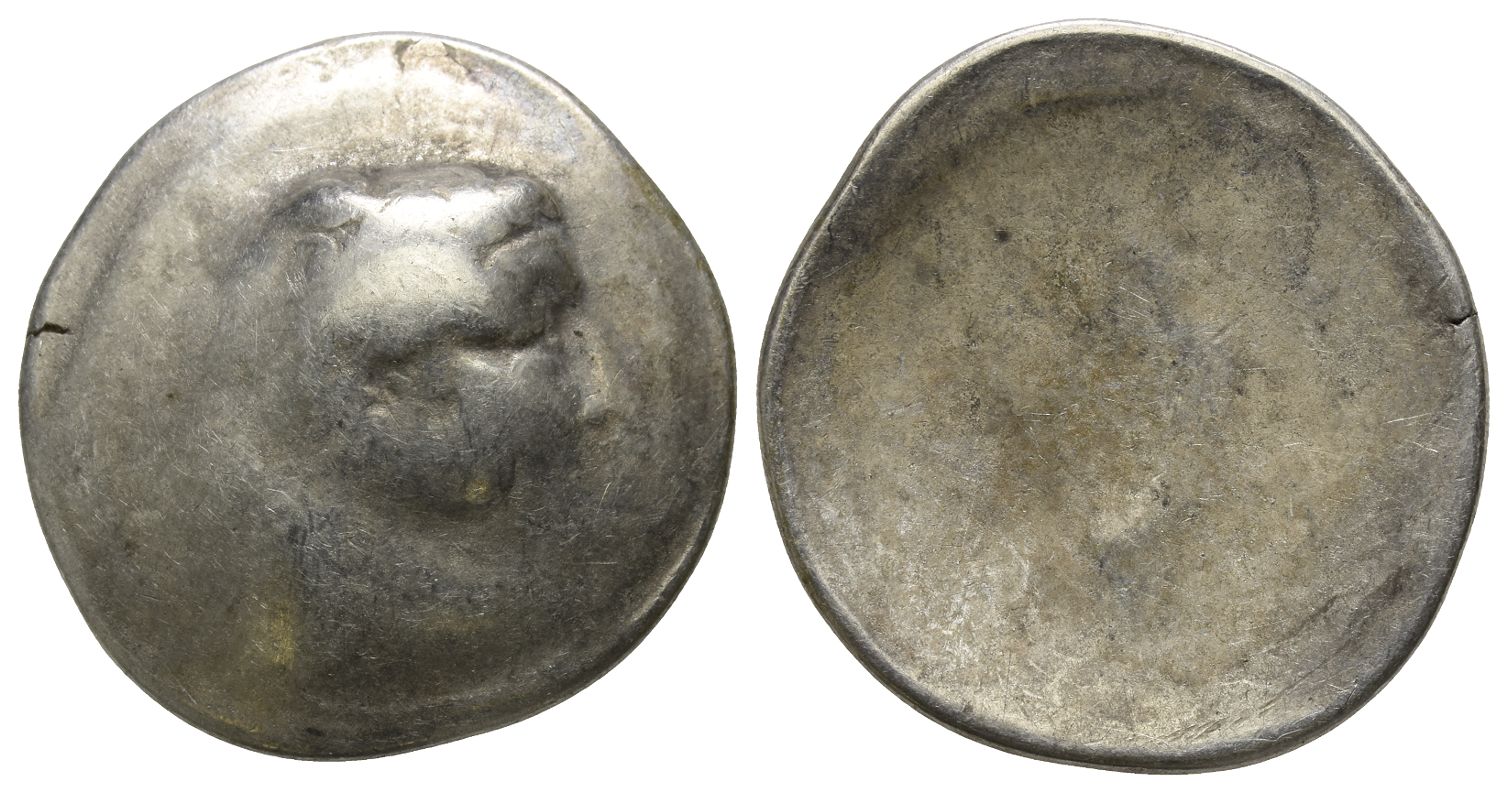
LOT 2868
Celts in Lower Danube AR Tetradrachm. Circa 300-100 BC.
Imitating Alexander III and Philip III of Macedon. Degraded head of Herakles to right / Stylised Zeus seated to left, holding eagle in right hand and sceptre with left. Cf. Lanz 910-932. Fine.(15.30gr, 30mm.).
ProvenanceProperty of a North London, UK, gentleman.
TimeLine Auctions follows a vetting process to ensure the authenticity and legality of all items, reinforcing our commitment to integrity and responsible trading. Each antiquity, antique, and coin lot undergoes thorough examination by a vetting committee of at least ten external specialists, professional trade association members, scientists, and archaeologists: Our Vetting Process
AUCTIONS:
TimeLine is a leading auction house specialising in antiquities, ancient art, collectables, natural history, coins, medals, and books. Our auctions offer museums, collectors, historians, and enthusiasts the opportunity to acquire unique and historically significant pieces.
-
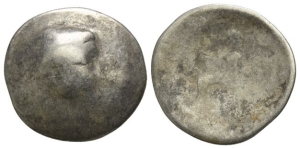
Celts in Lower Danube AR Tetradrachm. Circa 300-100 BC.
Sold for (Inc. bp): £20
Imitating Alexander III and Philip III of Macedon. Degraded head of Herakles to right / Stylised Zeus seated to left, holding eagle in right hand and sceptre with left. Cf. Lanz 910-932. 13.59gr, 29mm.
Fine.
Property of a North London, UK, gentleman. -
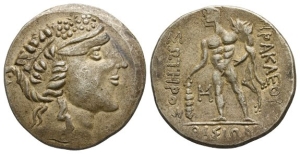
Celts in Danube Region AR Tetradrachm. Circa 1st century BC.
Sold for (Inc. bp): £572
Imitating Tetradrachms of Thasos, Thrace. Head of Celticized Dionysos to right, wearing ivy wreath, and with his hair partially knotted at the back and partially falling down the back of his neck / ΗΡΑΚΛΕΟΥΣ ΣΩΤΗΡΟΣ ΘΑΣΙΩΝ, Herakles, nude but for laurel wreath and lion's skin over his left shoulder, standing to left, holding club with his right hand, monogram of MH to inner left. Cf. Lanz 971-4; cf. Göbl OTA ppl. 46-7. For prototype see HGC 6, 359. 15.96gr, 31mm, 1h.
Near Extremely Fine.
Ex German art market, 2000s. Acquired from an EU collector living in London. From the collection of a Surrey, UK, gentleman. -
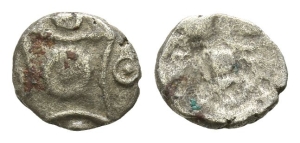
Celtic Britannia. Atrebates & Regni, Commius(?) AR Minim. Circa 50-25 BC.
Sold for (Inc. bp): £20
Concave Square (Atrebatic A) type. Square with concave sides, pellet-in-ring at center / Horse leaping to left; wheel above, pellet-in-annulet below. Van Arsdell 482-1; ABC 1046; SCBC 59. 0.29gr, 7mm.
Near Very Fine.
Acquired on the UK art market before 2000. Property of an Essex, UK, gentleman.
