
Loading, please wait...
LOT 1902
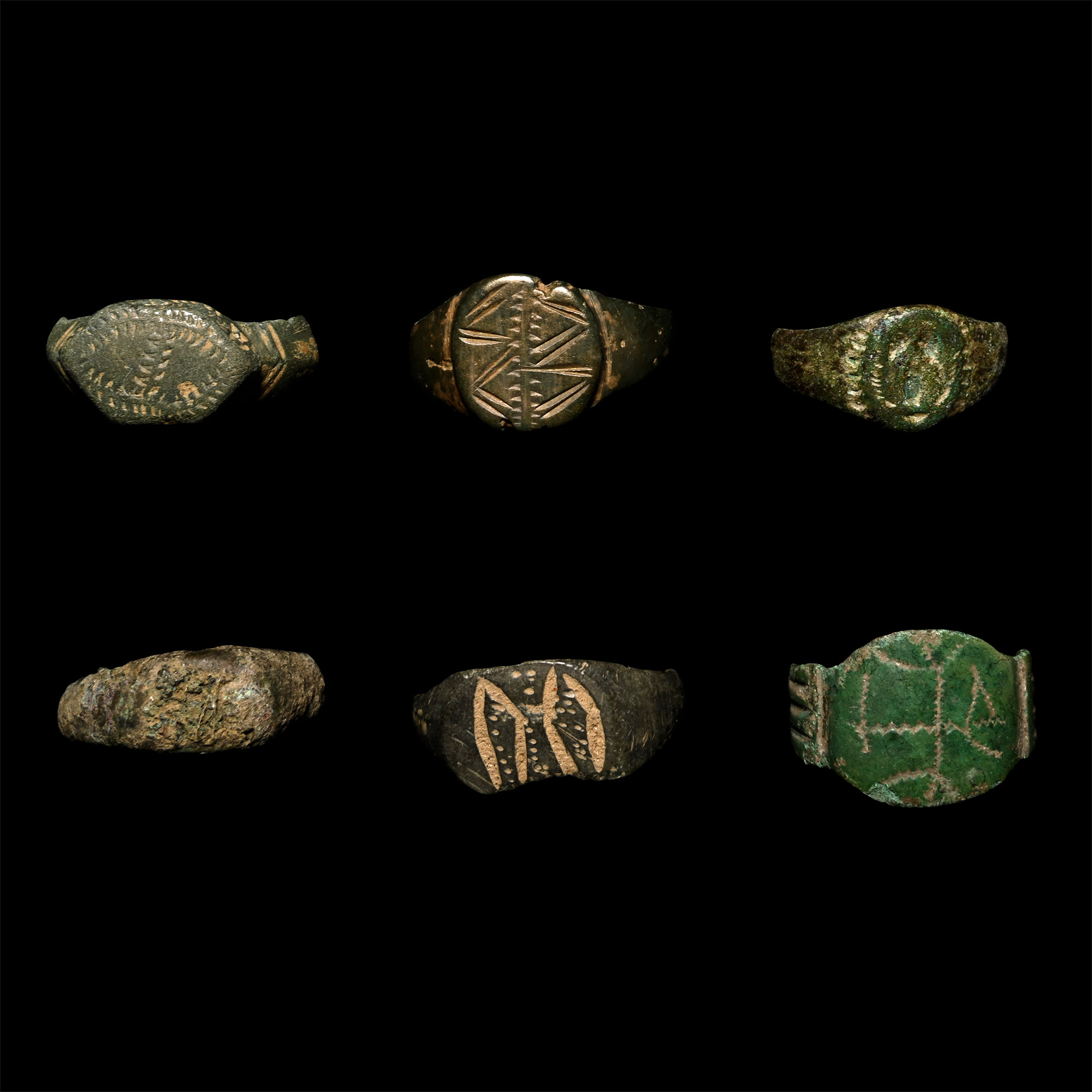
Celtic to Medieval Bronze Ring Collection
1ST CENTURY B.C.-16TH CENTURY A.D.
3/4 - 1 in. (30.06 grams total, 19-26 mm).
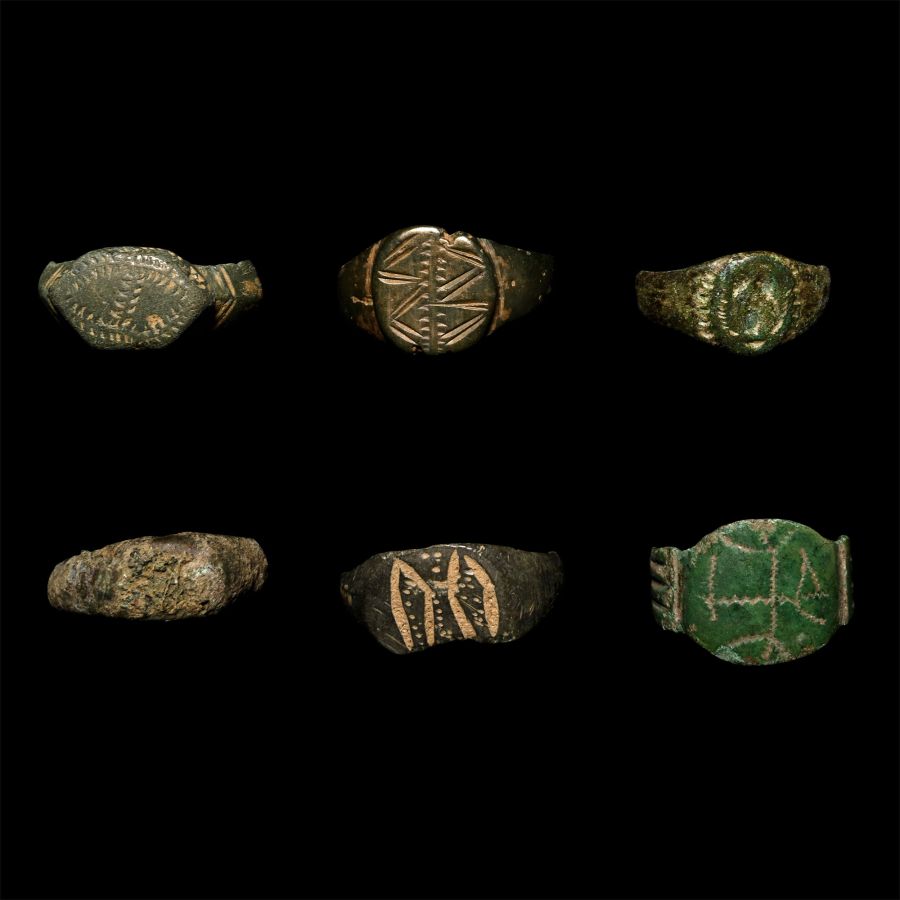
Comprising six rings with decorative bezels. [6, No Reserve]
ProvenanceAcquired on the UK and EU art market before 2000.
From the private collection of a Surrey, UK, gentleman.
Cf. for some medieval types, Mills, N., Medieval Artefacts, Witham, 2003, p.47, fig.NM.112.
FootnotesSeal rings are the most usual types of all medieval base metal rings. Brass or bronze specimens are the most common. The merchants and tradesmen ordered various devices to be engraved on the bezels of their seal rings, and sometimes they gave the appearance of being heraldic blazons.
CONDITIONTimeLine Auctions follows a vetting process to ensure the authenticity and legality of all items, reinforcing our commitment to integrity and responsible trading. Each antiquity, antique, and coin lot undergoes thorough examination by a vetting committee of at least ten external specialists, professional trade association members, scientists, and archaeologists: Our Vetting Process
AUCTIONS:
TimeLine is a leading auction house specialising in antiquities, ancient art, collectables, natural history, coins, medals, and books. Our auctions offer museums, collectors, historians, and enthusiasts the opportunity to acquire unique and historically significant pieces.
-
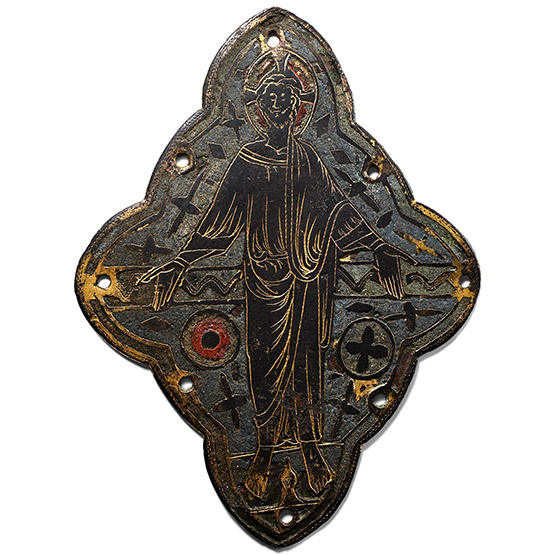
Large Medieval Gilt Bronze Champleve Plaque Depicting Christ in Majesty
Limoges, 13th century A.D.Sold for (Inc. bp): £3,900
Decorated in blue, green and red champlevé enamel, displaying the engraved figure of a standing Christ, his hands gesturing outwards towards the viewer; traces of original gilding; originally the central panel of a processional cross. 124 grams, 15.2 cm
Private collection, Europe. Acquired on the French art market. This lot has been checked against the Interpol Database of stolen works of art and is accompanied by search certificate number no.13092-248393.
From the 12th to 14th century, there was a large industry producing metal objects decorated in enamel using the champlevé technique, of which most of the survivals and probably most of the original production, are religious objects such as reliquaries, crosses and statues of saints. The centre of this production was Limoges, France. -
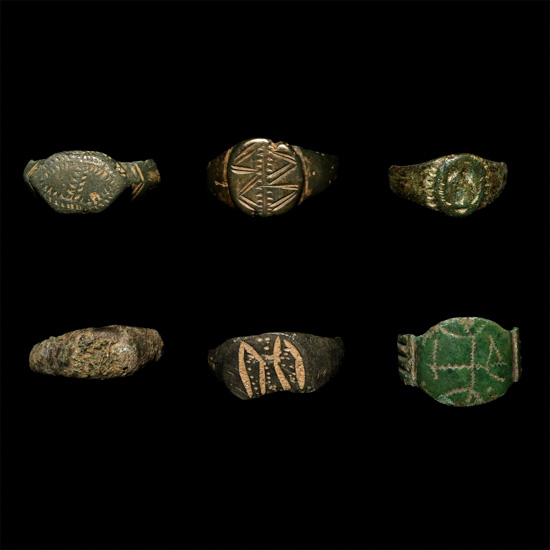
Celtic to Medieval Bronze Ring Collection
1st century B.C.-16th century A.D.Sold for (Inc. bp): £169
Comprising six rings with decorative bezels. 30.06 grams total, 19-26 mm
Acquired on the UK and EU art market before 2000. From the private collection of a Surrey, UK, gentleman.
Seal rings are the most usual types of all medieval base metal rings. Brass or bronze specimens are the most common. The merchants and tradesmen ordered various devices to be engraved on the bezels of their seal rings, and sometimes they gave the appearance of being heraldic blazons. -
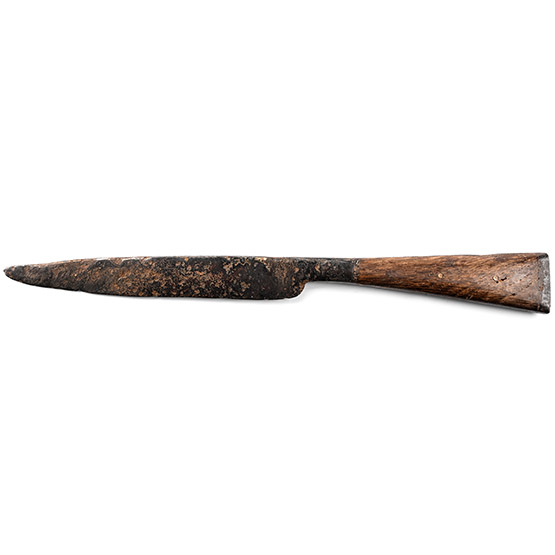
Medieval Iron Knife with Wooden Handle
Circa 1500 A.D.Sold for (Inc. bp): £130
Narrow single-edged blade with integral bolster, flared scale-tang hilt with integral finial; feint punched maker's mark 'ΛΛ' to one face. 49 grams, 21.8 cm
From an old English collection, 1980s.
