
Loading, please wait...
LOT 1835
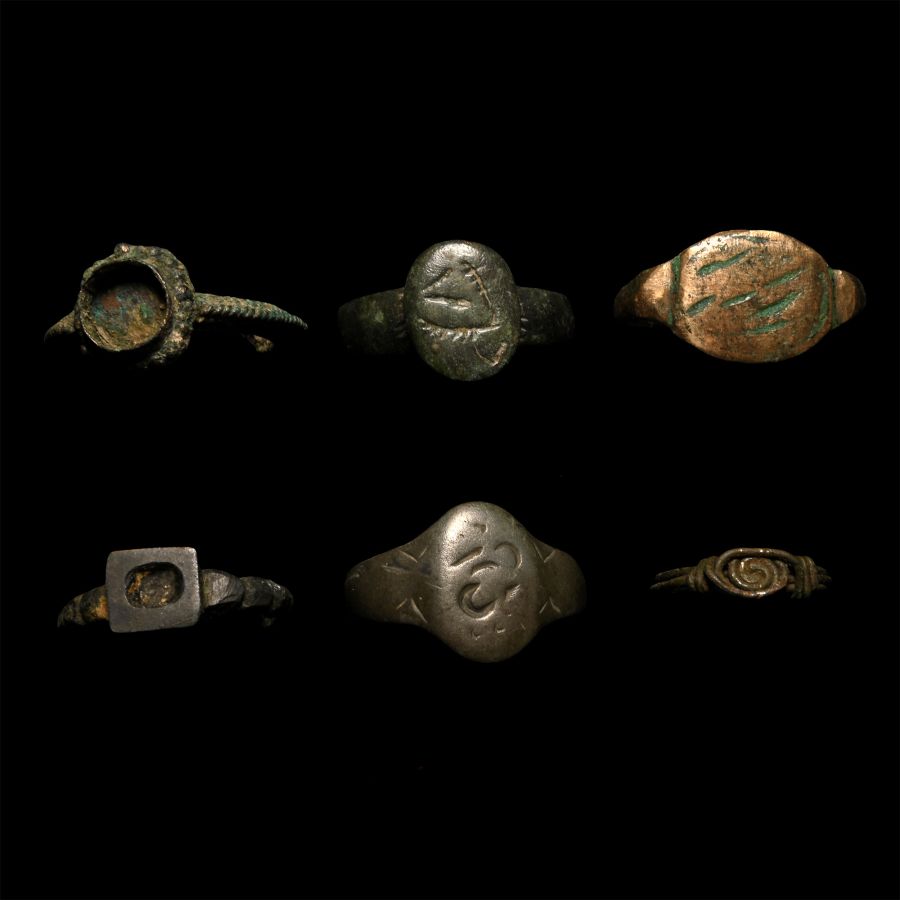
Celtic to Medieval Bronze Ring Collection
1ST CENTURY B.C.-16TH CENTURY A.D.
3/4 - 1 in. (21.97 grams total, 19-26 mm).
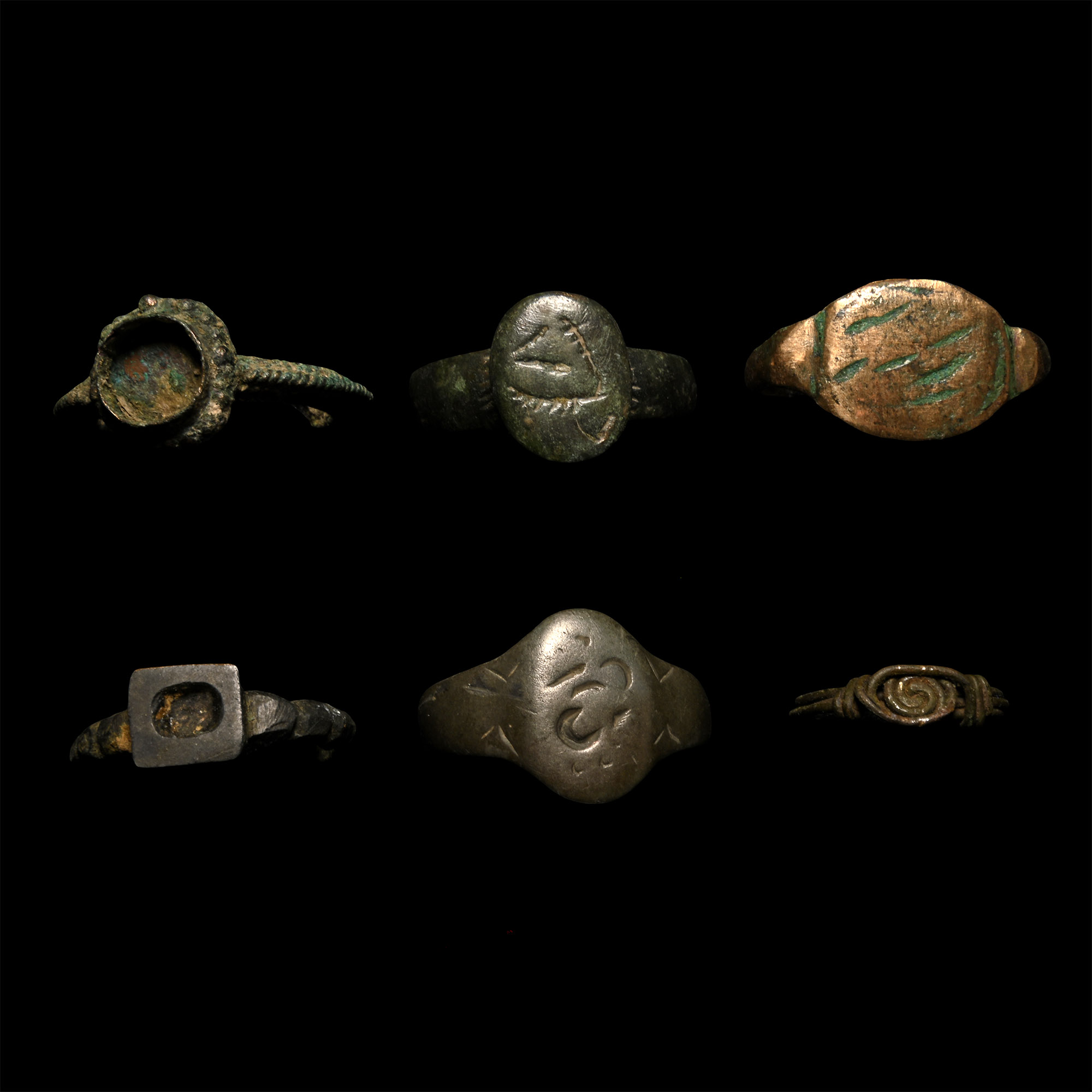
Comprising: a coiled ring with a coiled bezel; a ring with a raised oval bezel with linear motifs; two rings with an incuse motif on the bezel; two rings with recessed cells to accept an insert. [6, No Reserve]
ProvenanceAcquired on the UK and EU art market before 2000.
From the private collection of a Surrey, UK, gentleman.
Cf. for some medieval types Stanojev, N., Nekropolen aus dem 10.-15.Jahrhundert in der Vojvodina, Novi Sad, 1989, fig.513.
FootnotesA similar cast ring with a silver sheet and notched decoration was found in the Necropolis of Zabran, Zemun, and dated 10th-15th century A.D. These rings were often decorated with geometric and abstract lines.
CONDITIONTimeLine Auctions follows a vetting process to ensure the authenticity and legality of all items, reinforcing our commitment to integrity and responsible trading. Each antiquity, antique, and coin lot undergoes thorough examination by a vetting committee of at least ten external specialists, professional trade association members, scientists, and archaeologists: Our Vetting Process
AUCTIONS:
TimeLine is a leading auction house specialising in antiquities, ancient art, collectables, natural history, coins, medals, and books. Our auctions offer museums, collectors, historians, and enthusiasts the opportunity to acquire unique and historically significant pieces.
-
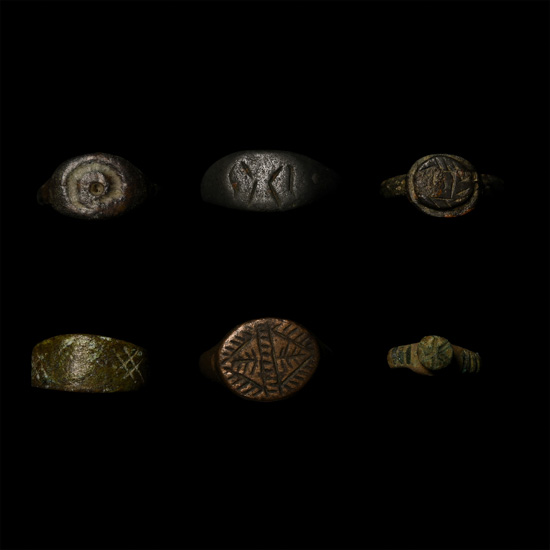
Celtic to Medieval Bronze Ring Collection
1st century B.C.-16th century A.D.Sold for (Inc. bp): £124
Comprising six rings with decorative bezels. 28.6 grams total, 21-25 mm
Acquired on the UK and EU art market before 2000. From the private collection of a Surrey, UK, gentleman.
A similar ring with a silver sheet and notched decoration was found in the Necropolis of Zabran, Zemun, and dated 10th-15th century A.D. These rings were often decorated with geometric and abstract lines. -
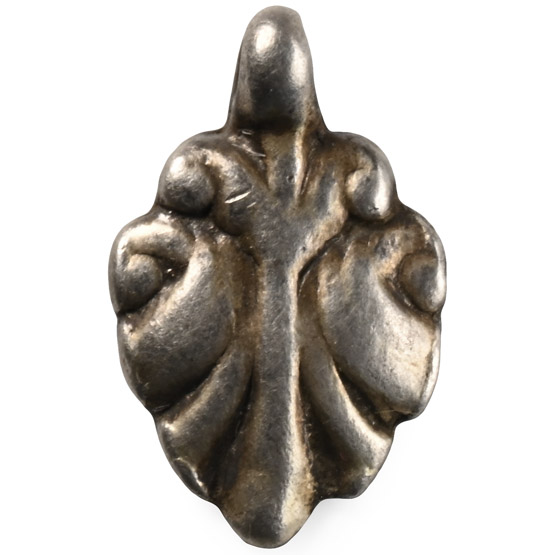
Medieval Silver Leaf-shaped Pendant
13th-15th century A.D.Sold for (Inc. bp): £59
Formed as a palmette with granules and loop. 1.9 grams, 17 mm
Ex German art market, 2000s. Acquired from an EU collector living in London. From the collection of a Surrey, UK, gentleman. -
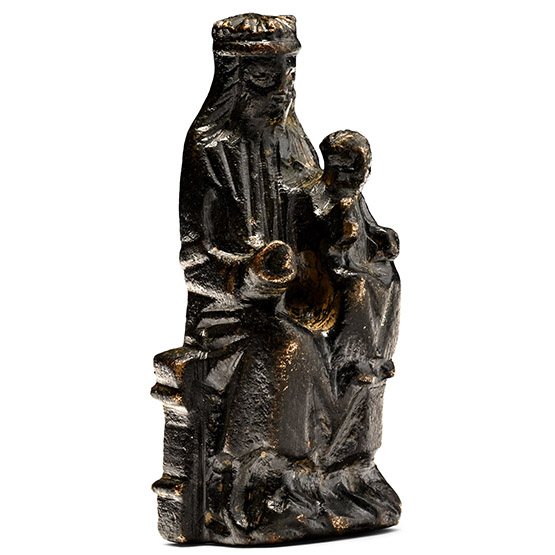
Medieval Bronze Seated Figure of Madonna and Child
England, 14th century A.D.Sold for (Inc. bp): £416
Modelled in the half-round, Mary crowned and seated, holding the infant Jesus on her left knee, the infant having his right hand raised in blessing gesture. 24.6 grams, 40 mm
Private collection, UK.
