
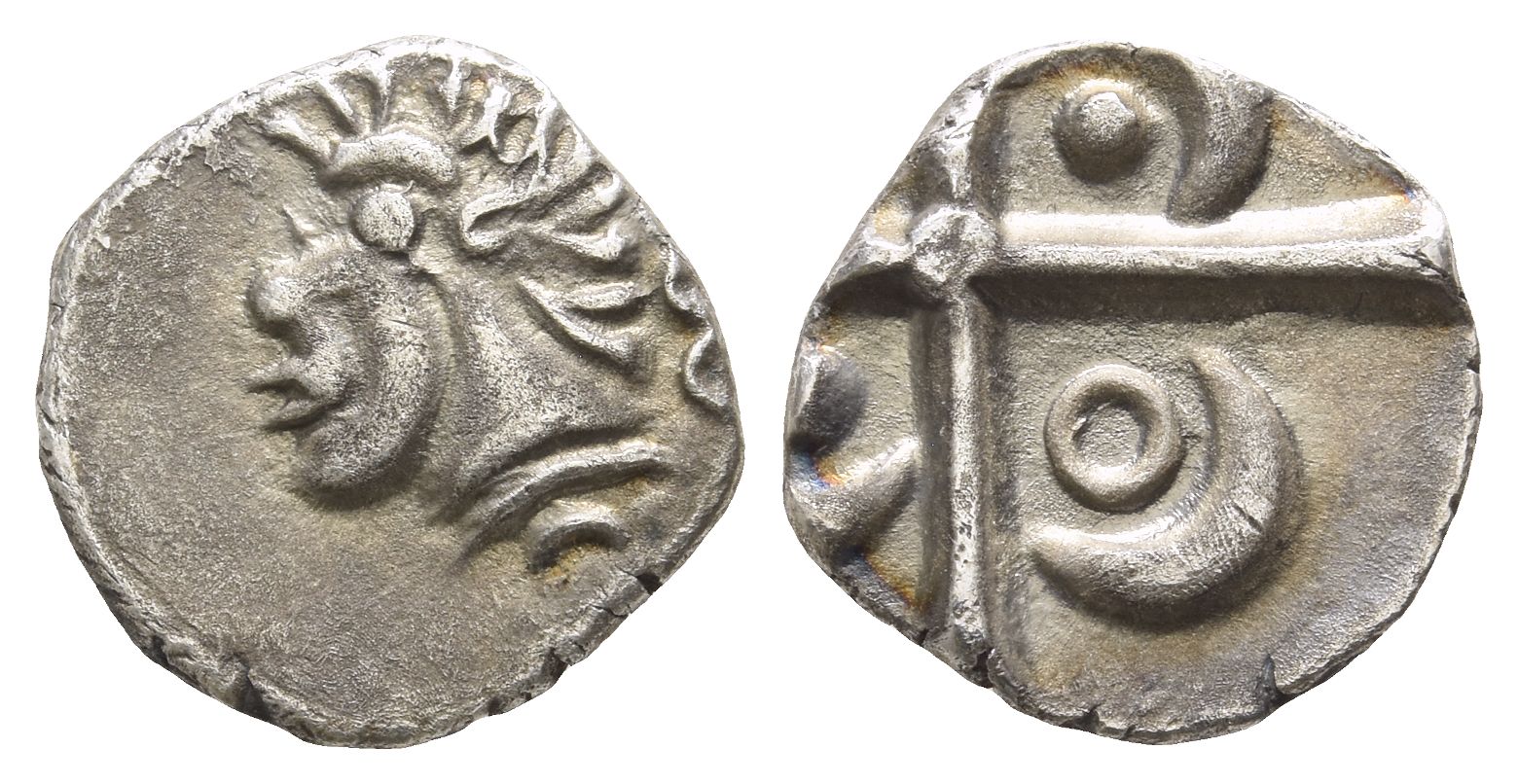
LOT 3044
Celtic Southwest Gaul. Tolosates AR Drachm. Circa 2nd cfentury BC.
Female head to left, wearing necklace; crescent below / Long cross with annulet-in-cresents and pellet-in-crescents in quarters. LT 2986; S 75; BN 2976-3240. Extremely Fine. Toned.(2.27gr, 14mm.).
ProvenanceEx cgb.fr. (bga_305800).
From the private collection of John Meredith, acquired since the 1990s; thence by descent.
TimeLine Auctions follows a vetting process to ensure the authenticity and legality of all items, reinforcing our commitment to integrity and responsible trading. Each antiquity, antique, and coin lot undergoes thorough examination by a vetting committee of at least ten external specialists, professional trade association members, scientists, and archaeologists: Our Vetting Process
AUCTIONS:
TimeLine is a leading auction house specialising in antiquities, ancient art, collectables, natural history, coins, medals, and books. Our auctions offer museums, collectors, historians, and enthusiasts the opportunity to acquire unique and historically significant pieces.
-
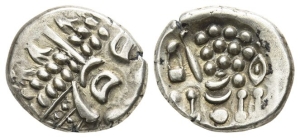
Celtic Britannia. Durotriges AR Stater. Circa 65 BC-AD 45. Cranborne Chase type.
Sold for (Inc. bp): £286
Devolved and disjointed laureate head of Apollo to right / Devolved and disjointed horse to left with numerous pellets above and a pellet below. ABC 2157; VA 1235-1. 5.58gr, 20mm, 11h.
Good Very FIne.
Found Isle of Wight, Hampshire, UK, 19 October 2005. Ex Chris Rudd, IOW, lot 28, ref. no.12753. From the private collection of John Meredith, acquired since the 1990s; thence by descent. -
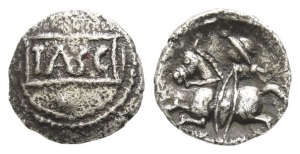
Celtic Britannia. Tasciovanos AR Unit. Circa 20 BC-AD 10. Cavalryman type.
Sold for (Inc. bp): £221
TASC in central panel, two line beaded border / Helmetted horseman left, holding large shield. ABC 2640; VA 1800; BMC 1677; S 238; CCI 00.0374. 1.23gr, 12mm, 12h.
Good Very Fine. Bold, sharp TASC. Very rare.
Found Herts/Cambs border, UK. Ex L Tongue collection. Ex Chris Rudd, LL61, lot 38, ref. no.16261. From the private collection of John Meredith, acquired since the 1990s; thence by descent. -
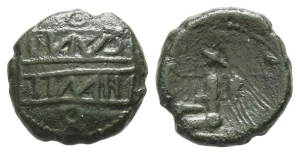
Celtic Britannia. Catuvellauni and Trinovantes, Cunobelin AE Unit. Circa AD 10-41. Cunobelinus Retrograde type.
Sold for (Inc. bp): £91
Retrograde/ blundered CVNOBELINI in two lines, ringed-pellet above and below / Victory seated left. ABC 2918 var.; VA 1971 var.; BMC 1921-27 var.; S 324. 3.62gr, 15mm, 4h.
Good Very Fine. Clear inscription, dark green patina. Extremely rare.
Ex Michael J. Grover collection. Ex Chris Rudd, 122, lot 51, ref. no.13926. From the private collection of John Meredith, acquired since the 1990s; thence by descent.
