
LOT 3015
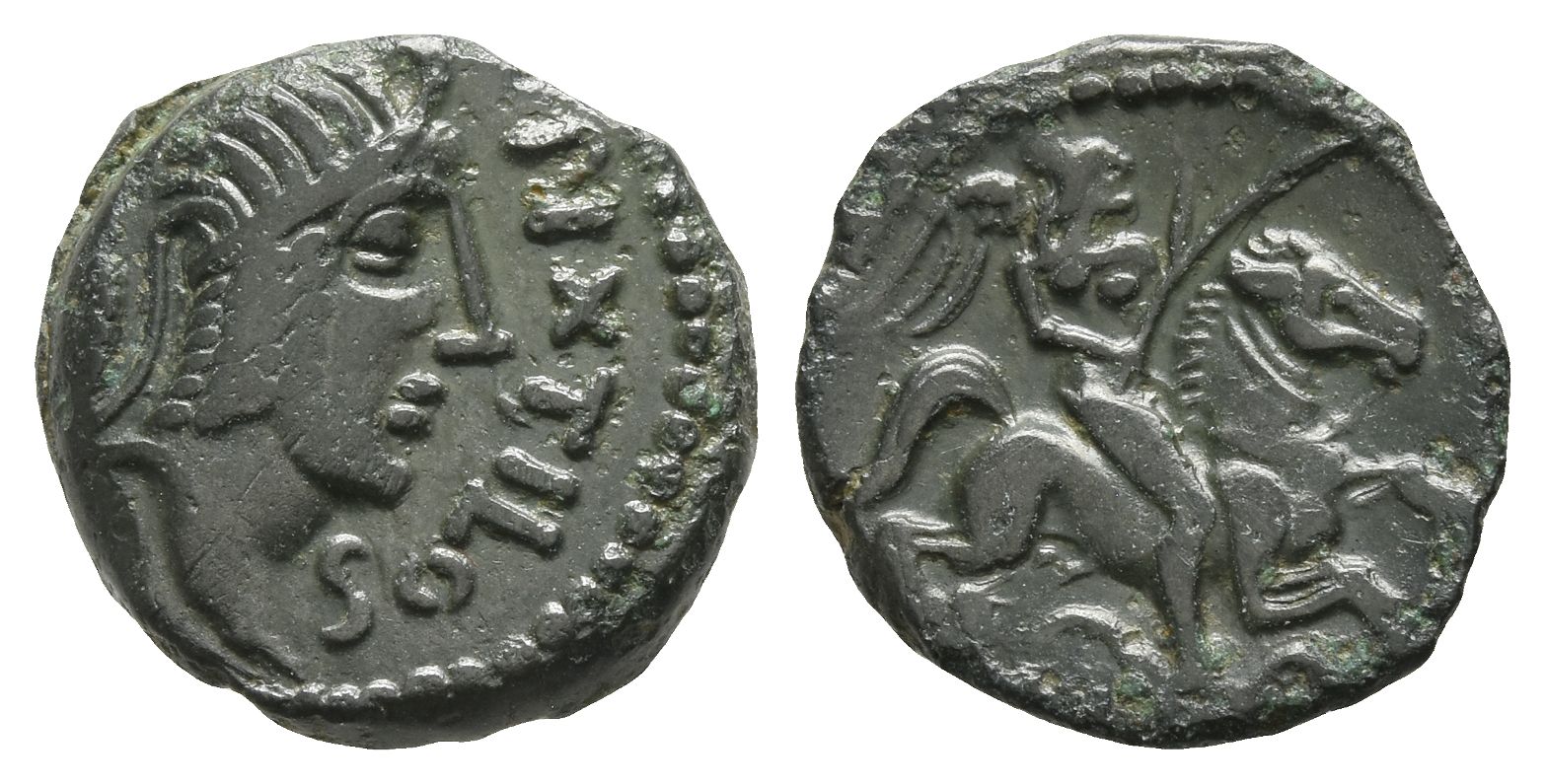
Celtic Northwest Gaul. Carnutes, Pixtilos AE Unit. Circa 40-30 BC. Class VII.
PIXTILOS, diademed male head (Apollo?) to right, with a horned snake-like dragon curling down from the top of his head / Nude man, holding a palm branch in his right hand and the reins with his left, riding a horse prancing to right; below, double spiral ornament. Depeyrot, NC V, 89; D&T 2471; Scheers, Pixtilos, class VII. Good Very Fine. Beautiful dark green patina.(2.72gr, 16mm, 10h.).
ProvenanceEx cgb.fr, Paris (v55_0539).
From the private collection of John Meredith, acquired since the 1990s; thence by descent.
TimeLine Auctions follows a vetting process to ensure the authenticity and legality of all items, reinforcing our commitment to integrity and responsible trading. Each antiquity, antique, and coin lot undergoes thorough examination by a vetting committee of at least ten external specialists, professional trade association members, scientists, and archaeologists: Our Vetting Process
AUCTIONS:
TimeLine is a leading auction house specialising in antiquities, ancient art, collectables, natural history, coins, medals, and books. Our auctions offer museums, collectors, historians, and enthusiasts the opportunity to acquire unique and historically significant pieces.
-
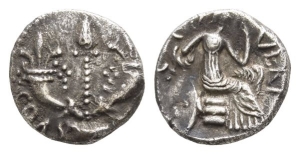
Celtic Britannia. Atrabates and Regni, Verica AR Unit. AD 10-20.
Sold for (Inc. bp): £221
Thyrsus between two cornucopiae, two-handled wine cup below, COM-[MI F] around / Long-robed figure seated right, with left hand raised, VERI-CA around. ABC 1241; VA 531; BMC 1393-419; S 134. 1.27gr, 11mm, 6h.
Good Very Fine.
Ex Spink. From the private collection of John Meredith, acquired since the 1990s; thence by descent. -
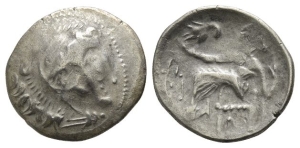
Celts in Middle Danube AR Drachm. 3rd–2nd century BC. Imitating Alexander III of Macedon.
Sold for (Inc. bp): £52
Stylised head of Heracles wearing lion skin headdress to right / Stylised Zeus seated to left on throne, holding eagle in his right hand and sceptre in his left. Dembski -; Flesche -; Lanz -. 3.59gr, 20mm, 12h.
Very Fine.
Acquired on the UK art market since the early 2000s. Property of a Lincolnshire gentleman, thence by descent. -
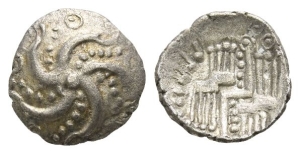
Celtic Britannia. Durotriges AR Quarter Stater 58 BC-43 AD.
Sold for (Inc. bp): £260
Five-armed starfish, lines of pellets between each arm / Zigzag thunderbolt and line of pellets across field; eight-rayed lighting flash with rectangular body to each side. VA 1270-78; BMC 2780-81; ABC 2220. 0.90gr, 12mm.
Near Very Fine.
Ex Paul Munro-Walker collection. Ex Roma Numismatics Ltd, E-Sale 57, 30 May 2019, lot 62. Property of a London antiquarian.
