
LOT 3017
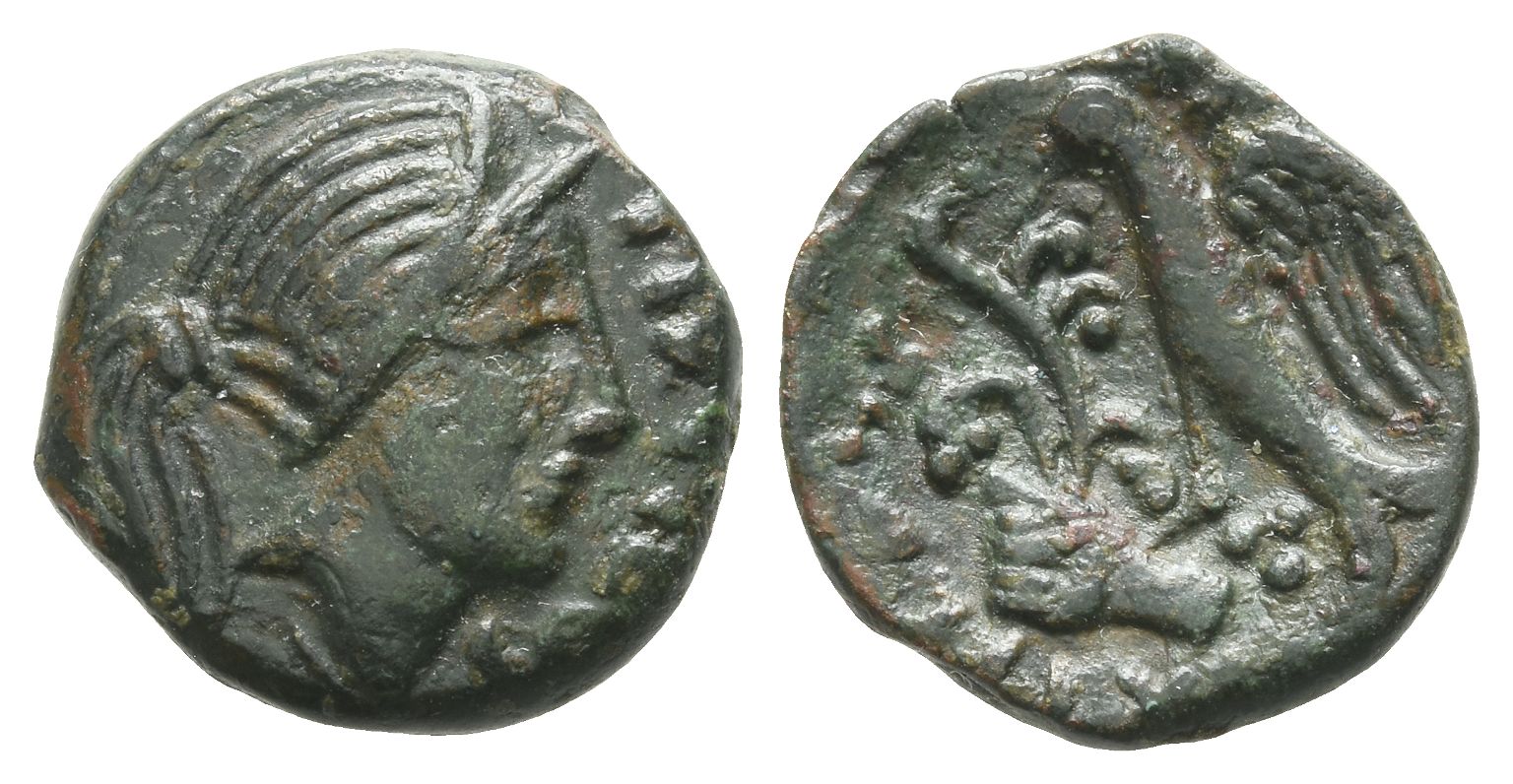
Celtic Northwest Gaul. Carnutes, Pixtilos AE Unit. Circa 40-30 BC. Class III.
Diademed female head to right, long hair tied at the nape of the neck to form a ponytail, legend before / Hand to left holding branch (vine, mistletoe?) on which bird appears to be feeding on the berries. LT.7070; DT.2467; RIG.224d; ABT.269. Good Very Fine.(3.20gr, 15mm, 4h.).
ProvenanceFrom the private collection of John Meredith, acquired since the 1990s; thence by descent.
TimeLine Auctions follows a vetting process to ensure the authenticity and legality of all items, reinforcing our commitment to integrity and responsible trading. Each antiquity, antique, and coin lot undergoes thorough examination by a vetting committee of at least ten external specialists, professional trade association members, scientists, and archaeologists: Our Vetting Process
AUCTIONS:
TimeLine is a leading auction house specialising in antiquities, ancient art, collectables, natural history, coins, medals, and books. Our auctions offer museums, collectors, historians, and enthusiasts the opportunity to acquire unique and historically significant pieces.
-
.jpg)
Celtic Britannia. Belgae AV Stater. Circa 55-45 BC. Chute type.
Sold for (Inc. bp): £715
Wreath motif with downward-facing leaves / Triple-tailed disjointed horse to left, shrimp and large blobs above, crab below, exergual line with zigzag and pellets. ABC 746; VA 1205; BMC 36-76; S 22. 6.17gr, 18mm, 10h.
Near Extremely Fine. Yellow gold, clear crab and shrimp. Recorded in Celtic Coin Index Online of Oxford University with reference no.CCI 01.0761.
Ex Trenerry, FPL Summer 1987, no.52; FPL July/August 1987, no.60. Ex Vecchi, 15 June 1999, lot 1622. From Walsh Collection. Ex DNW, 31 May 2000. From Chris Hamlyn collection. From James Hall collection. Ex Chris Rudd, 129, lot 18, ref. no.17111. From the private collection of John Meredith, acquired since the 1990s; thence by descent. -
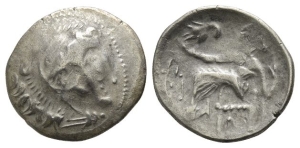
Celts in Middle Danube AR Drachm. 3rd–2nd century BC. Imitating Alexander III of Macedon.
Sold for (Inc. bp): £52
Stylised head of Heracles wearing lion skin headdress to right / Stylised Zeus seated to left on throne, holding eagle in his right hand and sceptre in his left. Dembski -; Flesche -; Lanz -. 3.59gr, 20mm, 12h.
Very Fine.
Acquired on the UK art market since the early 2000s. Property of a Lincolnshire gentleman, thence by descent. -
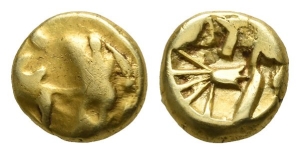
Celtic Britannia. Catuvellauni AV Quarter Stater. Circa 75-65 BC. Westerham Reversed L type.
Sold for (Inc. bp): £442
Three-men-in-a-boat / Tree-like object on horizontal bar. ABC 2454; VA-; BMC-; S-. 1.66gr, 9mm.
Good Very Fine. As struck in golden gold on chunky little flan, super tree, L-shape visible. Very rare.
Ex Chris Rudd, 129, lot 45, ref. no.17225. From the private collection of John Meredith, acquired since the 1990s; thence by descent.
