
Loading, please wait...
_900x900.jpg "Celtic Enamelled Bronze Chariot Lynch Pin Terminal")
_200x200.jpg "Celtic Enamelled Bronze Chariot Lynch Pin Terminal")
.jpg "Celtic Enamelled Bronze Chariot Lynch Pin Terminal")
LOT 0321
Celtic Enamelled Bronze Chariot Lynch Pin Terminal
1ST CENTURY B.C.-1ST CENTURY A.D.
2 in. (64.8 grams, 54 mm).
Square-section shank with flange and tapering bulb, disc finial with reserved comma-trumpet design and red enamelled field.
ProvenanceFound Norfolk, UK.
LiteratureCf. British Museum number 1987,0404.12; East Riding of Yorkshire: Kirkburn.
CONDITIONTimeLine Auctions follows a vetting process to ensure the authenticity and legality of all items, reinforcing our commitment to integrity and responsible trading. Each antiquity, antique, and coin lot undergoes thorough examination by a vetting committee of at least ten external specialists, professional trade association members, scientists, and archaeologists: Our Vetting Process
AUCTIONS:
TimeLine is a leading auction house specialising in antiquities, ancient art, collectables, natural history, coins, medals, and books. Our auctions offer museums, collectors, historians, and enthusiasts the opportunity to acquire unique and historically significant pieces.
-
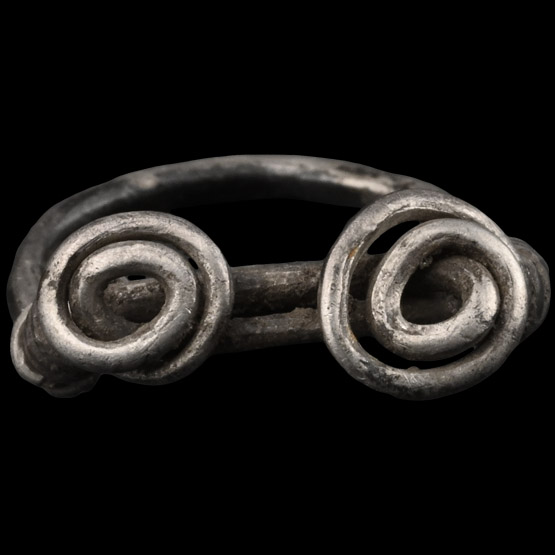
Celtic Silver Ring
Iron Age, circa 2nd-1st century B.C.Sold for (Inc. bp): £124
Formed as a length of silver wire with two spiral loops above forming the bezel, the ends wrapped around the shank. 2.82 grams, 25.46 mm overall, 15.94x17.86 mm internal diameter (approximate size British J, USA 4 3/4, Europe 8.69, Japan 8)
Ex German art market, 2000s. Acquired from an EU collector living in London. From the collection of a Surrey, UK, gentleman. -
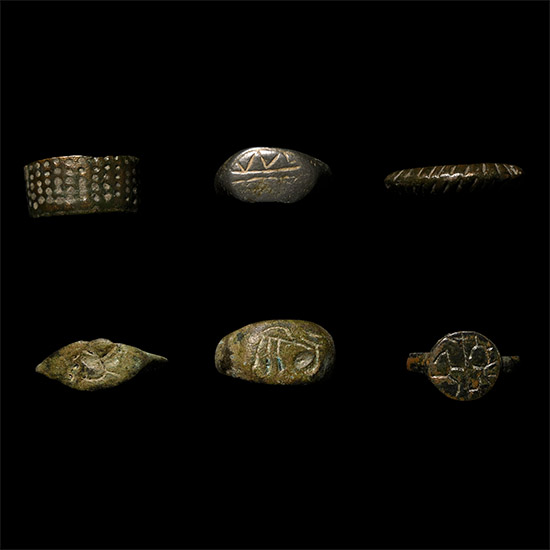
Celtic to Medieval Bronze Ring Collection
1st century B.C.-16th century A.D.Sold for (Inc. bp): £143
Comprising: four rings with decorative bezels; a ring with a keeled faux-twist hoop; a ring-type thimble with pointillé decoration. 18.54 grams total, 18-23 mm
Acquired on the UK and EU art market before 2000. From the private collection of a Surrey, UK, gentleman.
Similar cast bronze rings were found in the Necropolis of Ruski Krstur, and dated 10th-15th century A.D. -
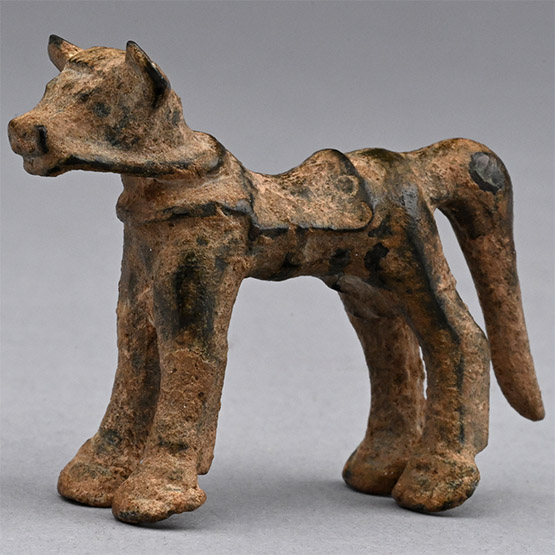
Iberian Bronze Bull Statuette
3rd-1st century B.C.Estimate: £1,800 - 2,400 (‡+bp*)
Opening Bid: £1,000
Modelled as a bridled and saddled bull, naturalistically rendered with well-defined facial planes, lending a vivid and expressive character to the figure; the edge of the saddle adorned with a delicate row of incised circles, broad hollowed out hooves. 48.6 grams, 54 mm long
Frank Sternberg collection, Zurich, 1980s. Private collection, acquired from Frank Sternberg in 1992. Accompanied by a copy of an Art Loss register certificate, dated 29 March 2004. This lot has been checked against the Interpol Database of stolen works of art and is accompanied by a search certificate number no.12729-234223.
The statuette likely served as a votive offering (ex-voto) at a sanctuary or temple, and closely parallels numerous Iberian examples recovered from sacred sites in Alicante, Valencia, and particularly in Andalusia. In Iberian culture, the bull was a potent symbol of strength, virility, and martial power—frequently associated with warrior deities. The inclusion of a saddle and bridle suggests domestication, and it is plausible that such animals, being more docile than horses, may have been ridden or equipped in ritual or ceremonial contexts.
