
Loading, please wait...
LOT 1694
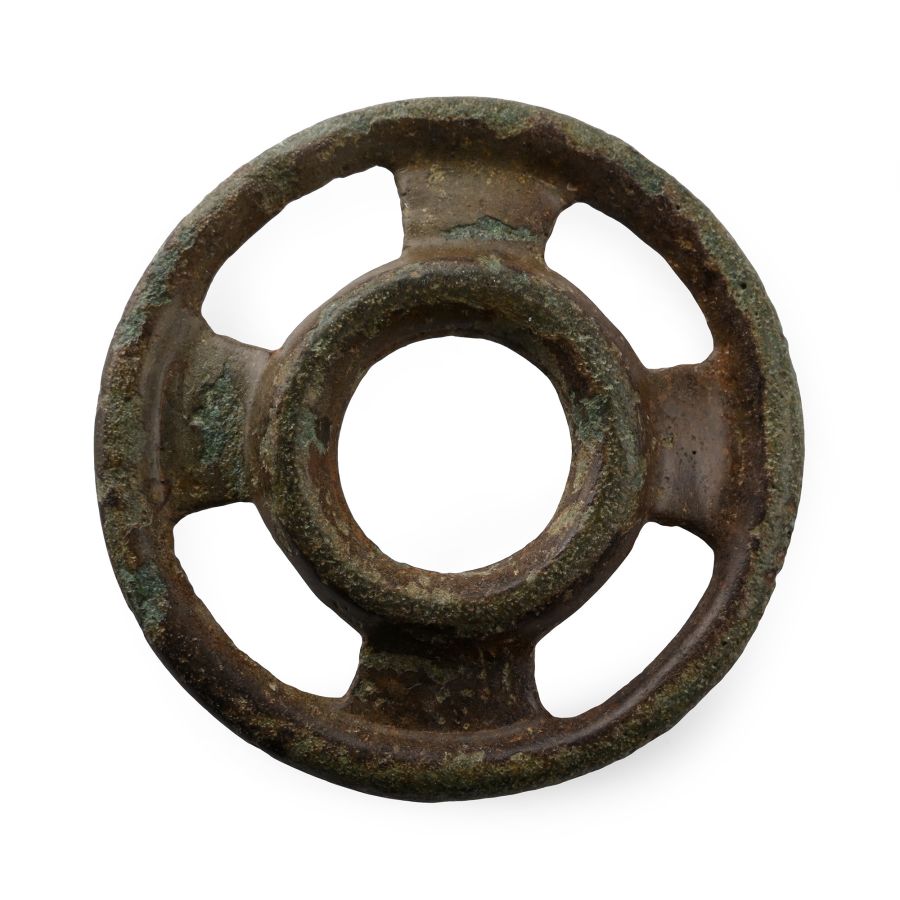
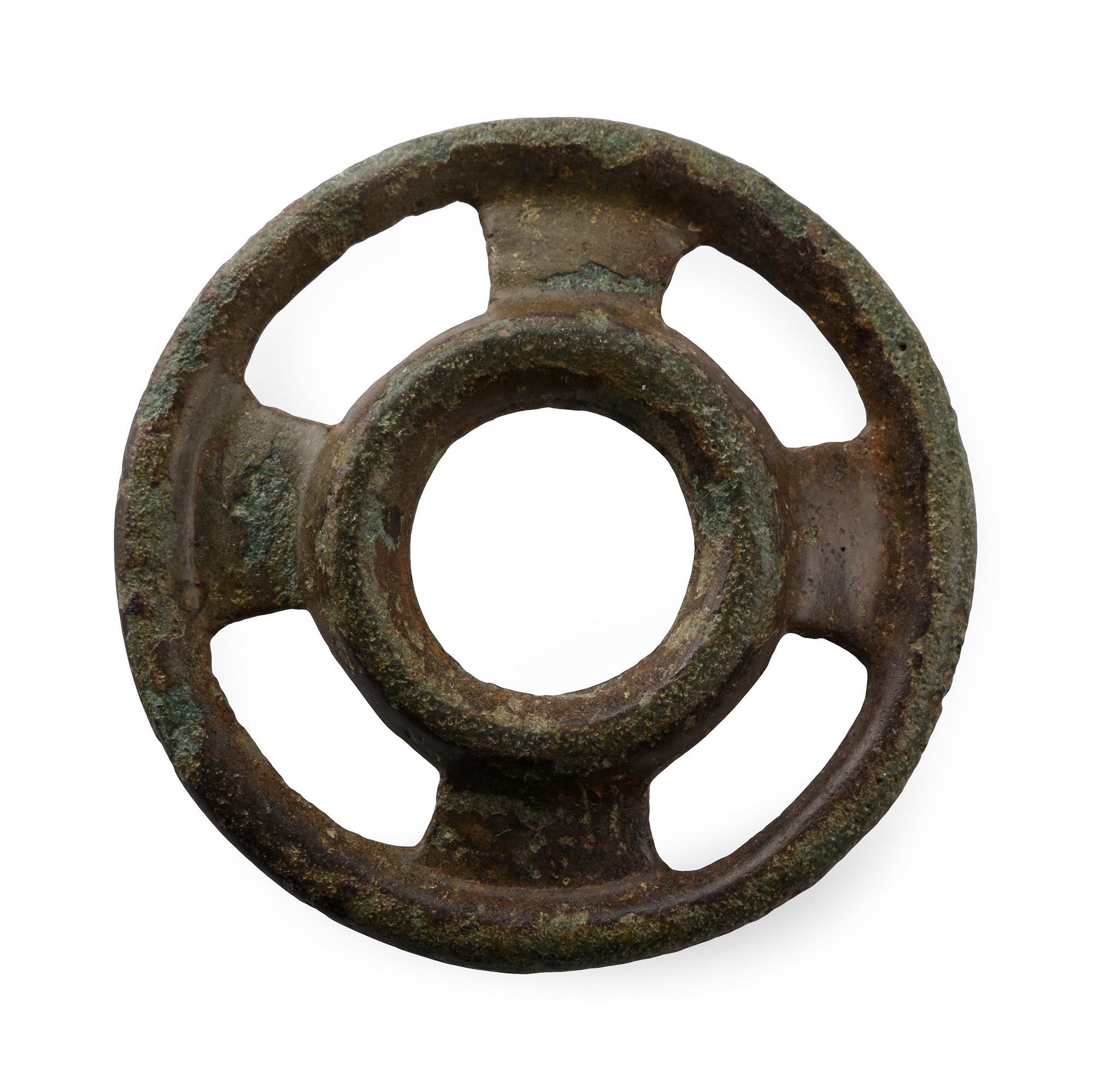
Celtic Bronze Chariot Mount
IRON AGE, 1ST CENTURY B.C.-1ST CENTURY A.D.
2 5/8 in. (60 grams, 66 mm).
An openwork spoked wheel-type mount with attachment studs on the reverse. [No Reserve]
ProvenanceFound Windsor and Maidenhead, UK.
CONDITIONTimeLine Auctions follows a vetting process to ensure the authenticity and legality of all items, reinforcing our commitment to integrity and responsible trading. Each antiquity, antique, and coin lot undergoes thorough examination by a vetting committee of at least ten external specialists, professional trade association members, scientists, and archaeologists: Our Vetting Process
AUCTIONS:
TimeLine is a leading auction house specialising in antiquities, ancient art, collectables, natural history, coins, medals, and books. Our auctions offer museums, collectors, historians, and enthusiasts the opportunity to acquire unique and historically significant pieces.
-
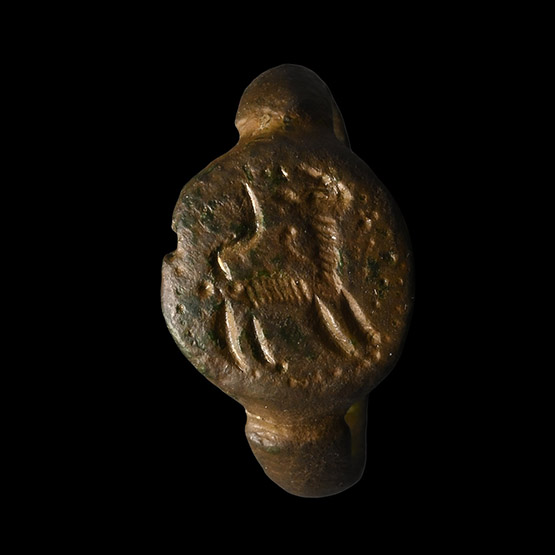
Romano-Celtic Bronze Ring with Standing Lion
1st century B.C.-2nd century A.D.Sold for (Inc. bp): £85
D-section hoop and discoid bezel with incuse image of a stylised lion facing right. 6.00 grams, 25.02 mm overall, 21.34 mm internal diameter (approximate size British S, USA 9, Europe 20, Japan 19)
Acquired on the UK and EU art market before 2000. From the private collection of a Surrey, UK, gentleman.
The ring belongs to the category where the bezel and the ring’s platform merge together, forming a round plate. The round bezel is often decorated with an animal figure. -
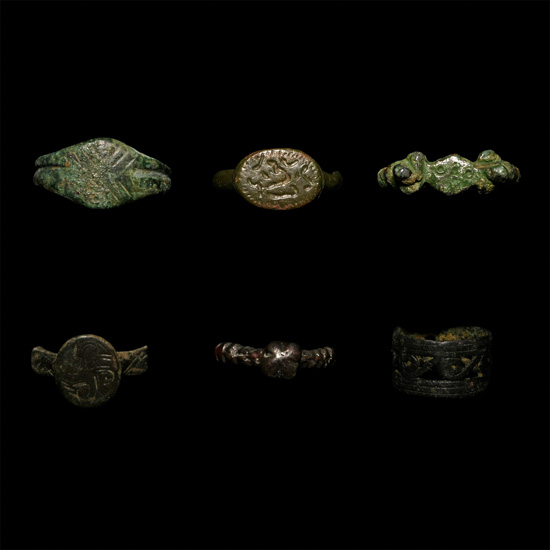
Celtic to Medieval Bronze Ring Group
1st century B.C.-16th century A.D.Sold for (Inc. bp): £85
Comprising: an openwork ring with spirals; three rings with decorated bezels; a ring with a round-section hoop and a lozenge-shaped bezel flanked by raised bosses; a ring with a notched hoop and a raised bezel. 25.04 grams total, 16-27mm
Acquired on the UK and EU art market before 2000. From the private collection of a Surrey, UK, gentleman.
Similar rings with with loop and braided wire were found in the Necropolis of Banatsko Arandelovo, Vojvodina, and dated 10th-15th century A.D. -
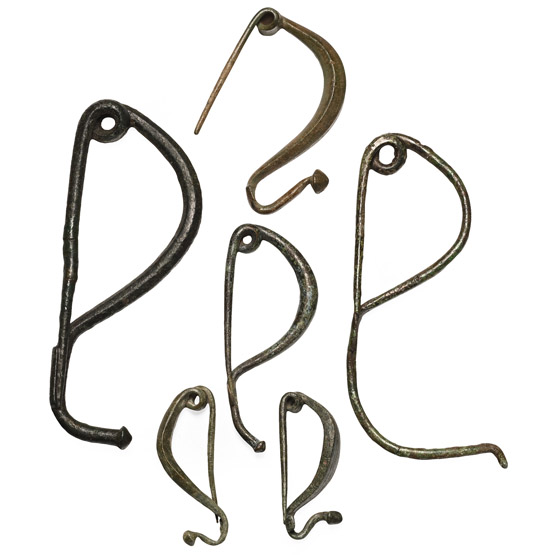
Celtic Bronze La Tène Bow Brooch Collection
Iron Age, 2nd century B.C.-1st century A.D.Sold for (Inc. bp): £143
Each with round-section bow, slender pin with coiled spring, some with knob finial and catch. 26.9 grams total, 27-64 mm
Ex property of an Essex, UK, gentleman collector. From the private collection of a Colchester, UK, gentleman.
