
LOT 2987
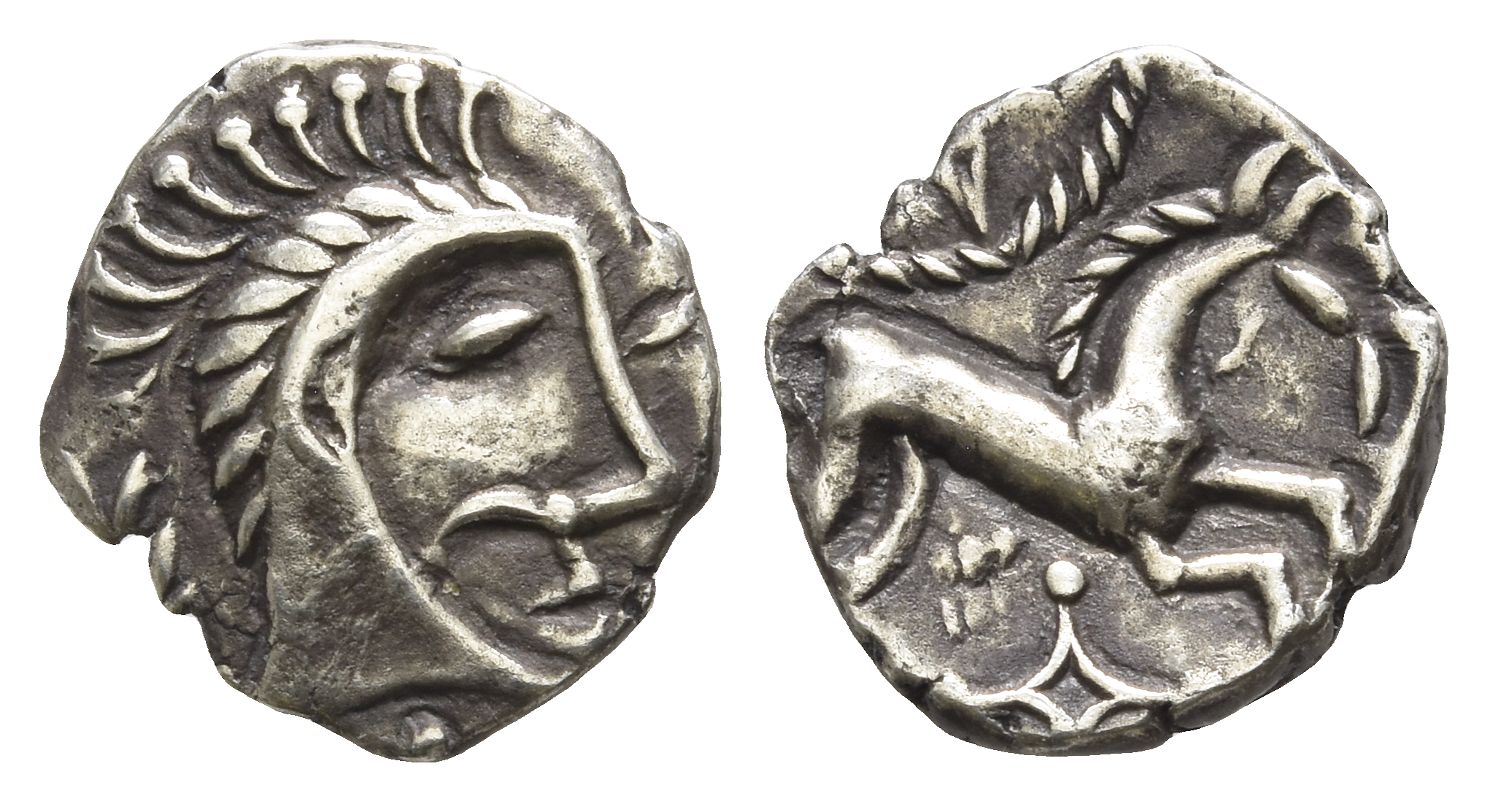
Celtic Britannia. Iceni AR Unit. Circa AD 20-43. Norfolk God Moustache type.
Male head right, with short spiky hair and boarskin headdress./ Horse right, with cabled mane, cabled pelta above, kite shape below. ABC 1567; VA 792, 794; BMC 3605-759; S 434. Near Extremely Fine. Toned silver, sharply struck, well centred.(0.91gr, 13mm, 8h.).
ProvenanceFound Mildenhall, Suffolk, UK.
Ex Chris Rudd, 118, lot 24, ref. no.13444.
From the private collection of John Meredith, acquired since the 1990s; thence by descent.
This superb specimen clearly displays the downward-curving moustache and the characteristic crest of boar-like bristles which seem to indicate that the deity is wearing a boarskin headdress.
TimeLine Auctions follows a vetting process to ensure the authenticity and legality of all items, reinforcing our commitment to integrity and responsible trading. Each antiquity, antique, and coin lot undergoes thorough examination by a vetting committee of at least ten external specialists, professional trade association members, scientists, and archaeologists: Our Vetting Process
AUCTIONS:
TimeLine is a leading auction house specialising in antiquities, ancient art, collectables, natural history, coins, medals, and books. Our auctions offer museums, collectors, historians, and enthusiasts the opportunity to acquire unique and historically significant pieces.
-
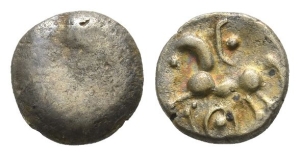
Celtic Central Europe. Boii AR Obol. Circa 2nd-1st century BC. Roseldorf Type II.
Sold for (Inc. bp): £52
Irregular raised surface / Horse to left; above, slightly curved line with thickened ends, pellet within volute-like loop below. Dembski, MÖNG 1991, 2; Lanz 94. 0.89gr, 9mm.
Very Fine.
Acquired on the UK art market since the early 2000s. Property of a Lincolnshire gentleman, thence by descent. -
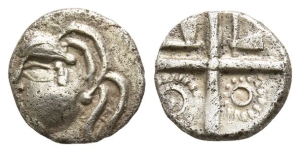
Celtic Southwest Gaul. Petrocorii AR Drachm. 2nd century BC. Périgueux Flamboyant type.
Sold for (Inc. bp): £111
Head left, with elliptical eye, large open crescents for hair / Cruciform motif, axes and pelleted-rings in angles. Saves 220-222; BN 3525-28; BMC 81. 1.74gr, 13mm.
Good Very Fine. Great head, both axes visible. Very rare.
Ex Chris Rudd, 125, lot 6, ref. no.16649. From the private collection of John Meredith, acquired since the 1990s; thence by descent.
CGF attribute this type to the Petrocorii 'the four armies' and they're probably right to do so. Strabo - his name means 'squint-eyed' - indicates that the Petrocorii were very good metal-workers (Geog. IV, 2, 2). Caesar says Vercingetorix asked them to supply 5,000 troops for his rebellion (BG VIII, 75). Depeyrot records only 18 examples of this very rare type, most of them in museums. -
Celtic Britannia. Iceni AR Unit. Circa AD 20-43. Norfolk God Moustache type.
Sold for (Inc. bp): £546
Male head right, with short spiky hair and boarskin headdress./ Horse right, with cabled mane, cabled pelta above, kite shape below. ABC 1567; VA 792, 794; BMC 3605-759; S 434. 0.91gr, 13mm, 8h.
Near Extremely Fine. Toned silver, sharply struck, well centred.
Found Mildenhall, Suffolk, UK. Ex Chris Rudd, 118, lot 24, ref. no.13444. From the private collection of John Meredith, acquired since the 1990s; thence by descent.
This superb specimen clearly displays the downward-curving moustache and the characteristic crest of boar-like bristles which seem to indicate that the deity is wearing a boarskin headdress.
