
LOT 2961
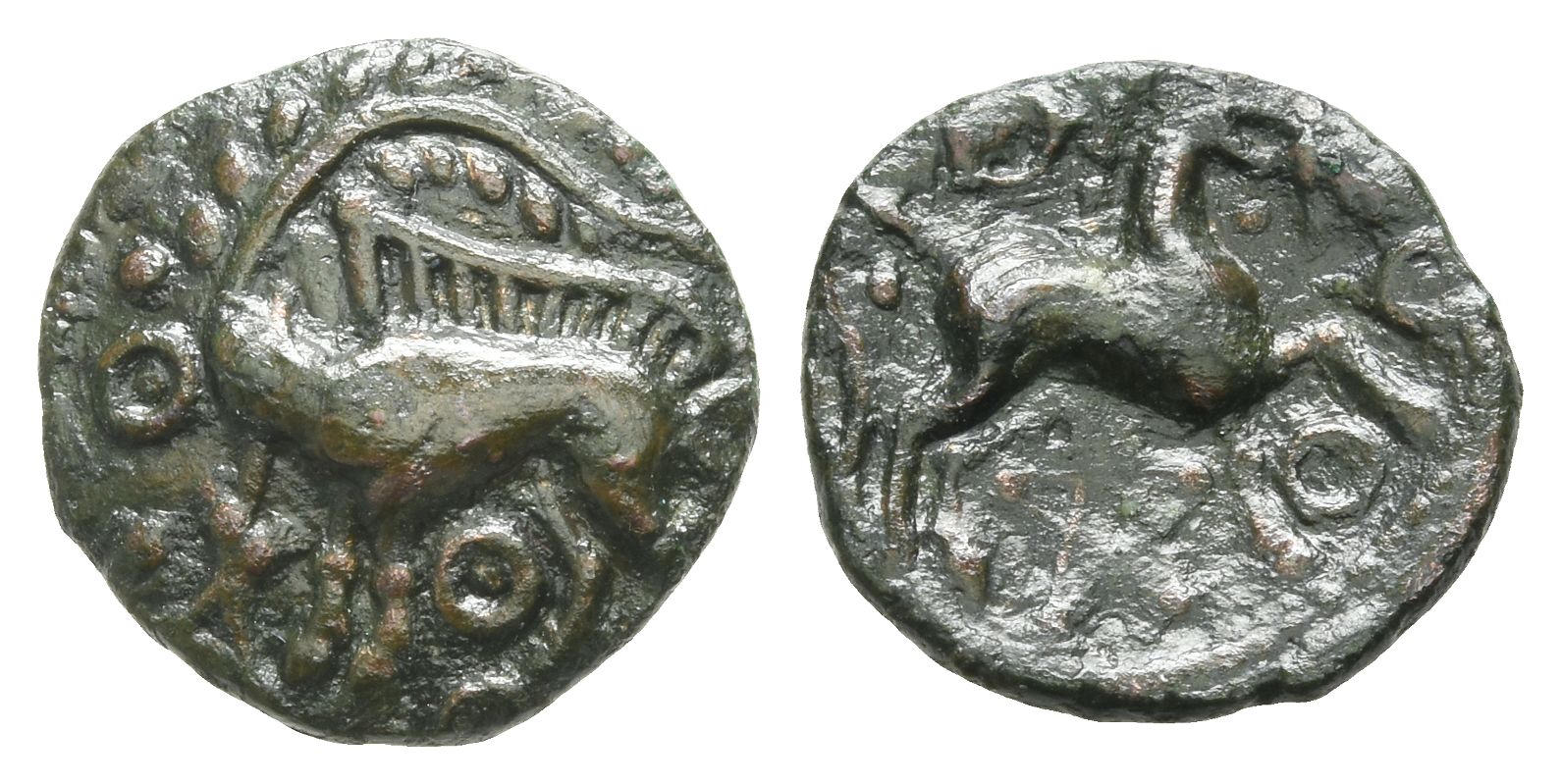
Celtic Britannia. Cantii AE Unit. Circa. 50-20 BC. North Thames. Boar and Pentagram type. KE 6.
Boar left, with prominent bristles and upturned snout, branch above, ring in front, ringed-pellet under / Horse stepping right, ring between and above front legs, pentagram under, pellet border. ABC 285; VA 167 var. (ring not ringed-pellet between and above horse's front legs); BMC 2490; S 176. Good Very Fine. Glossy brown patina, beautiful boar, well centred round flan. Very rare type. Extremely rare variant.(1.76gr, 14mm, 12h.).
ProvenanceFound Springhead, Kent, in 2002.
Ex Matthew Rich collection.
Ex Chris Rudd, 123, lot 9, ref. no.16321.
From the private collection of John Meredith, acquired since the 1990s; thence by descent.
Boars are associated with forests; so we may suppose the branch represents a forest of trees. On the other hand it could be a victory palm-branch. The pentagram can be seen on other Cantian coins (ABC 249, 282, 309 and 354) and on the North Thames Dragon Cross silver unit (ABC 2258).
TimeLine Auctions follows a vetting process to ensure the authenticity and legality of all items, reinforcing our commitment to integrity and responsible trading. Each antiquity, antique, and coin lot undergoes thorough examination by a vetting committee of at least ten external specialists, professional trade association members, scientists, and archaeologists: Our Vetting Process
AUCTIONS:
TimeLine is a leading auction house specialising in antiquities, ancient art, collectables, natural history, coins, medals, and books. Our auctions offer museums, collectors, historians, and enthusiasts the opportunity to acquire unique and historically significant pieces.
-
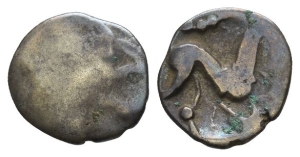
Celtic Britannia. Corieltauvi AR Unit. 1st century BC-1st century AD.
Sold for (Inc. bp): £39
Blank / Horse prancing to right; pellet-in-ring above. SCBC 397; BMC 3218-3227; ABC 1803. 1.22gr, 14mm.
Fine.
Acquired on the UK art market since the early 2000s. Property of a Lincolnshire gentleman, thence by descent. -
![Group of Three [3] Celtic AE and AR Coins.](https://timelineauctions.com/upload/images/items/small/239069-s.jpg)
Group of Three [3] Celtic AE and AR Coins. Circa 1st century BC-1st century AD.
Sold for (Inc. bp): £20
Various types. 7.34gr total.
Condition as seen.
Found Suffolk, UK. -
.jpg)
Celtic Britannia. Iceni AR Unit. Circa 35-25 BC. Kelling Boar type.
Sold for (Inc. bp): £169
Stylised boar to right, eye on the shoulder, [pellet-in-ring(?) above], pellet below / Horse prancing to right, [beaded mane, pellet-triad mouth, ringed pellet above(?)]. Cf. ABC 1585. 0.84gr, 12mm, 10h.
Near Very Fine. Iridescent toning. Of the highest rarity.
Found Little Wilbraham, Cambridgeshire, UK, on Friday 22nd November 2024. Accompanied by a copy of the British Museum's Portable Antiquities Scheme report no.SF-EE05EA.
