
LOT 2982
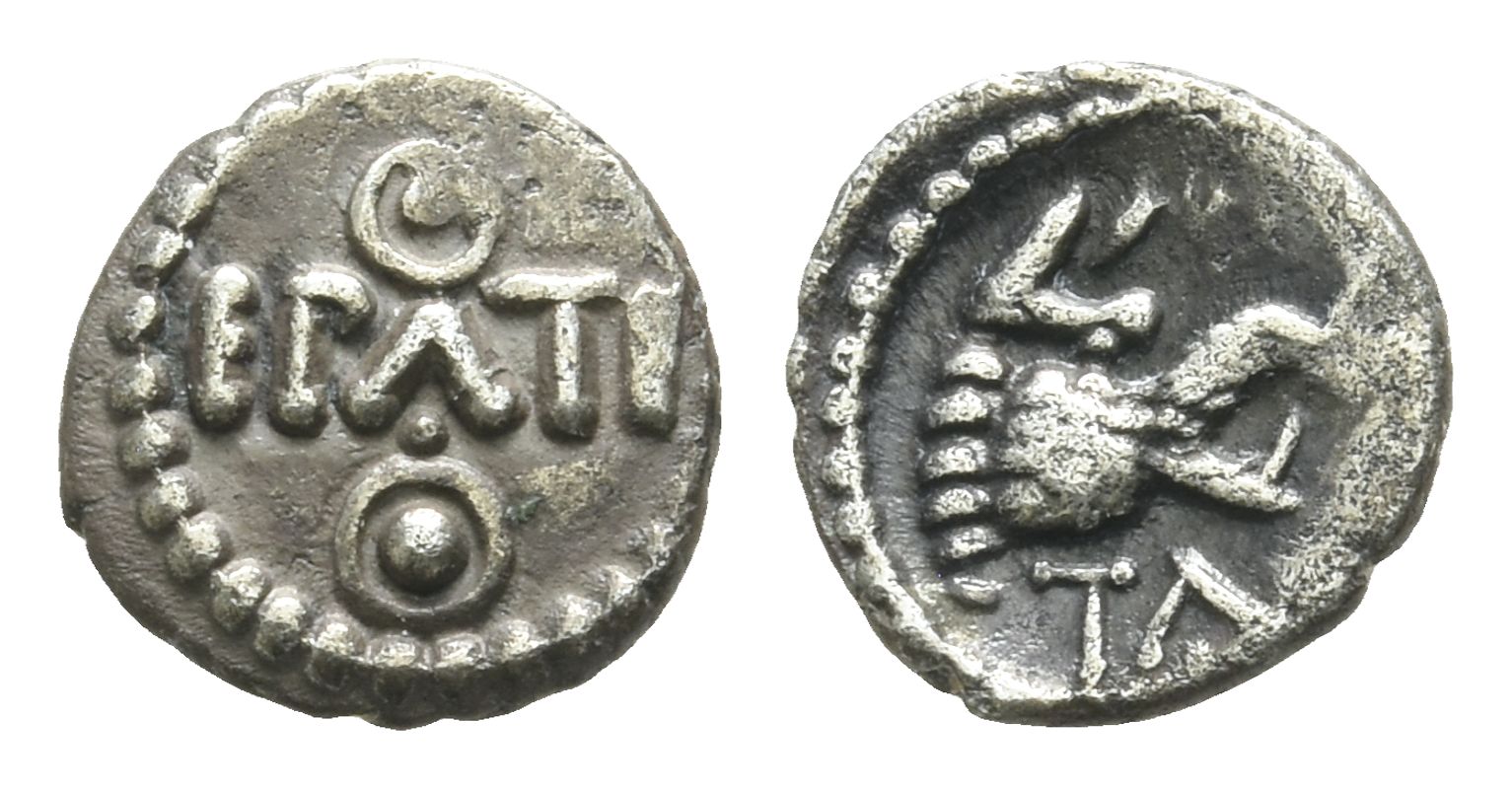
Celtic Britannia. Atrebates and Regni, Epaticcus AR Minim. Circa AD 35-43. Boar's Head type.
EPATI, pellet-in-ring motif above and below; all within pellet border / Boar's head to right; TA below; all within pellet border. ABC 1370; SCBC 360; Van Arsdell 585-1. Good Very Fine. Toned silver, complete inscription, great boar's head.(0.28gr, 8mm, 10h.).
ProvenanceEx Chris Rudd, 118, lot 20, ref. no.15487.
From the private collection of John Meredith, acquired since the 1990s; thence by descent.
The letters TA below the boar's head refer to Tasciovanos and indicate that Epaticcus comes from the court of Tasciovanos; indeed he may have been a son of Tasciovanos and younger brother of Cunobelinus.
TimeLine Auctions follows a vetting process to ensure the authenticity and legality of all items, reinforcing our commitment to integrity and responsible trading. Each antiquity, antique, and coin lot undergoes thorough examination by a vetting committee of at least ten external specialists, professional trade association members, scientists, and archaeologists: Our Vetting Process
AUCTIONS:
TimeLine is a leading auction house specialising in antiquities, ancient art, collectables, natural history, coins, medals, and books. Our auctions offer museums, collectors, historians, and enthusiasts the opportunity to acquire unique and historically significant pieces.
LOT 2982
Celtic Britannia. Atrebates and Regni, Epaticcus AR Minim.
Sold for (Inc. bp): £143
-
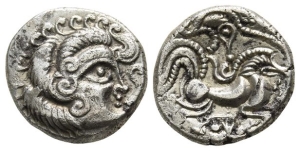
Celtic Northwest Gaul. Coriosolites BI Stater. Circa 100-50 BC.
Sold for (Inc. bp): £286
Stylized head to right, hair in large spiral curls, S-like ear; pearl strings flowing around / Stylized charioteer driving biga to right; below, boar to right; pearl string flowing above, ornaments around. Depeyrot, NC VIII, 178; DT 2334. 6.75gr, 21mm, 6h.
Good Very Fine. Bright silver, full head, well ornamented.
Ex Alan Harrison collection. Ex Chris Rudd, 127, lot 4, ref. no.15842. From the private collection of John Meredith, acquired since the 1990s; thence by descent. -
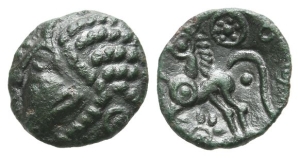
Celtic Britannia. Trinovantes and Catuvellauni, Addedomaros AE Unit. Circa 45-25 BC. 'Corded' type.
Sold for (Inc. bp): £156
Head to left with corded hair / Horse running to left, pellets and pellets in annulets around, flower below. VA 1615; SCBC 206. 1.41gr, 14mm, 11h.
Near Extremely Fine.
Ex Spink. From the private collection of John Meredith, acquired since the 1990s; thence by descent. -
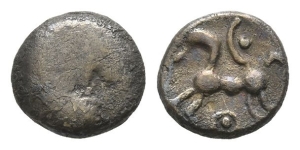
Celtic Central Europe. Boii AR Obol. Circa 2nd-1st century BC. Roseldorf Type II.
Sold for (Inc. bp): £85
Irregular raised surface / Horse to left; above, slightly curved line with thickened ends, pellet within volute-like loop below. Dembski, MÖNG 1991, 2; Lanz 94. 0.80gr, 9mm.
Very Fine.
Acquired on the UK art market since the early 2000s. Property of a Lincolnshire gentleman, thence by descent.
