
Loading, please wait...
LOT 1623
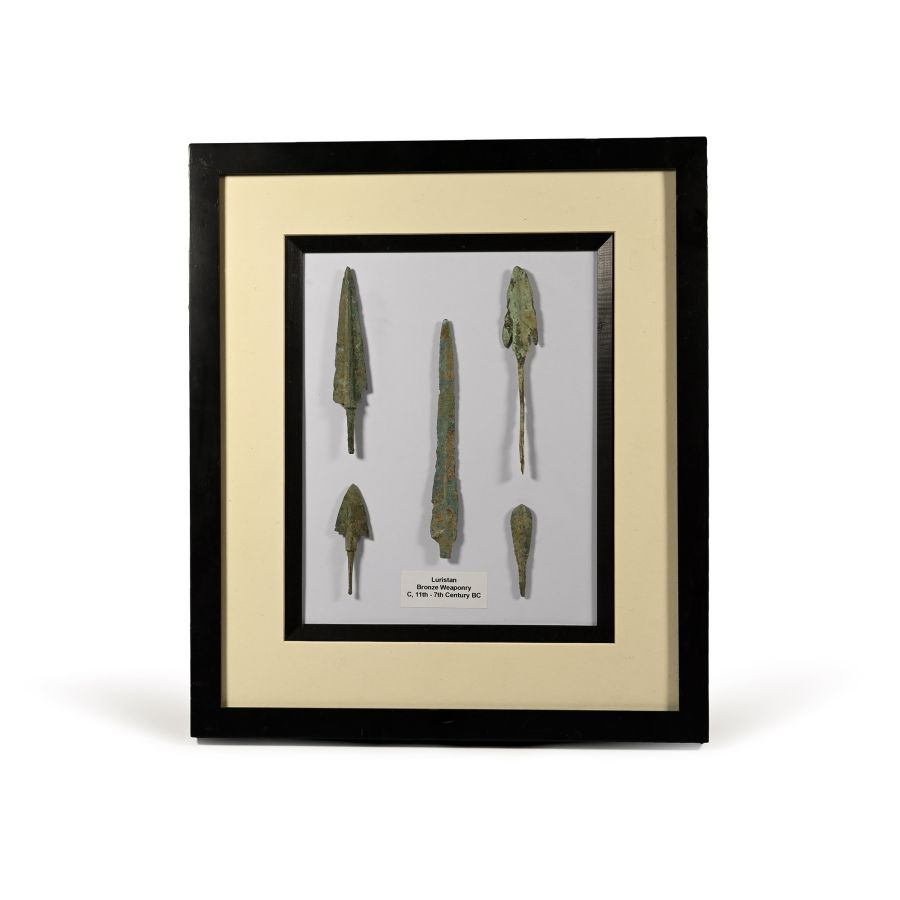
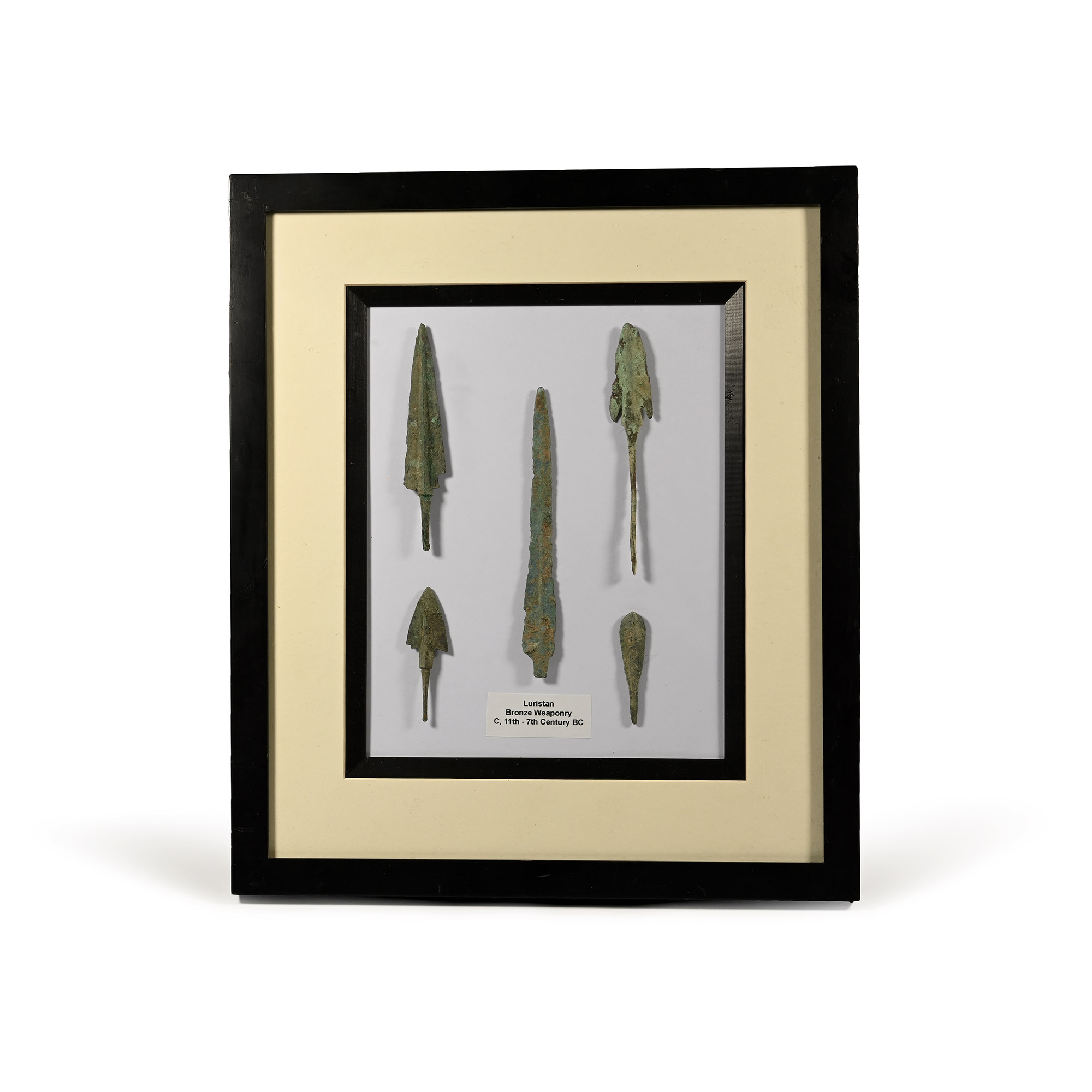
Cased Luristan Arrowhead Collection
CIRCA 11TH-7TH CENTURY B.C.
13 1/4 x 15 1/8 in. (1.1 kg, 33.5 x 38.5 cm).
Including leaf-shaped and barbed types in a glazed frame. [No Reserve]
ProvenanceEx G. While collection, South Wales, 1980s.
This lot is accompanied by an illustrated lot declaration signed by the Head of the Antiquities Department, Dr Raffaele D’Amato.
TimeLine Auctions follows a vetting process to ensure the authenticity and legality of all items, reinforcing our commitment to integrity and responsible trading. Each antiquity, antique, and coin lot undergoes thorough examination by a vetting committee of at least ten external specialists, professional trade association members, scientists, and archaeologists: Our Vetting Process
AUCTIONS:
TimeLine is a leading auction house specialising in antiquities, ancient art, collectables, natural history, coins, medals, and books. Our auctions offer museums, collectors, historians, and enthusiasts the opportunity to acquire unique and historically significant pieces.
-
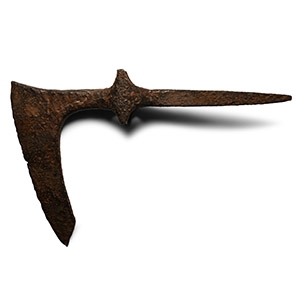
Byzantine Iron Bearded Axehead with Spike
9th-11th century A.D.Sold for (Inc. bp): £312
Double-edged battle axe with broad trapezoidal blade elongated towards the bottom, with rhomboidal and blunt fixing hole shaft, the opposite end formed by a long and thick spike. 411 grams, 22.7 cm
Ex USA private collection, 1970s-1990s. This lot is accompanied by an illustrated lot declaration signed by the Head of the Antiquities Department, Dr Raffaele D’Amato.
The double-edged axe was used by the Roman cavalry between the 9th and 11th centuries. The correspondence of this example with the types described by Emperor Leo VI the Wise, is surprising: it is clear that this typology was not a working tool but a war axe, suitable for breaking helmets, breastplates, shields and skulls since it inflicted devastating blows to the head and arms by damaging the protective equipment. -
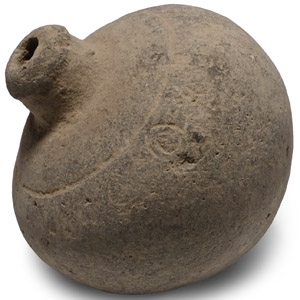
Byzantine 'Greek Fire' Ceramic Fire Bomb or Hand Grenade
9th-11th century A.D.Sold for (Inc. bp): £65
A piriform missile with domed filler-hole, intended to be filled with explosive liquid and wick, used as a hand grenade. 281 grams, 92 mm
From an important specialist collection, London, UK, 1990s onwards. Accompanied by an academic paper by military specialist Dr Raffaele D'Amato, dated 15 July 2019 and titled 'Eastern Roman Empire - Greek Fire Bomb or Hand Grenade (μεσαίον kακάβιον) 9th-11th century AD'. This lot is accompanied by an illustrated lot declaration signed by the Head of the Antiquities Department, Dr Raffaele D’Amato. -
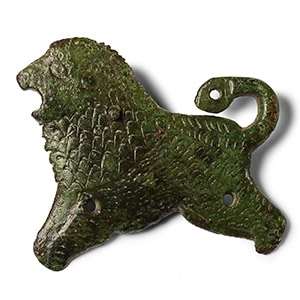
Late Roman Lion Horse Harness Mount
4th-6th century A.D.Sold for (Inc. bp): £130
The beast shown leaping with gaping jaws and raised tail, incised decoration to the body and mane; pierced for attachment with one rivet in situ. 8.14 grams, 34 mm
Ex German art market, 2000s. Acquired from an EU collector living in London. From the collection of Surrey, UK, gentleman. This lot is accompanied by an illustrated lot declaration signed by the Head of the Antiquities Department, Dr Raffaele D’Amato.
