
Loading, please wait...
LOT 1088
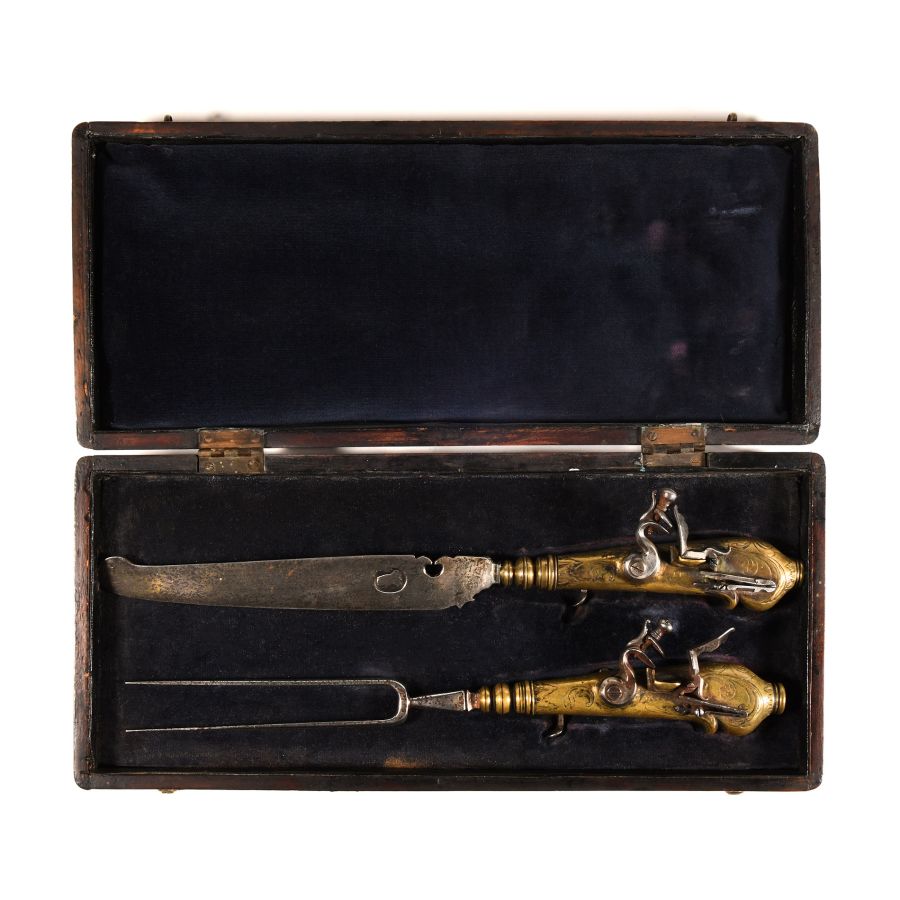
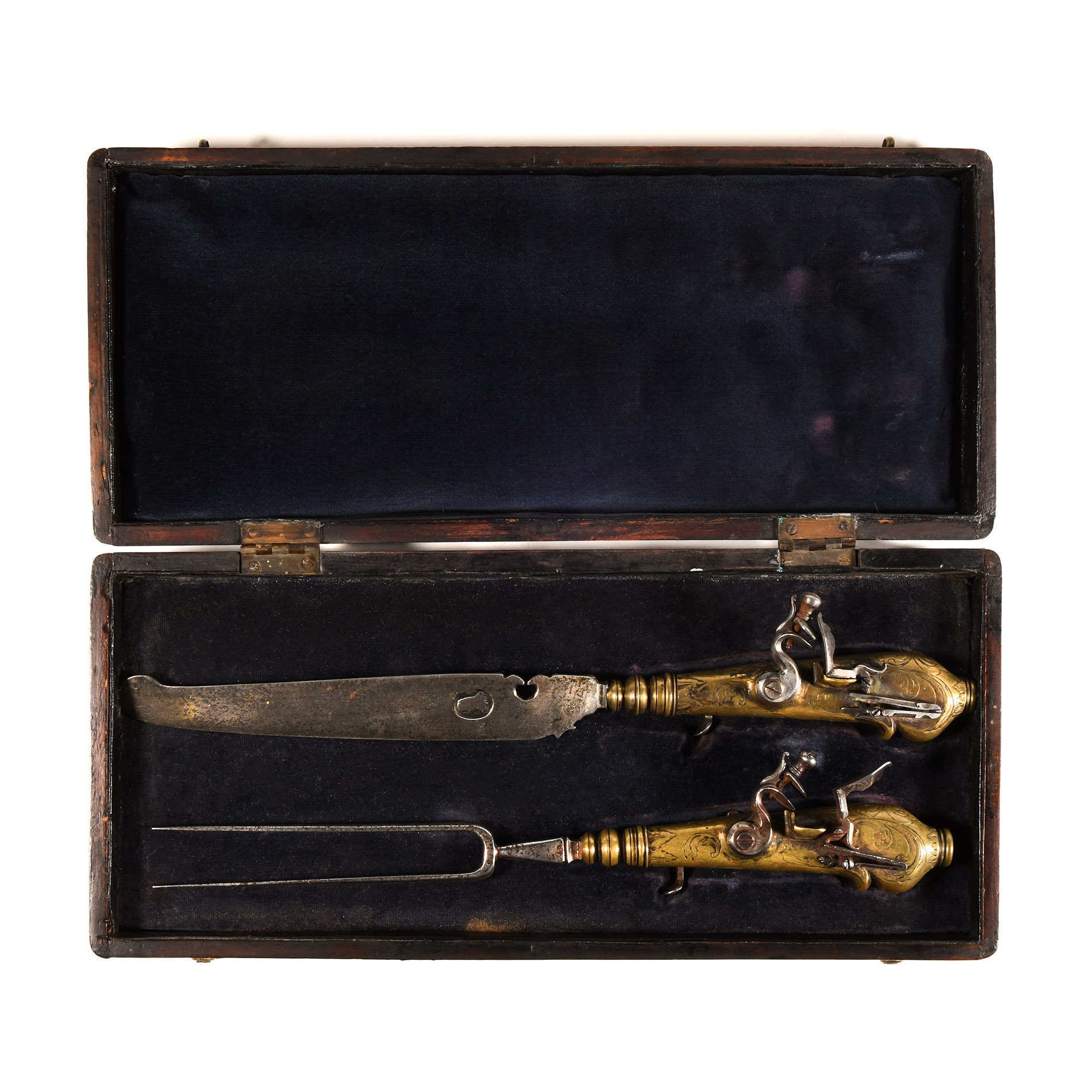
Cased Flintlock 'Knife and Fork' Gun Pair
19TH CENTURY A.D.
11 3/4 x 5 1/4 in. (1.31 kg total, case 30 x 13 cm).
A pair of smooth-bore flintlock pistols of about 5mm bore formed as a knife and fork (two tines) set; with steel blades (the knife with a profile bust maker's mark) with the pistols contained within the brass foliate engraved handles, firing to the rear; each fitted with finely made steel single action flintlock mechanism to sides; contained in the original velvet-lined mahogany case with hinged lid and brass catches; actions in working order.
ProvenanceAcquired Peter Wilson Auction, 2020, lot 13.
Property of a Kent collector.
Accompanied by lot ticket.
Sold as an exempt item under Section 58 (2) of the Firearms Act, 1968, to be held as a curiosity or ornament. No license required but buyer must be over 18 years of age.
CONDITIONTimeLine Auctions follows a vetting process to ensure the authenticity and legality of all items, reinforcing our commitment to integrity and responsible trading. Each antiquity, antique, and coin lot undergoes thorough examination by a vetting committee of at least ten external specialists, professional trade association members, scientists, and archaeologists: Our Vetting Process
AUCTIONS:
TimeLine is a leading auction house specialising in antiquities, ancient art, collectables, natural history, coins, medals, and books. Our auctions offer museums, collectors, historians, and enthusiasts the opportunity to acquire unique and historically significant pieces.
-
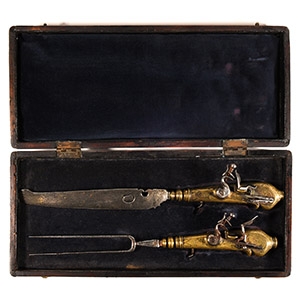
Cased Flintlock 'Knife and Fork' Gun Pair
19th century A.D.Sold for (Inc. bp): £4,160
A pair of smooth-bore flintlock pistols of about 5mm bore formed as a knife and fork (two tines) set; with steel blades (the knife with a profile bust maker's mark) with the pistols contained within the brass foliate engraved handles, firing to the rear; each fitted with finely made steel single action flintlock mechanism to sides; contained in the original velvet-lined mahogany case with hinged lid and brass catches; actions in working order. 1.31 kg total, case 30 x 13 cm
Acquired Peter Wilson Auction, 2020, lot 13. Property of a Kent collector. Accompanied by lot ticket.
Sold as an exempt item under Section 58 (2) of the Firearms Act, 1968, to be held as a curiosity or ornament. No license required but buyer must be over 18 years of age. -
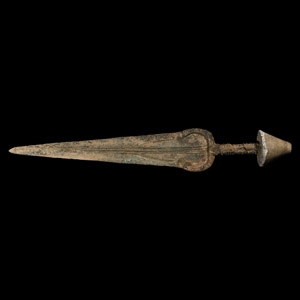
Luristan Sword Blade
Late 2nd millennium B.C.Sold for (Inc. bp): £936
A bronze sword with solid cast hilt with penannular guard and a horizontally ribbed grip; a conical stone mushroom pommel and a multi-fullered blade tapering to a sharp tip; handle repaired. 876 grams, 56 cm
Acquired 1980-2015. Ex Abelita family collection.
According to Moorey, such category of swords were distributed in the Northern Iran area, as proved by the Amarlu finds. Based on the example from the Ashmolean Museum, he dated them to the end of the 2nd millennium B.C., more precisely to a period between 1400-1200 B.C. -
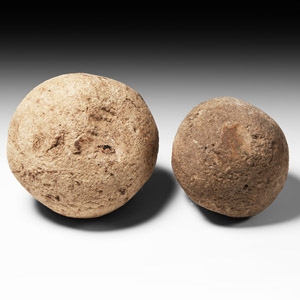
Roman Ballista Catapult Shot Group
1st-3rd century A.D.Sold for (Inc. bp): £156
A pair of differently sized ballistas made from limestone, suitable for use with a catapult type siege weapon. 650 grams total, 55-71 mm
Acquired before 2000. From the collection of a European gentleman living in the UK.
