
Loading, please wait...
LOT 2098
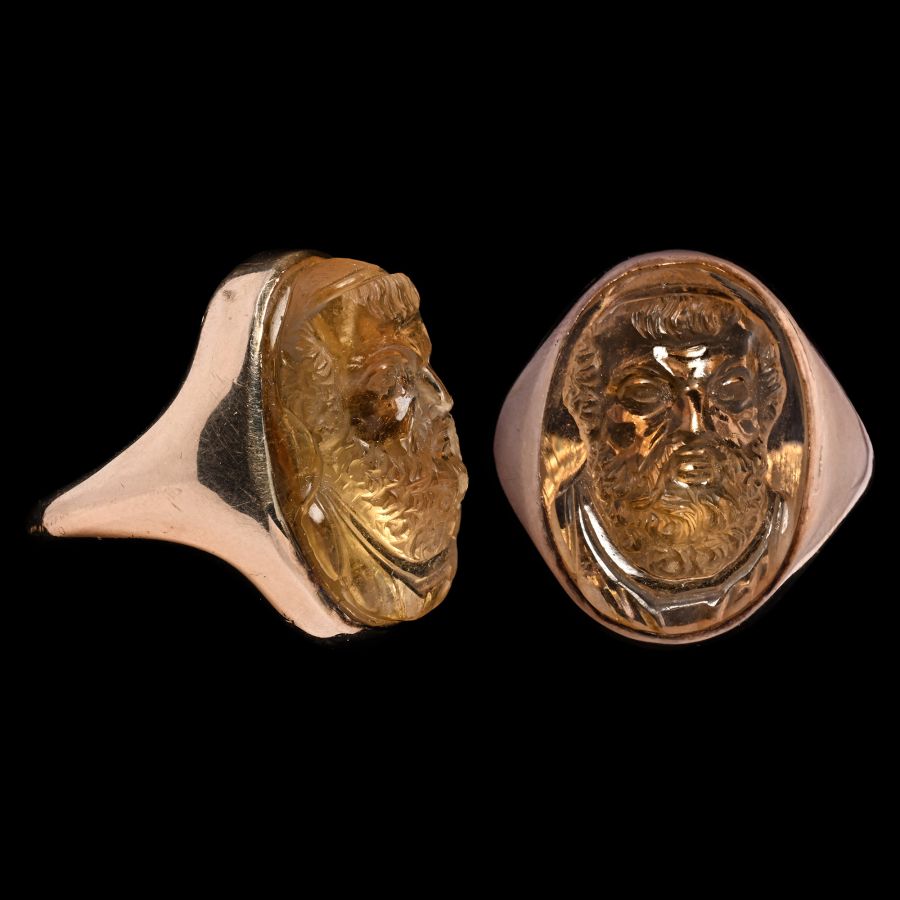
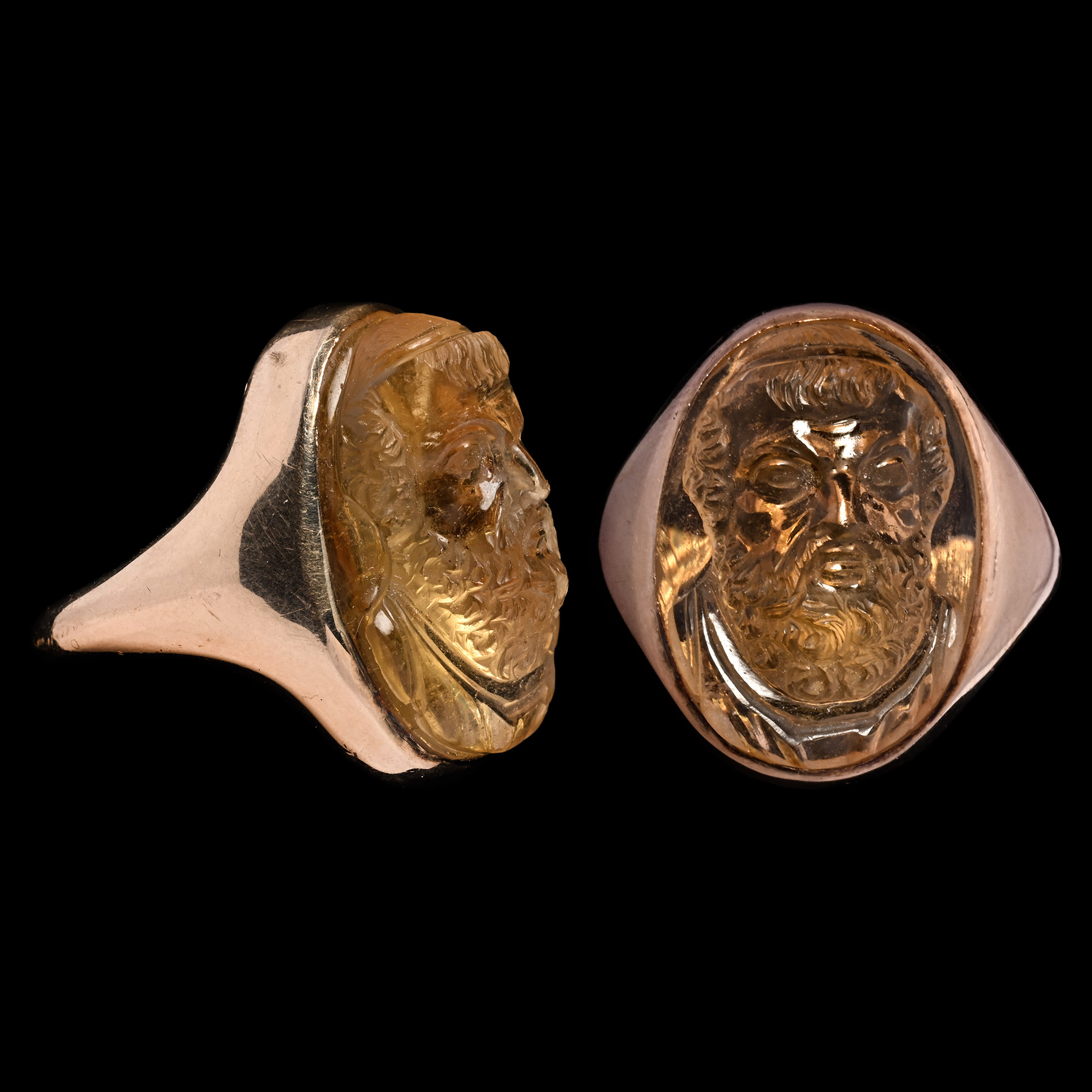
Carved Citrine Bust of Homer in Gold Ring
ITALY, 19TH CENTURY A.D.
1 1/8 in. (8.14 grams, 29.29 mm overall, 20.60 mm internal diameter (approximate size British Q, USA 8, Europe 17.49, Japan 16)).
Carved facing bust modelled in the half-round depicting Homer; bezel open to the reverse.
ProvenancePrivate collection, Europe.
Acquired on the English art market.
TimeLine Auctions follows a vetting process to ensure the authenticity and legality of all items, reinforcing our commitment to integrity and responsible trading. Each antiquity, antique, and coin lot undergoes thorough examination by a vetting committee of at least ten external specialists, professional trade association members, scientists, and archaeologists: Our Vetting Process
AUCTIONS:
TimeLine is a leading auction house specialising in antiquities, ancient art, collectables, natural history, coins, medals, and books. Our auctions offer museums, collectors, historians, and enthusiasts the opportunity to acquire unique and historically significant pieces.
-
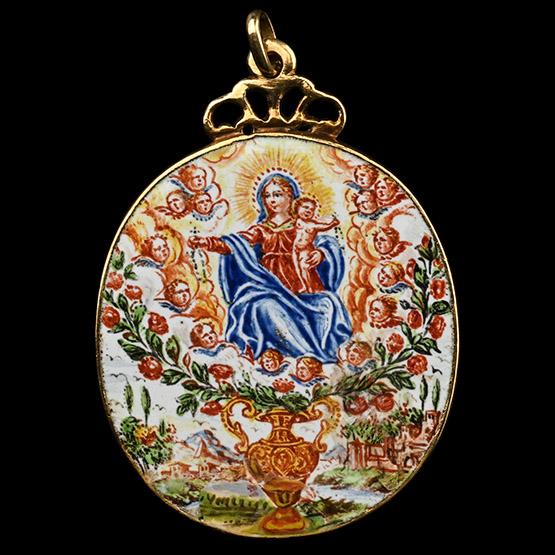
Enamelled Gold Pendant Depicting the Virgin and Child with Saints
Sicily, 17th-18th century A.D.Sold for (Inc. bp): £3,900
Decorated to obverse with a vase abundant with flowers in a mountainous landscape, with reserved roundels containing the images of Saints Anthony of Padua, John the Baptist and Saint Dominic de Guzmán; reverse with another vase in a landscape emitting a rose garland supporting an image of the Virgin and Child in Majesty, amidst clouds and angels. 24 grams, 61 mm
Private collection, Europe. Acquired on the French art market. This lot has been checked against the Interpol Database of stolen works of art and is accompanied by search certificate number no.13057-248398.
The pendant is decorated in the manner of Giuseppe Bruno who was an enameler from Messina, Sicily (active c.1652-82). -
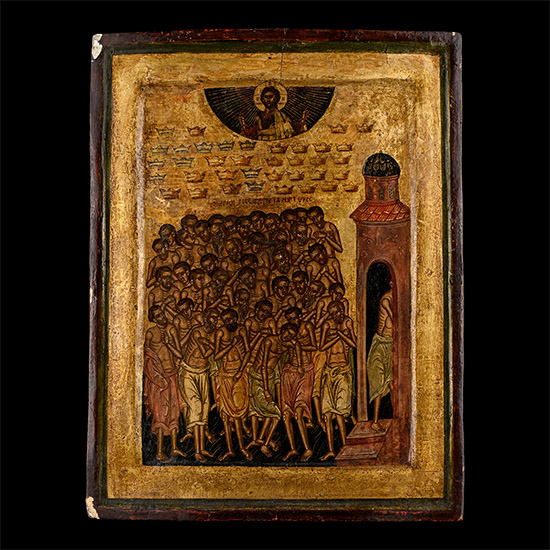
Veneto-Cretan Icon with Forty Martyrs of Sebaste
17th century A.D.Estimate: £6,000 - 8,000 (+bp*)
Opening Bid: £3,000
Depicting the martyrs freezing to death in a lake in Cappadocia, clad only in their undergarments (esophoria); Jesus above, dressed in gold and red, offering the crowns of martyrdom as a sign of reward; a tower to the side of the martyrs; Greek inscriptions: inside the gold nimbus 'O ѾN' (= The Only One who always exists), the inscription above the martyrs reading: 'Οι Άγιοι Τεσσαράκοντα Μάρτυρες = The Saint Holy 40 Martyrs'. 810 grams, 30 x 22.5 cm
Acquired on the European art market. Private collection, London, UK. Accompanied by an academic report by Dr Raffaele D’Amato. This lot has been checked against the Interpol Database of stolen works of art and is accompanied by search certificate number no.13063-249294.
The icon depicts the martyrdom of the 40 soldiers of the Legio XII Fulminata, who died in a frozen lake in Cappadocia in 320 AD. The drama experienced by these courageous men, nourished by their faith in Christ, is evocatively expressed. Their frozen bodies are painted in ochre and olive green, reflecting the stages of their agony. Christ is offering them crowns of glory from heaven as a sign of reward. The cult of the 40 Martyrs spread rapidly, first in Constantinople, where several churches were dedicated to them, then in the Balkans and Russia. -
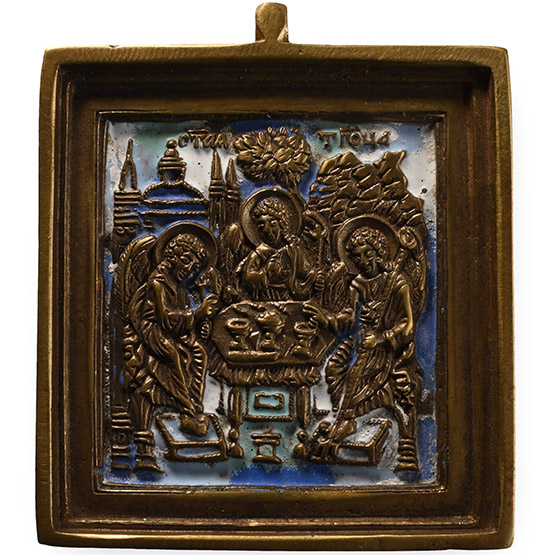
Russian Orthodox Enamelled Bronze Travel Icon with the Old Testament Trinity
19th century A.D.Sold for (Inc. bp): £117
Depicting the Holy Trinity, represented by three winged figures, each with a three-prong staff, sitting on stools around a table with three cups, trees and the outline of a cathedral behind. 67.5 grams, 62 mm
Acquired from Chris Martin-Zakheim, Iconastas, 5 Piccadilly Arcade, London SW1. From the private collection of a West London, UK, gentleman, formed since the early 2000s.
The subject is based on the traditional Russian interpretation of Genesis,18, in which three figures appear to Abraham at the oak tree of Mamre. The central figure is usually identified as Jesus Christ, while God the Father is on the right and the Holy Spirit on the left. The subject of the icon originated from a very famous 15th century painting by Andrei Rublev.
