
Loading, please wait...


LOT 0334
Carnelian Gemstone of the Prince of Troy in Gold Ring
ITALY, 19TH CENTURY A.D.
7/8 in. (5.04 grams, 21.88 mm overall, 18.74 mm internal diameter (approximate size British M, USA 6, Europe 12.46, Japan 12)).
An oval orange carnelian intaglio with a profile bust of Paris wearing a Phrygian cap, his long locks cascading from underneath it, a Greek pseudo-signature for Maronos on the field; set in a later swivel-ring; supplied with a museum-quality impression.
ProvenanceAcquired on the European art market.
This lot has been checked against the Interpol Database of stolen works of art and is accompanied by search certificate number no.13337-257952.
See for an impression of a similar intaglio bearing the same signature, see Gray, J. M., James and William Tassie: A Biographical and Critical Sketch, with a Catalog of Their Portraits, Edinburgh, 1894, no. 3070.
FootnotesIn Classical as in Neo-Classical art, Paris is often depicted wearing the Phrygian cap, and typically portrayed in Persian-style attire, featuring long sleeves and trousers, and a cloak.
CONDITIONTimeLine Auctions follows a vetting process to ensure the authenticity and legality of all items, reinforcing our commitment to integrity and responsible trading. Each antiquity, antique, and coin lot undergoes thorough examination by a vetting committee of at least ten external specialists, professional trade association members, scientists, and archaeologists: Our Vetting Process
AUCTIONS:
TimeLine is a leading auction house specialising in antiquities, ancient art, collectables, natural history, coins, medals, and books. Our auctions offer museums, collectors, historians, and enthusiasts the opportunity to acquire unique and historically significant pieces.
LOT 0334
Carnelian Gemstone of the Prince of Troy in Gold Ring
Estimate £3,500 - 4,500€4,060 - 5,220 (for guidance only)$4,730 - 6,080 (for guidance only)
-
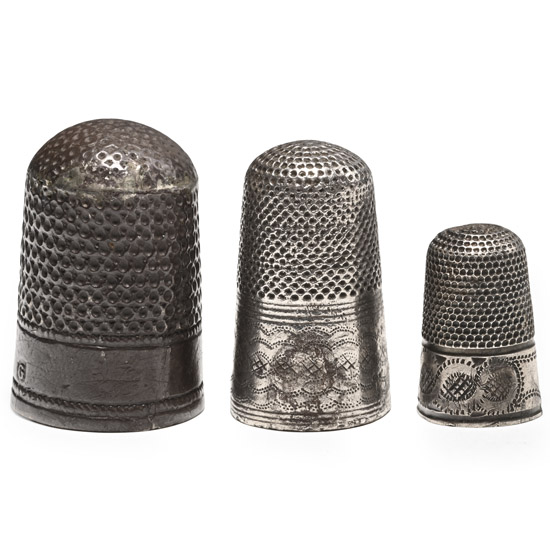
Post Medieval Silver Thimble Group
Circa 18th-19th century A.D.Sold for (Inc. bp): £78
Comprising three thimbles: the largest with a plain band stamped with 'G' and engraved with initials '*D*I*'; the second largest with a decorative band on the lower edge with a plain shield; the smallest with a decorative band to the lower edge resembling pinecones, and a plain shield. 11.15 grams total, 16-26 mm
Acquired on the UK art market. Property of a Lancashire, UK, collector. -
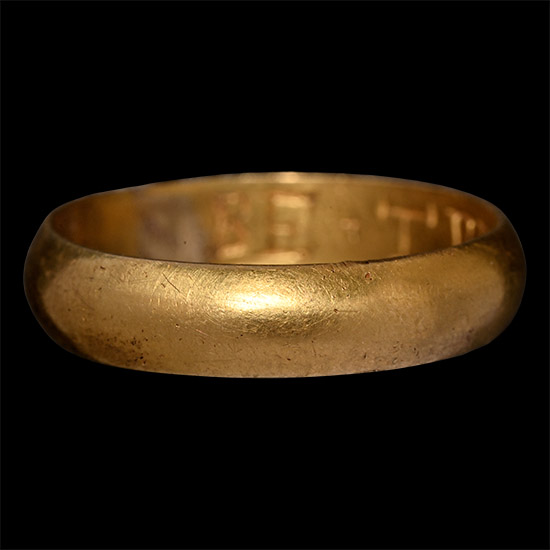
Tudor Gold 'BE . TRVE . IN . HART' Posy Ring
Circa 16th century A.D.Sold for (Inc. bp): £2,470
Featuring a smooth exterior and D-shaped in cross-section, a flat internal face with an inscription in upper case Roman letters, reading 'BE . TRVE . IN . HART' for 'Be true in heart' with the stops formed as small crosses and the N reversed. 4.25 grams, 20.66 mm overall, 18.06 mm internal diameter (approximate size British P, USA 7 1/2, Europe 16.23, Japan 15)
Found whilst searching with a metal detector near Edgmond, Telford & Wrekin, UK, by George Elymn, on 27 October 2024. Recorded with the British Museum's Portable Antiquities Scheme (PAS) with reference no.HESH-B237EA; handed in as Treasure under the Treasure Act, and subsequently disclaimed and returned to the finder. Accompanied by a copy of the Report for H M Coroner on finding of Potential Treasure, with reference no.2025T1645. Accompanied by a copy of a letter from the British Museum explaining that the Crown's interest in this find has been disclaimed.
The 'posy' name is derived from the 'poesy' (motto) engraved around the hoop. In medieval examples, the posy is usually found around the hoop exterior, although on later examples, inscriptions were more usually engraved on the interior. Rings with amatory inscriptions can be found from the 14th century AD onwards, when they served as love gifts, betrothal and wedding rings. Posy rings were also given to friends or used to mark significant occasions. Posies were composed by the giver, kept in stock by goldsmiths, or could be selected from published compendiums or commonplace books such as 'The Mysteries of Love or the Arts of Wooing' (1658 AD), or 'Love's Garland or Posies for Rings, Hand-kerchers and Gloves and such pretty tokens that Lovers send their Loves' (1674 AD). Rings were one genre of personal item amongst many to be adorned with posies at this time. -

Western Asiatic Style Millefiori Glass Bead Necklace
20th century A.D.Sold for (Inc. bp): £72
Composed of spherical mosaic glass beads interspersed with small light blue beads, two pairs of biconical blue beads at the ends; restrung with loop-and-bead closure; likely Indonesian. 139 grams, 59 cm
From the family collection of a Hampstead gentleman; formerly acquired in the 1980s.
