
LOT 2636
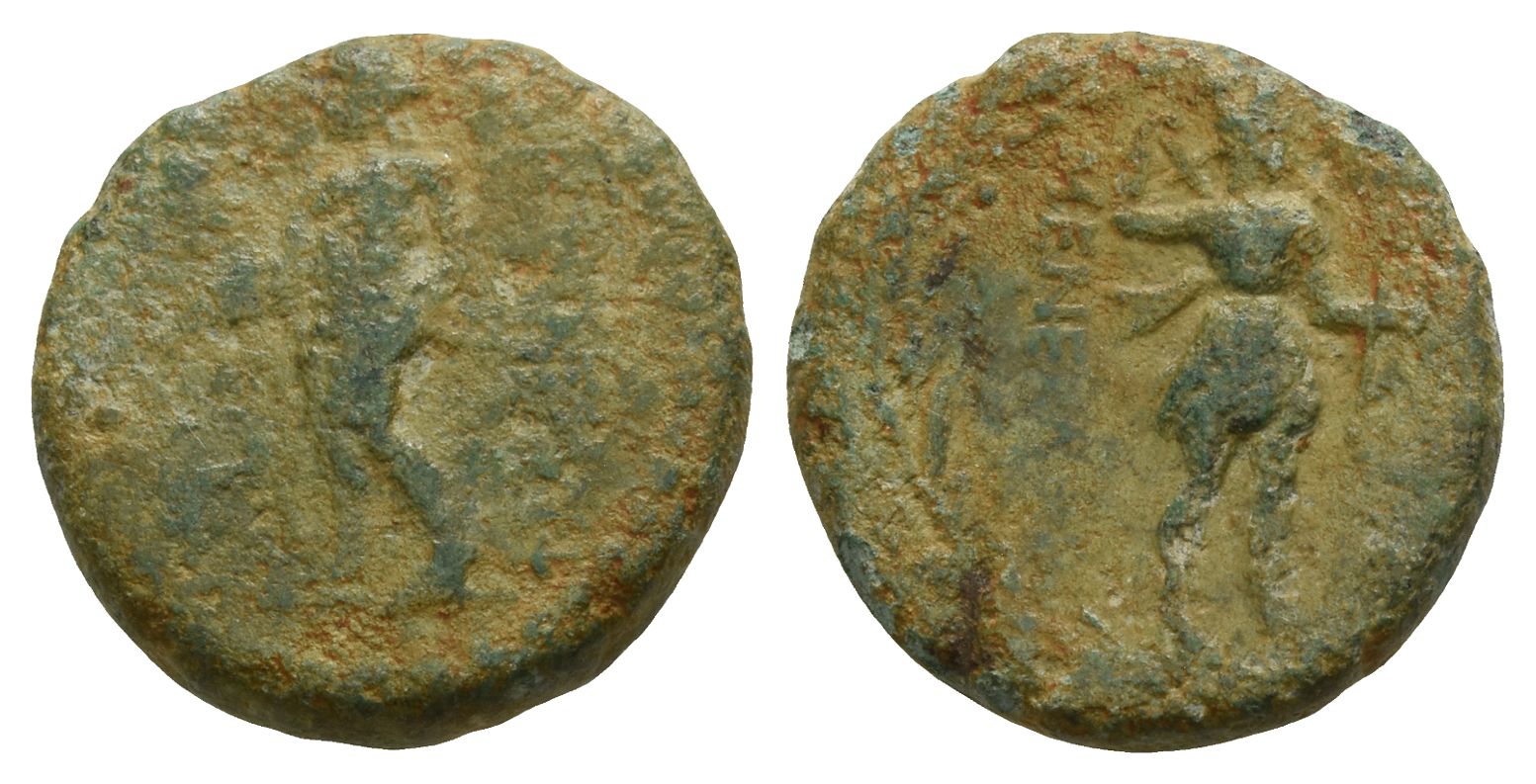
Caria, Iasos AE 17mm. Circa 250-190 BC.
ΜΕΝΕΚΛΗΣ (Menekles), magistrate. Group C. Apollo Delphinios standing to left, holding bow and arrow, dolphin at feet; illegible inscription to right / MENE[ΚΛΗΣ], Artemis advancing to right, drawing arrow from quiver, to right [IA]; all within laurel wreath. Cf. Ashton, The Pre-Imperial Coinage of Iasos p.72, 2-3, pl.14, 216-7. Near Very Fine. Very rare.(3.45gr, 17mm, 12h.).
ProvenanceEx 'V' gentleman's collection, Switzerland.
From the property of a North London, UK, gentleman.
TimeLine Auctions follows a vetting process to ensure the authenticity and legality of all items, reinforcing our commitment to integrity and responsible trading. Each antiquity, antique, and coin lot undergoes thorough examination by a vetting committee of at least ten external specialists, professional trade association members, scientists, and archaeologists: Our Vetting Process
AUCTIONS:
TimeLine is a leading auction house specialising in antiquities, ancient art, collectables, natural history, coins, medals, and books. Our auctions offer museums, collectors, historians, and enthusiasts the opportunity to acquire unique and historically significant pieces.
-
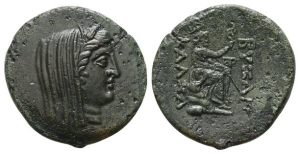
Thrace, Byzantion in alliance with Kalchedon AE 26mm. 300-200 BC.
Sold for (Inc. bp): £33
Veiled head of Demeter to right / ΒΥZΑN ΚΑΛΧΑ, Poseidon seated to right, holding aphlaston with right hand and transverse trident with left; ΠΑΡ monogram in inner right field. Schönert-Geiss 1271-5; HGC 3.2, 1428. 9.05gr, 26mm, 12h.
Good Very Fine.
Acquired on the UK art market before 2000. Property of an Essex, UK, gentleman. -

Paphlagonia, Sinope AE 20mm. Time of Mithradates VI Eupator, circa 120-111 or 110-100 BC.
Sold for (Inc. bp): £20
Head of Artemis to right wearing stephane; bow and quiver over shoulder / ΣINΩ-ΠHΣ, tripod-lebes. SNG BM Black Sea 1524; HGC 7, 417. 8.14gr, 20mm, 12h.
Good Very Fine.
Property of a North London, UK, gentleman. -
![Group of Eight [8] AR Sigloi of Achaemenid Empire.](https://timelineauctions.com/upload/images/items/small/223546-s.jpg)
Group of Eight [8] AR Sigloi of Achaemenid Empire. 5th-4th century BC.
Sold for (Inc. bp): £325
Various types. 44.96gr total.
Fine to Very Fine.
Ex 'V' gentleman's collection, Switzerland. From the property of a North London, UK, gentleman.
