
Loading, please wait...
_900x900.jpg "Caravaca de la Cruz Bronze Cross Pendant")
_200x200.jpg "Caravaca de la Cruz Bronze Cross Pendant")
.jpg "Caravaca de la Cruz Bronze Cross Pendant")
LOT 2011
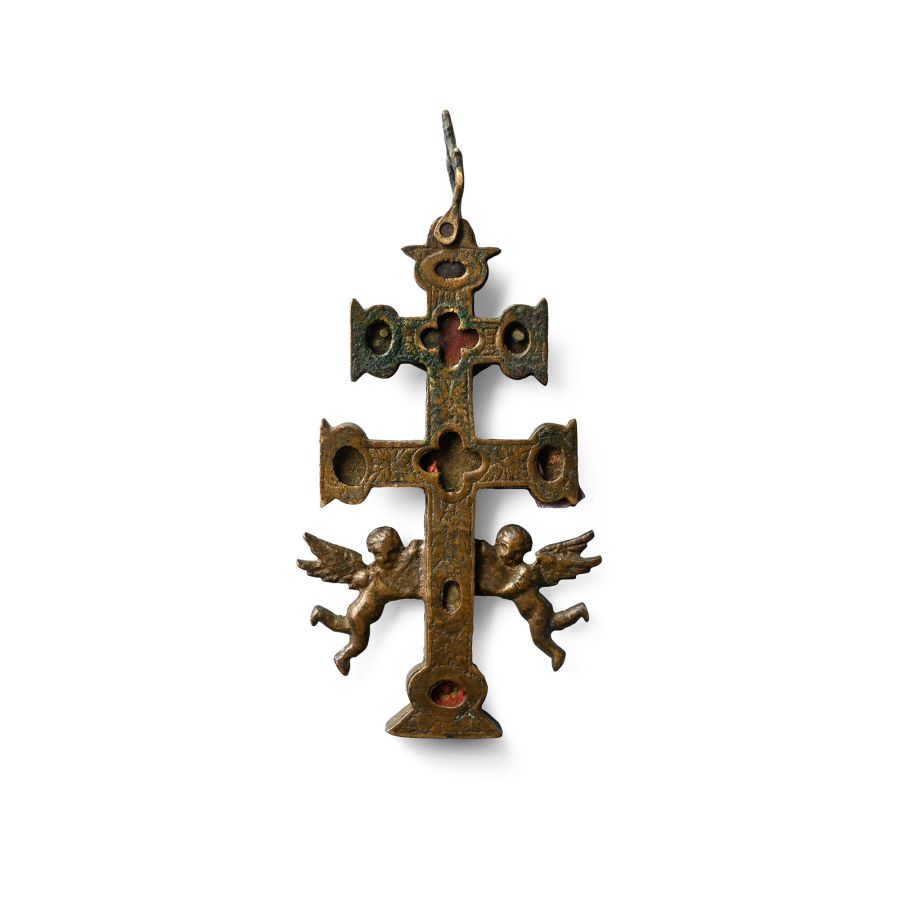
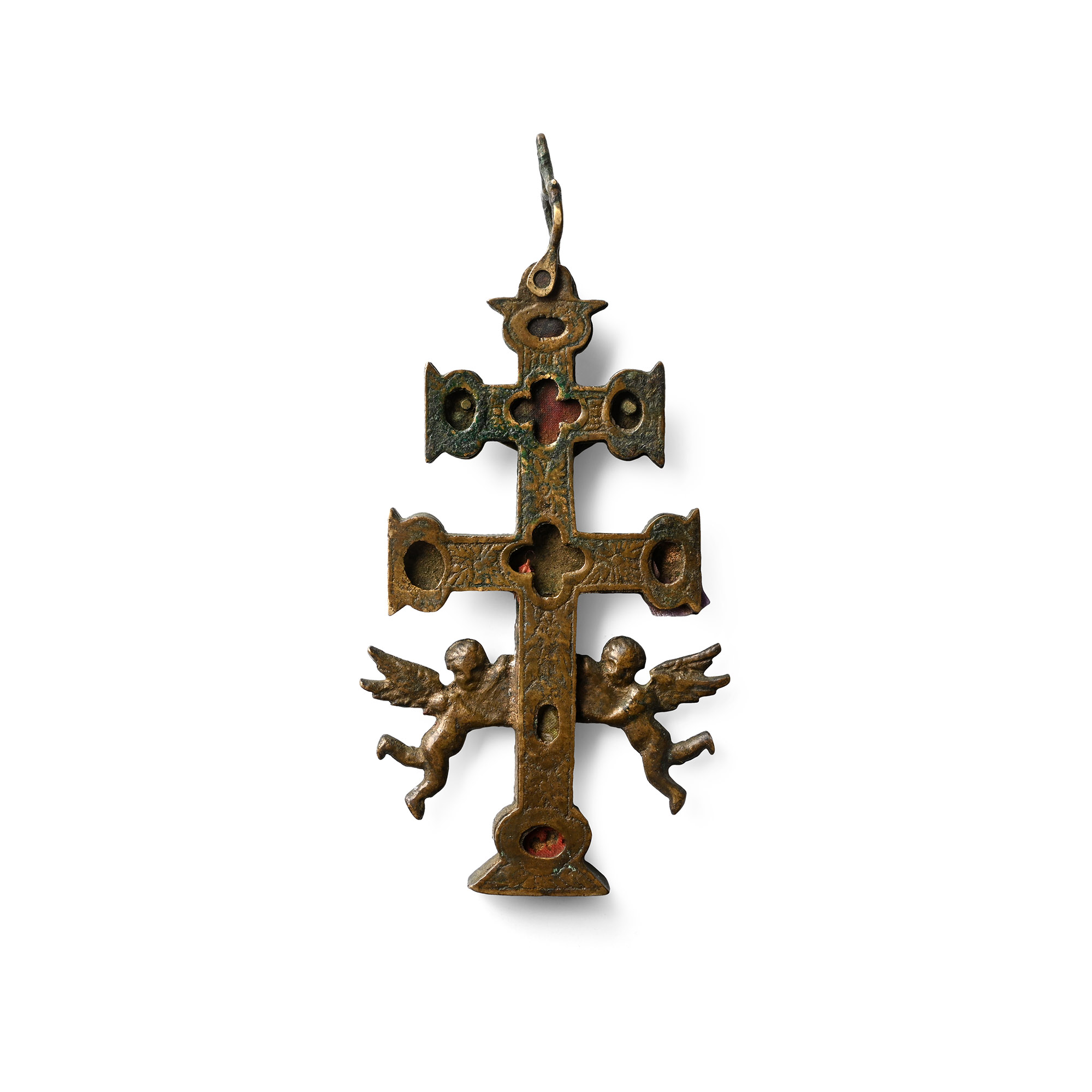
Caravaca de la Cruz Bronze Cross Pendant
17TH-18TH CENTURY A.D.
5 3/8 in. (101 grams, 13.7 cm).
Bifacial double cross with two angels at the base carrying the cross, applied figures of Corpus Christi and Virgin Mary to one side with an inscription 'CAR VACA'; separately made reverse panel with openwork panels and foliate decoration; made as a reliquary.
ProvenanceAcquired on the UK art market, early 2000s.
PublishedExhibited at the Harwich Museum, Harwich, Essex, UK, 26th May-15th September 2025; accompanied by a copy of a photograph of the artefacts on display.
FootnotesThe Caravaca Cross, also known as the Cross of Caravaca, originated in the Spanish town of Caravaca de la Cruz and according to tradition, first appeared in the 13th century during the Christian reconquest of Spain. According to a legend, during the rule of the Muslim king Abu Zeid in 1231, a miraculous event occurred. A Christian priest lacking a cross celebrated Mass and was not able to continue as the cross is an essential element for the Eucharist. Miraculously, two angels bearing the Caravaca Cross appeared thus enabling the Mass to proceed. This event is considered the foundational miracle of the Caravaca Cross.
CONDITIONTimeLine Auctions follows a vetting process to ensure the authenticity and legality of all items, reinforcing our commitment to integrity and responsible trading. Each antiquity, antique, and coin lot undergoes thorough examination by a vetting committee of at least ten external specialists, professional trade association members, scientists, and archaeologists: Our Vetting Process
AUCTIONS:
TimeLine is a leading auction house specialising in antiquities, ancient art, collectables, natural history, coins, medals, and books. Our auctions offer museums, collectors, historians, and enthusiasts the opportunity to acquire unique and historically significant pieces.
-
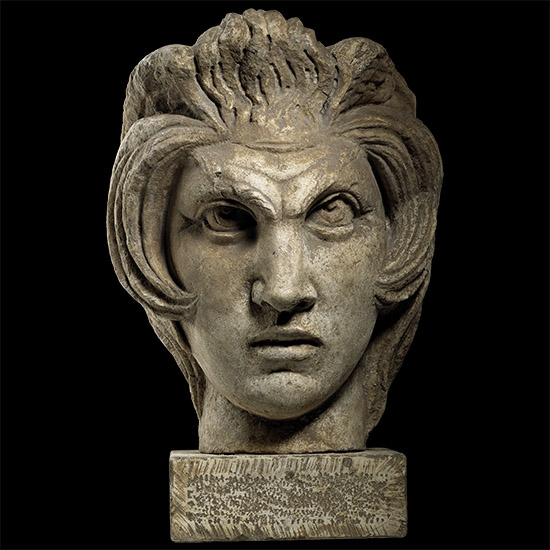
Post Medieval Marble Portrait of a Man
17th-18th century A.D.Estimate: £5,000 - 7,000 (+bp*)
Opening Bid: £2,500
Modelled in the round with a frowning expression, a triangular face with angular features and thick banded hair; recessed to the top of the head. 35.1 kg, 41 cm high including stand
Private collection, England. This lot has been checked against the Interpol Database of stolen works of art and is accompanied by search certificate number no.13082-249677.
From the late 17th century until around the 1760s, classical nostalgia and the viewing and recording of classical remains became major occupations for aristocratic young men who went on the ‘Grand Tour’. In Rome, for example, some British visitors counted and measured the huge number of ancient columns and obelisks still visible in the city. The wealthiest brought back antiquities, including stones with Latin inscriptions, and redesigned their gardens to display them. More significantly, such travels also encouraged those who went to redefine their own origins and native identities within a wider European context. The taste for the reproductions of ancient monuments involved also the sculptures of Middle Age. -
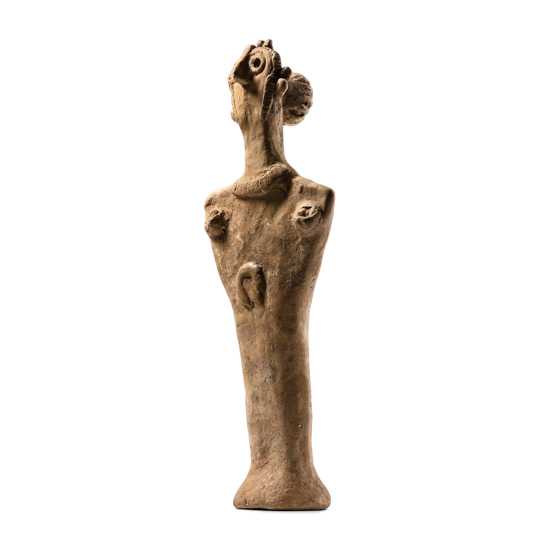
Large Syro-Hittite Style Terracotta Standing Figure
20th century A.D. or earlierSold for (Inc. bp): £7
Modelled in the round, standing, facing, each with pronounced facial features and hairdo. 181 grams, 20 cm
From the private collection of John Meredith, acquired since the 1990s; thence by descent. -
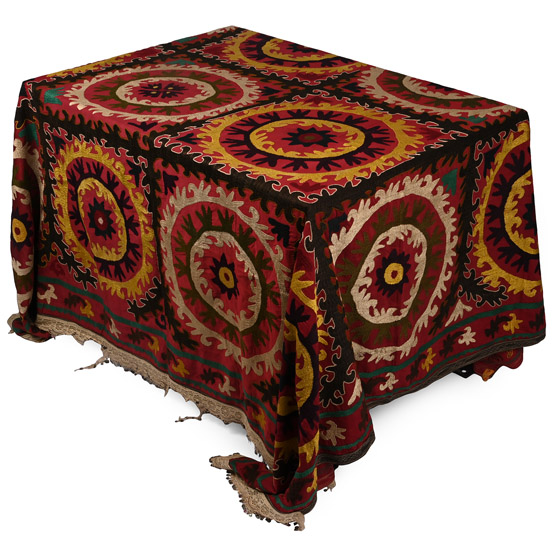
Very Large Uzbek Bed or Table Cover
20th century A.D.Sold for (Inc. bp): £1,690
Rectangular fabric panel with embroidered floral and geometric motifs, applied borders. 1.75 kg, 190 x 224 cm
Private collection, UK.
