
LOT 3463
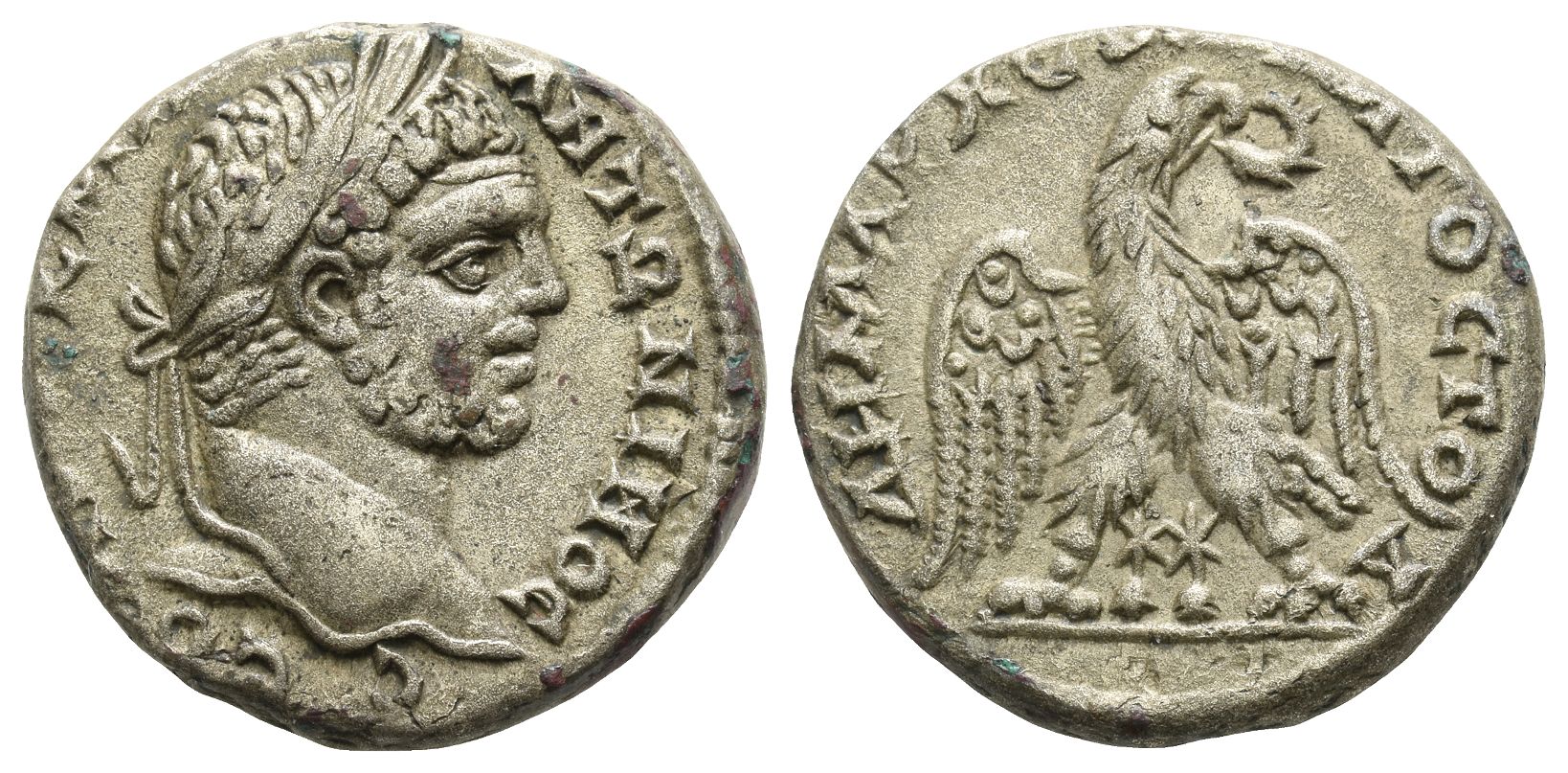
Caracalla BI Tetradrachm of Ake-Ptolemais, Phoenicia. Struck AD 215-217.
ΑΥ[T] Κ M Α ΑΝΤΩΝΙΝΟC CЄΒ, laureate head to right / ΔΗΜΑΡΧ ЄΞ ΥΠΑΤΟC ΤO Δ, eagle with spread wings standing facing, head to right, holding wreath in beak; between legs, two pilei surmounted by stars. Prieur 1227. Good Very Fine. Toned.(12.28gr, 25mm, 12h.).
ProvenanceFrom the collection of a gentleman, acquired on the London art market in the 1990s.
TimeLine Auctions follows a vetting process to ensure the authenticity and legality of all items, reinforcing our commitment to integrity and responsible trading. Each antiquity, antique, and coin lot undergoes thorough examination by a vetting committee of at least ten external specialists, professional trade association members, scientists, and archaeologists: Our Vetting Process
AUCTIONS:
TimeLine is a leading auction house specialising in antiquities, ancient art, collectables, natural history, coins, medals, and books. Our auctions offer museums, collectors, historians, and enthusiasts the opportunity to acquire unique and historically significant pieces.
-
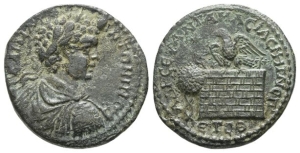
Caracalla AE 30mm of Amaseia, Pontos. Dated CY 209 (AD 206/7).
Sold for (Inc. bp): £156
ΑΥ ΚΑΙ Μ ΑΥP ΑΝΤΩΝΙΝΟϹ, laureate, draped and cuirassed bust to right, seen from rear / ΑΔΡ ϹЄΥ ΑΝΤ ΑΜΑϹΙΑϹ ΜΗT NЄ ΠP (MH and ΠP ligate), high altar surmounted by eagle with spread wings standing to left; to left, tree; star in upper left field; ЄΤ ϹΘ (date) below. RPC V.3 Unassigned ID 83890; Dalaison, Amaseia 522. 15.09gr, 30mm, 6h.
Near Extremely Fine. Sharp details.
Acquired on the European coin market. Property of a Kent, UK, gentleman. -
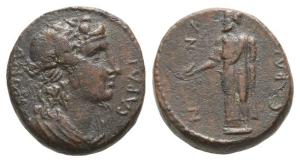
Lydia, Sardes AE 17mm. Time of Vespasian, AD 69-79. Pseudo-autonomous issue.
Sold for (Inc. bp): £26
CAPΔI-ANΩN, draped bust of Dionysos to right, wearing ivy wreath / CAPΔI-ANΩN, Zeus Lydios standing to left, holding eagle and sceptre. GRPC Lydia 271; Leypold I, 1200. 5.43gr, 17mm, 7h.
Very Fine. Very rare.
Ex Münzzentrum Rheinland. Property of a Kent, UK, gentleman. -
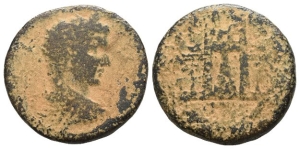
Caracalla AE 31mm of the Koinon of Cyprus. AD 198-217.
Sold for (Inc. bp): £7
Radiate, laureate, draped and cuirassed bust to right / Temple of Paphian Aphrodite within which cone, crescent and star on top of temple, roofed wing on each side within which candelabrum stands, dove on roof of each wing, paved semicircular court before temple. Cf. RPC V.3, Unassigned ID 69942; cf. Lindgren & Kovacs 1664. 21.99gr, 31mm, 6h.
Good Fine.
Acquired on the UK market. Property of a London antiquarian.
Palea Paphos was one of the most important pilgrimage centres in the Greek world due to its famous Sanctuary of Aphrodite; the goddess herself was born of the sea near Paphos, and floated in on a scallop shell. When she arose, she was hailed as 'Cyprian'. The Sanctuary of Aphrodite continued to flourish well into the Roman era. Several Roman emperors honoured the shrine, and it was visited by Titus in AD 69 when the future emperor was on his way to Egypt; he consulted the oracle of Aphrodite, and was told that he had a great future. The sanctuary was rebuilt by the Romans after the earthquake of AD 76/77, in a design that preserved the layout of the original. The cult of Aphrodite survived at Palea Paphos until the 4th century AD, when emperor Theodosius I outlawed paganism. Today, virtually nothing remains of the Sanctuary save the holy ground itself.
