
Loading, please wait...
LOT 0198
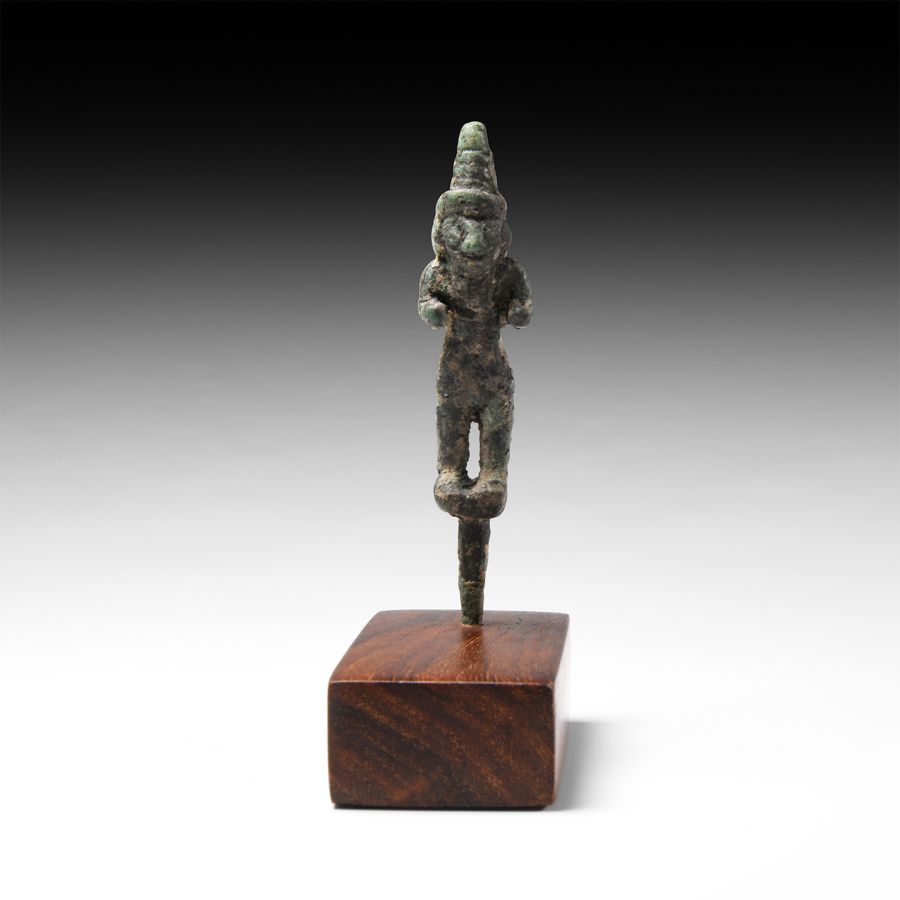
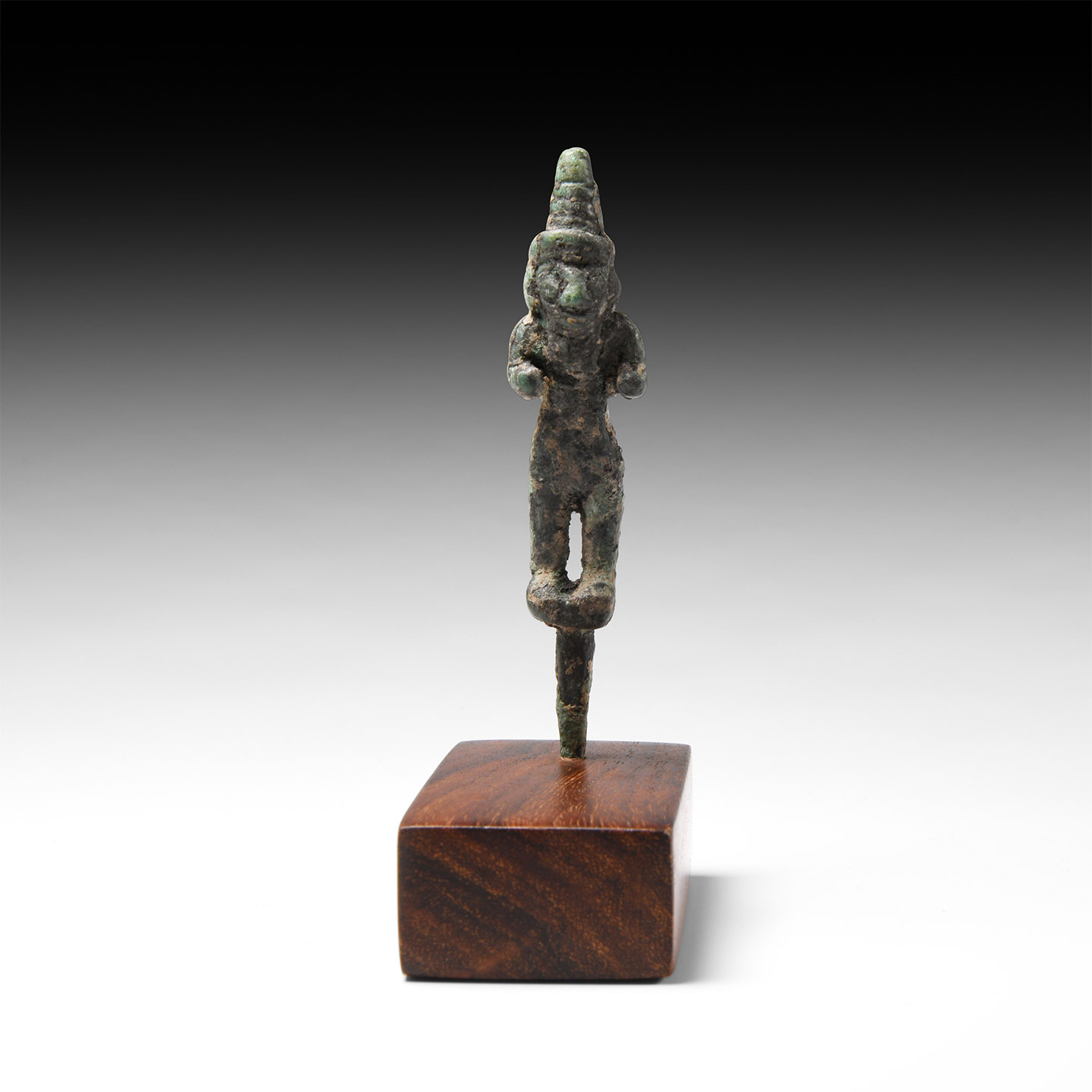
Canaanite Standing Male Statuette
2ND MILLENNIUM B.C.
4 in. (70 grams total, 10 cm high including stand).
A bronze figure of a male standing wearing a conical cap with a thick brim; his arms bent and legs straight; attachment peg beneath the feet; mounted on a custom-made display stand.
ProvenanceFrom a French collection.
Paris gallery, 2000s.
Cf. similar but larger item in the British Museum, London, under accession number 1894,0116.3.
CONDITIONTimeLine Auctions follows a vetting process to ensure the authenticity and legality of all items, reinforcing our commitment to integrity and responsible trading. Each antiquity, antique, and coin lot undergoes thorough examination by a vetting committee of at least ten external specialists, professional trade association members, scientists, and archaeologists: Our Vetting Process
AUCTIONS:
TimeLine is a leading auction house specialising in antiquities, ancient art, collectables, natural history, coins, medals, and books. Our auctions offer museums, collectors, historians, and enthusiasts the opportunity to acquire unique and historically significant pieces.
LOT 0198
Canaanite Standing Male Statuette
Estimate £500 - 700€580 - 810 (for guidance only)$680 - 950 (for guidance only)
-
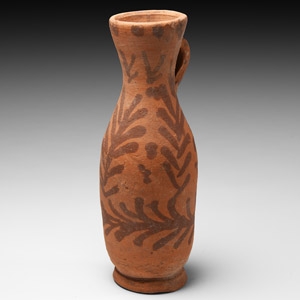
Nabataean Painted Jug
1st century B.C.-1st century A.D.Sold for (Inc. bp): £520
A small terracotta jug with strap handle above the shoulder, painted frond patterns to the body, shoulder and neck. 76 grams, 12.4 cm high
From an important collection of Holy Land pottery formed pre 1988, thence by descent. -
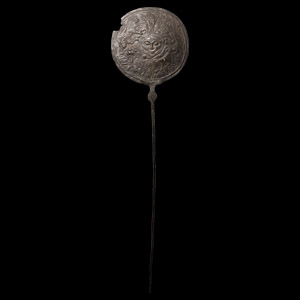
Urartian Pin with Repousse Decorated Disc
7th-6th century B.C.Estimate: £700 - 900 (+bp*)
Opening Bid: £350
A bronze dress pin comprising a round-section tapering shank with hipped bulb below the head; discoid head with raised border, repoussé design featuring a central facing mask with lentoid eyes and piriform face, hatched hair and beard; below, two rosettes above the backs of addorsed advancing goats with decorated and segmented bodies; plant motifs before the goats' chests and leaping lions above with gaping mouths flanking the mask of a master of animals with ibexes emerging from the cheeks; mounted on a stand; chipped. 88 grams, 43 cm long
Acquired 1970s-1990s. Ex Rabi Gallery, Mayfair, London, U.K. From a specialist collection of pottery. -
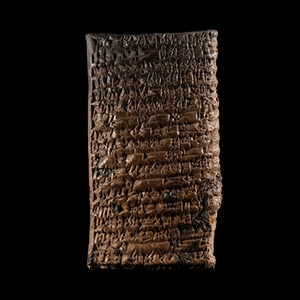
Old Babylonian Cuneiform Letter from King Illuni to Inzuršakšu King of Niqqum About Being Attacked by the Elamites
Circa 1730-1720 B.C.Sold for (Inc. bp): £5,200
A rectangular bifacial clay tablet bearing cuneiform text to both principal faces and two side edges; a letter from Iluni, king of Ešnunna, to Inzuršakšu, king of Niqqum; Iluni answered to a letter from his ally who accused him of not having respected their agreements by not sending him an army as he had asked in a letter; he says he is attacked by the Elamites (neighbors of Niqqum), Iluni defends himself and considers that it is on the contrary Inzuršakšu who is in his wrong, he accuses him indeed not only of being the aggressor, but also of wanting to push him to enter in conflict with the Elamites, whom he was indeed himself a vassal, an incomplete draft of this letter was already known; excerpts: 'About the Elamite troop which rose against my country I had written to you to send me a reinforcement troop but you did not send me any troop. You have therefore violated your divine oath (...). This is what you have just written to me. It is you who have just violated your divine oath! Now you are willing to do bad things to this country and you want me to be angry with the Elamites. (...)' 179 grams, 94 mm wide
Specialised collection of cuneiform texts, the property of a London gentleman and housed in London before 1992. Thence by descent to family members. Examined by Professor Wilfrid George Lambert FBA (1926-2011), historian, archaeologist, and specialist in Assyriology and Near Eastern archaeology, in the late 1980s and early 1990s. The collection is exceptional for the variety of types, including some very rare and well preserved examples.
A draft of this message was already known but the present one gives a more complete version.
