
Loading, please wait...
LOT 1428
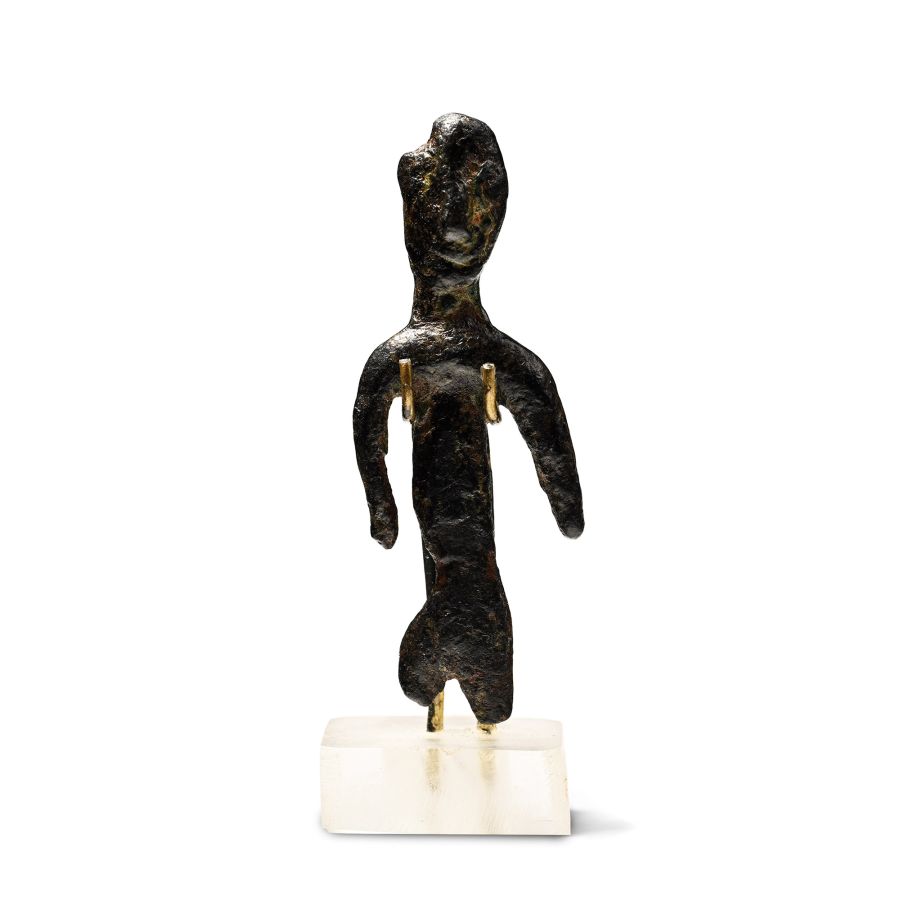
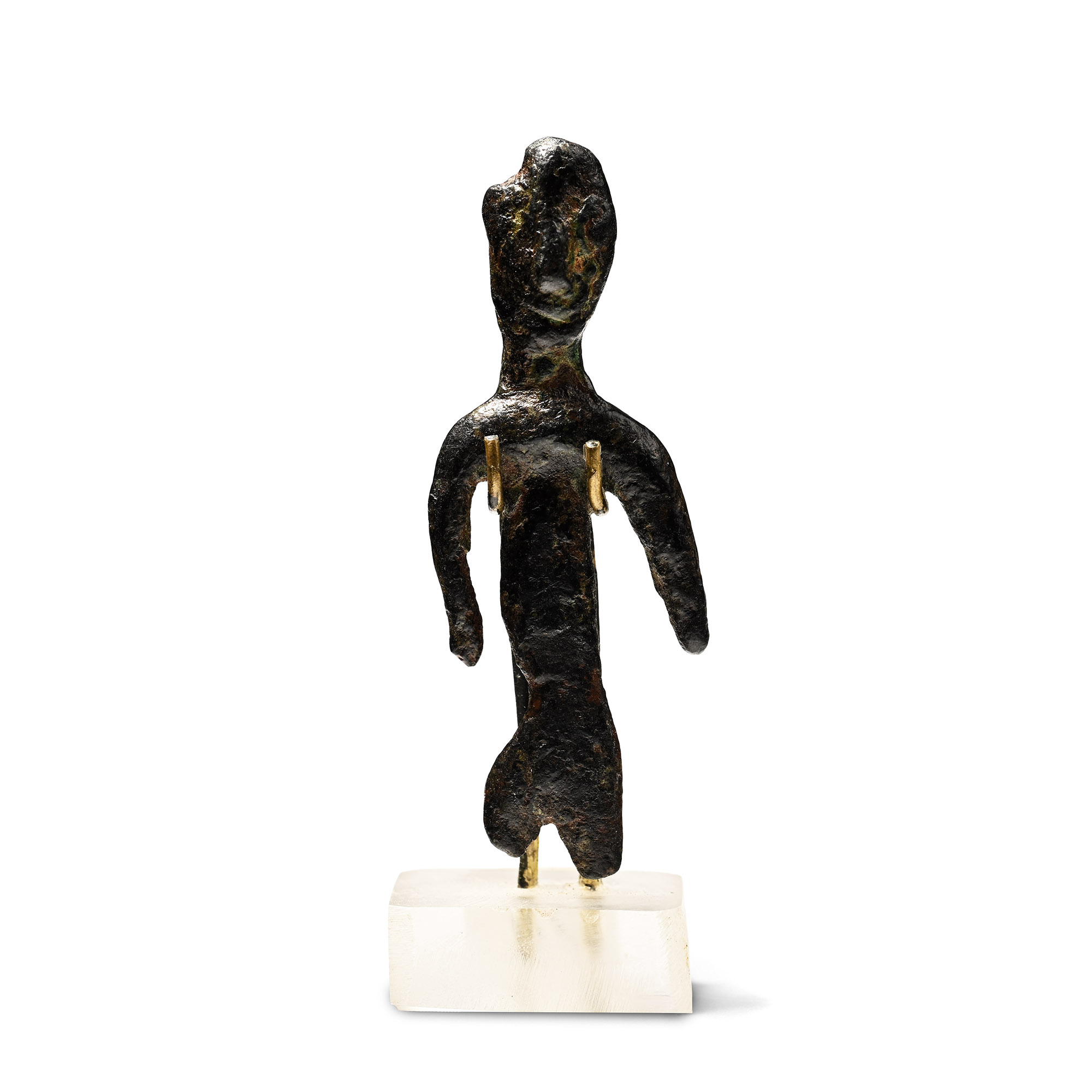
Canaanite Bronze Figure
2ND MILLENNIUM B.C.
2 1/2 in. (18.8 grams total, 65 mm including stand).
A slender bronze figurine of a standing male with lowered arms, piriform head with bulbous eyes and slit mouth; mounted on a custom-made stand. [No Reserve]
ProvenanceFrom the private collection of a medical professional; formerly part of a collection formed in Toulouse, France, since 1967.
From the private collection of John Meredith, acquired since the 1990s; thence by descent.
For a similar figure in 'Anatolian' pose from the 'Simiriyan' Group, cf. Negbi, O., Canaanite Gods in Metal, Tel Aviv. 1976, pp.10-13, fig.15/55; for figures of similar type, cf. Aruz, J. (ed.), Beyond Babylon. Art, Trade and Diplomacy in the Second Millennium B.C., Exhibition Catalogue, The Metropolitan Museum of Art, New York, 2008, pp.23-24.
FootnotesThese representations in the style of figurines presumably represented household deities who were guardians of the home. In some cases figurines of this type were produced in groups of two or four.
CONDITIONTimeLine Auctions follows a vetting process to ensure the authenticity and legality of all items, reinforcing our commitment to integrity and responsible trading. Each antiquity, antique, and coin lot undergoes thorough examination by a vetting committee of at least ten external specialists, professional trade association members, scientists, and archaeologists: Our Vetting Process
AUCTIONS:
TimeLine is a leading auction house specialising in antiquities, ancient art, collectables, natural history, coins, medals, and books. Our auctions offer museums, collectors, historians, and enthusiasts the opportunity to acquire unique and historically significant pieces.
-
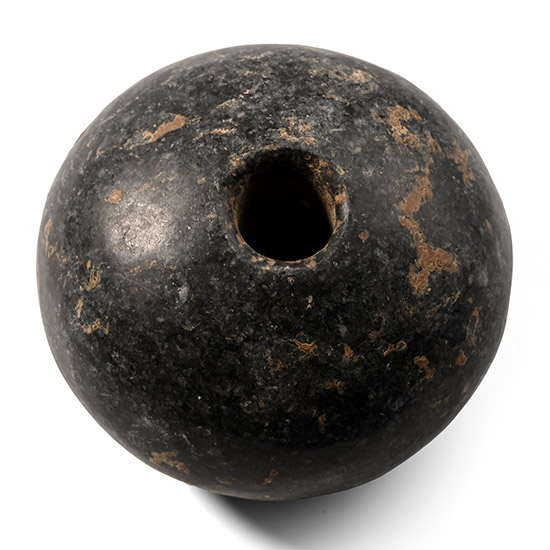
Western Asiatic Polished Stone Macehead
3rd-2nd millennium B.C.Sold for (Inc. bp): £195
Donut-shaped, oblate in profile and drilled vertically to accommodate a wooden shaft. 556 grams, 80 mm
From the collection of North West London, UK, gentleman, early 2000s. -
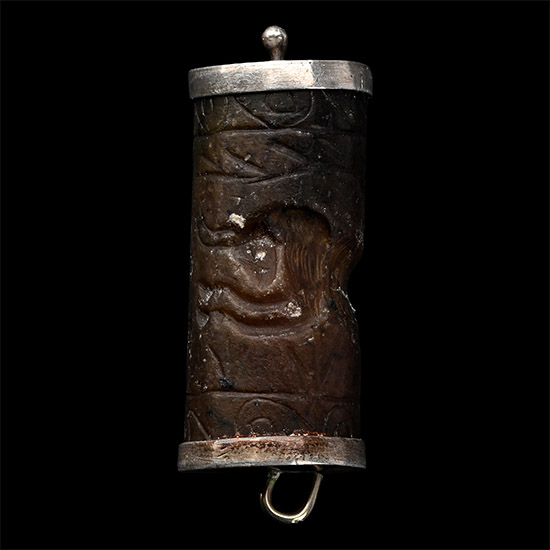
Early Achaemenid Stone Cylinder Seal with Later Silver Casing
600-500 B.C. or laterSold for (Inc. bp): £468
With incuse frieze depicting a leaping bull between tendrils, wave pattern to borders, set into a later silver casing with pendant loop. 19.79 grams, 43 mm
Acquired on the USA art market. Private collection, England. -
.jpg)
Western Asiatic Carnelian Scaraboid Seal with Bull
Late 2nd-3rd century A.D.Estimate: £500 - 700 (‡+bp*)
Opening Bid: £250
Rectangular in plan with pyramidal upper face, incuse bull and cow motif. 7.54 grams, 25 mm
Acquired in 2001. Private collection, Europe.
