
Loading, please wait...
LOT 1797
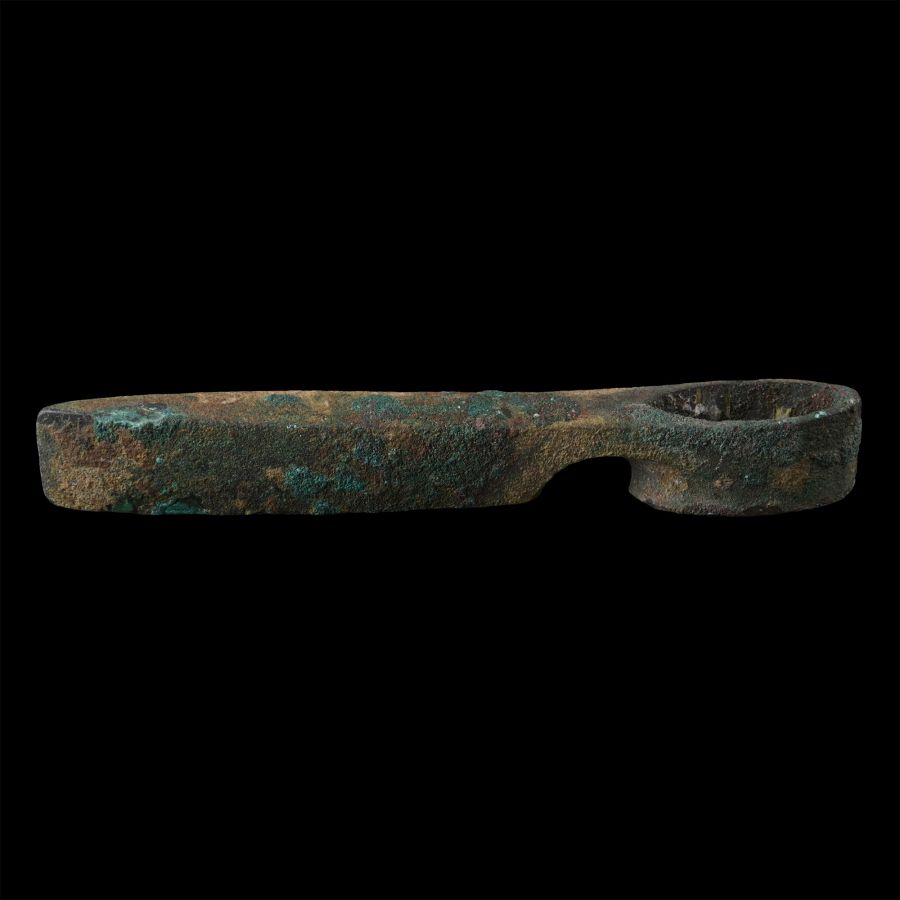
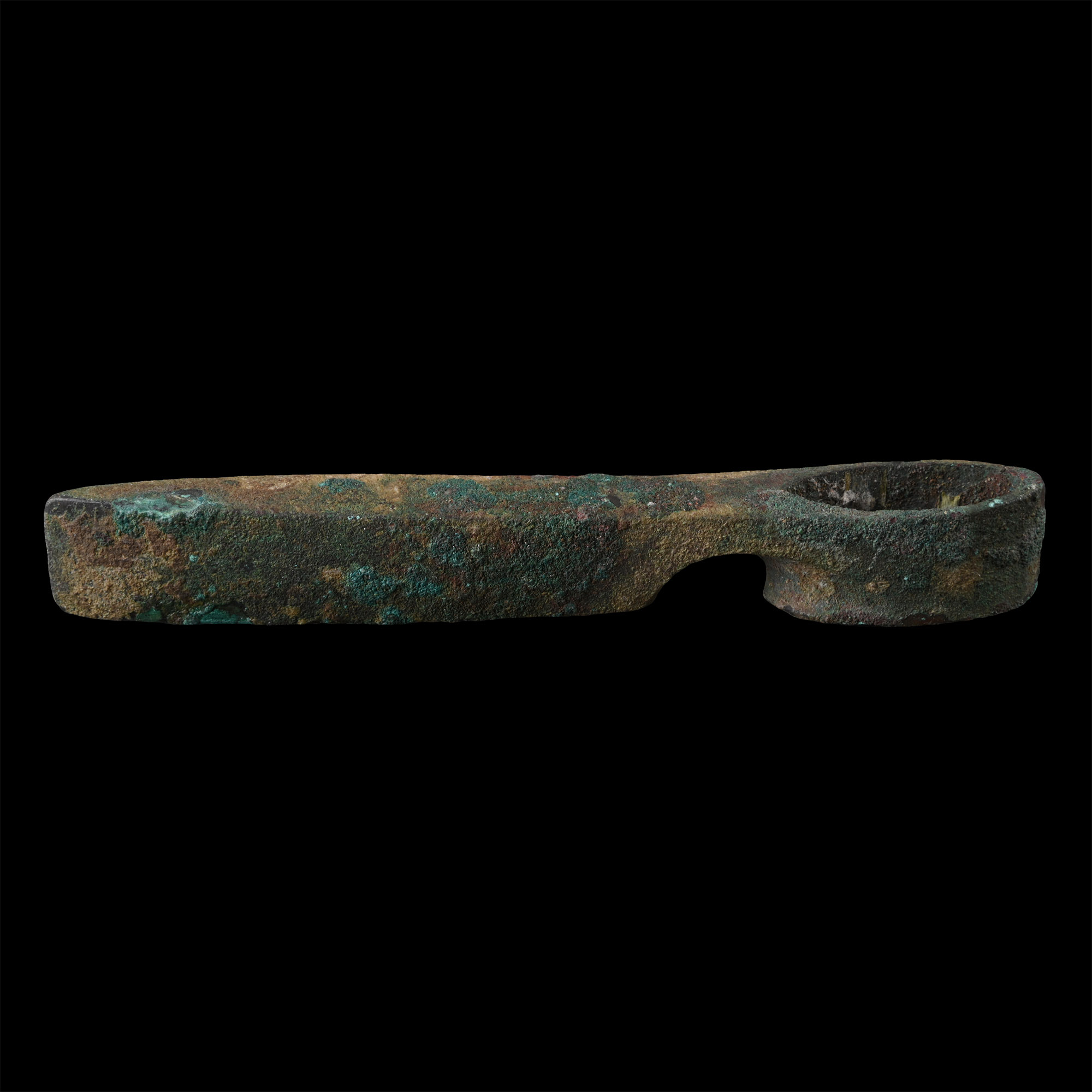
Canaanite Bronze Axehead
BRONZE AGE, 2000-1200 B.C.
4 3/4 in. (116 grams, 12 cm).
Comprising a slender rectangular-section blade and an ellipsoid socket with a flared lower edge. [No Reserve]
ProvenanceFrom the private collection of a European gentleman (1942-2024), formed since the 1970s.
LiteratureSee Gorelik, M., Weapons of Ancient East, IV millennium BC-IV century BC, Saint Petersburg, 2003, p..91-93, for the typology.
CONDITIONTimeLine Auctions follows a vetting process to ensure the authenticity and legality of all items, reinforcing our commitment to integrity and responsible trading. Each antiquity, antique, and coin lot undergoes thorough examination by a vetting committee of at least ten external specialists, professional trade association members, scientists, and archaeologists: Our Vetting Process
AUCTIONS:
TimeLine is a leading auction house specialising in antiquities, ancient art, collectables, natural history, coins, medals, and books. Our auctions offer museums, collectors, historians, and enthusiasts the opportunity to acquire unique and historically significant pieces.
-
.jpg)
Turkish Iron Dagger with Brass Hilt and Scabbard
Mid 20th century A.D.Sold for (Inc. bp): £39
Two-edged jambiya with narrow curved blade, two deep fullers and punched detailing with inset turquoise-coloured pellet; brass bolster and applied bone panels to the grip, silver facing to pommel; brass sheath with low-relief foliage and figural ornament, suspension rings. 211 grams, 23.2 cm
Previously acquired on the UK art market in the early 2000s. This item is for collection from our premises only. -
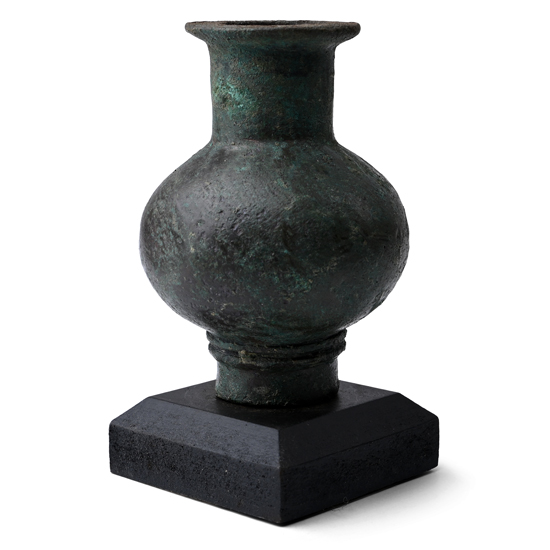
Luristan Bronze Macehead
2nd-1st millennium B.C.Sold for (Inc. bp): £286
With a globular body and tubular socket with two raised collars above and a flaring base; accompanied by a custom-made display stand. 329 grams total, mace: 83 mm
From the collection of the late Sir Clinton Charles Donald Cory, 5th Baronet of Coryton. Ex Philip Auction House, 24 September 1985. -
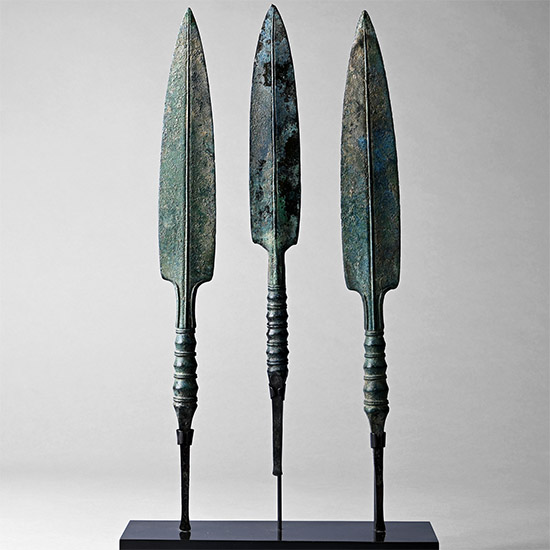
Luristan Bronze Spearhead Collection
Circa 1000-700 B.C.Sold for (Inc. bp): £6,500
Group of three tanged spearheads, each with a slender leaf-shaped two-edged blade and midrib, tiered ribbing to the neck, square-section tang with chisel tip; mounted on a custom-made stand. 1.65 kg total, blades: 34.5-38.6 cm
Ex London, UK, gallery, 1971-early 2000s. London, UK, collection. This lot has been checked against the Interpol Database of stolen works of art and is accompanied by search certificate number no.13245-252972.
Spearheads of this kind were realised by mould casting. They were of different lengths and used by Luristan, Hamadan, early Median and Achaemenid warriors.
