
Loading, please wait...
LOT 0076
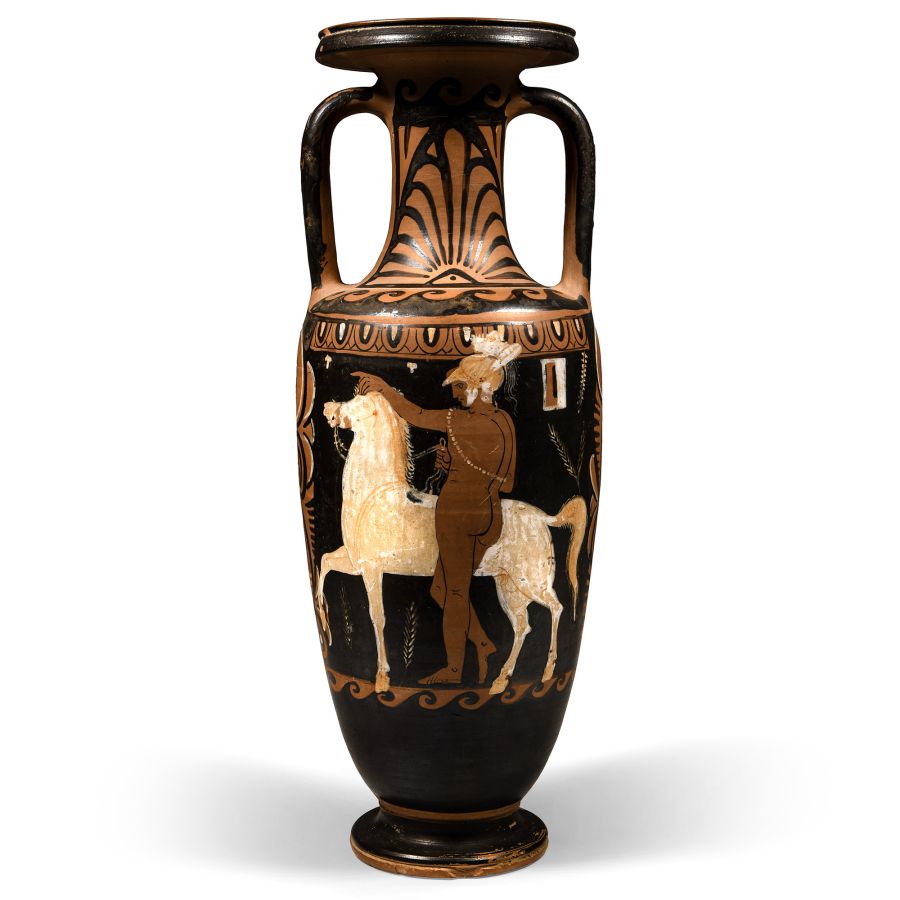
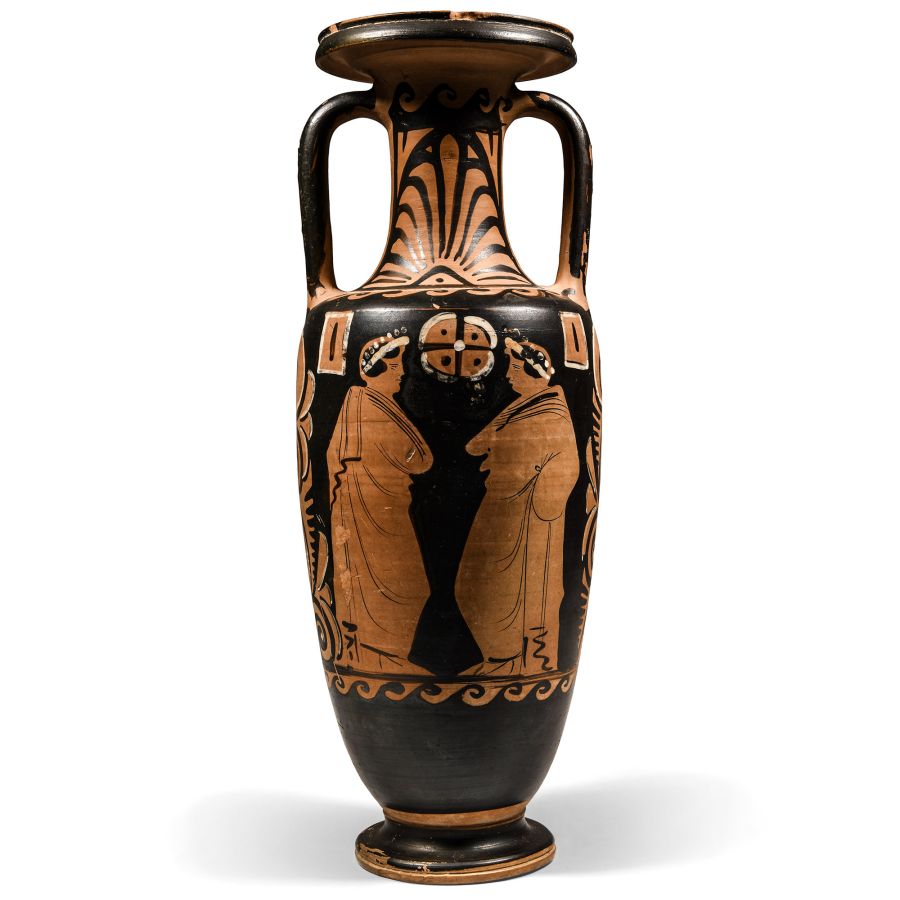
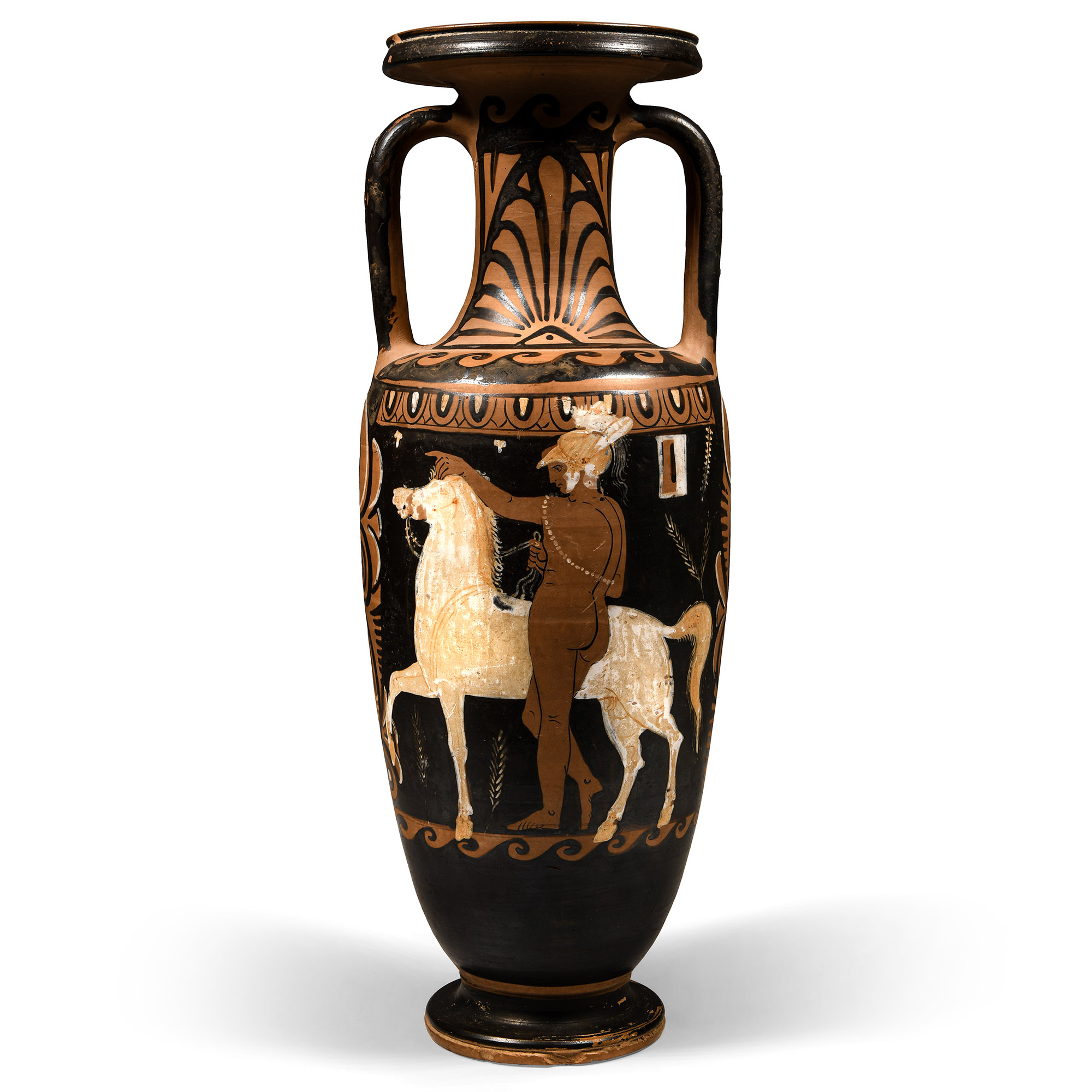
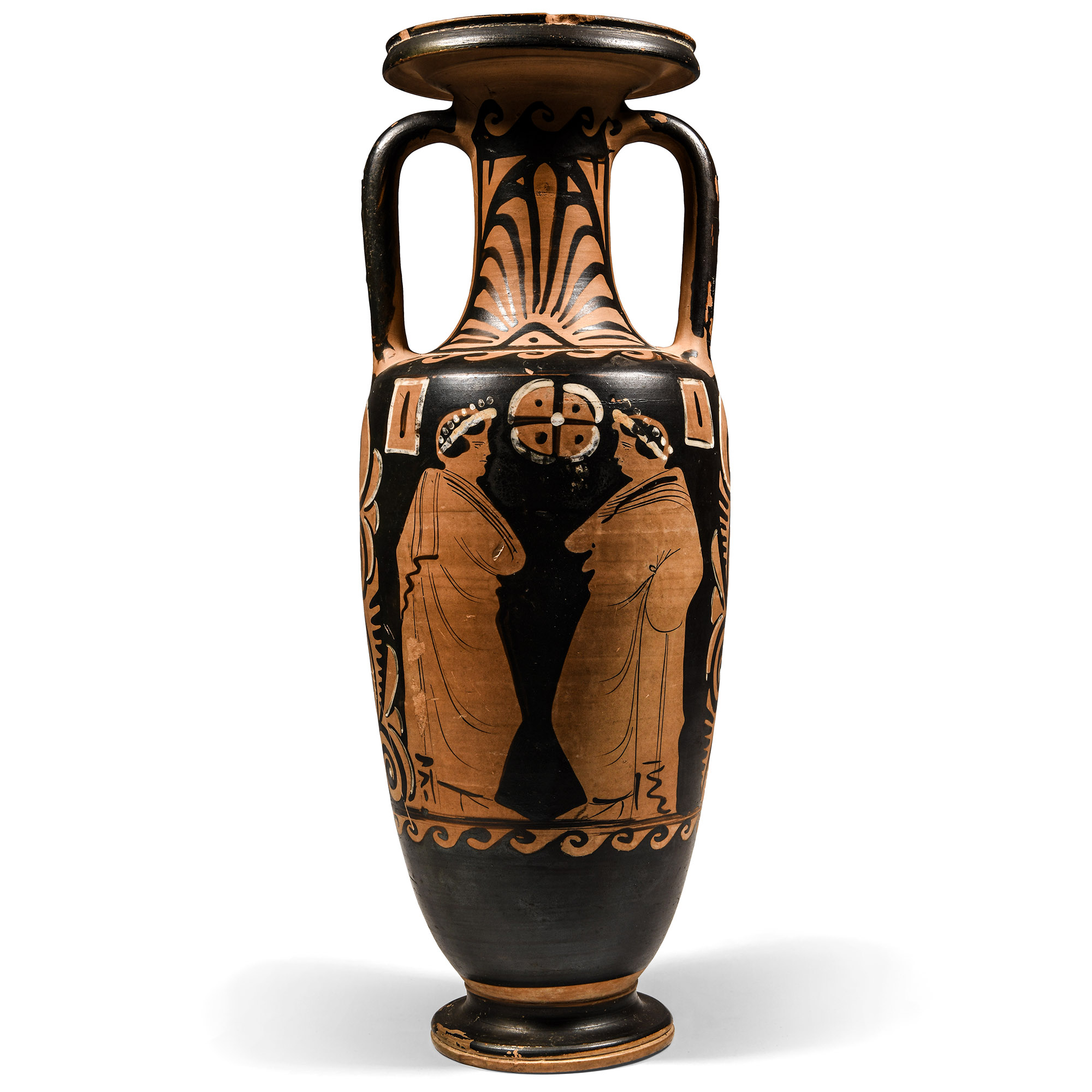
Campanian Red-Figure Neck-Amphora with Cavalryman
340-330 B.C.
15 7/8 in. (1.55 kg, 40.2 cm high).
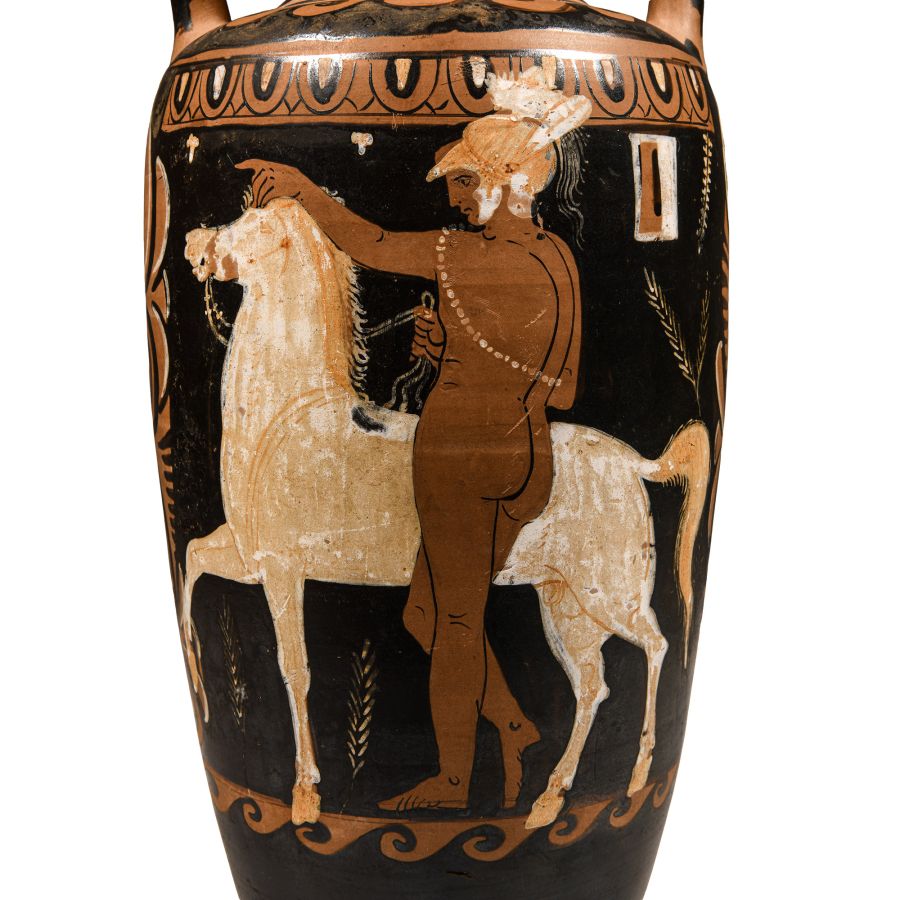
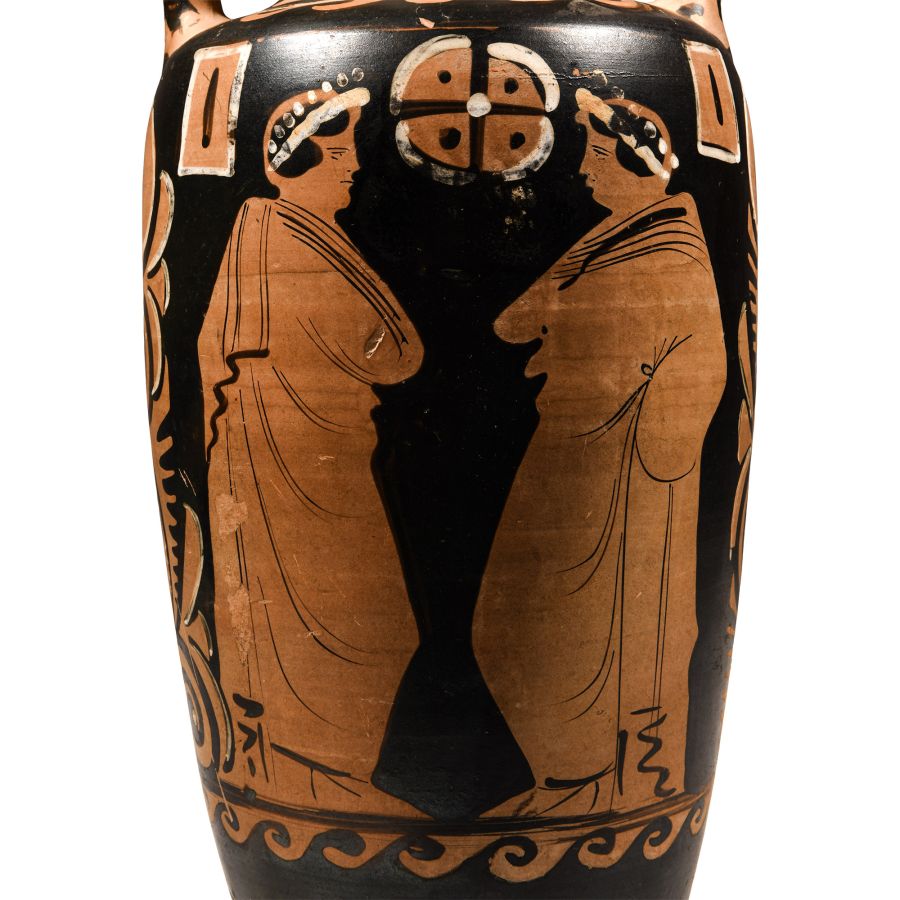
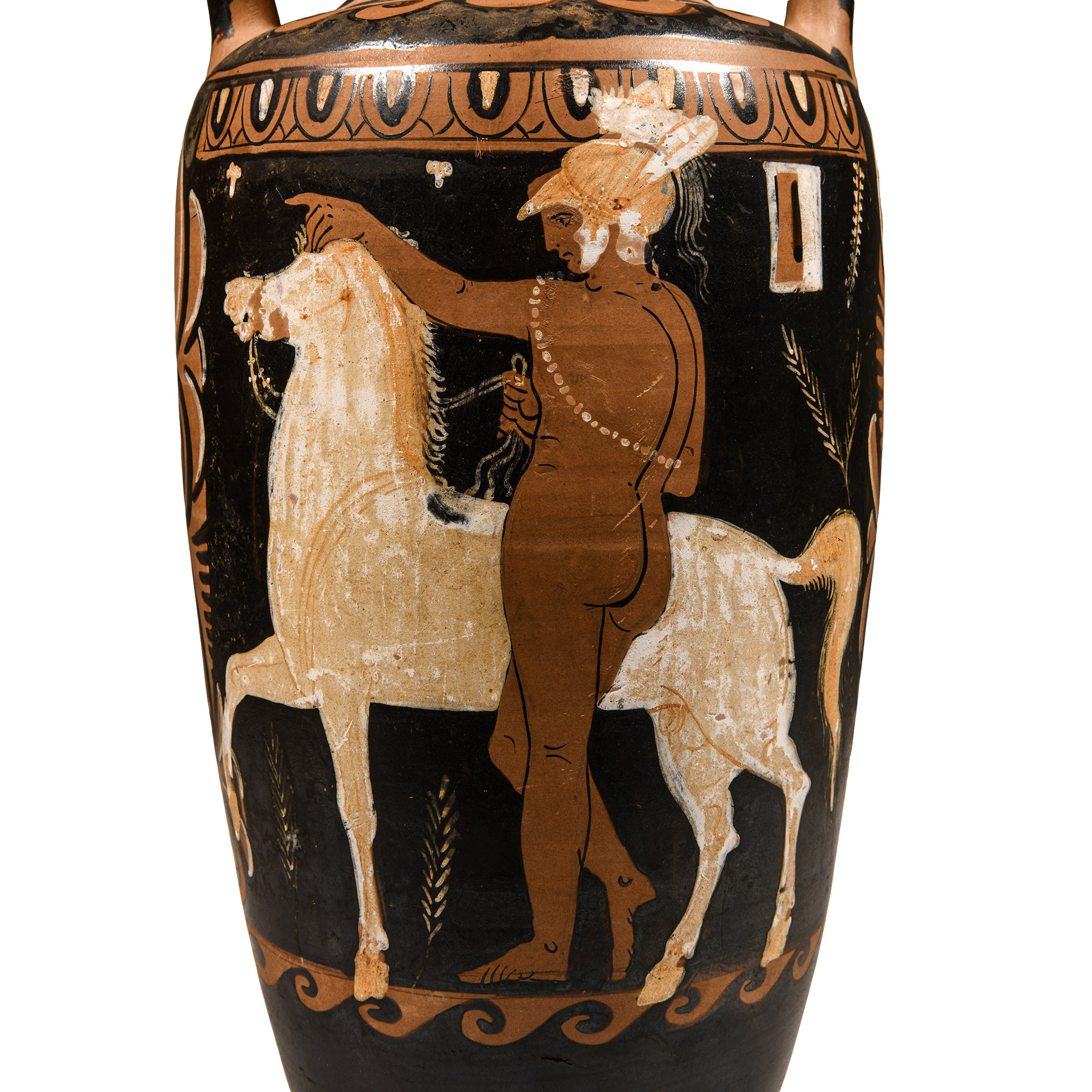
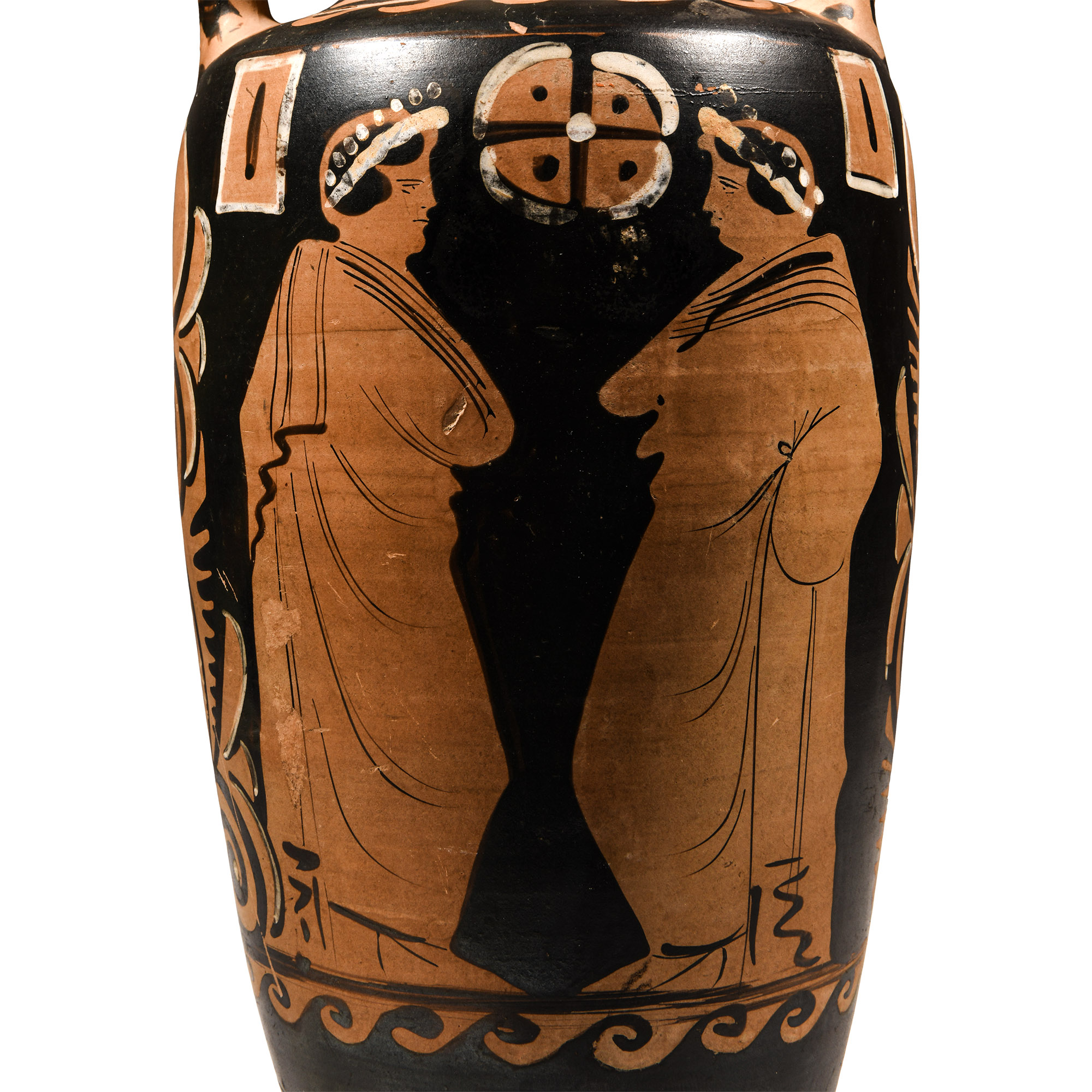
The piriform body with broad, stepped rim and two round-section handles; red-figure frieze depicting two standing women facing, wearing a himation and stephane; the other side with a nude standing warrior wearing an Apulo-Corinthian helmet, holding the reins of his horse, acanthus leaves, ovolo and wave motifs to the neck and lower body; probably from a Cuma workshop.
ProvenanceEx private collection Mr S., Geneva, by inheritance.
Accompanied by an academic report by Dr Raffaele D’Amato.
Accompanied by an original thermoluminescence analysis report no.N123k3 from Oxford Authentication.
This lot has been checked against the Interpol Database of stolen works of art and is accompanied by search certificate number no.11784-206515.
Trendall, A.D., The red-figured vases of Lucania, Campania and Sicily, second supplement, University of London, Institute of Classical Studies Bulletin n°31, 1973, planche XLII.
LiteratureCf. Trendall, A.D., ‘Paestan Pottery: a Revision and a Supplement’, in Papers of the British School at Rome, 1952, no.20, pp.1-53, pl.XVIa, for similar amphora but with different iconography.
FootnotesThe illustration of the horse is noteworthy: contemporary descriptions speak about the Sicilian horses as 'generous, swift and with firm foot' (Aeneid III, 704). The Oscan poet Lucilius of the 2nd century B.C. quotes the Campanian chargers as ‘fiery and brave although not very fine in their look’. The artistic evidence, like here, depicts well-built horses with fine legs suitable for middle-light cavalry.
CONDITIONTimeLine Auctions follows a vetting process to ensure the authenticity and legality of all items, reinforcing our commitment to integrity and responsible trading. Each antiquity, antique, and coin lot undergoes thorough examination by a vetting committee of at least ten external specialists, professional trade association members, scientists, and archaeologists: Our Vetting Process
AUCTIONS:
TimeLine is a leading auction house specialising in antiquities, ancient art, collectables, natural history, coins, medals, and books. Our auctions offer museums, collectors, historians, and enthusiasts the opportunity to acquire unique and historically significant pieces.
-
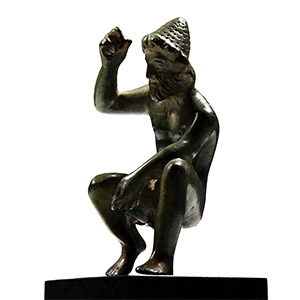
Greek Bronze Hephaistos Statuette
Circa 5th century B.C.Estimate: £20,000 - 30,000 (+bp*)
Opening Bid: £10,000
The elegant figure depicting the Greek god of fire and metalworking seated and nude except for the pilos on his head, lean body with naturalistic detailing, shown bearded and with curly hair emerging beneath the cap; he would have once held a pair of tongs in his left hand and a hammer in his right hand; accompanied by a custom-made display stand. 294 grams total, 13.5 cm high including stand
Fine condition, wonderful state of preservation, very rare.
with Elie Borowski, Basel. Subsequently in the collection of Denys Sutton (1917-1991), London, acquired from the above on 11 October 1963. Thence by descent. with Sotheby's, New York, 6 December 2012, lot 11. Accompanied by an academic report by Dr Raffaele D’Amato. This lot has been checked against the Interpol Database of stolen works of art and is accompanied by search certificate number no. 11827-207739.
According to legend, Hephaistos was thrown into the ocean by his mother Hera and raised by the sea nymph Thetis. Upon his return to Olympus, he took his revenge by imprisoning his mother and obtaining the hand of the most beautiful of the goddesses, Aphrodite. He became the blacksmith of the gods. Sculptural depictions of the god, known as Vulcan to the Romans, are very rare. Hephaistos was the armourer of the heroes, and certainly his greatest artwork was making Achilles' armour. -
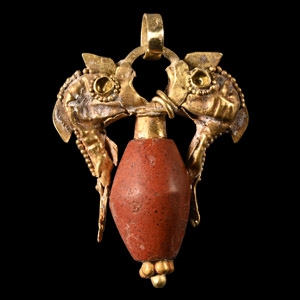
Greek Large Gold Dolphin Pendant
Circa 4th-3rd century B.C.Estimate: £600 - 800 (+bp*)
Opening Bid: £300
Formed as an amphora with dolphin handles, the body composed of a biconical jasper bead, repoussé and filigree detailing to the animals, suspension loops between; restored. 4.68 grams, 33 mm
From a late Japanese specialist collector, 1970-2000s. -
.jpg)
Large Greek Apulian Red-Figured Knob-Handled Patera with Eros
Circa 350-320 B.C.Estimate: £5,000 - 7,000 (+bp*)
Opening Bid: £2,425
With raised rim and stepped foot, two strap handles to the rim each flanked by two domed studs; rim with reserved wave pattern band, studs with starburst motif; painted central scene with outer foliate bands and reserved wave pattern framing the tondo displaying Eros in flight with wings spread, holding a red cloth over an inverted shield; some repainting. 2.76 kg, 41 cm wide
Fine condition.
French collection, 1990s-early 2000s. Formerly in Patrick Declerck Auction, Douai, France, 2014, lot 72. From an important Paris gallery, France. Ex private Parisian collection. Accompanied by an original thermoluminescence analysis report no.N122j42 from Oxford Authentication. This lot has been checked against the Interpol Database of stolen works of art and is accompanied by search certificate no.11616-196567.
