
Loading, please wait...
_900x900.jpg "Campanian Red-Figure Bail Amphora from a Cumae Workshop")
_200x200.jpg "Campanian Red-Figure Bail Amphora from a Cumae Workshop")
.jpg "Campanian Red-Figure Bail Amphora from a Cumae Workshop")
LOT 0066
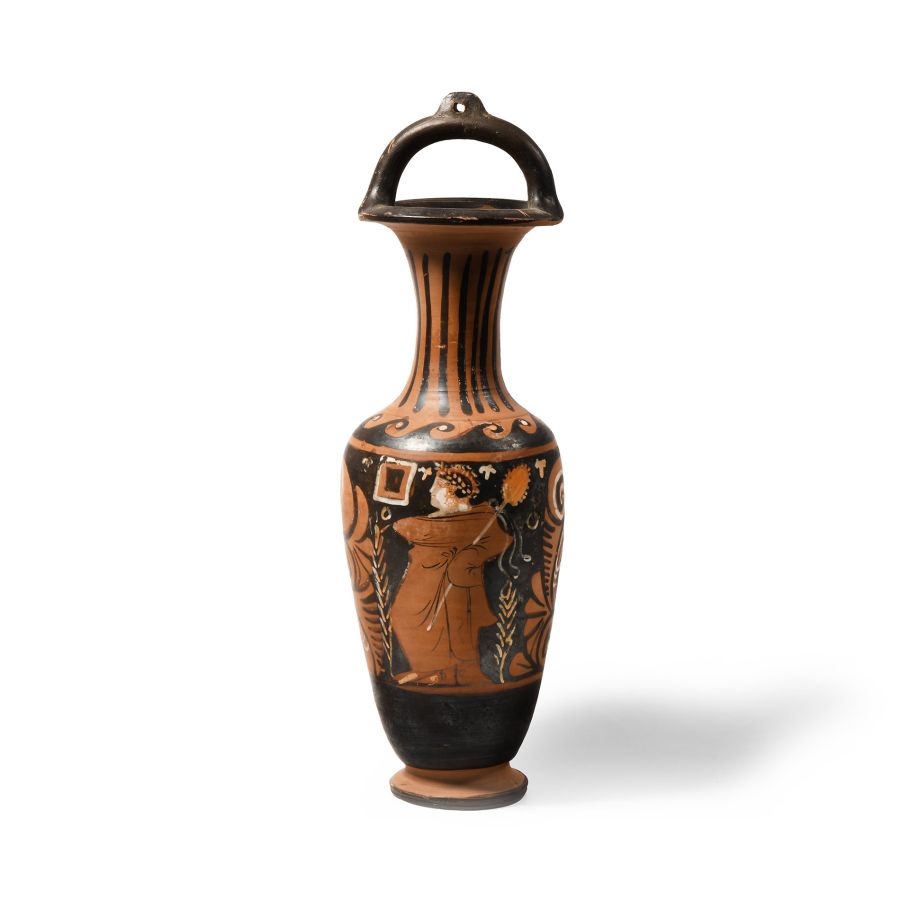
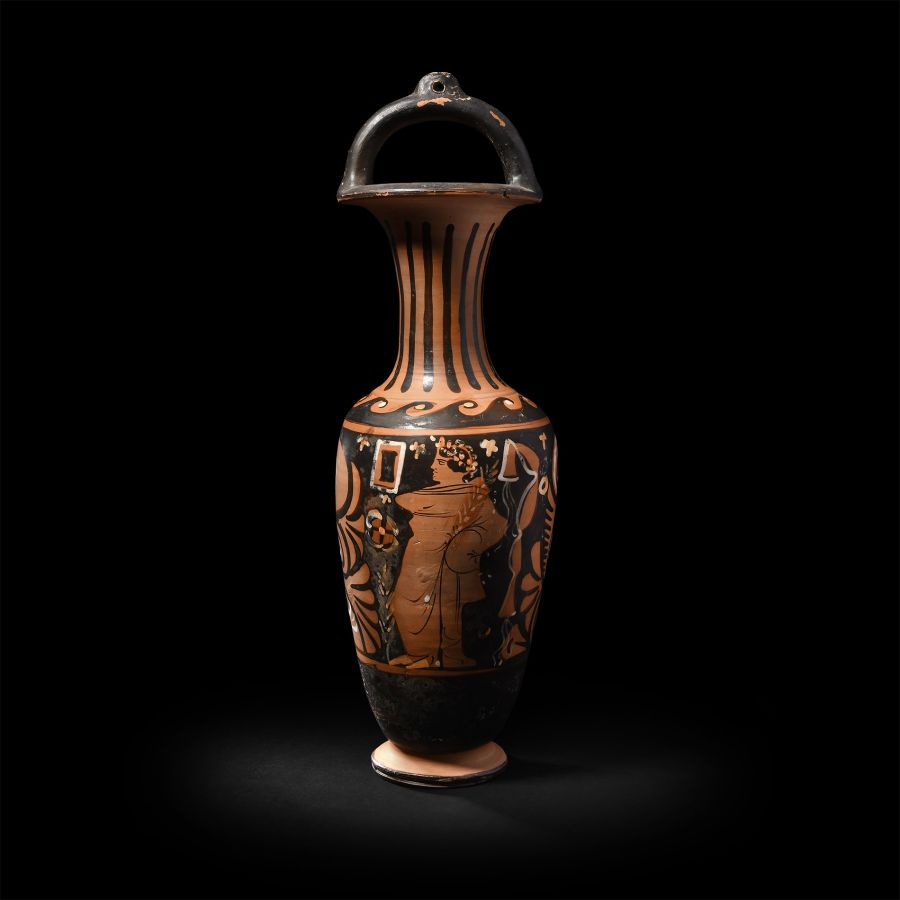
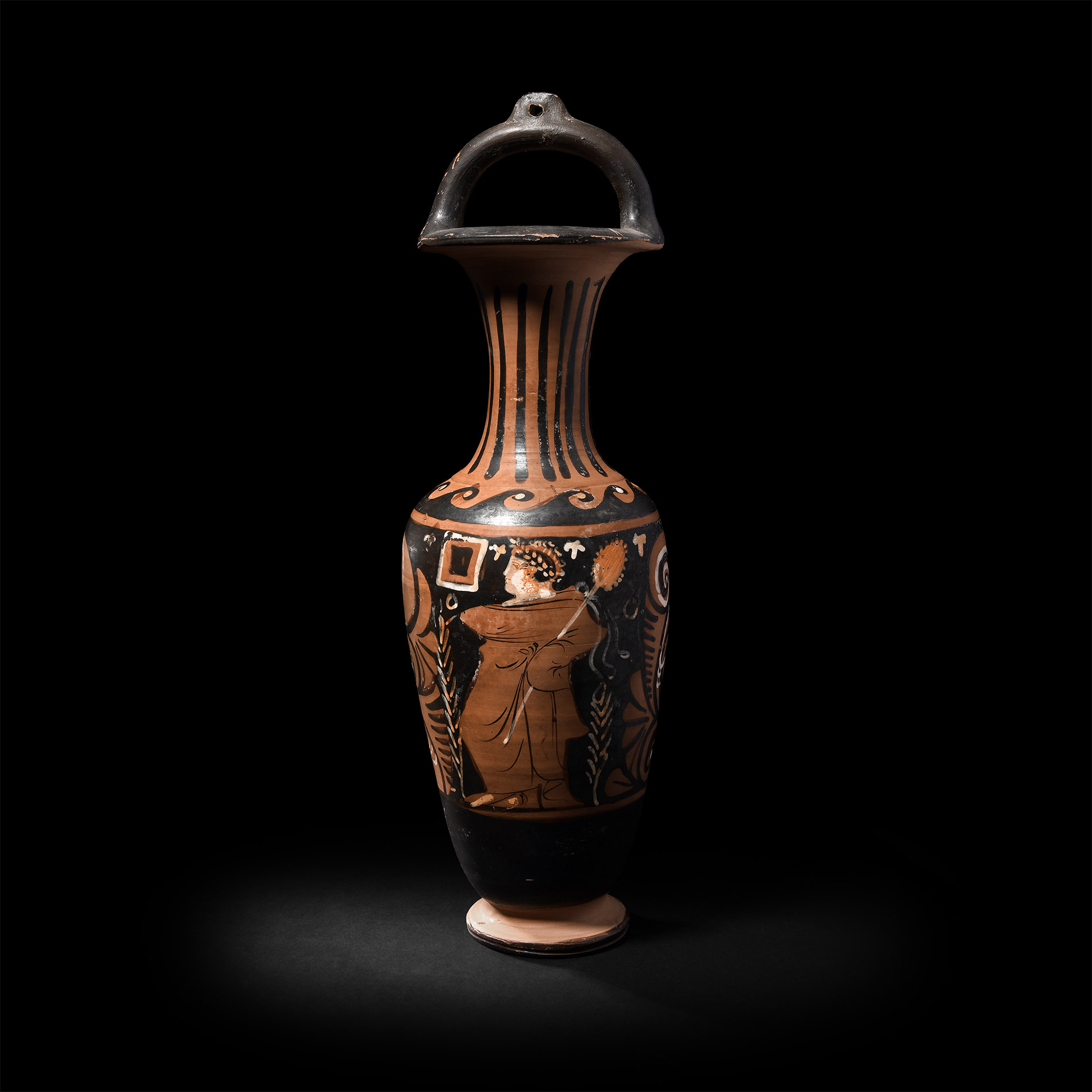
Campanian Red-Figure Bail Amphora from a Cumae Workshop
330-300 B.C.
14 1/2 in. (862 grams, 37 cm high).
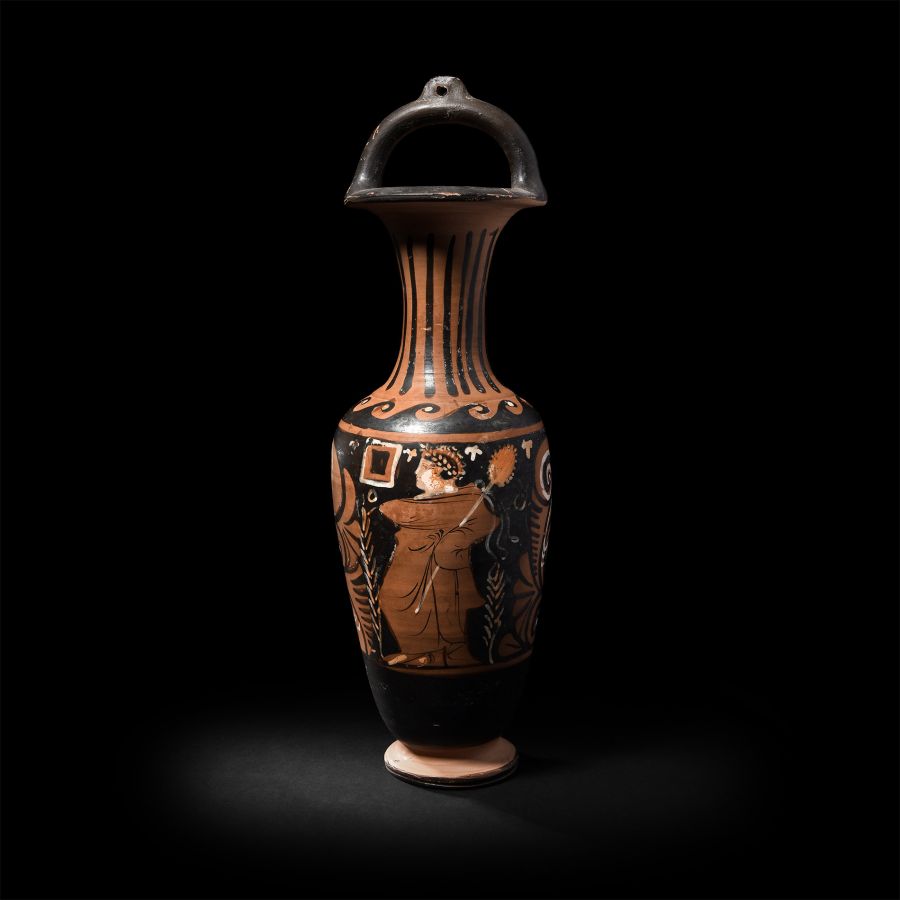
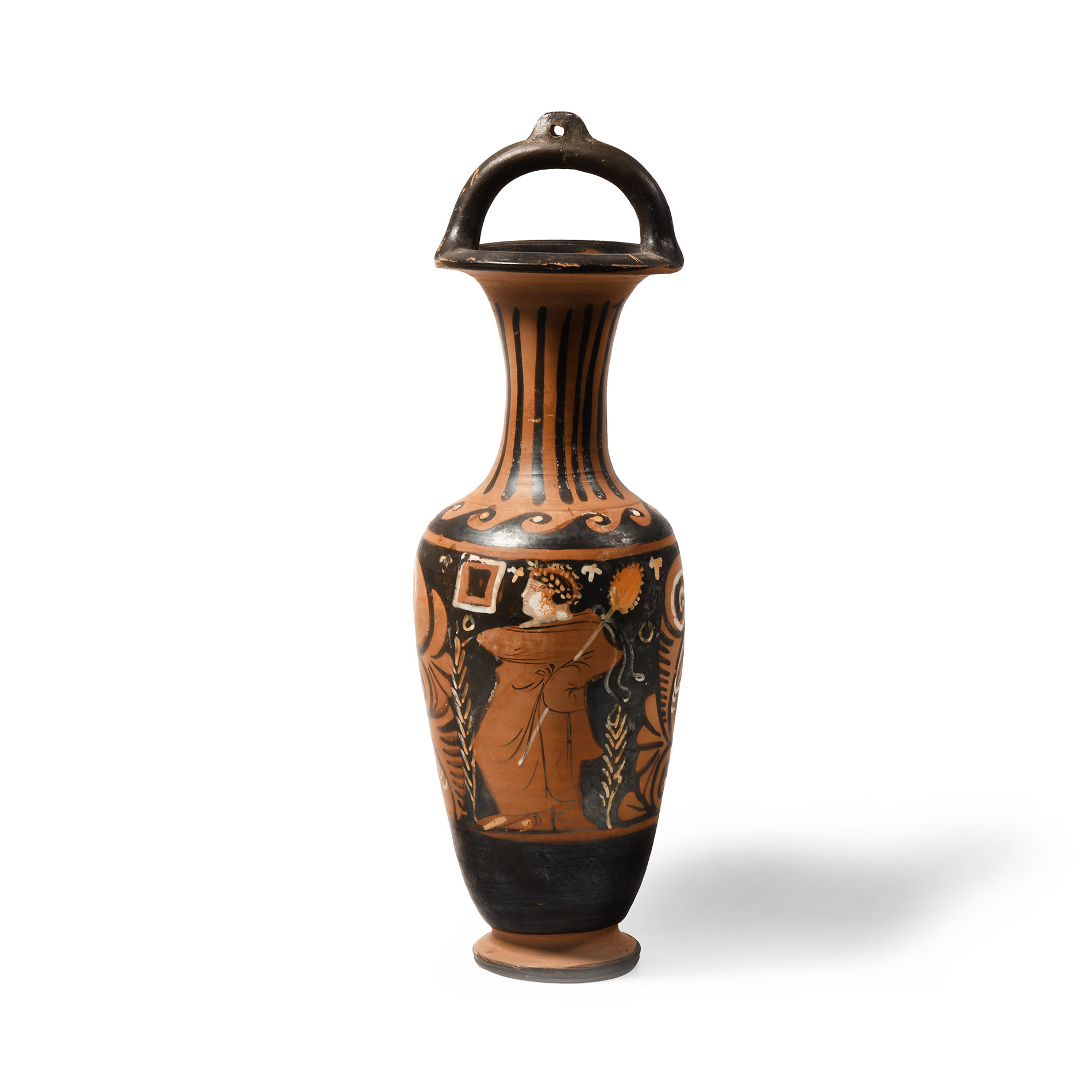
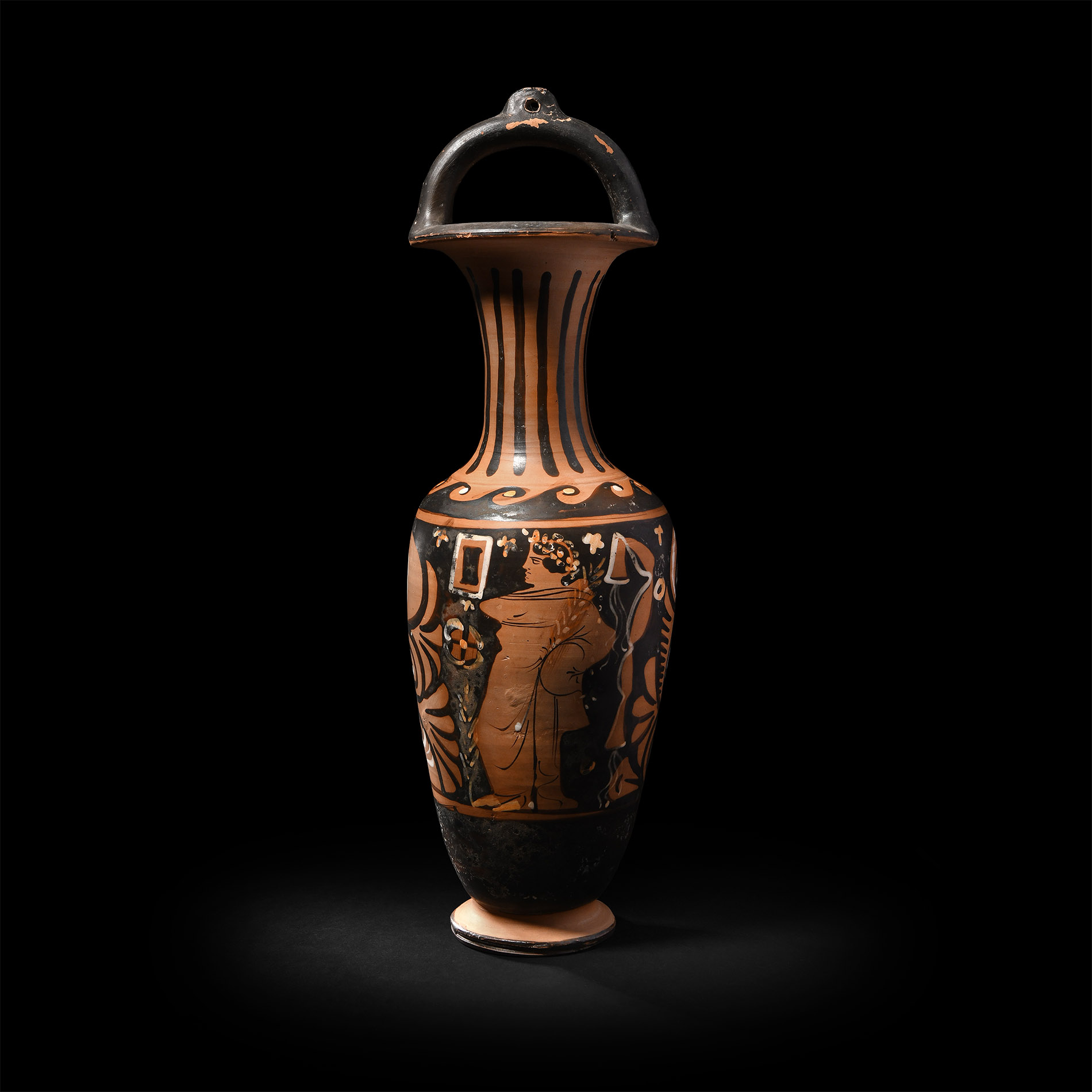
A ceramic red-figure bail amphora with round-section strap handle and pierced lug at the apex, tall waisted neck with vertical rib detailing, rounded shoulder with running wave pattern ornament, tapering body with figural designs of standing females wearing a himation and a stephane in red and white on black ground, one figure holding a thyrsus and the other an ear of corn, with accessories in the field; flared base; from a workshop in Cumae.
ProvenanceEx collection H.& P. Payot, Clarens, by descent.
Accompanied by an academic report by Dr Raffaele D’Amato.
This lot has been checked against the Interpol Database of stolen works of art and is accompanied by search certificate number no.11577-199027.
Accompanied by an original thermoluminescence analysis report no.QED2223/SG0-0105 from QED Laboratoire.
Cf. similar items in Museum of the Fine Arts in Budapest, inventory number 50.250; the British Museum, London, under accession number 1772,0320.77, in Trendall, A.D., The Red-Figured Vases of Lucania, Campania and Sicily, Oxford, 1967, no.4 p.353; for another bail amphora with similar motif see p.322, no.706, pl.12; Ede, C., Images, London, 2019, pp.49, 101.
FootnotesThe bail amphora, named for the tall handle arching over the mouth, was a shape made primarily in Campania, where red-figure vases were produced at both Capua and Cumae in the 4th century B.C. The decoration offered a remarkable range of subjects associated not only with mythological images, but with representations of the local life, costumes and customs. The simple, single figure compositions decorating each side of this vase are also characteristic of the style, which tended to avoid complex mythological scenes often found on much larger vessels like volute craters, favouring representation of the daily life of south Italic people.
CONDITIONTimeLine Auctions follows a vetting process to ensure the authenticity and legality of all items, reinforcing our commitment to integrity and responsible trading. Each antiquity, antique, and coin lot undergoes thorough examination by a vetting committee of at least ten external specialists, professional trade association members, scientists, and archaeologists: Our Vetting Process
AUCTIONS:
TimeLine is a leading auction house specialising in antiquities, ancient art, collectables, natural history, coins, medals, and books. Our auctions offer museums, collectors, historians, and enthusiasts the opportunity to acquire unique and historically significant pieces.
LOT 0066
Campanian Red-Figure Bail Amphora from a Cumae Workshop
Sold for (Inc. bp): £4,680
-
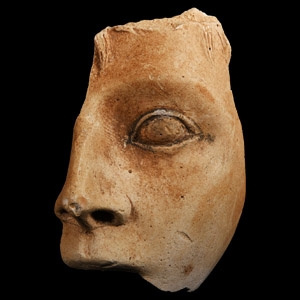
Etruscan Terracotta Fragment of a Face
6th century B.C.Sold for (Inc. bp): £780
An amorphous fragment from a terracotta face, retaining the left eye, nose, partial upper lip and fringes of hair, rendered with semi-naturalistic detailing. 125 grams, 13 cm high
Private Swiss collection, acquired 2002. -
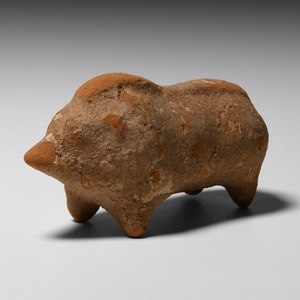
Greek Terracotta Boar Statuette
5th-3rd century B.C.Sold for (Inc. bp): £171
A terracotta model of a boar standing on stub legs with conical snout and raised ridge of bristles to the back. 108 grams, 97 mm wide
Fine condition.
Acquired before 2000. From the property of a Suffolk, UK, lady. -
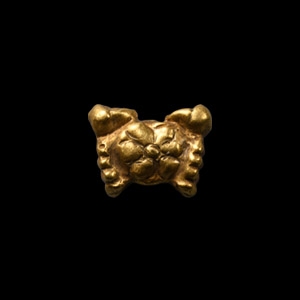
Graeco-Roman Gold Crab Amulet
2nd century B.C-1st century A.D.Sold for (Inc. bp): £191
A hollow-formed gold amulet of a crab with socketted claws above, pierced for attachment. 0.85 grams, 11.5 mm
Fine condition.
Acquired 1970s-1980s. Ex UK collection. Property of a Portsmouth, UK gentleman.
