
Loading, please wait...
LOT 1493
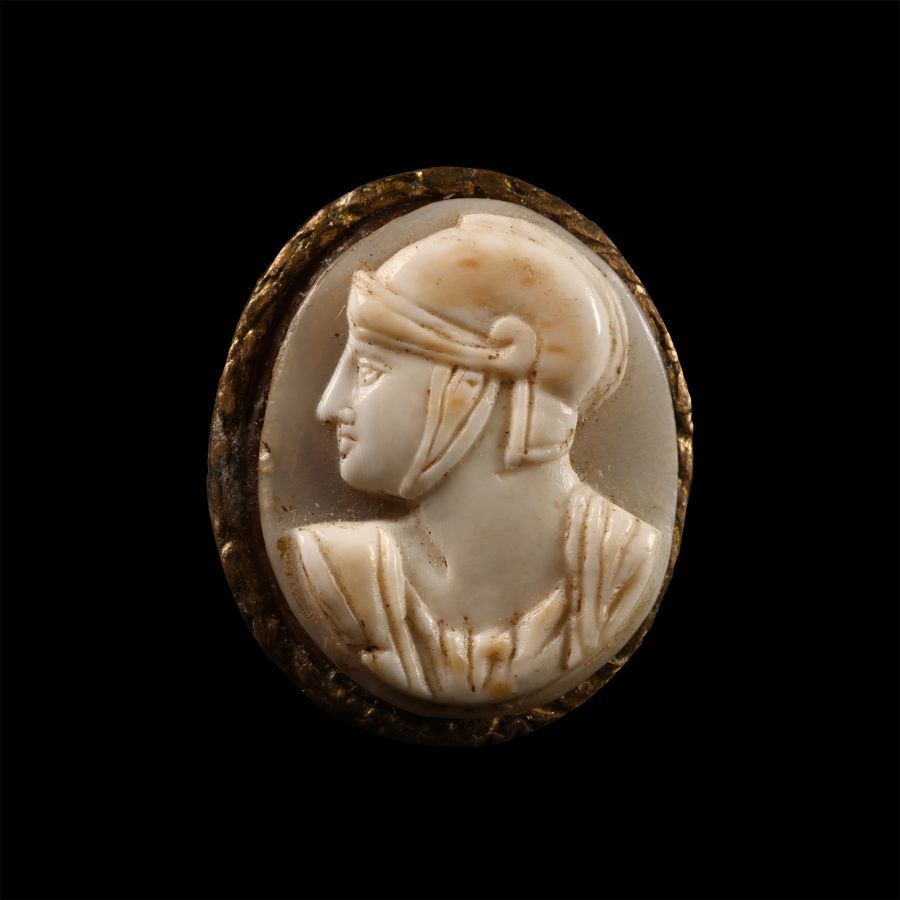
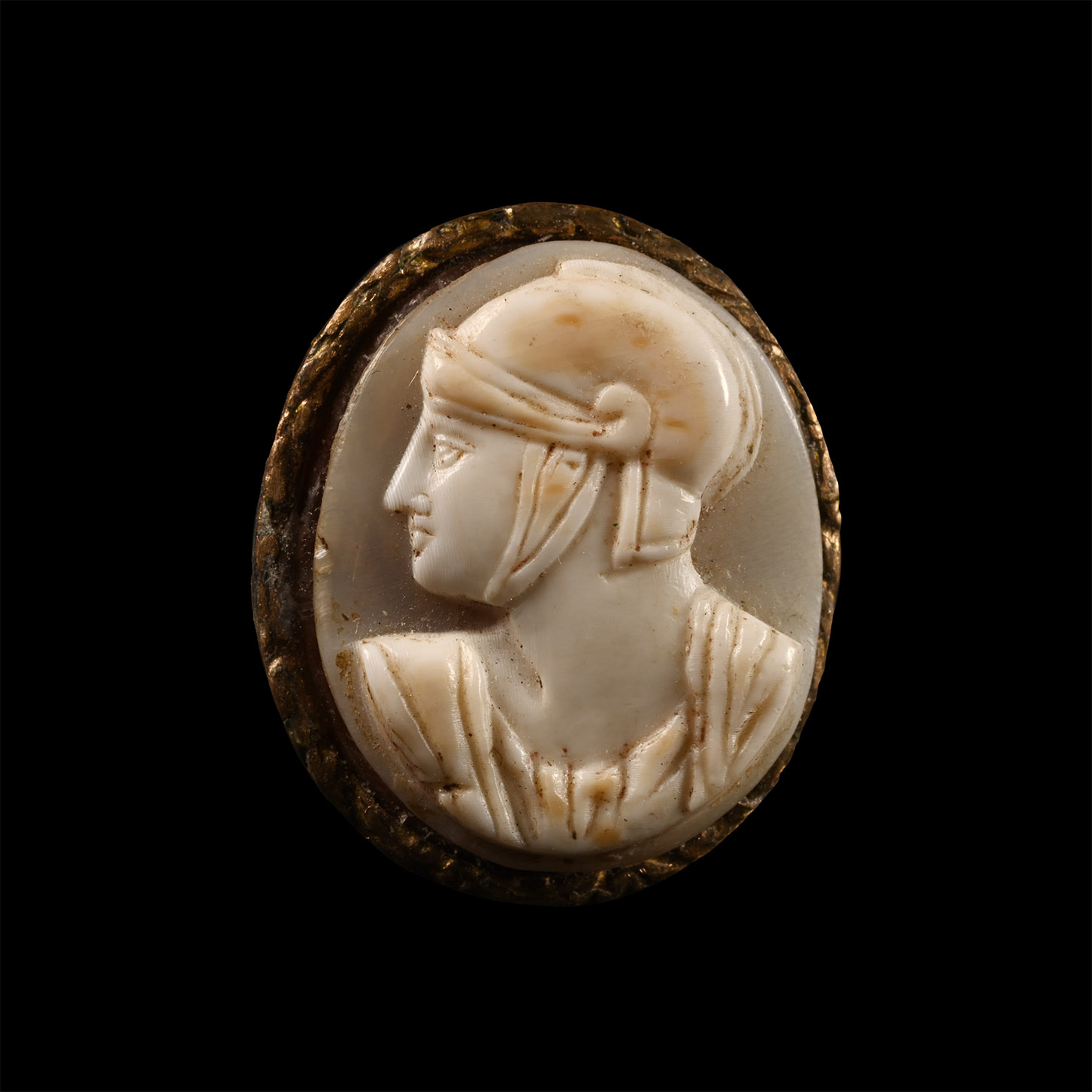
Cameo with Bust of a Roman Soldier
19TH CENTURY A.D.
1 in. (4.97 grams, 24 mm).
A shell cameo portraying the draped and cuirassed bust of a Roman soldier facing left, wearing a helmet; attached to an agate backed gilt copper-alloy setting. [No Reserve]
ProvenanceAcquired 1960s-1990s.
From the late Alison Barker collection, a retired London barrister.
TimeLine Auctions follows a vetting process to ensure the authenticity and legality of all items, reinforcing our commitment to integrity and responsible trading. Each antiquity, antique, and coin lot undergoes thorough examination by a vetting committee of at least ten external specialists, professional trade association members, scientists, and archaeologists: Our Vetting Process
AUCTIONS:
TimeLine is a leading auction house specialising in antiquities, ancient art, collectables, natural history, coins, medals, and books. Our auctions offer museums, collectors, historians, and enthusiasts the opportunity to acquire unique and historically significant pieces.
-
.jpg)
Post Medieval Reclining Female Statue
Late 19th-early 20th century A.D.Sold for (Inc. bp): £1,300
A bronze study of a reclining nymph on a draped chaise longue, nude with head tilted back and lips sensuously parted, left hand stroking her luxuriant hair, right hand lifting a fold of the cloth cover, left leg bent and held beneath the right leg, cushioned headrest with tassel; hollow to the underside; unsigned. 5.4 kg, 34 cm long
English private collection. -
.jpg)
Post Medieval Green Porphyry 'Warwick Vase' Pair
18th-19th century A.D.Sold for (Inc. bp): £2,340
A pair of carved porphyry vases modelled on the famous 2nd century A.D. Roman Warwick Vase with Bacchic ornament, beading and egg-and-dart ornament around the rim, foliate vines below with both handles formed from two entwined vines, the body displaying a frieze of male and female masks modelled naturalistically in high relief, leaves radiating upwards from the centre base; each created in two parts and accompanied by a marble plinth; probably re-used ancient stone. 10.7 kg total, 29.5 cm wide each
English private collection. This lot has been checked against the Interpol Database of stolen works of art and is accompanied by search certificate number no.11684-199805.
The original vase was reputedly discovered at Hadrian's Villa, in Tivoli, Italy in 1771 A.D.; now in the Burrell Collection, Glasgow, Scotland. The vase is not entirely reconstructed from original elements but incorporates the restorer's interpretation of how missing elements of the vase likely appeared. The original vase was named after the 2nd Earl of Warwick who acquired it from his uncle, Sir William Hamilton, in c.1775. -
.jpg)
Georgian Gold Poison Ring
18th-19th century A.D.Sold for (Inc. bp): £5,720
A Georgian-era 15 carat gold and silver 'poison' ring, composed of a slender hoop of scrolls and crescents with a plain panel at the base, expanding shoulders formed as openwork foliate flourishes set with small stones; oval cluster bezel set with a central cushion-cut emerald weighing approximately 4.06 cts, held in a pierced setting with twisted gold wire collar, and surrounded by rose-cut diamonds; hinged bezel revealing a secret compartment beneath, the reverse domed and engraved with a stylised shell motif. 10.02 grams, 28.41 mm overall, 17.91 mm internal diameter (approximate size British O, USA 7, Europe 14.98, Japan 14)
Acquired from Platt Boutique Jewelry, Inc., West Hollywood, California, USA, 2016. Property of an East Sussex collector. Accompanied by a copy of the Platt Boutique Jewelry invoice. This lot has been checked against the Interpol Database of stolen works of art and is accompanied by search certificate no.11668-197586.
'Poison rings' became popular in Europe during the 16th century, and Lucrezia Borgia is popularly believed to have used one. The compartment within the bezel was used to conceal poison, a lock of hair or other substances.
