
Loading, please wait...
LOT 0884
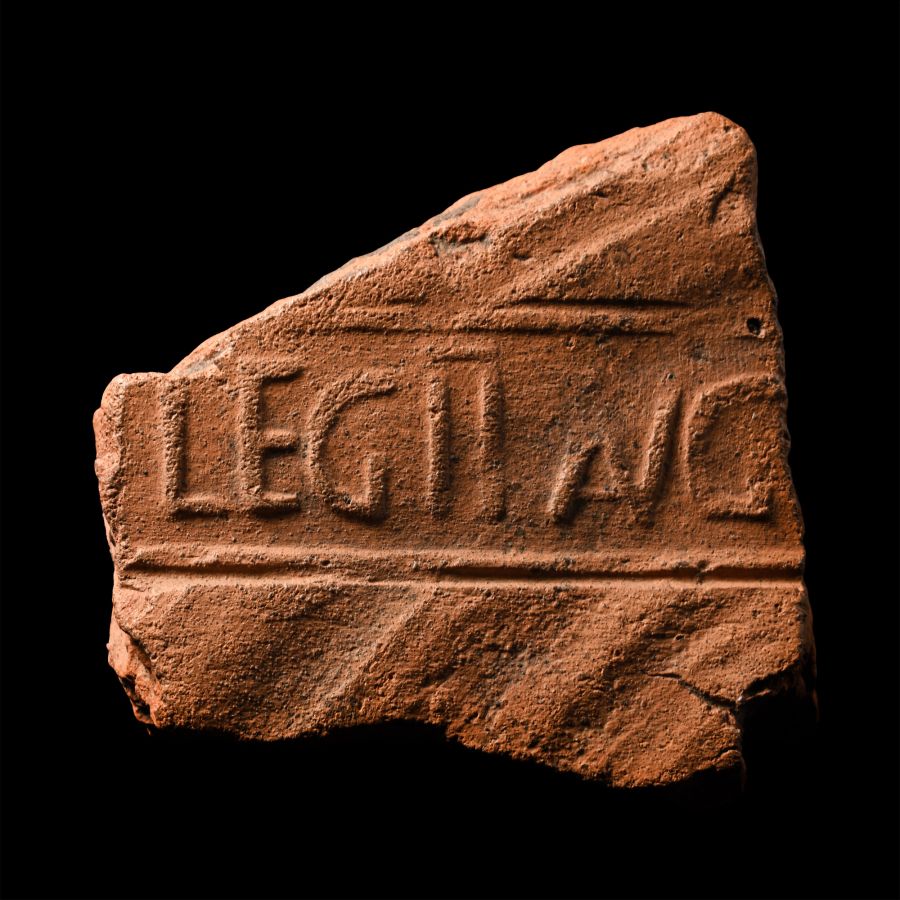
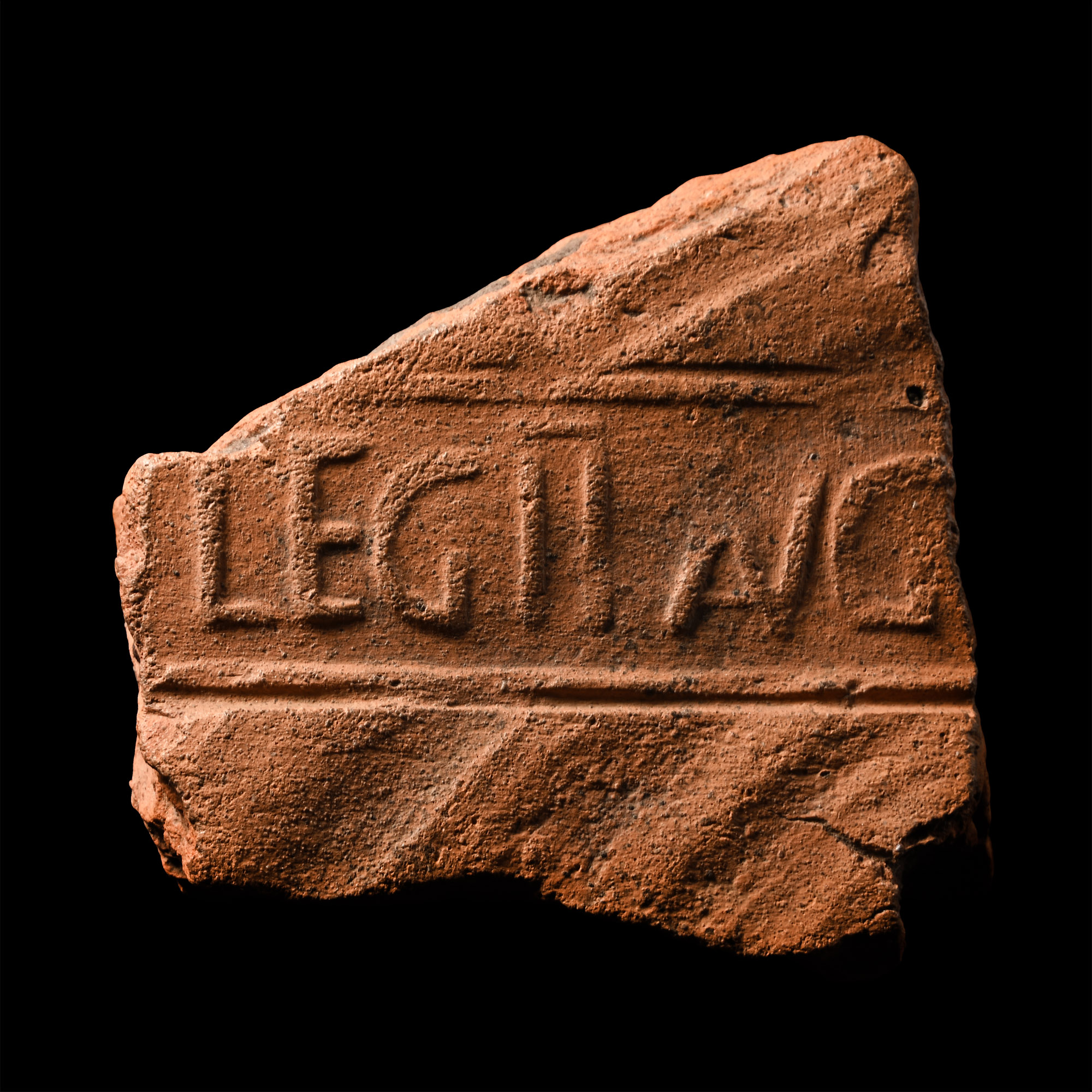
'Caerleon' Roman Roof Tile Fragment with LEG II AVG Legionary Stamp
3RD-4TH CENTURY A.D.
2 7/8 in. (174 grams, 72 mm).
Thick section of a tile with stamped 'LEG II AVG' across the front, an inked collector's number 31.36.65 to one side and a taped label reading 'Caerleon Roman bathouse (sic)' on the reverse. [No Reserve]
ProvenanceFound at Caerleon Bathhouse, Newport, Wales, UK.
From the private collection of Peter Clayton, FCILIP, Dip, Arch, FSA, FRNS, Hemel Hempstead, Hertfordshire, UK; formed since the late 1950s.
The Caerleon Roman barracks served as a base for the Roman Second Augustan Legion and held upwards of 5000 soldiers.
CONDITIONTimeLine Auctions follows a vetting process to ensure the authenticity and legality of all items, reinforcing our commitment to integrity and responsible trading. Each antiquity, antique, and coin lot undergoes thorough examination by a vetting committee of at least ten external specialists, professional trade association members, scientists, and archaeologists: Our Vetting Process
AUCTIONS:
TimeLine is a leading auction house specialising in antiquities, ancient art, collectables, natural history, coins, medals, and books. Our auctions offer museums, collectors, historians, and enthusiasts the opportunity to acquire unique and historically significant pieces.
LOT 0884
'Caerleon' Roman Roof Tile Fragment with LEG II AVG Legionary Stamp
Estimate £60 - 80€70 - 93 (for guidance only)$81 - 108 (for guidance only)
Opening Bid
£5 (EUR 6; USD 7) +BP*
-
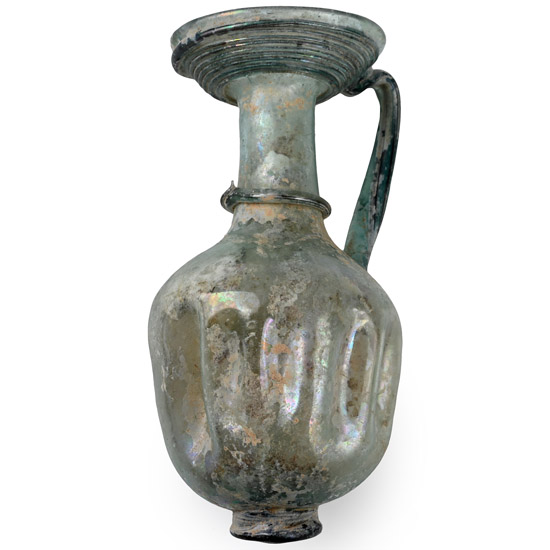
Roman Pale Green Glass Jug with Trail
Circa 4th-5th century A.D.Estimate: £1,000 - 1,400 (+bp*)
Opening Bid: £550
With a rounded body and a cylindrical neck with a funnel-shaped mouth, a small uneven foot and a blue-trailed handle; the body decorated with vertical concave indents and trails of glass applied at the base of the neck and around the mouth. 53 grams, 10.5 cm
From a London collection, acquired in the 1970s. Roman glass from an important London collection, acquired from the early 1980s. Accompanied by a typed previous catalogue information page with provenance.
This jug has many common features with the distinctive group of Syro-Palestinian glasses, free- and mould-blown ones dated to the 4th-5th centuries A.D. Common features, beginning with the characteristic colour and quality of both green and turquoise glass, are the shape of the base and the handle, the indentations along the body, and the decorative coloured coil on the neck and under the rim. -
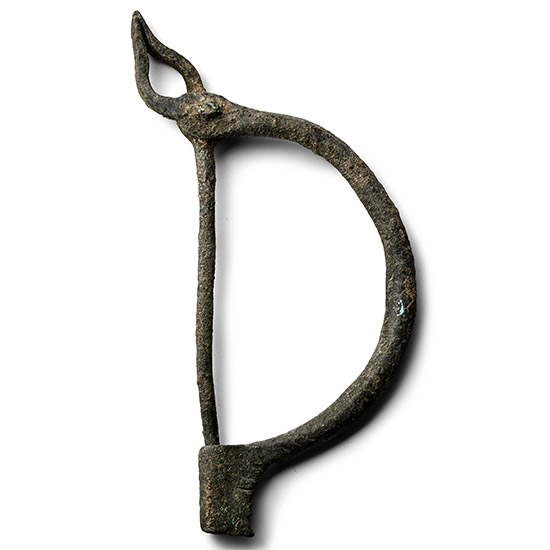
Roman Bronze Pincer Bow Brooch
1st century A.D.Estimate: £40 - 60 (+bp*)
Opening Bid: £5
Comprising a round-section bow, articulated pin with a finial formed as tongs, rectangular ribbed catchplate. 13.1 grams, 82 mm
From a UK collection formed in the 1980s. Property of an Essex, UK, gentleman. -
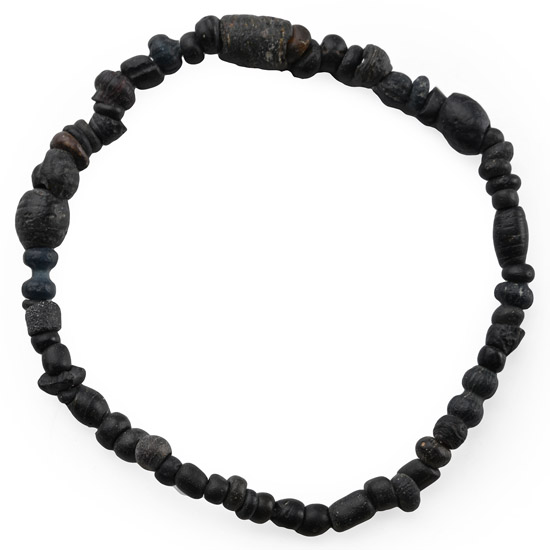
Roman Black Glass Bead Bracelet
Circa 1st-4th century A.D.Estimate: £50 - 70 (+bp*)
Opening Bid: £5
Composed of mixed beads, restrung with an elasticated string. 4.79 grams, 17 cm
Ex Ancient Art Shop, Windsor, UK, 1990s. Ex private collection.
