
Loading, please wait...
LOT 1087
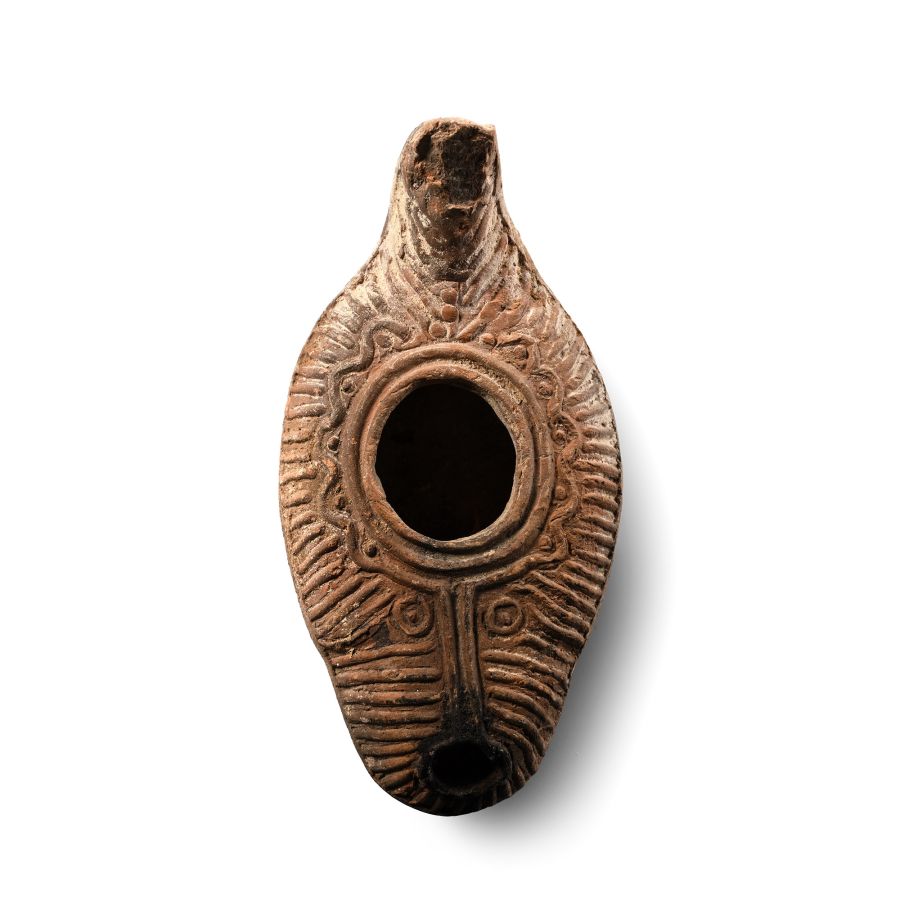
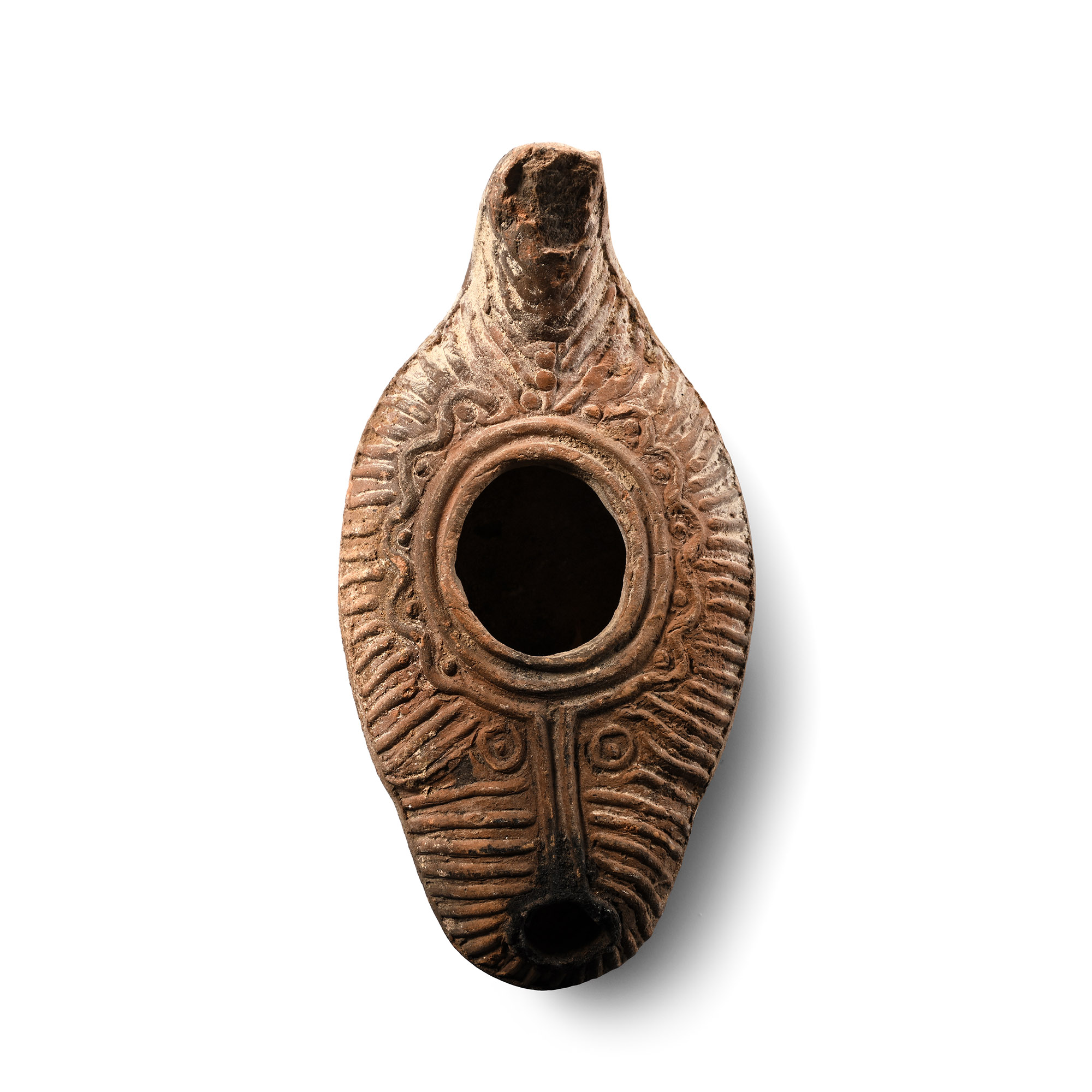
Byzantine Terracotta Slipper Oil Lamp
5TH-8TH CENTURY A.D.
4 1/2 in. (88 grams, 11.4 cm).
Slipper-shaped in plan with curved lug handle to the rear, raised rim to the filler hole, broad shoulder with raised radiating bars, pellets and undulation, stub nozzle, and low basal ring. [No Reserve]
ProvenanceEx Israeli collection, 1980s.
LiteratureCf. De Vincenz, A., ‘Ceramic Vessels and Oil Lamps from the Burial Cave at ‘En Lavan, Nahal Refa’im’ in Atiqot, 98, 2020, pp.103-122, fig.8, for type.
CONDITIONTimeLine Auctions follows a vetting process to ensure the authenticity and legality of all items, reinforcing our commitment to integrity and responsible trading. Each antiquity, antique, and coin lot undergoes thorough examination by a vetting committee of at least ten external specialists, professional trade association members, scientists, and archaeologists: Our Vetting Process
AUCTIONS:
TimeLine is a leading auction house specialising in antiquities, ancient art, collectables, natural history, coins, medals, and books. Our auctions offer museums, collectors, historians, and enthusiasts the opportunity to acquire unique and historically significant pieces.
-
.jpg)
Byzantine Bronze Ring with Scrolls
Circa 10th-12th century A.D.Sold for (Inc. bp): £91
Comprising a wide, keeled band with a flat plaque on each shoulder, raised bezel with a discoid plaque decorated with scroll motifs. 7.46 grams, 30.65 mm overall, 19.57 mm internal diameter (approximate size British R, USA 8 1/2, Europe 18 3/4, Japan 18)
Acquired on the UK art market before 2000. Property of an Essex, UK, gentleman. -
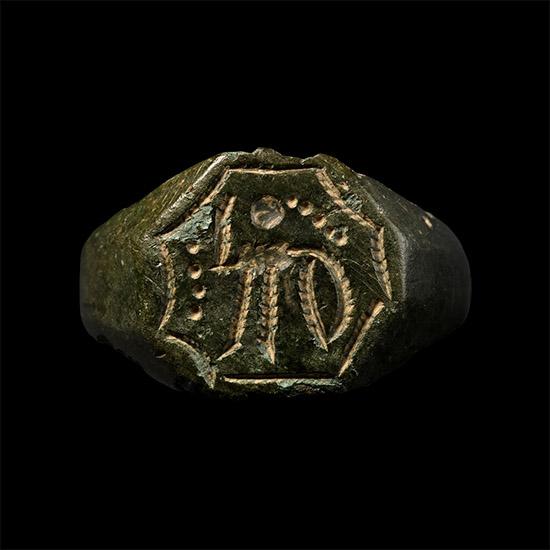
Byzantine Bronze Ring with Warrior Saint
14th-15th century A.D.Sold for (Inc. bp): £46
Wide hoop expanding at the shoulders, octagonal bezel with a stylised figure holding a sword and a shield. 7.11 grams, 23.16 mm overall, 19.40 mm internal diameter (approximate size British Q, USA 8, Europe 17.49, Japan 16)
Acquired on the UK and EU art market before 2000. From the private collection of a Surrey, UK, gentleman.
In these rings, the octagonal circular bezel bears a stylised warrior. The bezel of these rings was decorated with stylised images, very often military saints, invoking protection and blessing. -
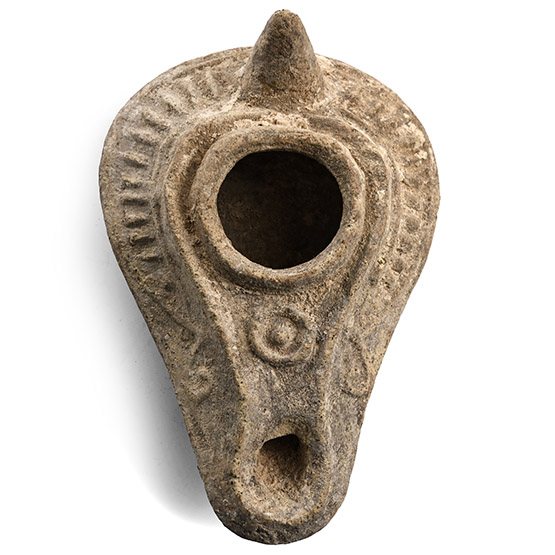
Byzantine Terracotta Oil Lamp
5th-7th century A.D.Sold for (Inc. bp): £98
Slipper-shaped in plan with spike handle, raised rim to the filler hole, broad shoulder with raised radiating bars, stub nozzle with ring-and-dot above, low basal ring. 72 grams, 97 mm
From the Lloyd and Jeanne Raport collection, Washington, D.C. and Florida, USA, formed between 1972-2000. Acquired through Bonhams, London, UK.
