
Loading, please wait...
LOT 0741
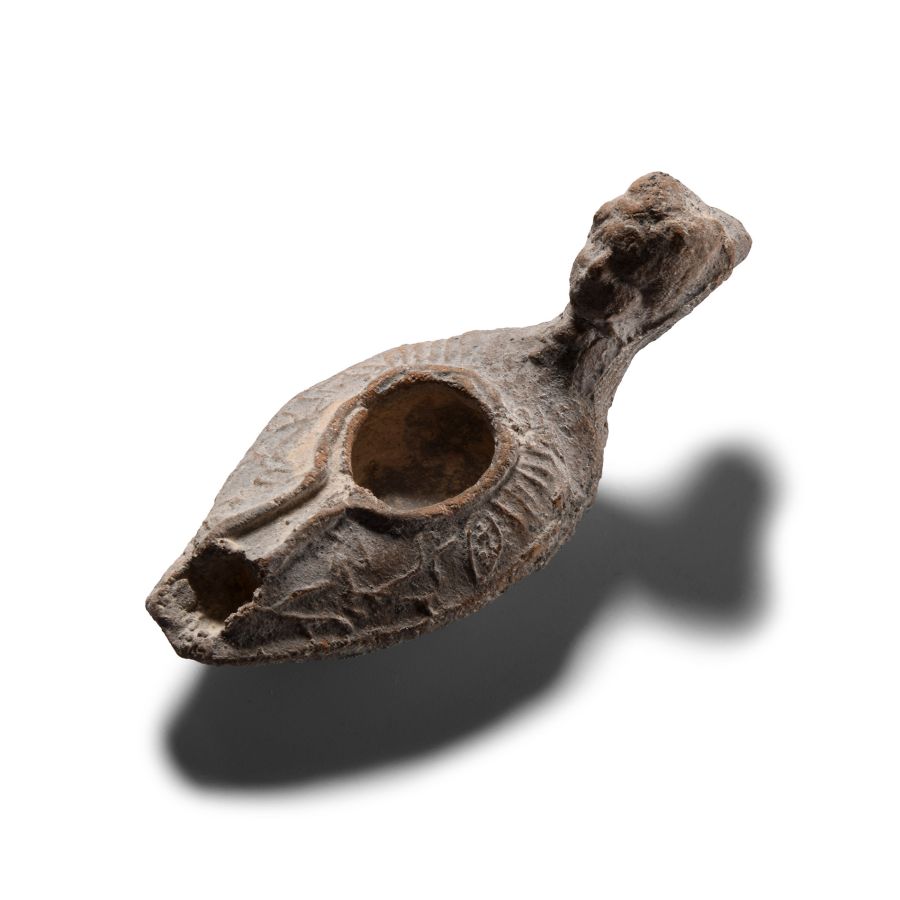
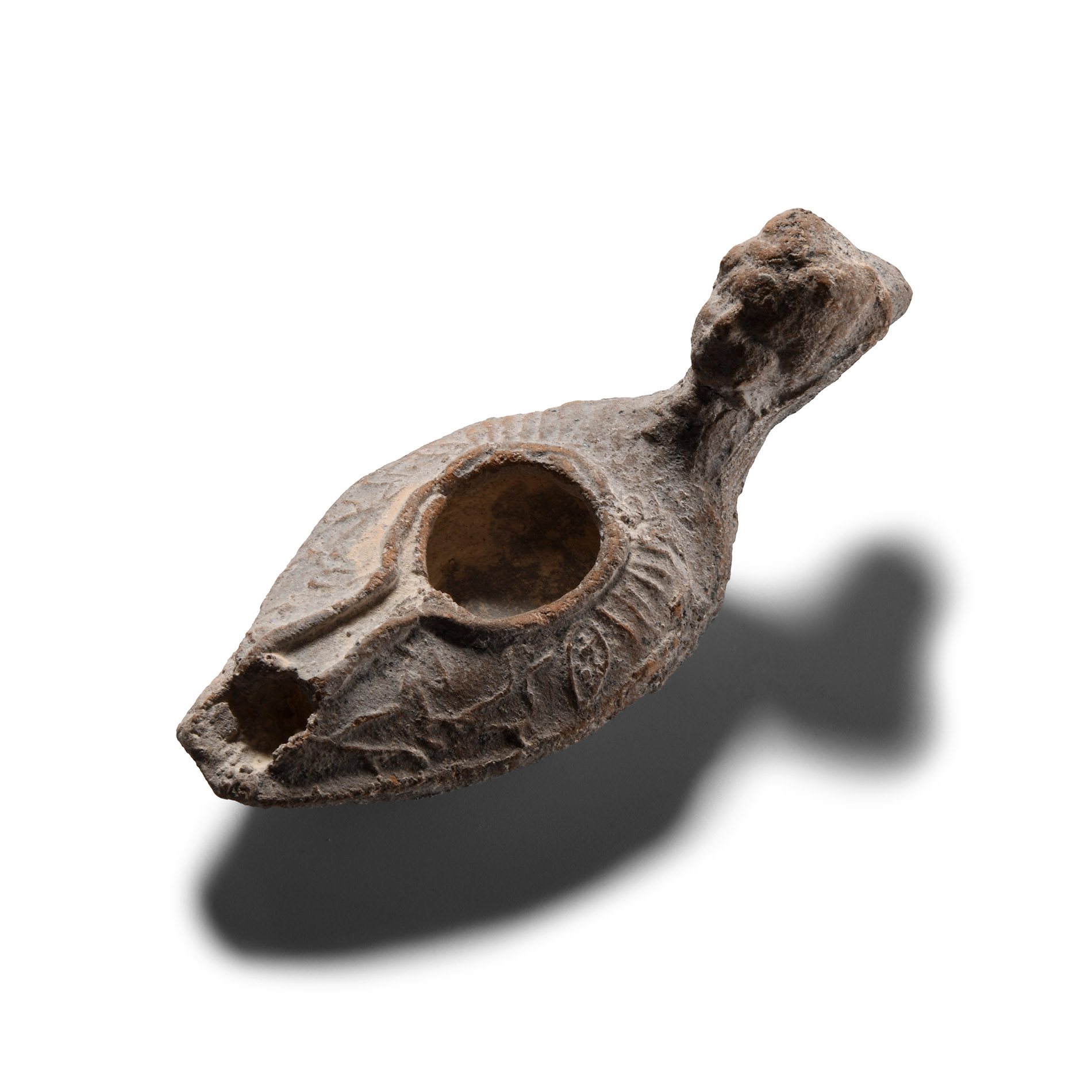
Byzantine Terracotta Slipper Oil Lamp with Head of a Goddess
5TH-8TH CENTURY A.D.
4 1/2 in. (79 grams, 11.6 cm).
With a large sub circular filling hole and a narrow channel running towards the nozzle; stylised animal motifs and linear decoration to the body; the integral handle formed as the head of a goddess with rounded face and curly hair; low basal ring from which raised tendrils radiate. [No Reserve]
ProvenanceAcquired before 1990s/early 2000s.
From the family collection of Jack Lyttle (1944-2023), Kilmacolm, Scotland; thence by descent to his granddaughter.
Property of an East Sussex, UK, gentleman.
TimeLine Auctions follows a vetting process to ensure the authenticity and legality of all items, reinforcing our commitment to integrity and responsible trading. Each antiquity, antique, and coin lot undergoes thorough examination by a vetting committee of at least ten external specialists, professional trade association members, scientists, and archaeologists: Our Vetting Process
AUCTIONS:
TimeLine is a leading auction house specialising in antiquities, ancient art, collectables, natural history, coins, medals, and books. Our auctions offer museums, collectors, historians, and enthusiasts the opportunity to acquire unique and historically significant pieces.
LOT 0741
Byzantine Terracotta Slipper Oil Lamp with Head of a Goddess
Sold for (Inc. bp): £124
-
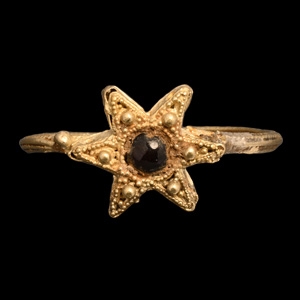
Byzantine Gold Star Ring
Circa 13th-14th century A.D.Estimate: £800 - 1,000 (+bp*)
Opening Bid: £400
Composed of a slender carinated hoop adorned with filigree supporting a hollow-formed star-shaped bezel set with central polished cabochon garnet and granules, each of six arms pierced, remaining granule to one shoulder. 1.76 grams, 23.61 mm overall, 20.80 mm internal diameter (approximate size British S 1/2, USA 9 1/4, Europe 20.63, Japan 19)
Acquired 1990s-early 2000s. East Anglian private collection. -
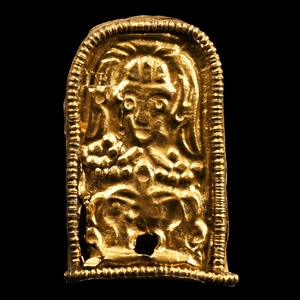
Byzantine Gold Strap End with Facing Figure
Circa 9th-10th century A.D.Estimate: £600 - 800 (+bp*)
Opening Bid: £320
The hollow-formed, tongue-shaped body adorned with a filigree border, repoussé figure with pellets on the torso and serpents framing the head. 7.40 grams, 39 mm
Acquired 1990s-early 2000s. East Anglian private collection. -
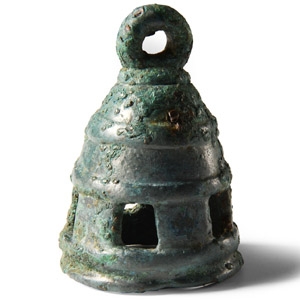
Byzantine Bronze Openwork Bell
Circa 10th-12th century A.D.Sold for (Inc. bp): £117
Conical profile with thick suspension loop, circumferential ribs, five square slots above the mouth. 108 grams, 63 mm
Ex old English collection. London art market, pre 2000. Property of a London, UK, gentleman.
