
Loading, please wait...
LOT 1292
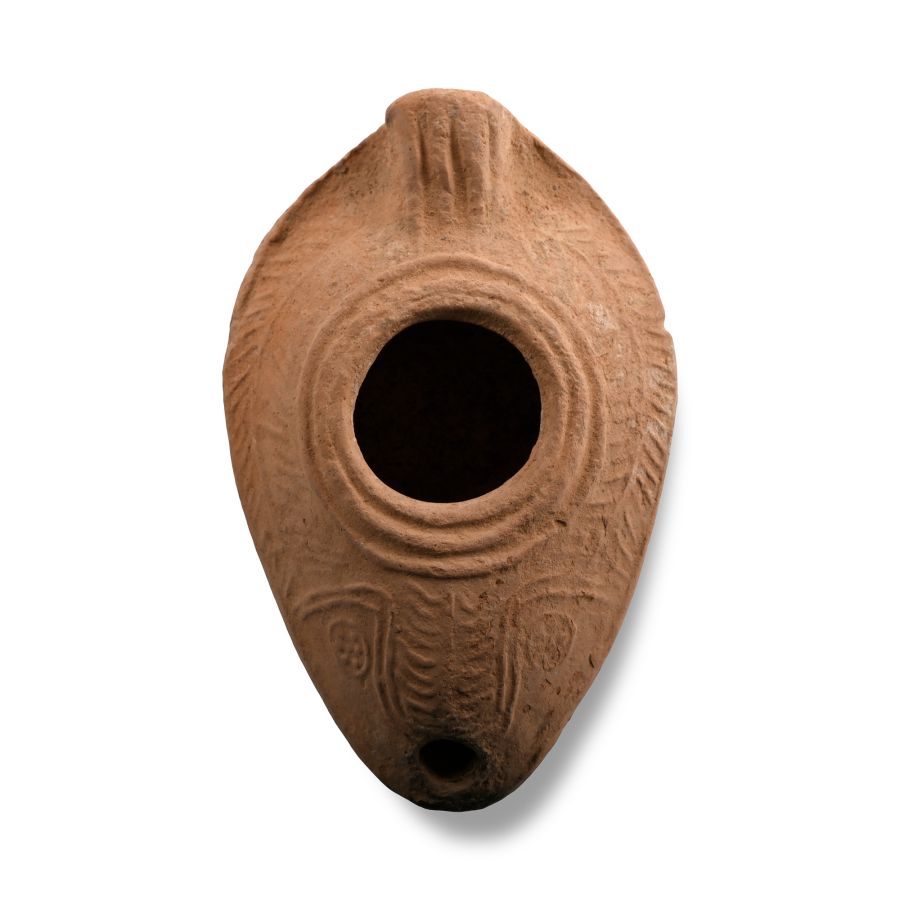
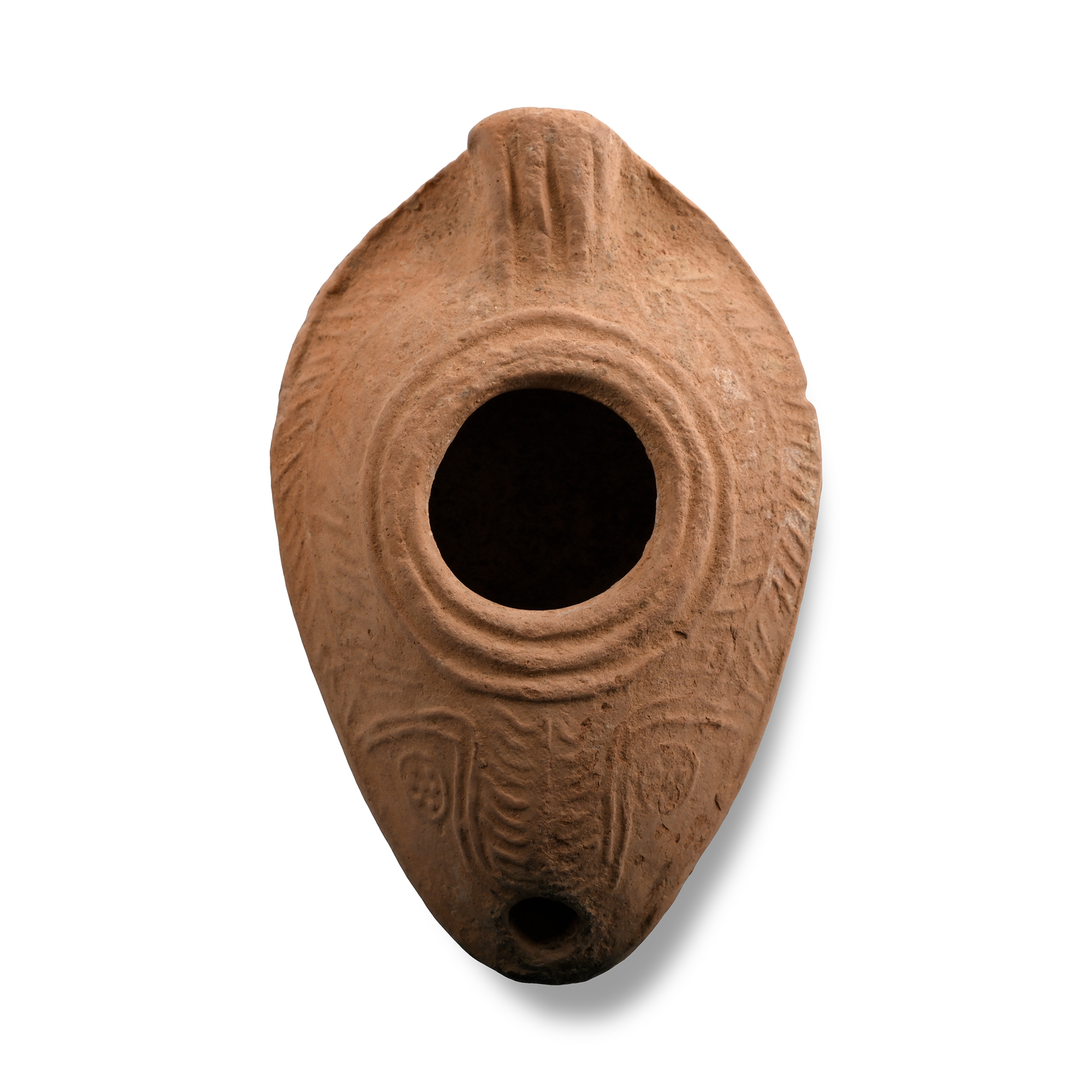
Byzantine Terracotta Slipper Oil Lamp with Fern
5TH-8TH CENTURY A.D.
3 1/2 in. (63.2 grams, 88 mm).
Slipper-shaped body with raised rim around the filler hole, tapering nozzle, lug handle to the rear, low-relief frond decoration to the discus, small basal ring. [No Reserve]
ProvenanceFrom a collection of lamps of a late Scottish gentleman, 1970-1990s.
CONDITIONTimeLine Auctions follows a vetting process to ensure the authenticity and legality of all items, reinforcing our commitment to integrity and responsible trading. Each antiquity, antique, and coin lot undergoes thorough examination by a vetting committee of at least ten external specialists, professional trade association members, scientists, and archaeologists: Our Vetting Process
AUCTIONS:
TimeLine is a leading auction house specialising in antiquities, ancient art, collectables, natural history, coins, medals, and books. Our auctions offer museums, collectors, historians, and enthusiasts the opportunity to acquire unique and historically significant pieces.
-
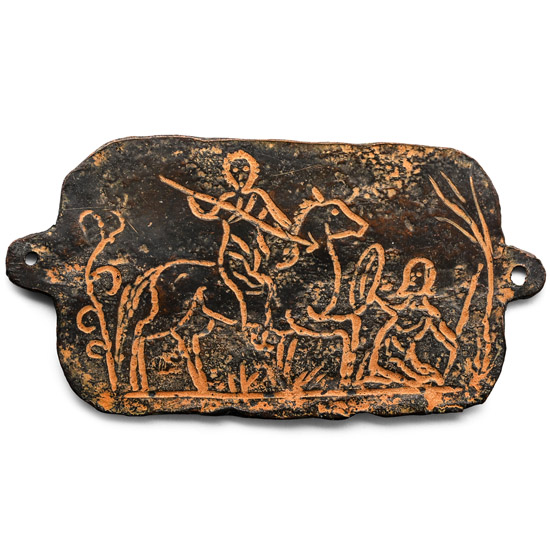
Byzantine Bronze Plaque with Warrior Saint
Circa 6th century A.D.Sold for (Inc. bp): £338
Rectangular with rounded corners and pierced lug to each short side; low-relief scene with a horseman brandishing a spear against an infantryman with spear and shield; foliage and baseline. 8.82 grams, 58 mm
From the collection of a gentleman, acquired on the London art market in the 1990s. -
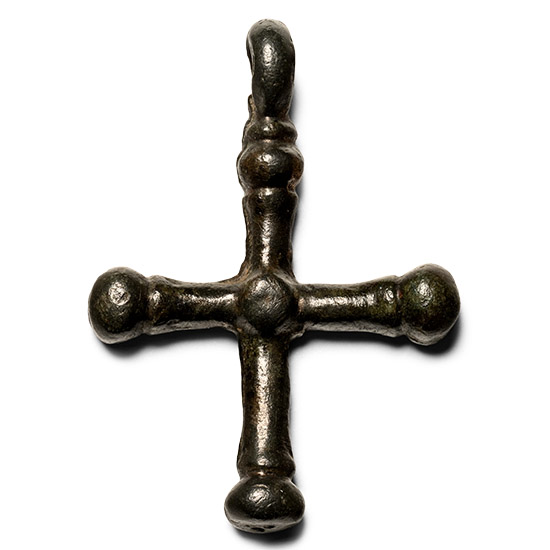
Byzantine Bronze Cross Pendant
10th-12th century A.D.Sold for (Inc. bp): £59
Round-section arms with knop finials, raised pellet at the centre and an integral suspension loop. 10.6 grams, 43 mm
Ex German art market, 2000s. Acquired from an EU collector living in London. From the collection of a Surrey, UK, gentleman. -
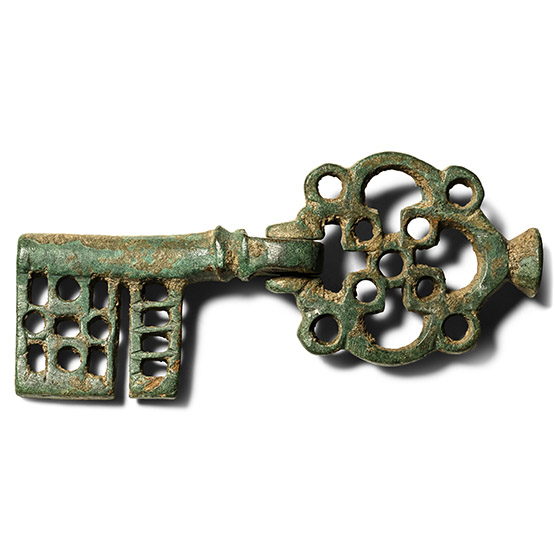
Byzantine Bronze Openwork Key
6th-8th century A.D.Sold for (Inc. bp): £1,040
Comprising an articulated decorative handle with a cross motif, a round-section shaft and an openwork bit. 17.8 grams, 60 mm
Ex German art market, 2000s. Acquired from an EU collector living in London. From the collection of a Surrey, UK, gentleman.
