
Loading, please wait...
LOT 1112
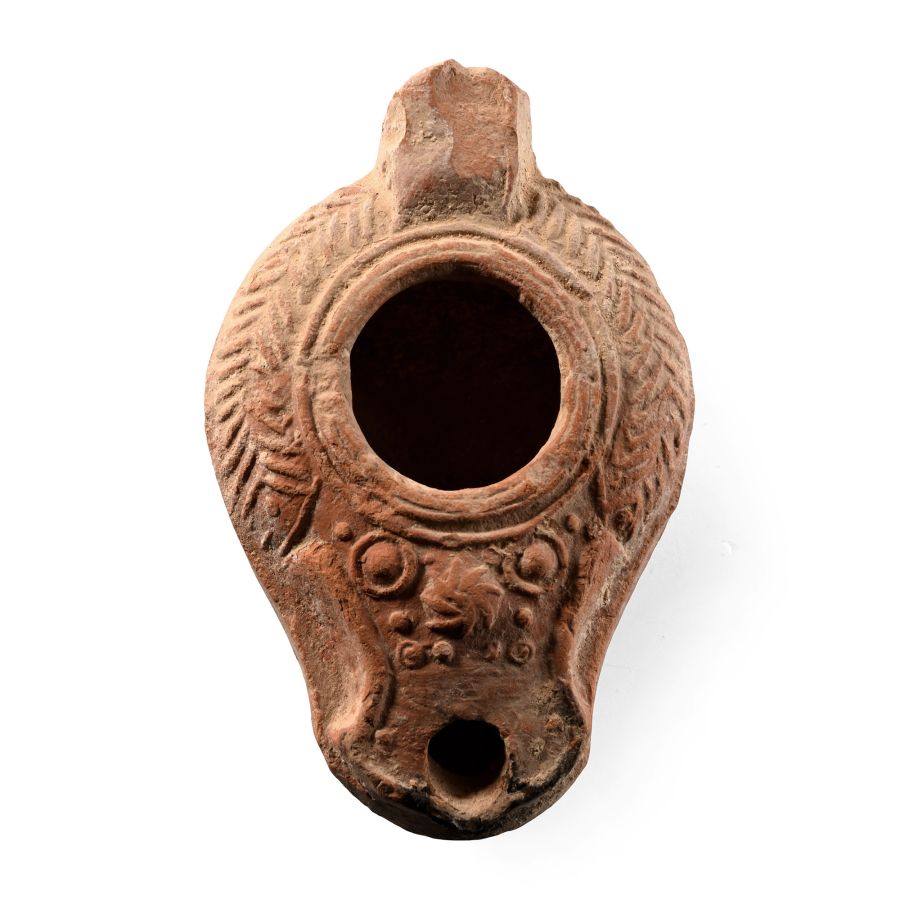
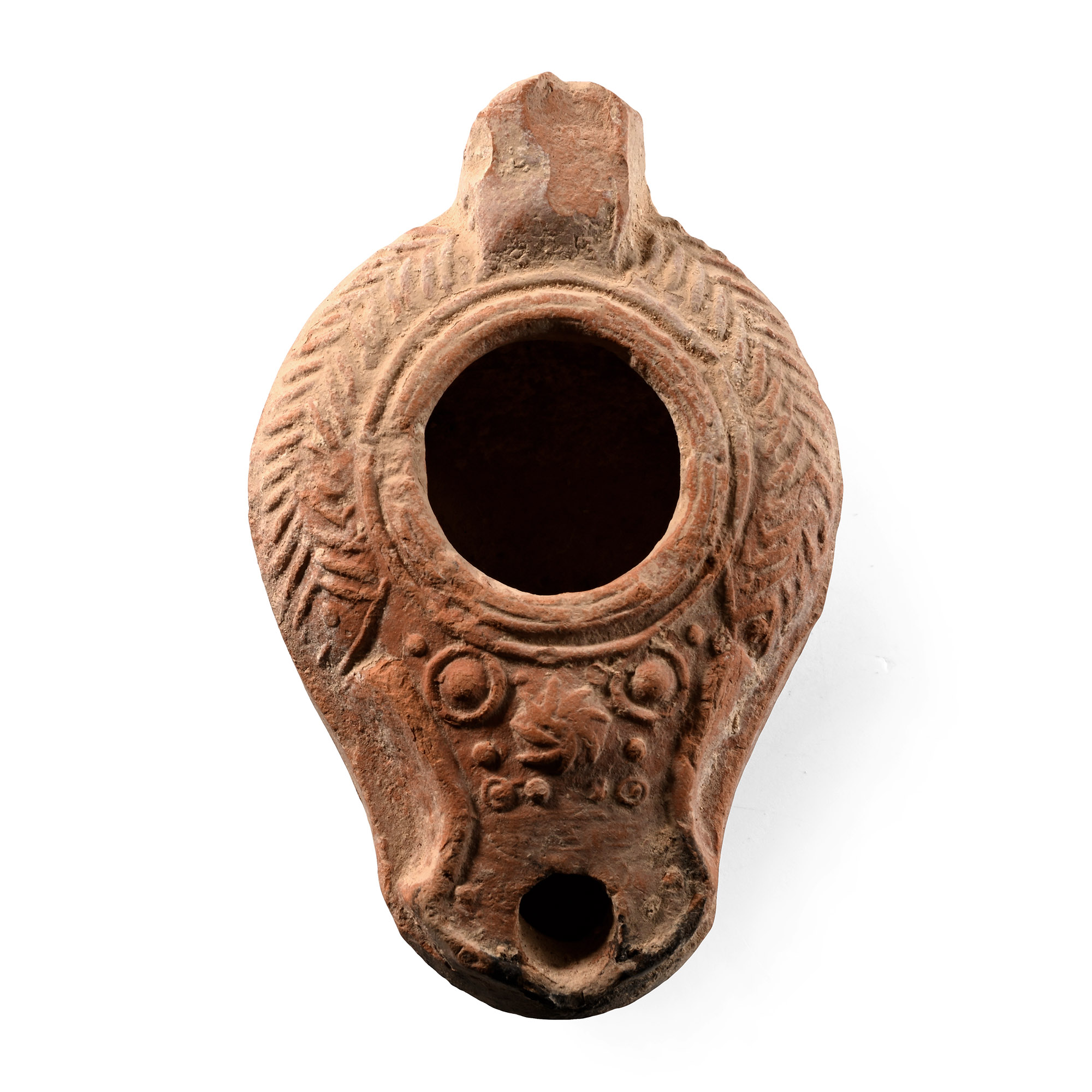
Byzantine Terracotta Slipper Oil Lamp with Chevrons
HOLY LAND, CIRCA 5TH-8TH CENTURY A.D.
3 5/8 in. (60 grams, 93 mm).
Lug handle to the rear, band of herringbone pattern around the filler hole, the nozzle with a sunburst motif flanked by ring-and-dot motifs; low basal ring with a central pellet. [No Reserve]
ProvenanceEx Ancient Art Shop, Windsor, UK, 1990s.
Ex private West County, UK, collection.
Cf. Rosenthal R., Sivan, R., Ancient Lamps in the Schloessinger Collection, Jerusalem, 1978, no.519, p.126, for the type (Elgavish type 56).
CONDITIONTimeLine Auctions follows a vetting process to ensure the authenticity and legality of all items, reinforcing our commitment to integrity and responsible trading. Each antiquity, antique, and coin lot undergoes thorough examination by a vetting committee of at least ten external specialists, professional trade association members, scientists, and archaeologists: Our Vetting Process
AUCTIONS:
TimeLine is a leading auction house specialising in antiquities, ancient art, collectables, natural history, coins, medals, and books. Our auctions offer museums, collectors, historians, and enthusiasts the opportunity to acquire unique and historically significant pieces.
-
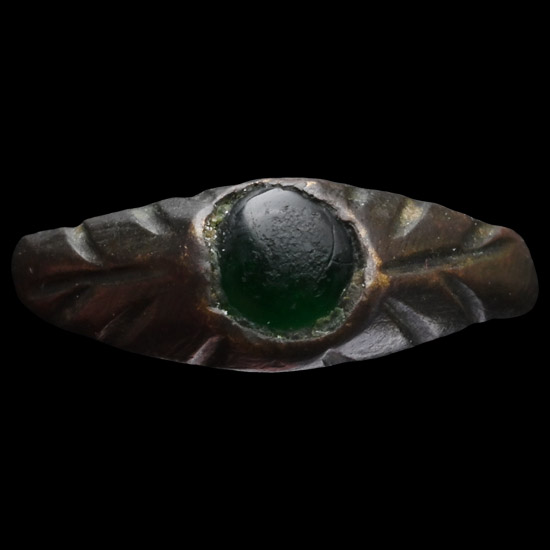
Byzantine Bronze Stirrup Ring with Green Gem
Circa 14th-15th century A.D.Sold for (Inc. bp): £91
With a slender hoop and thickened underside, conical bezel set with incuse foliage detailing, inset cabochon. 2.96 grams, 23.50 mm overall, 16.02 x 15.43 mm internal diameter (approximate size British J, USA 4 3/4, Europe 8.69, Japan 8)
From the private collection of Mr Brian Edwards, New Malden, Surrey, UK, formed from the late 1970s-early 1980s; thence by descent. Accompanied by the original collector's data sheet(s) with reference no.A45. -
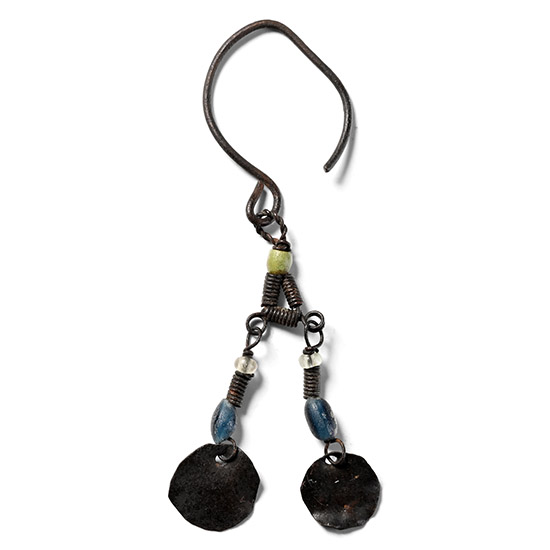
Byzantine Bronze Earring with Bead Drops
12th-15th century A.D.Sold for (Inc. bp): £26
Hook earring with wire and glass bead dangles, disc spangles. 1.56 grams, 65 mm
From the private collection of Mr Brian Edwards, New Malden, Surrey, UK, formed from the late 1970s-early 1980s; thence by descent. Accompanied by the original collector's data sheet(s) with reference no.A71. -
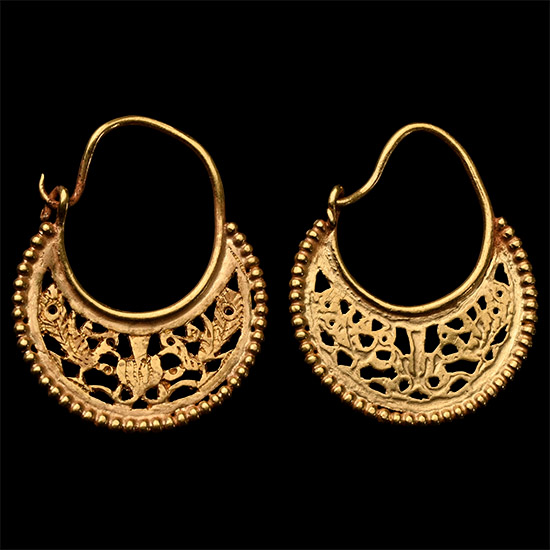
Byzantine Gold Openwork Earring Pair
6th-8th century A.D.Sold for (Inc. bp): £1,430
Each a crescent plaque with beaded borders, sprung hook and catch; openwork foliage motif with two opposing birds. 5.75 grams total, 28-29 mm
Private collection, 1990s-early 2000s.
