
Loading, please wait...
LOT 1461
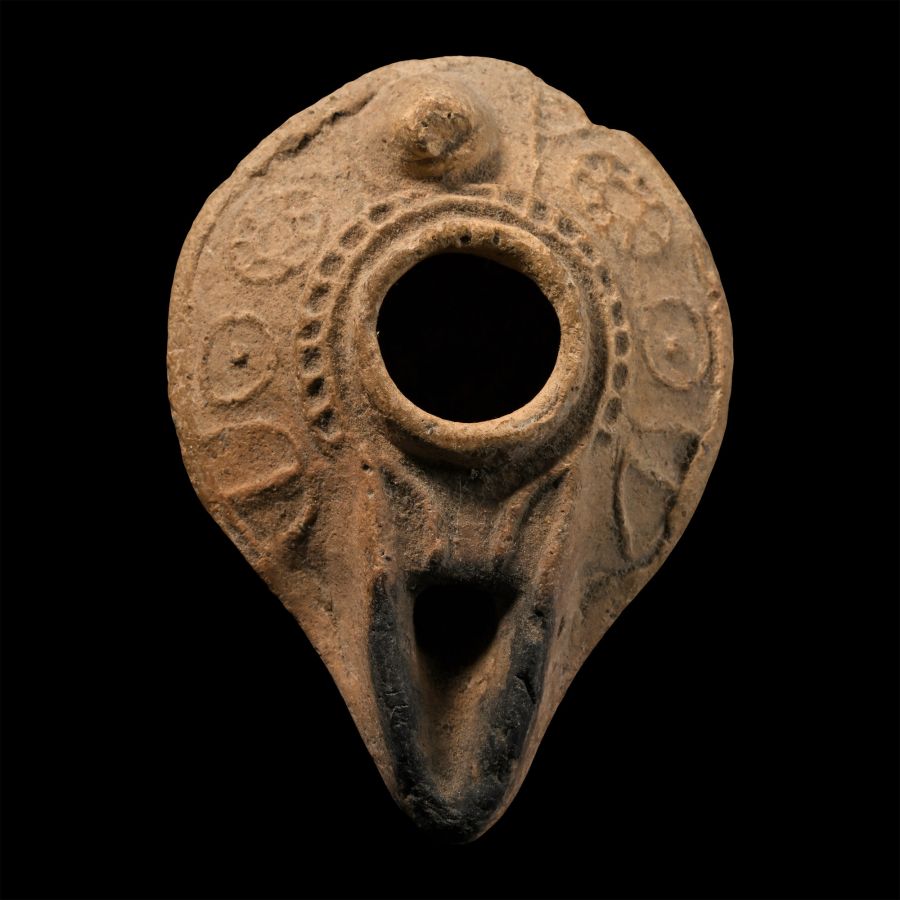
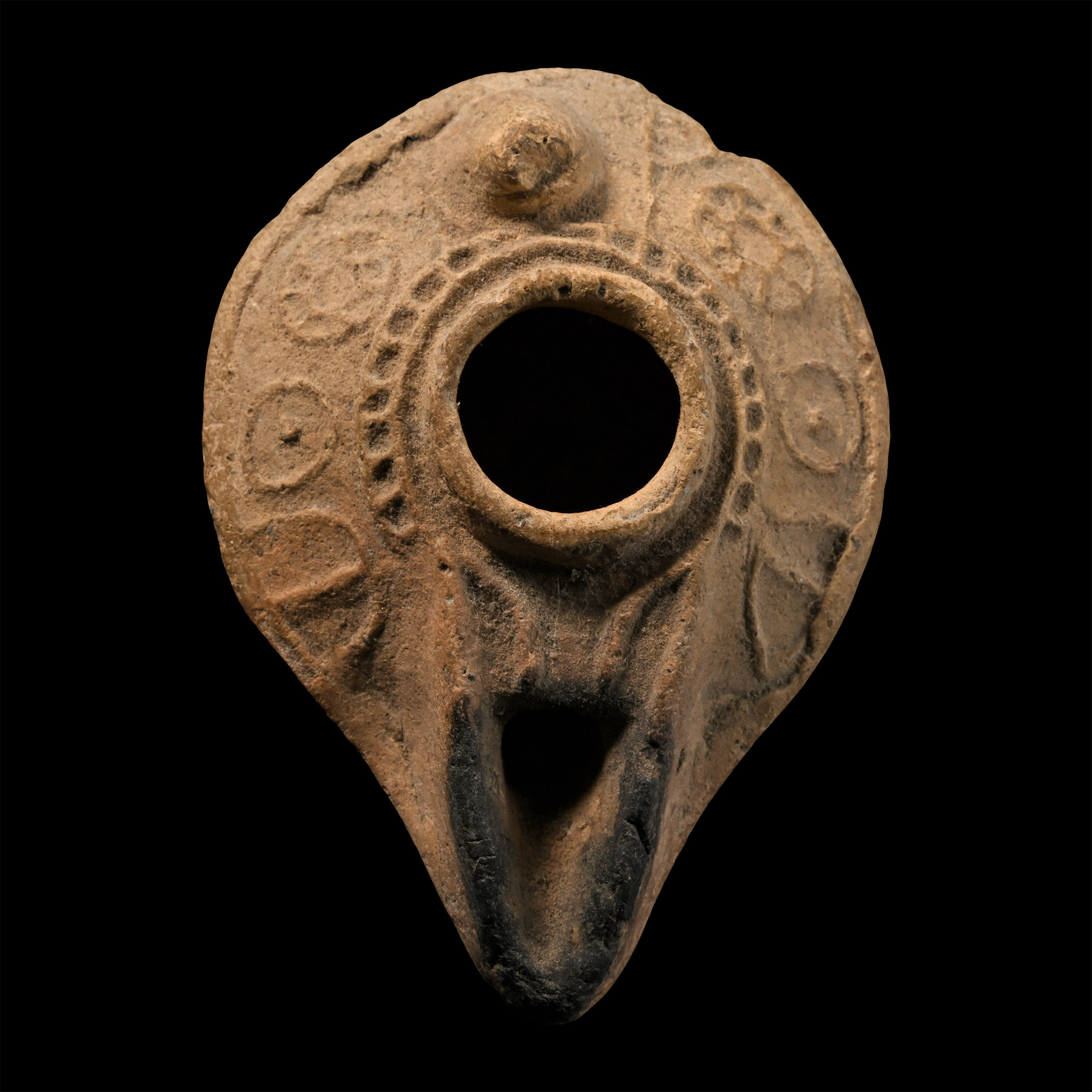
Byzantine Terracotta Oil Lamp with Roundel Decoration
HOLY LAND, CIRCA 7TH CENTURY A.D.
3 3/8 in. (83 grams, 96 mm).
The body with roundel decoration in relief, small stub handle to the rear and a triangular spout. [No Reserve]
ProvenanceEx J. Zadok & Sons, 18, King David Road, Jerusalem, Israel.
From the property of a late Lincolnshire, UK, gentleman; thence by descent.
Accompanied by a certificate of antiquity issued by J. Zadok & Sons.
TimeLine Auctions follows a vetting process to ensure the authenticity and legality of all items, reinforcing our commitment to integrity and responsible trading. Each antiquity, antique, and coin lot undergoes thorough examination by a vetting committee of at least ten external specialists, professional trade association members, scientists, and archaeologists: Our Vetting Process
AUCTIONS:
TimeLine is a leading auction house specialising in antiquities, ancient art, collectables, natural history, coins, medals, and books. Our auctions offer museums, collectors, historians, and enthusiasts the opportunity to acquire unique and historically significant pieces.
LOT 1461
Byzantine Terracotta Oil Lamp with Roundel Decoration
Estimate £50 - 70€58 - 81 (for guidance only)$68 - 95 (for guidance only)
-
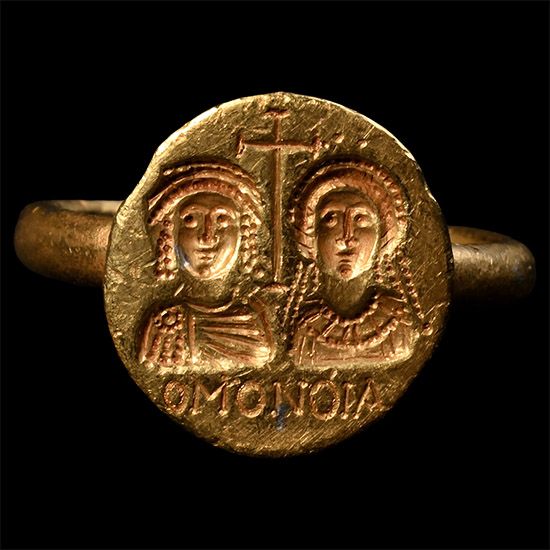
Byzantine Gold Marriage Ring with Inscription
Circa 6th-7th century A.D.Estimate: £5,000 - 7,000 (+bp*)
Opening Bid: £2,500
Round-section hoop with discoid bezel incuse image of two front-facing busts wearing beaded headdresses between a cross, legend 'ΟΜΟΝΟΙΑ' (harmony, unity) below; supplied with an impression. 7.81 grams, 21.81 mm overall, 18.33 x 17.78 mm internal diameter (approximate size British P 1/2, USA 7 3/4, Europe 16.86, Japan 16)
Mayfair gallery, London, UK, 1990s. From a Surrey, UK, gentleman’s Christian collection. This lot has been checked against the Interpol Database of stolen works of art and is accompanied by search certificate no.13542-263292.
The marriage ring is one of the typologies in which figural decorations are frequently found. Generally speaking, marriage rings are engraved with a representation of a husband and wife dressed as an Imperial couple, sometimes accompanied by Christ or by a cross, and usually engraved with wishes for 'harmony, health and the grace of God'. Rings of this type had been used since the late 4th century A.D. and remained extremely popular in Byzantium in the 6th and 7th centuries. -
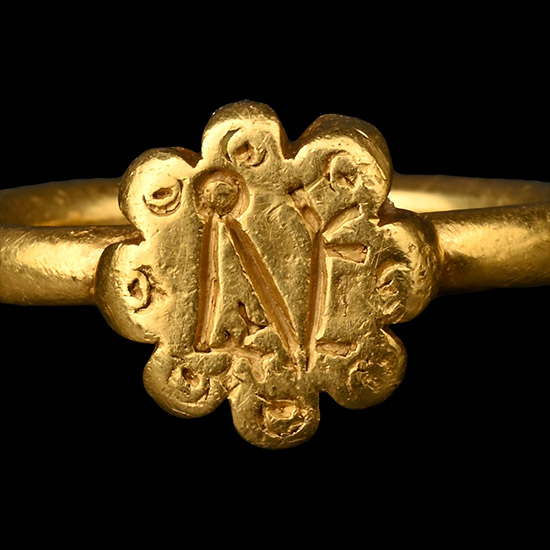
Heavy Byzantine Gold Ring with Monogram
Circa 7th century A.D.Estimate: £3,000 - 4,000 (‡+bp*)
Opening Bid: £1,500
Substantial hoop with integral rosette bezel, ring-and-dot motifs to the upper face surrounding a monogram including 'ΝIKΟΥ' and other letters. 14.74 grams, 27.85 mm overall, 20.28 x 18.97 mm internal diameter (approximate size British S 1/2, USA 9 1/4, Europe 20.63, Japan 19)
Private collection of Kal Noselson, New York, acquired between 1976 and the late 1990s; thence by descent. This lot has been checked against the Interpol Database of stolen works of art and is accompanied by search certificate no.13413-259782.
The ring belongs to the category of Eastern Roman rings featuring a polygonal band and an applied bezel, a type particularly common in the 7th century A.D. It bears the monogram ΝIKΟΥ (of Nikos). -
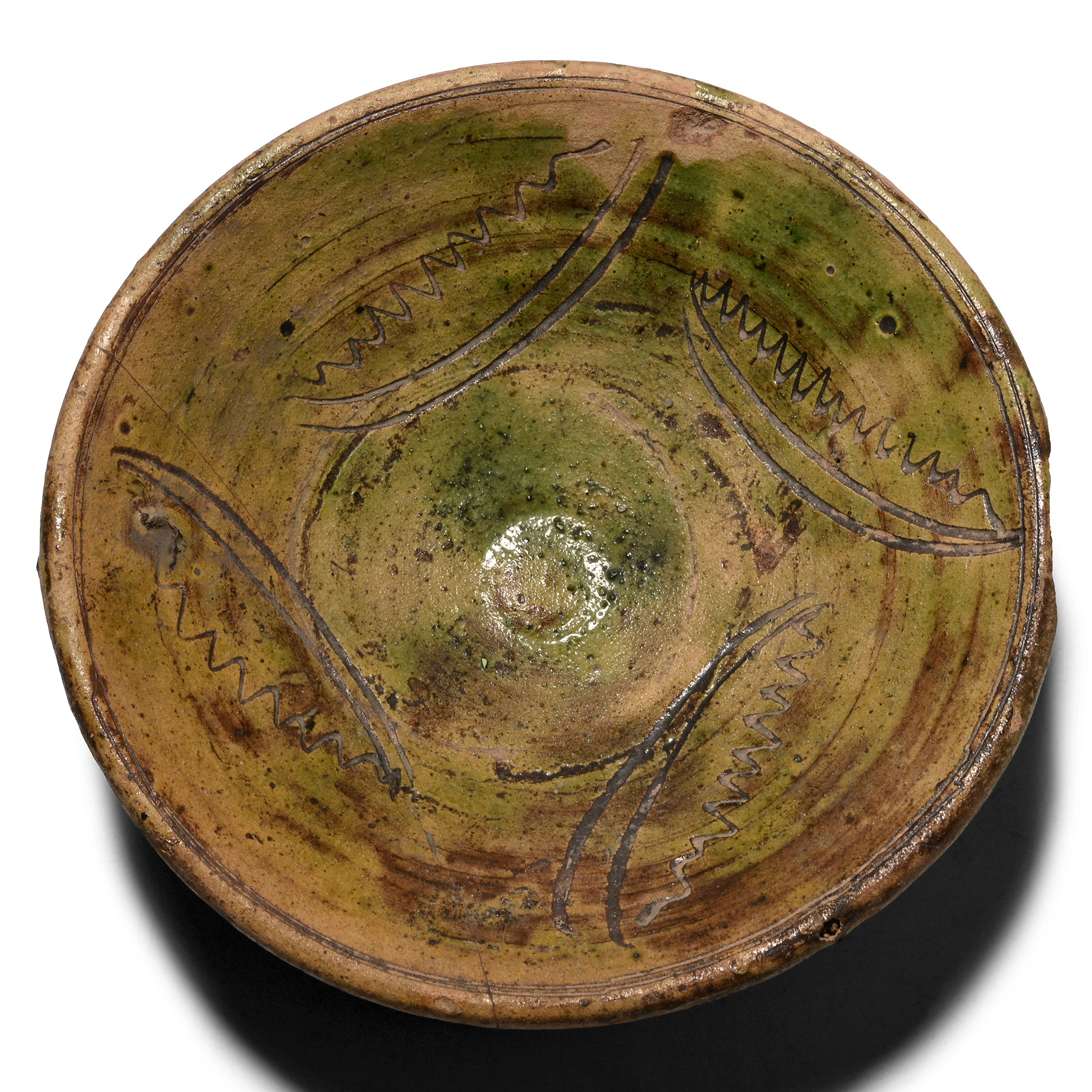
Byzantine Green Glazed Sgraffito Footed Bowl
13th-14th century A.D.Estimate: £200 - 300 (+bp*)
Bids: 2 | Current Bid: £10
Shallow type with dished body and ring to underside; rounded rim and incised border, four sgraffito crescent motifs with undulating line above each. 301 grams, 16 cm wide
From the private collection of Peter Clayton, FCILIP, Dip, Arch, FSA, FRNS, Hemel Hempstead, Hertfordshire, UK; formed since the late 1950s.
