
Loading, please wait...
LOT 0966
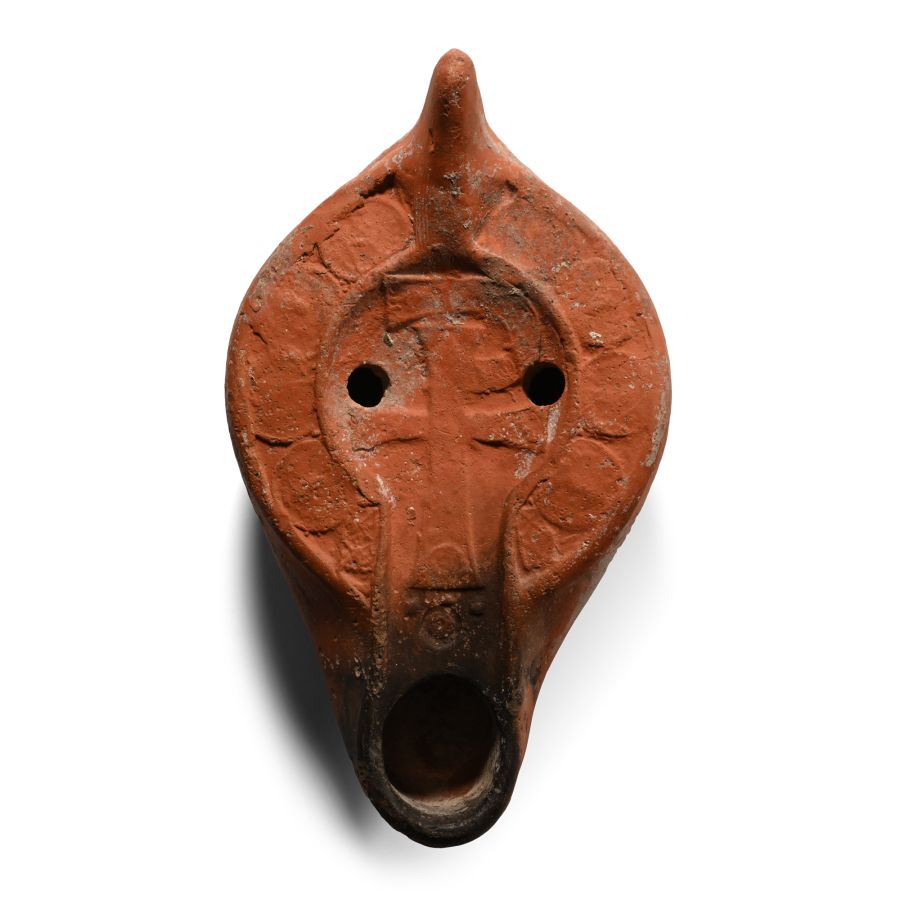
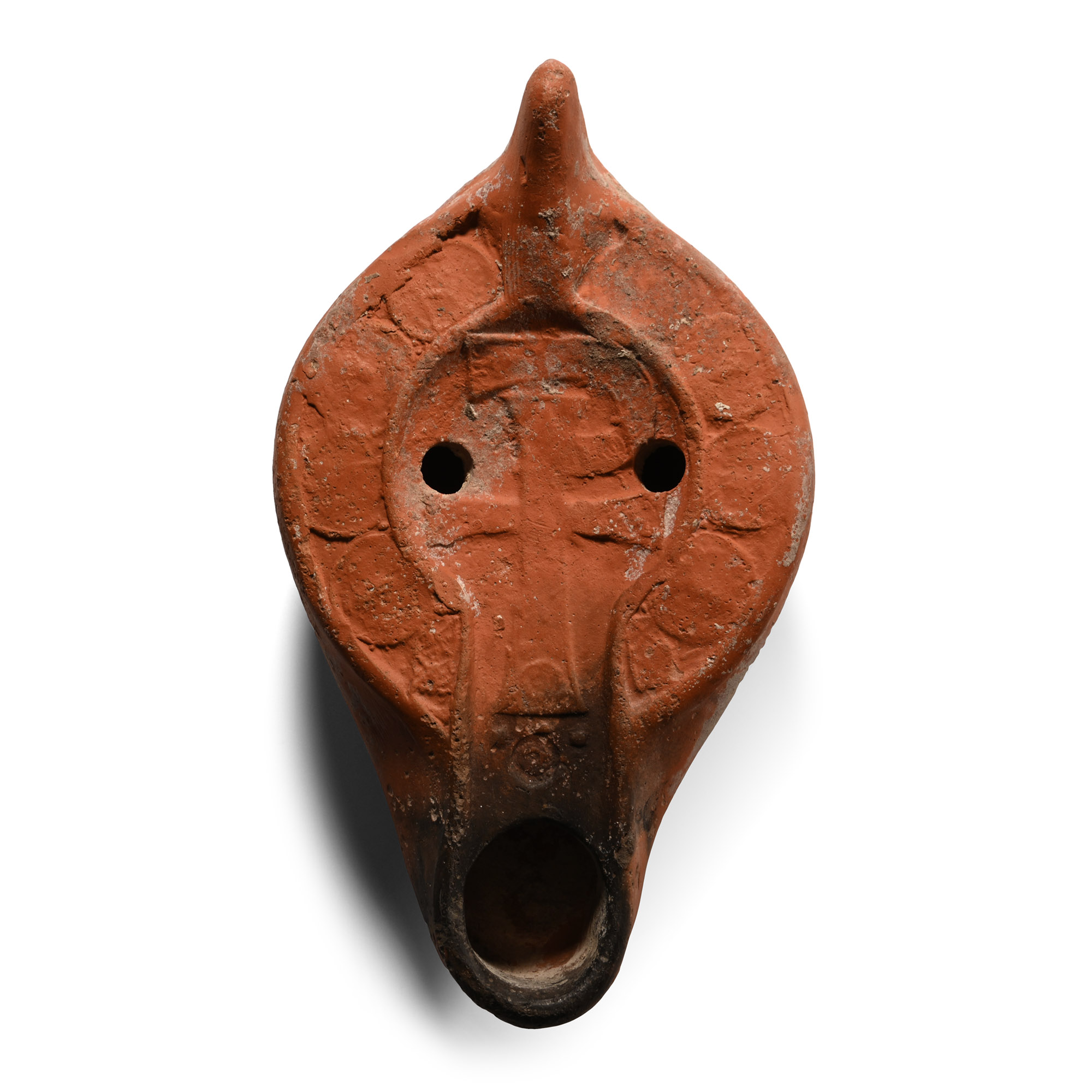
Byzantine Terracotta Oil Lamp with Chi-Rho
5TH-7TH CENTURY A.D.
5 1/4 in. (174 grams, 13.6 cm).
With broad piriform body and nozzle, luf handle to rear, shoulder with band of medallions, discus with reserved chi-rho christogram.
ProvenanceAcquired on the German art market, 1989-1995.
with The Museum Gallery, 19 Bury Place, London, WC1, UK, 1998-2003.
Property of a London based academic, 2003-present.
This lot is accompanied by an illustrated lot declaration signed by the Head of the Antiquities Department, Dr Raffaele D'Amato.
TimeLine Auctions follows a vetting process to ensure the authenticity and legality of all items, reinforcing our commitment to integrity and responsible trading. Each antiquity, antique, and coin lot undergoes thorough examination by a vetting committee of at least ten external specialists, professional trade association members, scientists, and archaeologists: Our Vetting Process
AUCTIONS:
TimeLine is a leading auction house specialising in antiquities, ancient art, collectables, natural history, coins, medals, and books. Our auctions offer museums, collectors, historians, and enthusiasts the opportunity to acquire unique and historically significant pieces.
LOT 0966
Byzantine Terracotta Oil Lamp with Chi-Rho
Estimate £200 - 300€230 - 350 (for guidance only)$270 - 410 (for guidance only)
-
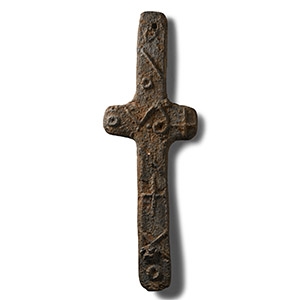
Byzantine Lead Cross
5th-7th century A.D.Estimate: £400 - 600 (‡+bp*)
Opening Bid: £200
Flat-section cruciform mount with stub arms and attachment point at one end; high-relief saltires, hoops and other detailing. 357 grams, 21.5 cm
Acquired in the mid 1980s-1990s. From the family collection of Mr S.A., Switzerland, thence by descent. Private collection since the late 1990s. This lot is accompanied by an illustrated lot declaration signed by the Head of the Antiquities Department, Dr Raffaele D'Amato. -
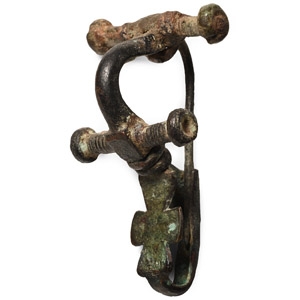
Byzantine Bronze Bow Brooch with Cross
6th-8th century A.D.Sold for (Inc. bp): £156
With deep bow flanked by two pairs of lateral disc-headed studs, cruciform foot returning to form the catch and with loop around the shank, spring and pin to reverse. 17 grams, 53 mm
Ex important German collection of brooches, 1980s. This lot is accompanied by an illustrated lot declaration signed by the Head of the Antiquities Department, Dr Raffaele D'Amato. -
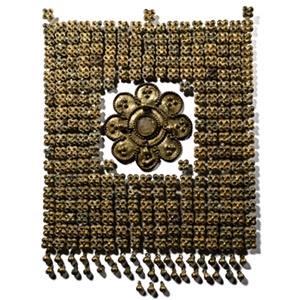
Byzantine Gilt Bronze Horse Harness Decoration Set
8th-10th century A.D.Estimate: £4,000 - 6,000 (+bp*)
Opening Bid: £1,500
Comprising: a large octofoil harness frontal plate with beaded rim and granulation; studs with quatrefoil plates; bell-shaped dangles. 556 grams total, 11-92 mm
From the private collection of a London gentleman, from his grandfather's collection formed before the early 1970s. This lot has been checked against the Interpol Database of stolen works of art and is accompanied by a search certificate number no.12687-234699. This lot has been cleared against the Art Loss Register database, and is accompanied by an illustrated lot declaration signed by the Head of the Antiquities Department, Dr Raffaele D'Amato.
