
Loading, please wait...
LOT 1448
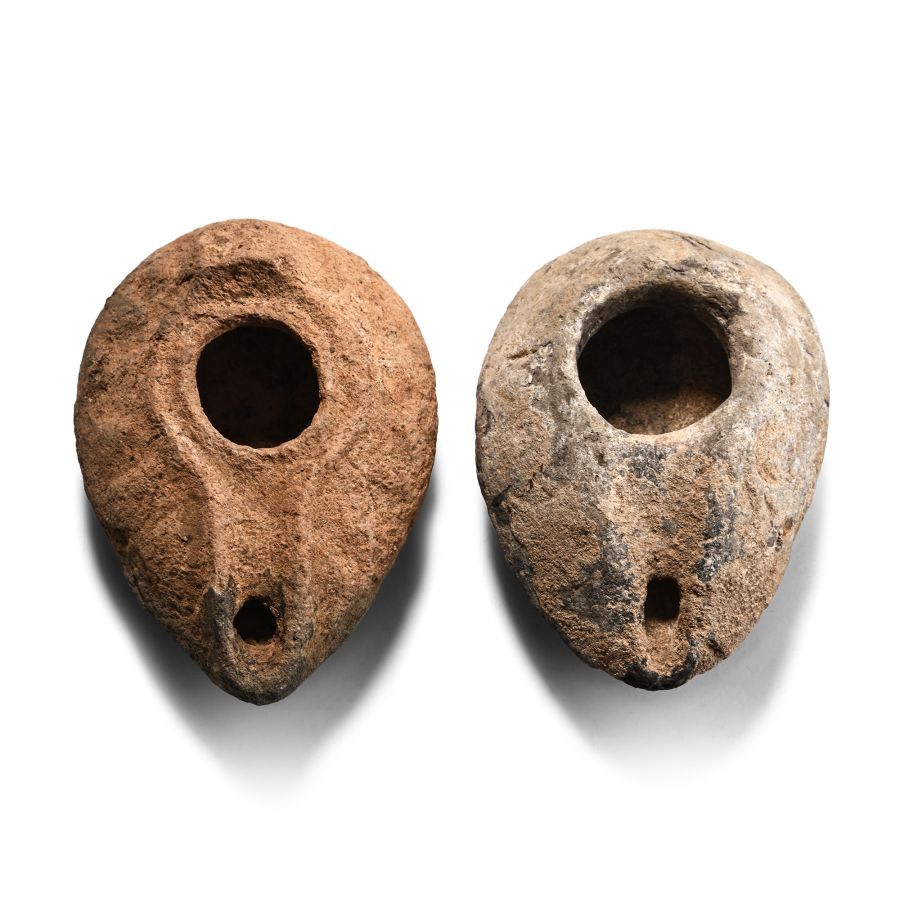
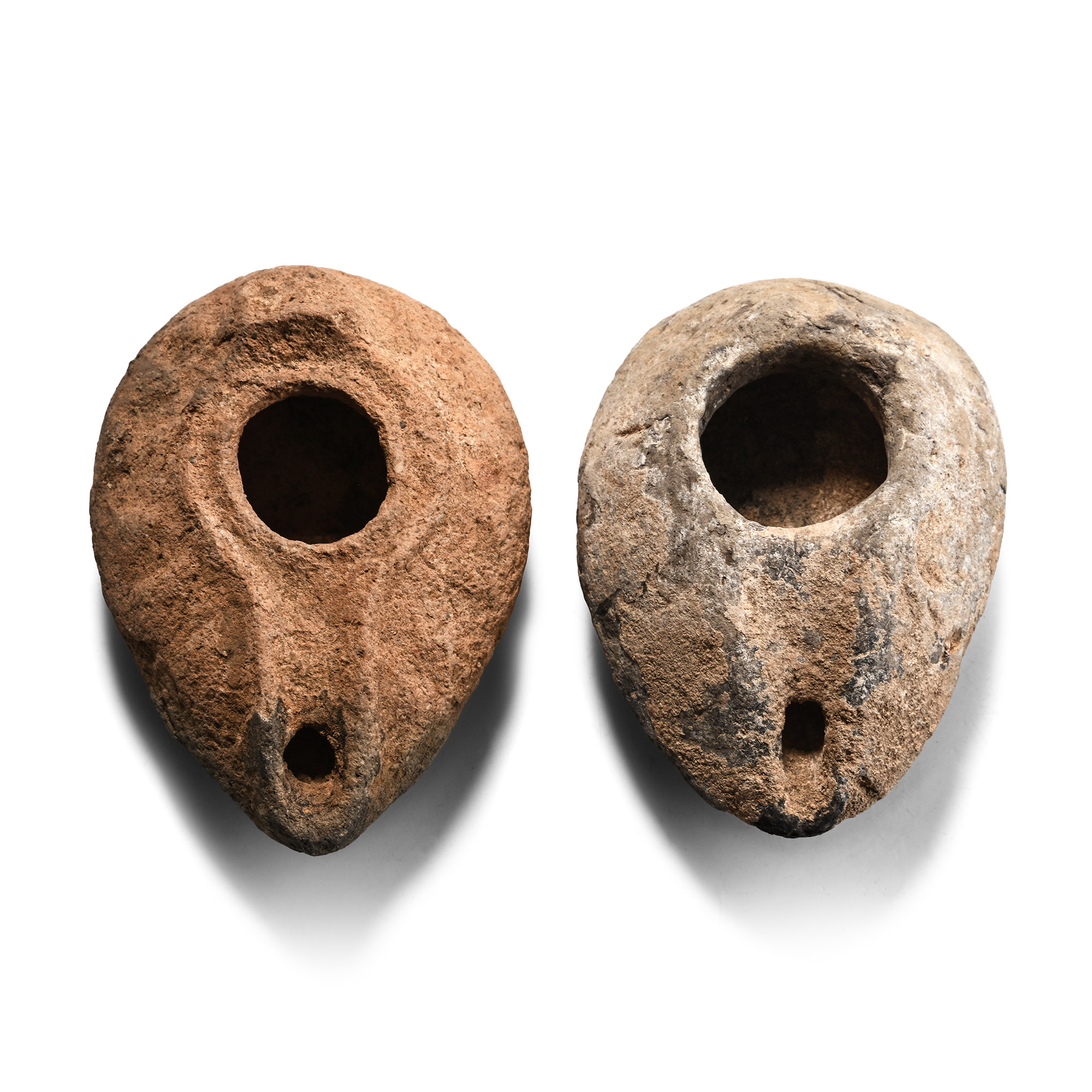
Byzantine Terracotta Oil Lamp Group
HOLY LAND, CIRCA 6TH-7TH CENTURY A.D.
3 1/8 - 3 1/4 in. (176 grams total, 81-84 mm).
Comprising: brown pottery oil lamp with a band of raised decoration around the shoulder, small stub handle to the rear and a cross-shaped maker's mark on the base; grey pottery oil lamp with a large filler hole and a slightly concave base. [2, No Reserve]
ProvenanceEx J. Zadok & Sons, 18, King David Road, Jerusalem, Israel.
From the G.H. Freelander collection, formed in the late 1970s.
From the property of a late Lincolnshire, UK, gentleman; thence by descent.
Accompanied by two previous catalogue information slips.
TimeLine Auctions follows a vetting process to ensure the authenticity and legality of all items, reinforcing our commitment to integrity and responsible trading. Each antiquity, antique, and coin lot undergoes thorough examination by a vetting committee of at least ten external specialists, professional trade association members, scientists, and archaeologists: Our Vetting Process
AUCTIONS:
TimeLine is a leading auction house specialising in antiquities, ancient art, collectables, natural history, coins, medals, and books. Our auctions offer museums, collectors, historians, and enthusiasts the opportunity to acquire unique and historically significant pieces.
LOT 1448
Byzantine Terracotta Oil Lamp Group
Estimate £30 - 40€35 - 46 (for guidance only)$41 - 54 (for guidance only)
Opening Bid
£5 (EUR 6; USD 7) +BP*
-
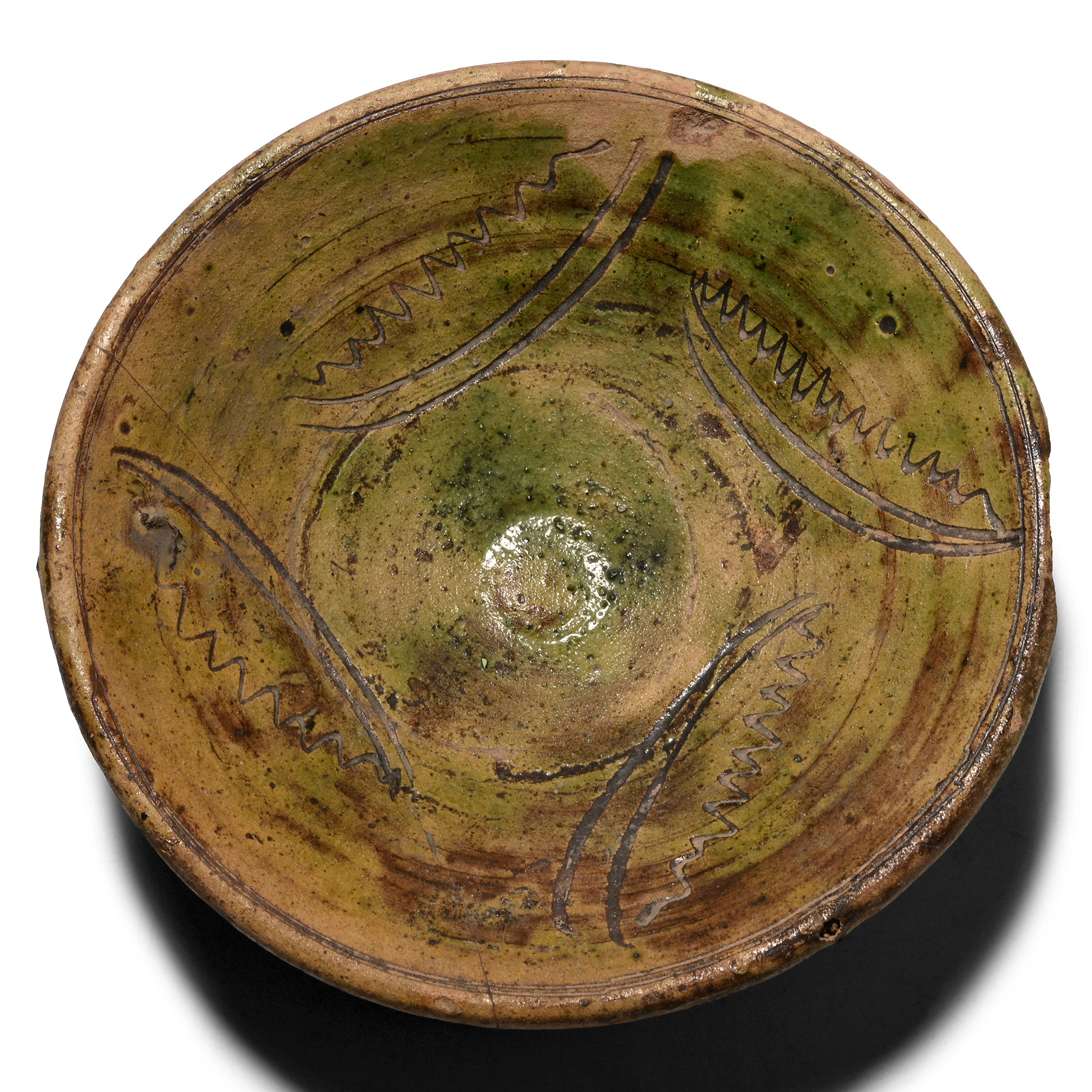
Byzantine Green Glazed Sgraffito Footed Bowl
13th-14th century A.D.Estimate: £200 - 300 (+bp*)
Opening Bid: £5
Shallow type with dished body and ring to underside; rounded rim and incised border, four sgraffito crescent motifs with undulating line above each. 301 grams, 16 cm wide
From the private collection of Peter Clayton, FCILIP, Dip, Arch, FSA, FRNS, Hemel Hempstead, Hertfordshire, UK; formed since the late 1950s. -
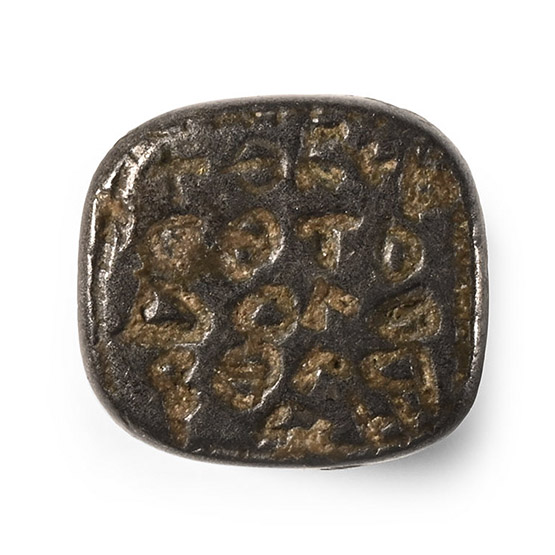
Byzantine Seal Matrix with Inscription
Circa 11th-12th century A.D.Estimate: £60 - 80 (+bp*)
Opening Bid: £5
With inscription '+ΘKEB / OΘTO / ΔΟΛΟ / ΤΘΛΑ' for 'ΘΕΟΤΟΚΕ ΒΟΗΘΕI ΤΩ ΔΟΥΛΩ ΤΟΥ ΘΕΟΥ ΛΑΔΕ' (Mother of God, help Lades, the servant of God). 13.1 grams, 18 mm
From an important collection formed before 1988, London and Geneva.
The stamp seals that have survived in large numbers from Byzantium are objects a few centimetres high and conical in shape, featuring a sealing surface at the lower end and a pendant at the upper end. They served the same function as signet rings and were used to seal everyday objects, primarily for personal purposes, using wax and other soft materials. -
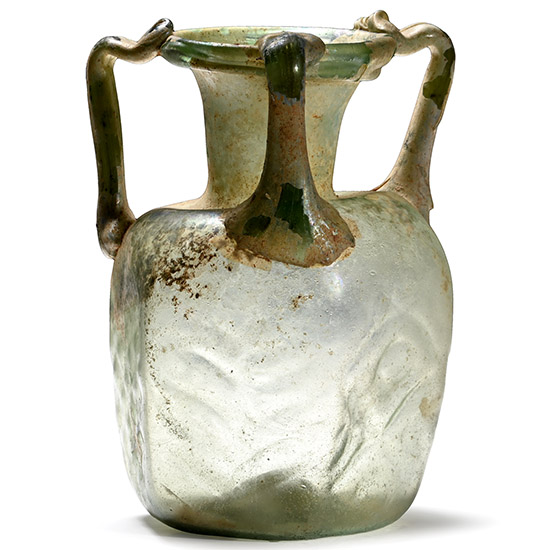
Byzantine Mould-Blown Translucent Pale Green Glass Three-Handled Jug
5th-8th century A.D.Estimate: £1,000 - 1,400 (+bp*)
Opening Bid: £550
Hexagonal body with a short cylindrical neck and a flaring rim, three applied handles extending from the rim to the shoulders, geometric decoration on the panels. 58 grams, 93 mm high
Roman glass from an important London collection, acquired from the early 1980s. From an important London glass collection, 1990s. Accompanied by a typed previous catalogue information page with provenance.
These octagonal or hexagonal jugs or jars were possibly made as tokens for pilgrims visiting the holy sites in Jerusalem or for use in burial rites. In the late 6th and early 7th century A.D., they were mass-produced in moulds for the pilgrim trade in the Holy Land, in the vicinity of the holy city, but they were found all around the Mediterranean, especially in islands like Cyprus, an important place on the sea route that brought pilgrims to Jerusalem. Such vessels were probably filled with oil from holy sites and sold to pilgrims.
