
Loading, please wait...
LOT 0785
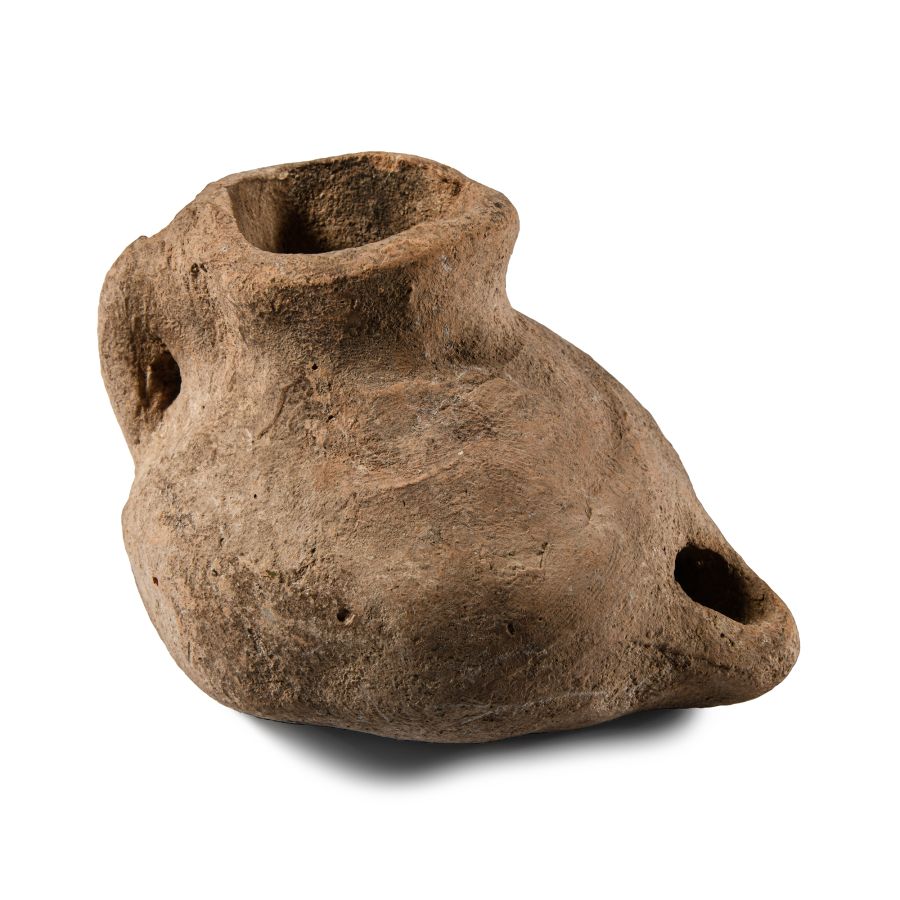
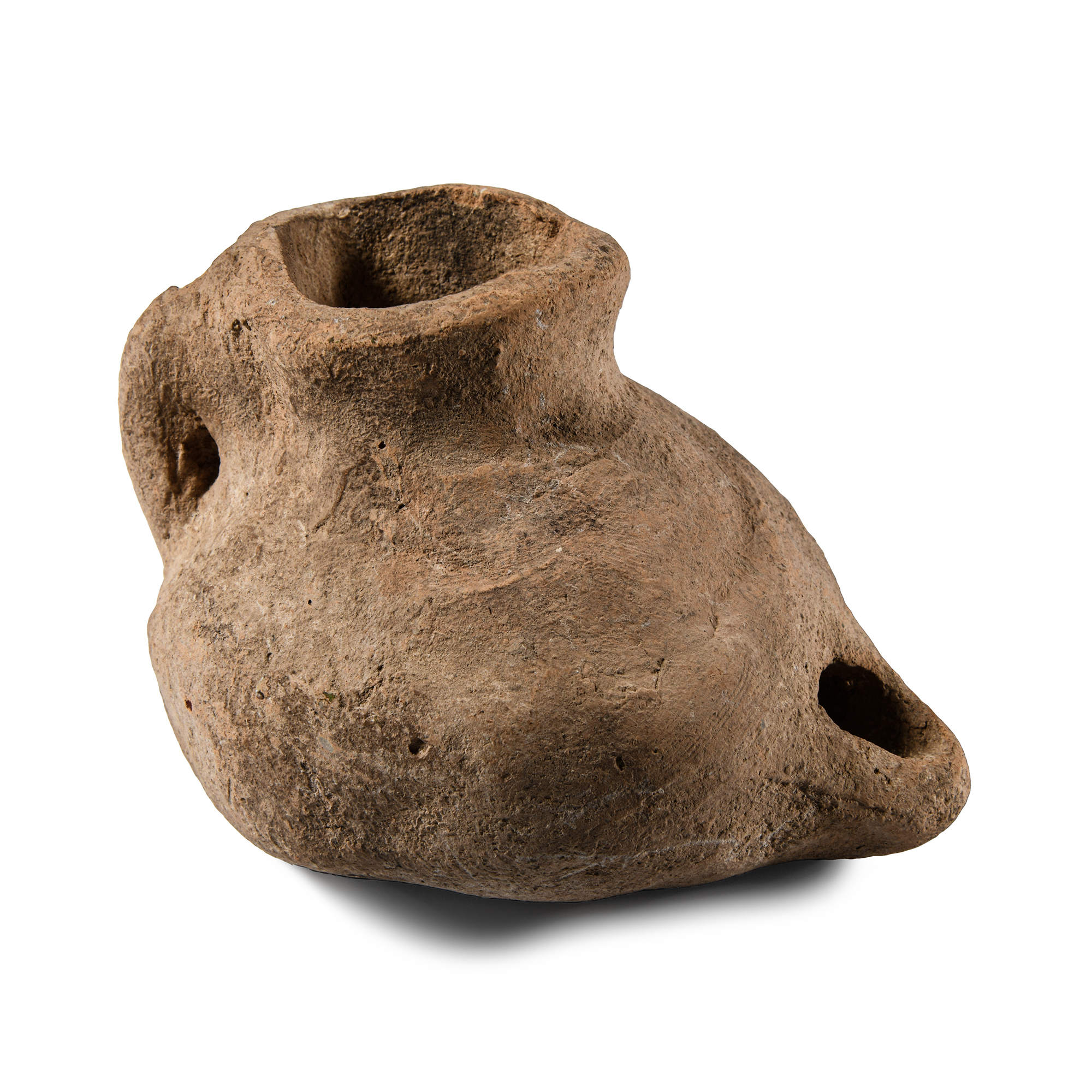
Byzantine Terracotta Oil Lamp Filler
5TH-8TH CENTURY A.D.
4 in. (200 grams, 10.2 cm).
Of boot-type with rounded body and short cylindrical neck; lug handle to the rear. [No Reserve]
ProvenanceAcquired before 1990s/early 2000s.
From the family collection of Jack Lyttle (1944-2023), Kilmacolm, Scotland; thence by descent to his granddaughter.
Property of an East Sussex, UK, gentleman.
TimeLine Auctions follows a vetting process to ensure the authenticity and legality of all items, reinforcing our commitment to integrity and responsible trading. Each antiquity, antique, and coin lot undergoes thorough examination by a vetting committee of at least ten external specialists, professional trade association members, scientists, and archaeologists: Our Vetting Process
AUCTIONS:
TimeLine is a leading auction house specialising in antiquities, ancient art, collectables, natural history, coins, medals, and books. Our auctions offer museums, collectors, historians, and enthusiasts the opportunity to acquire unique and historically significant pieces.
-
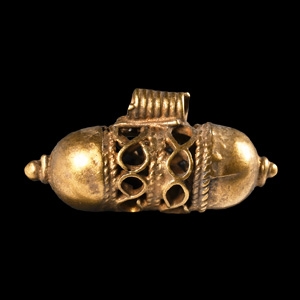
Byzantine Gold Filigree Pendant
6th-10th century A.D.Sold for (Inc. bp): £247
Two sheet gold domes flanking a tube of filigree loops and braided bands, ribbed collar above, granule cluster to each end. 0.79 grams, 15 mm
From a late Japanese specialist collector, 1970-2000s. -
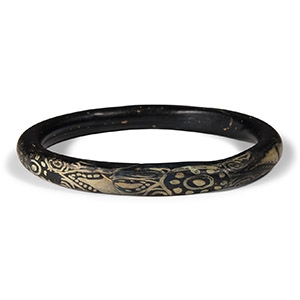
Byzantine Decorated Glass Bracelet
Circa 6th-8th century A.D.Estimate: £250 - 350 (+bp*)
Opening Bid: £125
In black glass with intricate decorative design in contrasting colour comprising eye motifs, palmettes and pellet designs. 33.3 grams, 84 mm wide
Collected from 1969-1999. From the collection of the late Mr S.M., London, UK. -
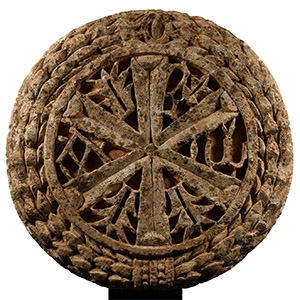
Monumental Byzantine Limestone Chi Rho Roundel
Circa 6th-8th century A.D.Sold for (Inc. bp): £36,400
Divided into six sections by Christogram letters chi and rho, two of the segments with Greek letters alpha and omega, the other four segments with floral ornaments; a laurel wreath to the edge; mounted on a custom-made display stand. 84 kg total, 77 cm high including stand
From a German collection. Acquired from Germany in 2010. Ex London, UK, collection. Accompanied by an academic report by Dr Raffaele D’Amato. This lot has been checked against the Interpol Database of stolen works of art and is accompanied by search certificate number no.11928-209561.
This monumental sculpture was probably affixed at the top of a church façade, a type of decoration also used in the Western Romanesque art during the Middle Ages (see the sculpted Chi Rho monogram at the Monastery of San Juan de la Pena, Spain). The presence of letters alpha and omega shows a powerful link with the Christian cult, especially as the two letters are incised beside the Chi Rho. These letters are symbols of eternity of Jesus: in the final verses of the Bible, Jesus describes himself as the Alpha and the Omega, the Beginning and the End (Revelation, 22.13).
