
Loading, please wait...
LOT 1169
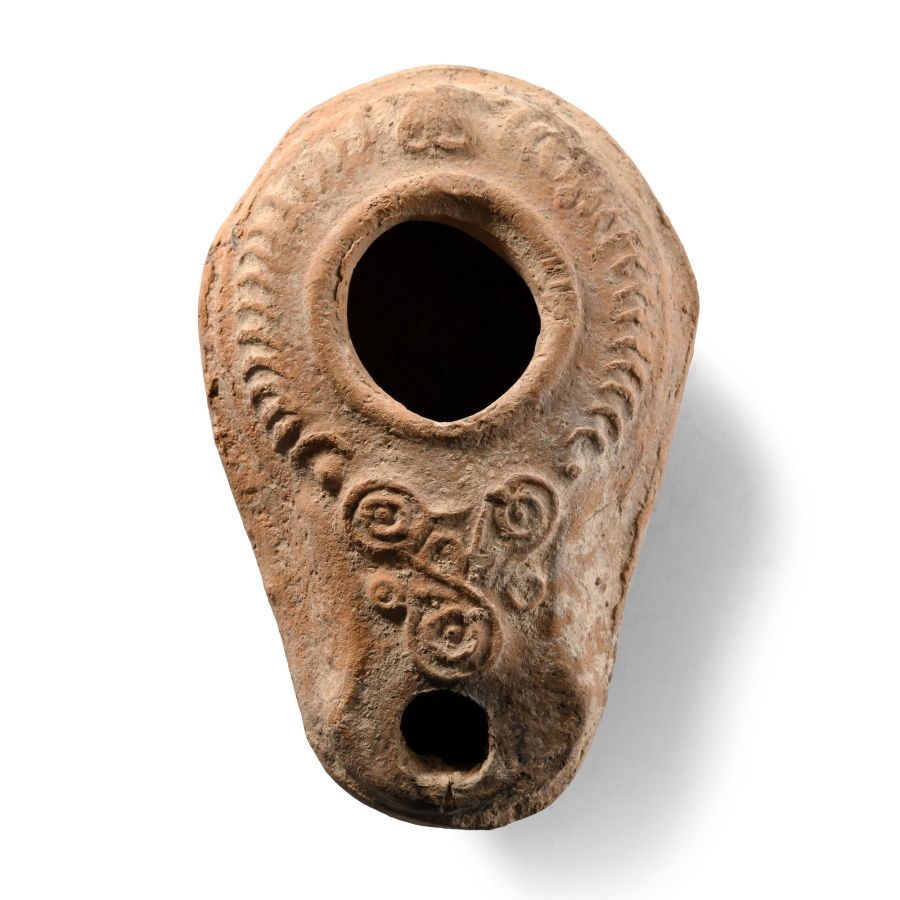
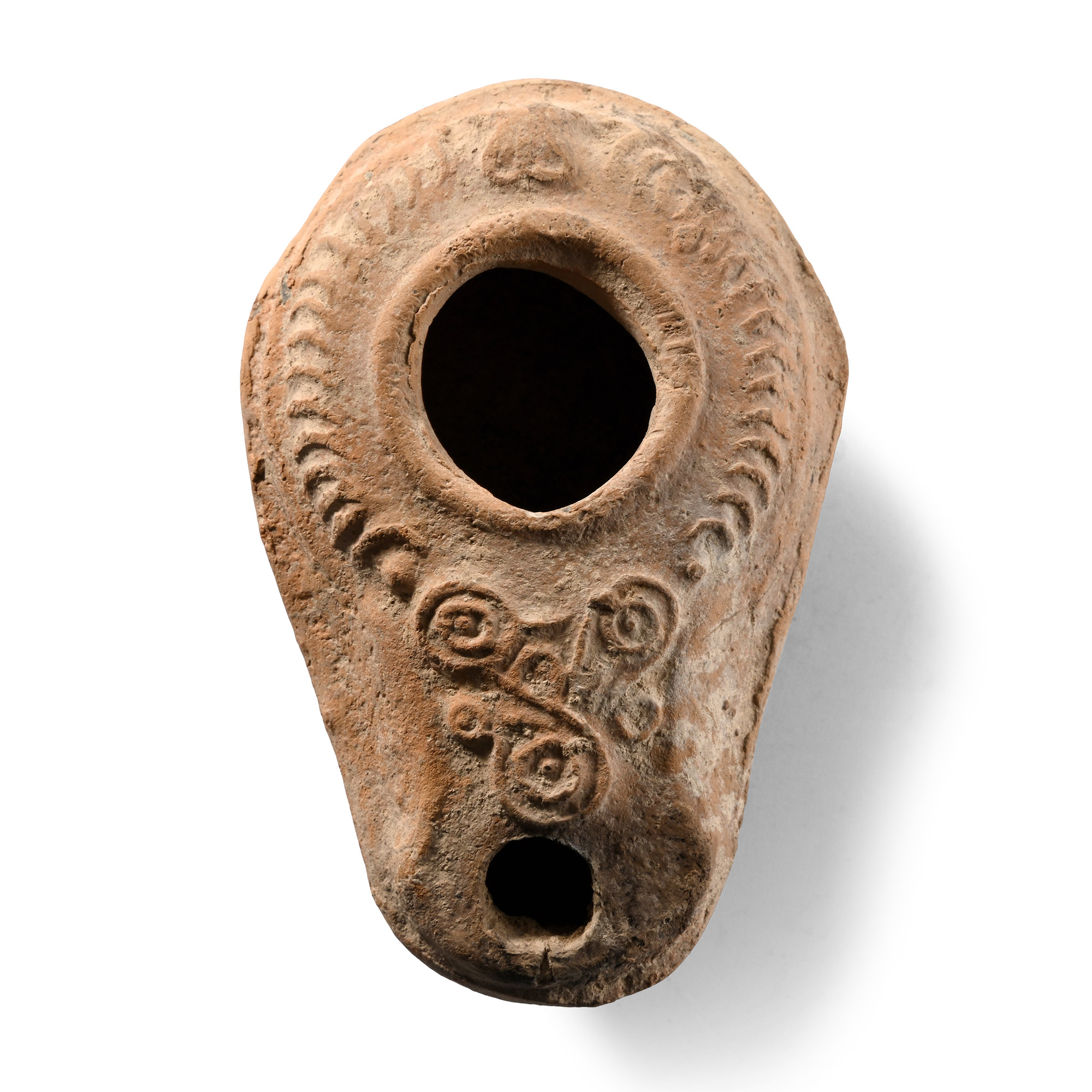
Byzantine Terracotta Candlestick Oil Lamp with Triskele
HOLY LAND, CIRCA 5TH-8TH CENTURY A.D.
3 1/4 in. (70 grams, 81 mm).
Transverse ribs in the shoulder and a large triskele on the nozzle, with a low basal ring. [No Reserve]
ProvenanceEx Ancient Art Shop, Windsor, UK, 1990s.
Ex private West County, UK, collection.
Cf. M¥ynarczyk, J., ‘Terracotta oil lamps from Qumran: the typology’ in Revue Biblique, January 2013, T.120-121, pp.99-133, no.048 (AF 187), for the type.
CONDITIONTimeLine Auctions follows a vetting process to ensure the authenticity and legality of all items, reinforcing our commitment to integrity and responsible trading. Each antiquity, antique, and coin lot undergoes thorough examination by a vetting committee of at least ten external specialists, professional trade association members, scientists, and archaeologists: Our Vetting Process
AUCTIONS:
TimeLine is a leading auction house specialising in antiquities, ancient art, collectables, natural history, coins, medals, and books. Our auctions offer museums, collectors, historians, and enthusiasts the opportunity to acquire unique and historically significant pieces.
-
.jpg)
Byzantine Gold Marriage Ring
Circa 6th-7th century A.D.Sold for (Inc. bp): £9,100
D-section hoop with expanding shoulders, trumpet-shaped bezel with two facing busts and a cross between and a nimbate bearded bust above, legend 'OMONOIA' (harmony) below. 9.62 grams, 23.93 mm overall, 18.92 mm internal diameter (approximate size British R 1/2, USA 8 3/4, Europe 19.38, Japan 18)
From an important Byzantine collection, formed in the 1970s, Surrey, UK. This lot has been checked against the Interpol Database of stolen works of art and is accompanied by search certificate number no.13347-258734.
The marriage ring is one of the typologies in which figural decorations are frequently found. Generally speaking, marriage rings are engraved with a representation of a husband and wife, sometimes accompanied by Christ, and usually engraved with wishes for 'harmony, health and the grace of God'. Rings of this type had been used since the late 4th century A.D. and remained extremely popular in Byzantium in the 6th and 7th centuries. -
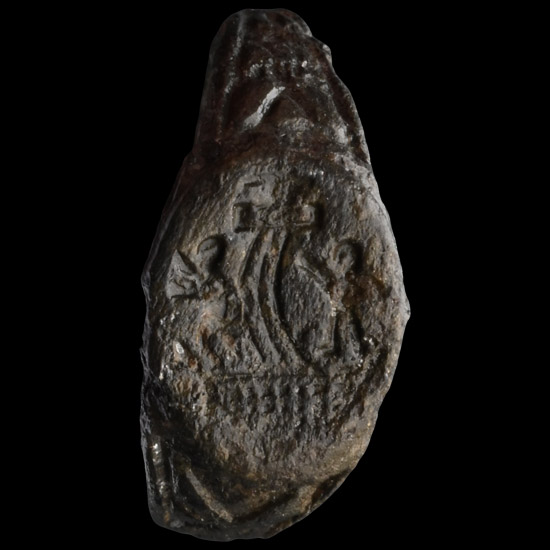
Byzantine Bronze Ring with Stavrosis and Two Roman Soldiers
10th-11th century A.D.Sold for (Inc. bp): £33
Comprising a D-section hoop and an oval bezel with a cross flanked by two adoring figures. 1.66 grams, 17.78 mm overall, 15.34 mm internal diameter (approximate size British I, USA 4 1/4, Europe 7.44, Japan 7)
From a UK collection formed in the 1980s. Property of an Essex, UK, gentleman. -
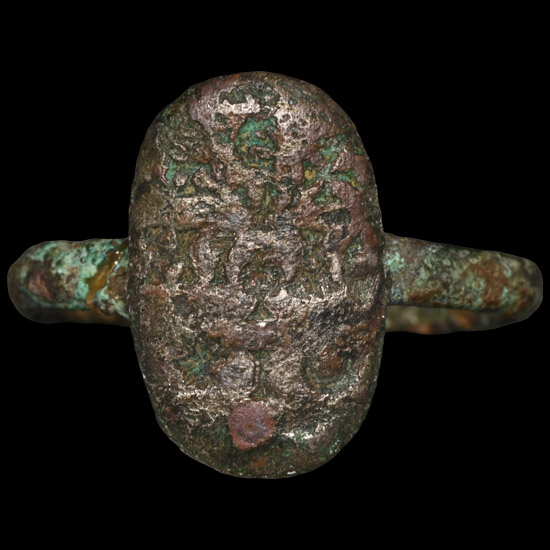
Byzantine Bronze Ring with Inscription
6th-7th century A.D.Sold for (Inc. bp): £26
Featuring a D-section hoop and an oval bezel with a three-line Greek inscription. 3.07 grams, 21.60 mm overall, 17.73 mm internal diameter (approximate size British L, USA 5 3/4, Europe 11.24, Japan 10)
From the private collection of a European gentleman (1942-2024), formed since the 1970s.
