
Loading, please wait...


LOT 0208
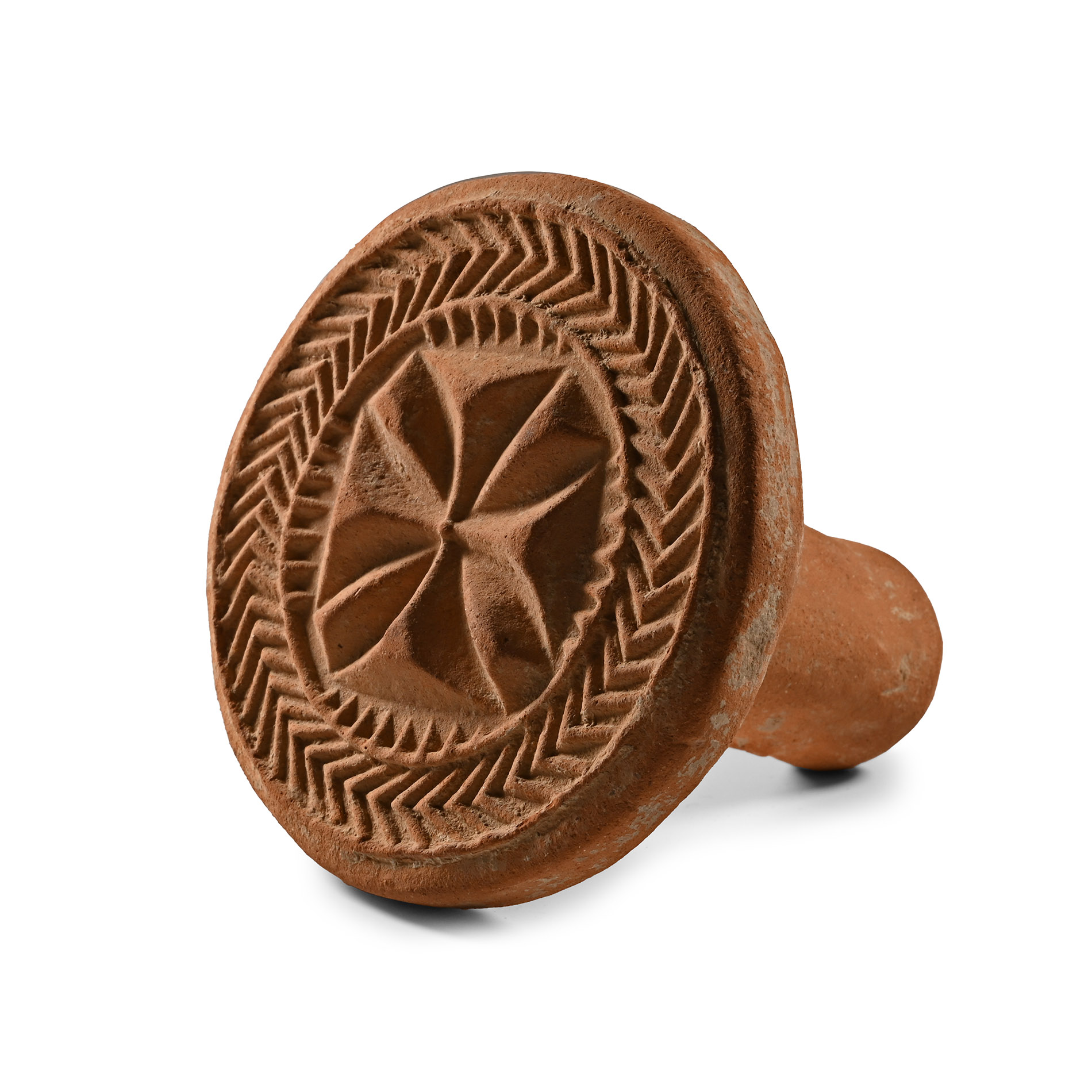
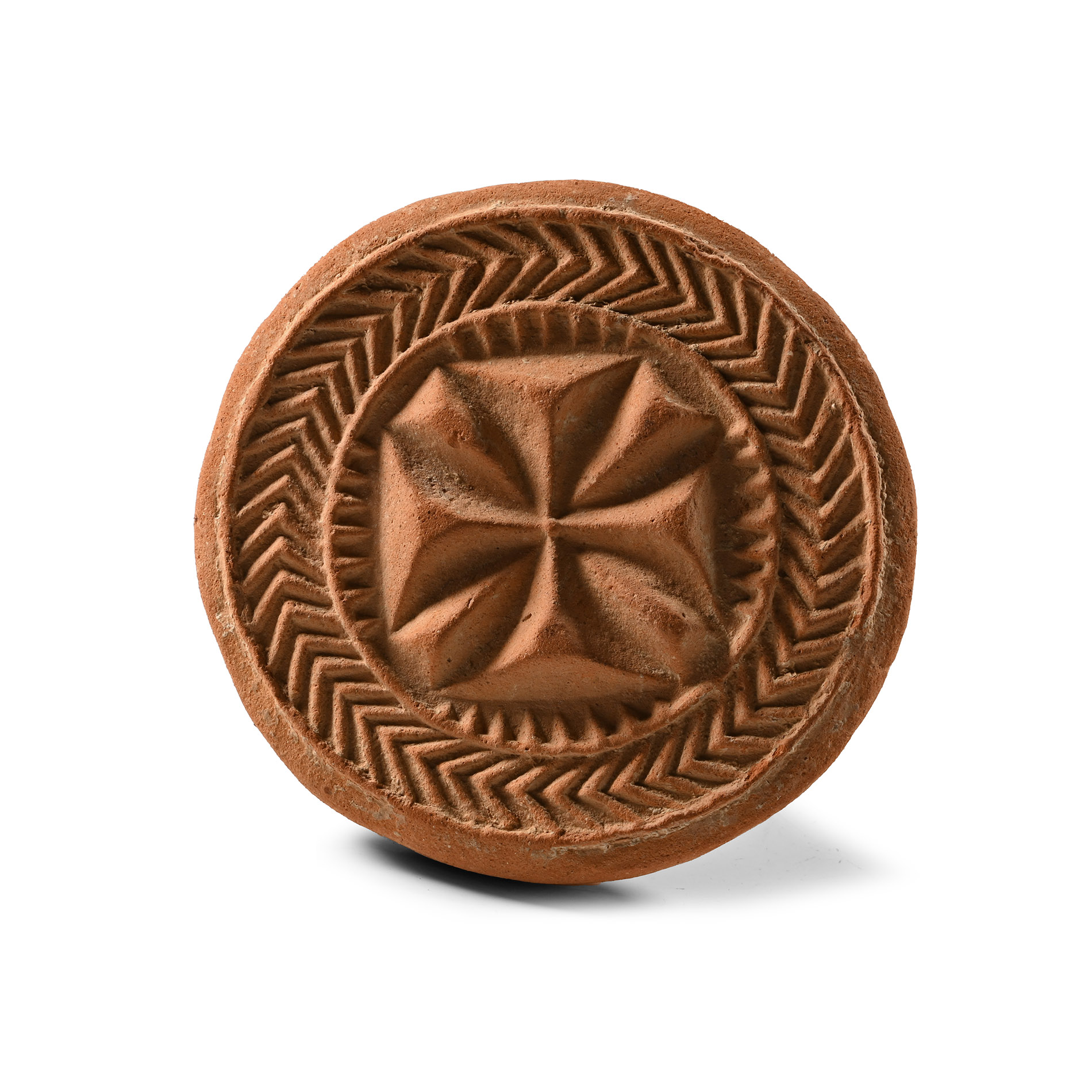
Byzantine Terracotta Bread Stamp
10TH-11TH CENTURY A.D.
3 3/4 in. (319 grams, 95 mm).
Discoid in plan with integral stub handle; central Maltese cross within a herringbone ring.
ProvenanceFrom the collection of Sir Daniel Donohue [1919-2014] and the Countess Bernardine [1904-1968], Los Angeles, USA; the collection was assembled in the 1950-1960s, but before March 1968.
with Bonhams, London, 13 April 2011, no.310 [Part].
Acquired on the English art market, 2011.
Private collection, Europe.
Accompanied by copies of the relevant Bonhams catalogue pages.
TimeLine Auctions follows a vetting process to ensure the authenticity and legality of all items, reinforcing our commitment to integrity and responsible trading. Each antiquity, antique, and coin lot undergoes thorough examination by a vetting committee of at least ten external specialists, professional trade association members, scientists, and archaeologists: Our Vetting Process
AUCTIONS:
TimeLine is a leading auction house specialising in antiquities, ancient art, collectables, natural history, coins, medals, and books. Our auctions offer museums, collectors, historians, and enthusiasts the opportunity to acquire unique and historically significant pieces.
-
Byzantine Green Glazed-Ware Bowl
Circa 12th century A.D.Sold for (Inc. bp): £520
Squat in profile with inturned rim, transverse bands of polychrome geometric ornament to inner face with lateral spirals, segmented rim. 390 grams, 16 cm
Ex London, UK, gallery, 1971-early 2000s. London, UK, collection. -
Byzantine Bronze Reliquary Cross Plate
10th-12th century A.D.Estimate: £800 - 1,000 (‡+bp*)
Opening Bid: £400
The enkolpion with hinged loop, nimbate figure in orans pose with a smaller robed figure before, inscription above, two nimbate saints to the arms. 49.5 grams, 10.6 cm
Acquired on the German art market, 2003. Private collection, Europe. -

Byzantine Bronze Patrix Die for a Belt Mount
6th-7th century A.D.Sold for (Inc. bp): £104
Cruciform in plan with central quatrefoil flanked on three sides by a disc with rosette fill and lateral lugs. 17.8 grams, 40 mm
Acquired in the 1980s. From the collection of a London antiquarian.
