
Loading, please wait...


LOT 0920
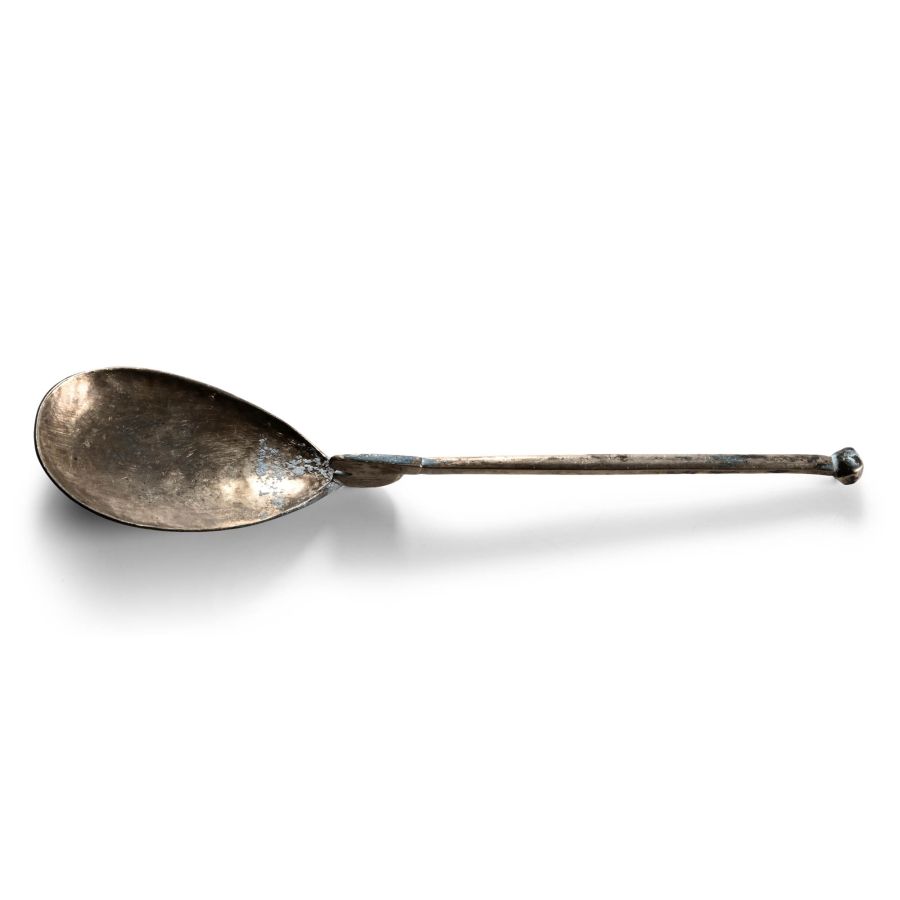
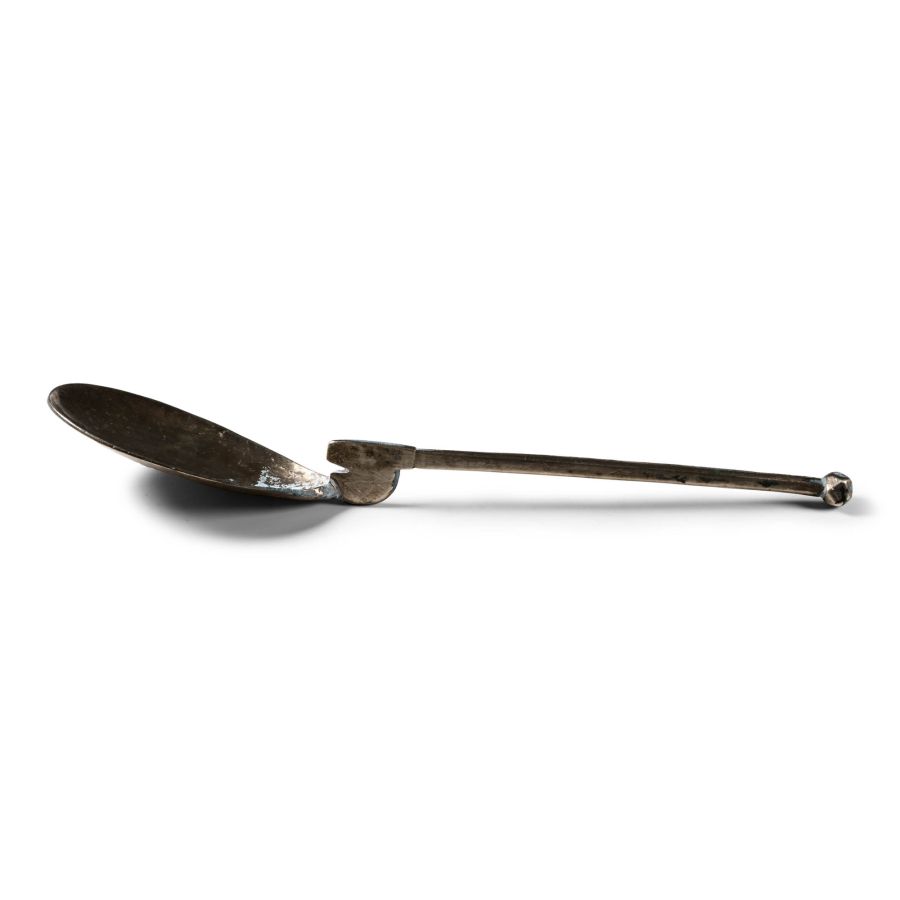
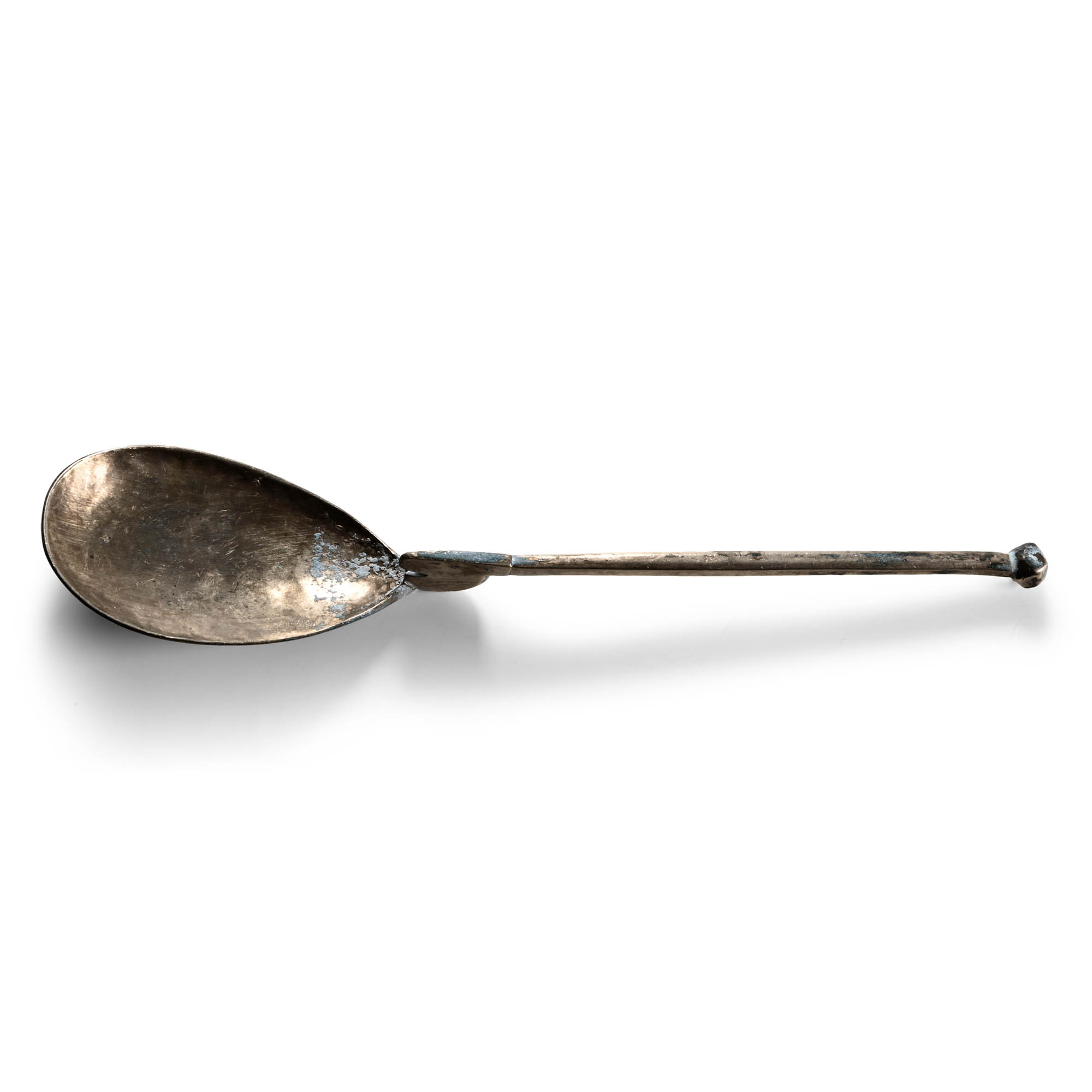
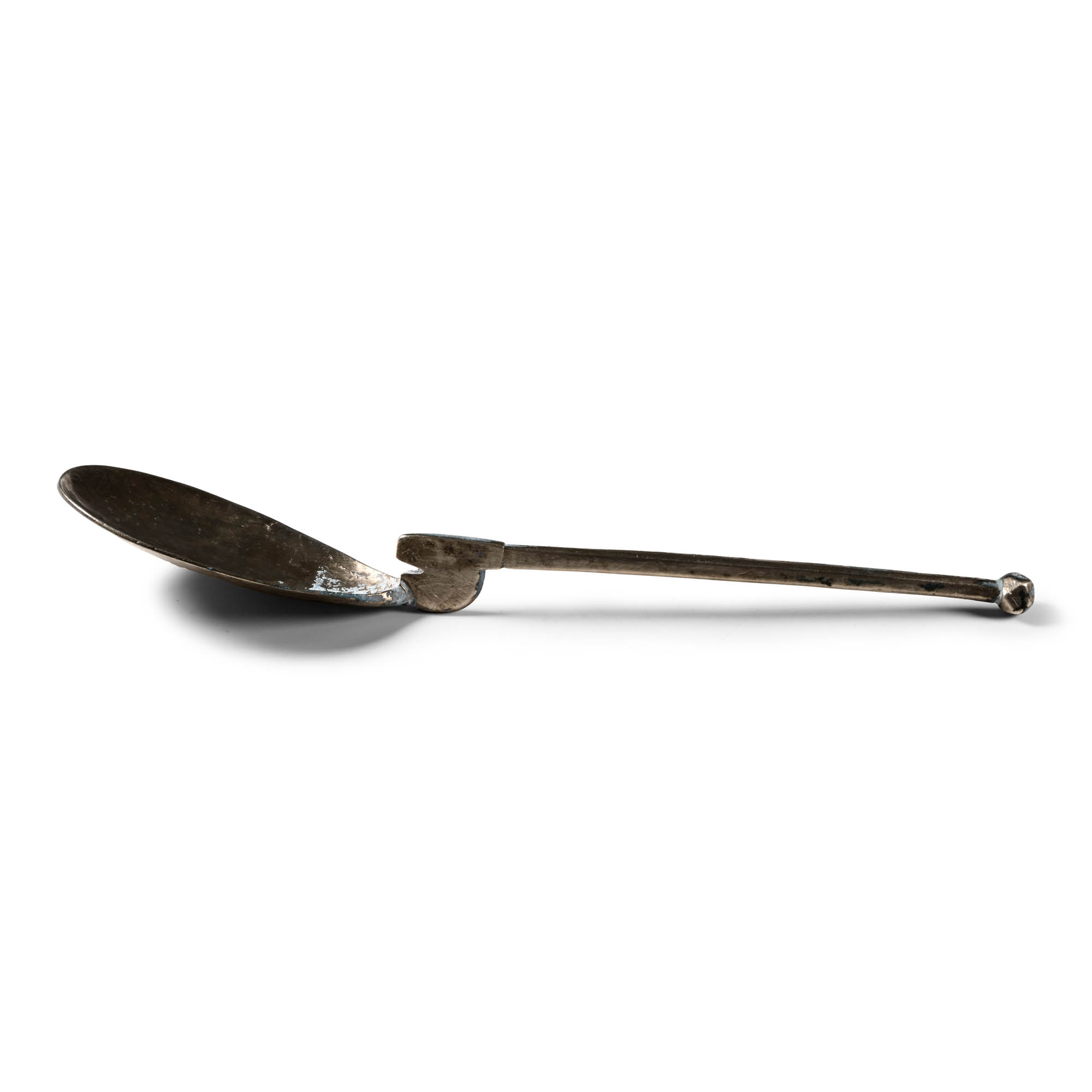
Byzantine Swan-Necked Silver Spoon
5TH-7TH CENTURY A.D.
7 1/8 in. (39 grams, 18.1 cm).
Shallow piriform bowl attached to a stepped baluster, square-section handle with knop finial.
ProvenanceEx London, UK, gallery, 1971-early 2000s.
London, UK, collection.
TimeLine Auctions follows a vetting process to ensure the authenticity and legality of all items, reinforcing our commitment to integrity and responsible trading. Each antiquity, antique, and coin lot undergoes thorough examination by a vetting committee of at least ten external specialists, professional trade association members, scientists, and archaeologists: Our Vetting Process
AUCTIONS:
TimeLine is a leading auction house specialising in antiquities, ancient art, collectables, natural history, coins, medals, and books. Our auctions offer museums, collectors, historians, and enthusiasts the opportunity to acquire unique and historically significant pieces.
-
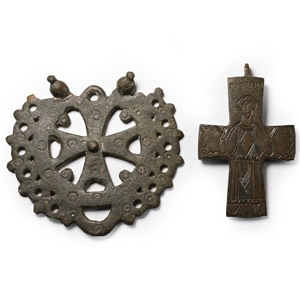
Byzantine Bronze Artefact Group
6th-10th century A.D.Estimate: £250 - 350 (+bp*)
Opening Bid: £100
Comprising: front cover of an enkolpion with robed figure in orans pose, legend 'ΓΕΟΡΓΙΟC' (St. George) above; censer cover with openwork design, expanding-arm cross within an arc with ring-and-dot motifs, poppy-head lugs, suspension loop. 188 grams total, 84-95 mm
From the private collection of Mr K.A., acquired in the 1990s-early 2000s. -
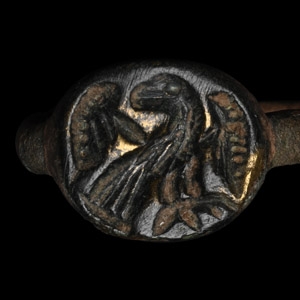
Byzantine Bronze Ring with Eagle
6th-7th century B.C.Sold for (Inc. bp): £260
Discoid bezel with intaglio profile eagle with head turned and wings raised. 5.55 grams, 25.49 mm overall, 19.85 x 15.30 mm internal diameter (approximate size British I 1/2, USA 4 1/2, Europe 8.07, Japan 7)
From the collection of a London antiquarian, formed since the 1980s. -
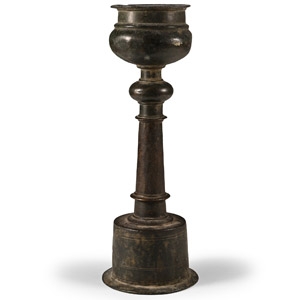
Byzantine Bronze Oil Lamp Stand
12th-13th century A.D.Sold for (Inc. bp): £715
Comprising a hollow drum-shaped base with flange rim, tapering stem with raised collars, broad bowl with raised neck and gusseted rim. 659 grams, 25 cm
Ex London, UK, gallery, 1971-early 2000s. London, UK, collection.
