
Loading, please wait...
LOT 1449
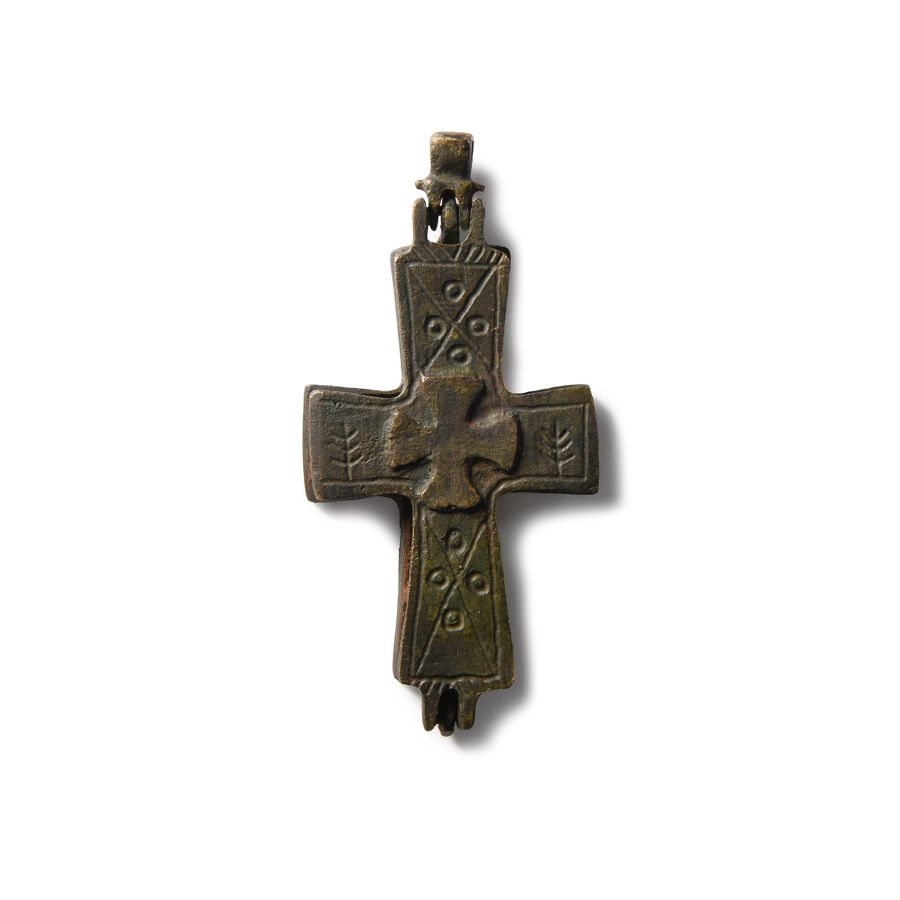
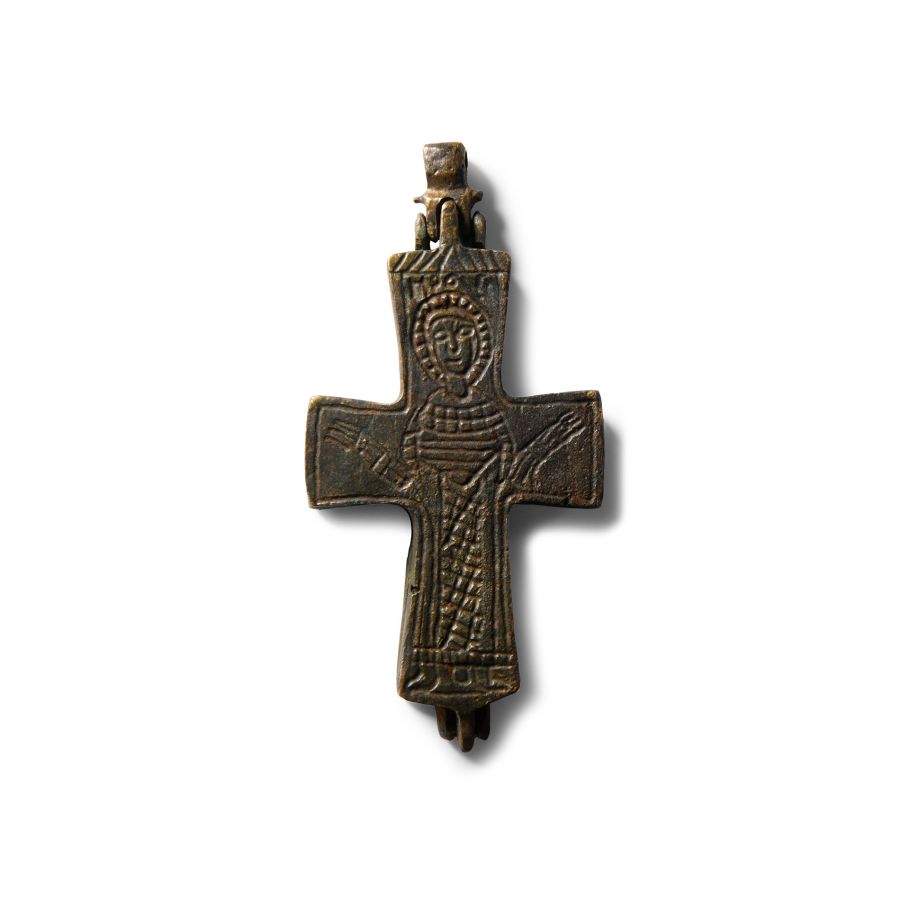
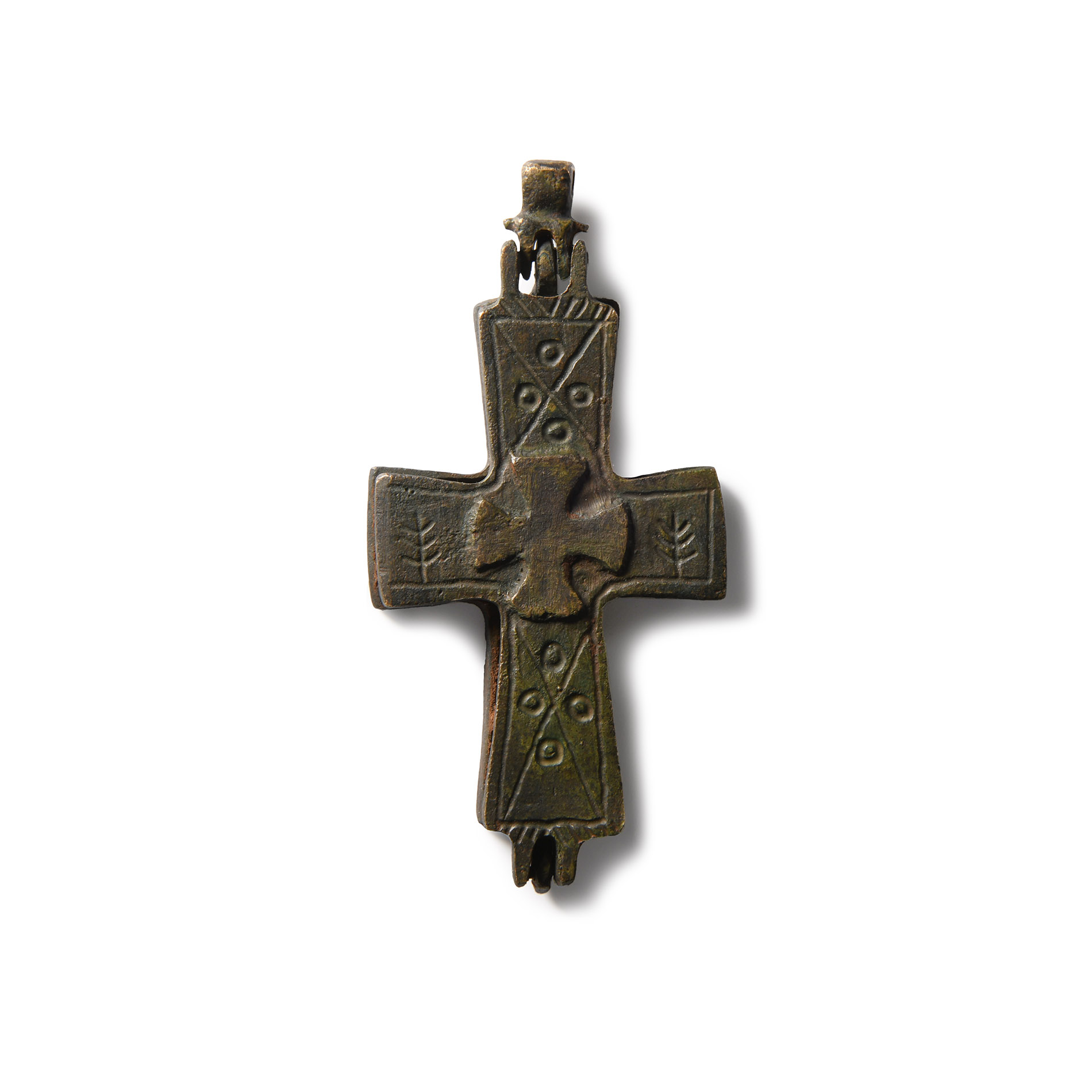
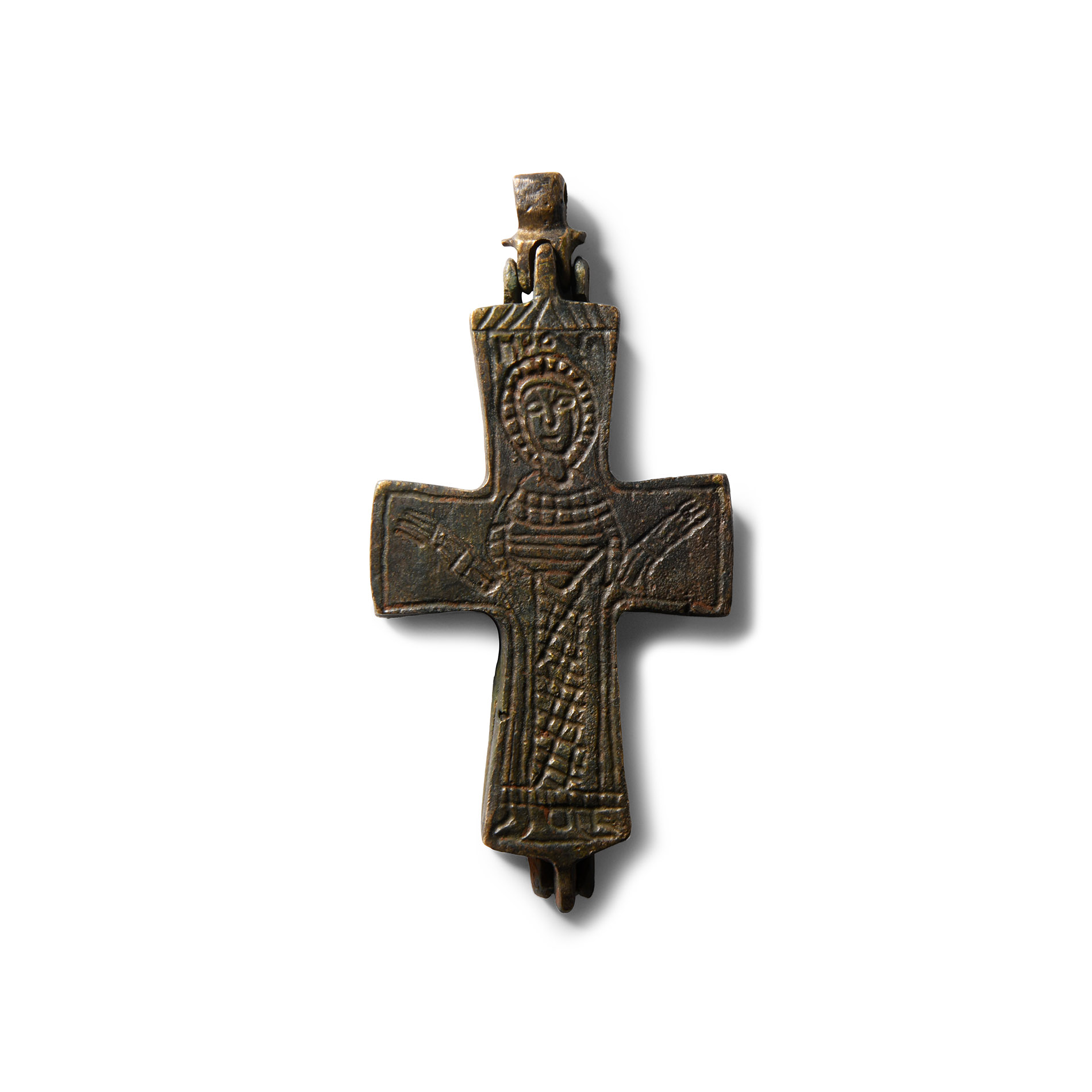
Byzantine Style Bronze Reliquary Cross Pendant
20TH CENTURY A.D.
4 1/8 in. (126 grams, 10.5 cm).
Hinged suspension loop, two recessed halves hollow to the reverse, low-relief figure in orans pose to the obverse, geometric ornament to the reverse. [No Reserve]
ProvenanceAcquired 1980-1990s.
From the private collection of H.N., Milton Keynes, Bedfordshire, UK.
See Pitarakis, B., Les Croix-Reliquaires Pectorales Byzantines en Bronze, Paris, 2006, for original examples from the Eastern empire.
FootnotesUsually the reliquary crosses or enkolpia, were composed of two separate halves, inside of which a relic of a saint was contained; this could have been a piece of cloth or a bone. The practice, in the Orthodox Church, is still in place today, sometimes by using reproductions of ancient styles, like our specimen, probably realised at the beginning of the last century.
CONDITIONTimeLine Auctions follows a vetting process to ensure the authenticity and legality of all items, reinforcing our commitment to integrity and responsible trading. Each antiquity, antique, and coin lot undergoes thorough examination by a vetting committee of at least ten external specialists, professional trade association members, scientists, and archaeologists: Our Vetting Process
AUCTIONS:
TimeLine is a leading auction house specialising in antiquities, ancient art, collectables, natural history, coins, medals, and books. Our auctions offer museums, collectors, historians, and enthusiasts the opportunity to acquire unique and historically significant pieces.
-
Post Medieval Gilt-Bronze Signet Ring
17th-18th century A.D.Sold for (Inc. bp): £91
With a flat-section hoop, the almond-shaped bezel with a stylised lotus flower motif to each end, one end showing the stepped joint of the bezel to the hoop. 1.81 grams, 19.49 mm overall, 17.11 mm internal diameter (approximate size British N, USA 6 1/2, Europe 13.72, Japan 13)
Found Mildenhall, Suffolk, UK. Property of a UK gentleman, acquired May 1978. Property of an East Sussex, UK, gentleman. Accompanied by an old identification ticket including provenance. -
.jpg)
Large Framed Gilt Icon Painting with Vision of Saint John on Patmos
Early 19th century A.D.Sold for (Inc. bp): £312
From the Book of Revelation or Apocalypse; the central image of seated Christ on a blue cloud with gold circlets supported by cherubs, an arch of cherubs represented as fire-creatures above him; surrounded by angels holding the models of the seven churches of Asia, from left to right: Ephesus, Smyrna, Pergamon, Thyatira, Sardis, Philadelphia and Laodicea, with their names written next to the models and a candlestick before; resting figure of Saint John below, dressed in red himation and green pallium, a monk dressed in long white sticharion and epitrachelion beside him; panel with text from the Book of Revelation above him; mounted in a modern gilt frame with an old label for 'Henry J Murcott' to the reverse. 5.6 kg total, 90.5 x 74.5 cm
Acquired in the 1990s or before. From a deceased London, UK, estate. Accompanied by an academic report Dr Raffaele D’Amato. -
Post Medieval Painted Miniature Alabaster Casket
Circa 17th century A.D.Sold for (Inc. bp): £377
With D-section lid and four stub feet, painted panels of rosettes and foliage in red and green with liquide gold detailing; upper edge of base with legend 'SIrVOAMI / SENOr[A] DOrA NICOLA / SADERO[B]AS'. 336 grams, 83 mm wide
From a Blackheath, London, UK, deceased estate. Property of a Suffolk, UK, gentleman.
The text reads in part as a personal name 'Senora Dora Nicola ... de Robas', Spanish or Catalan.
