
Loading, please wait...
LOT 0217
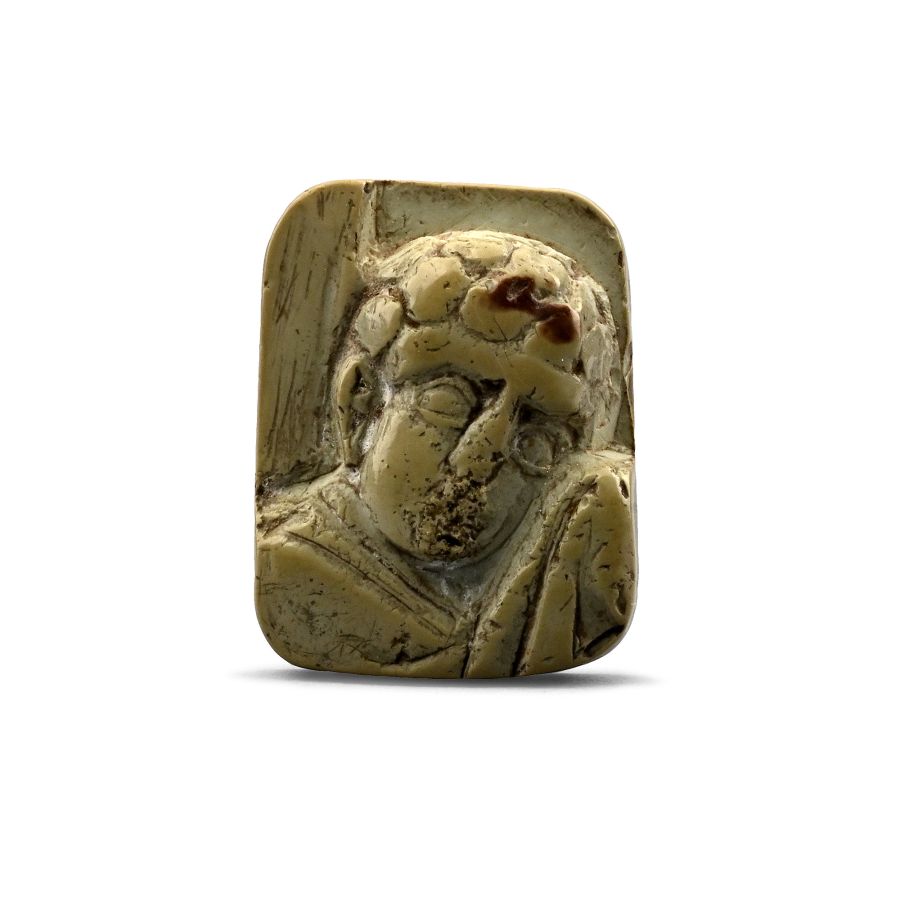
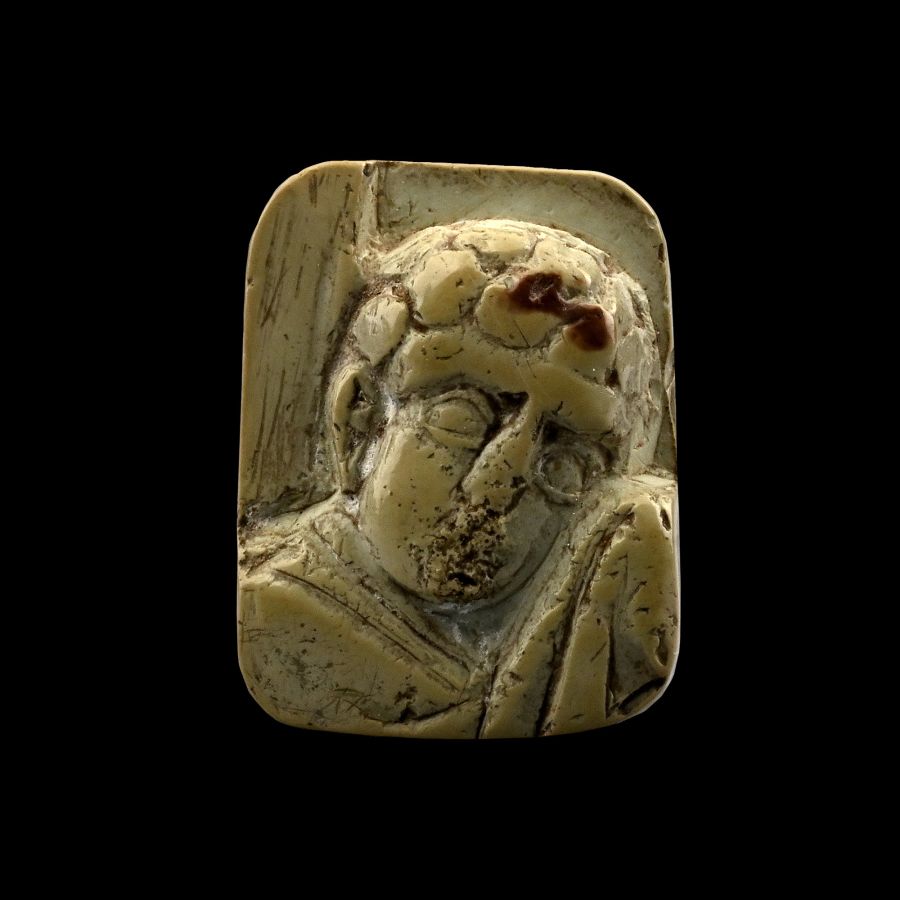
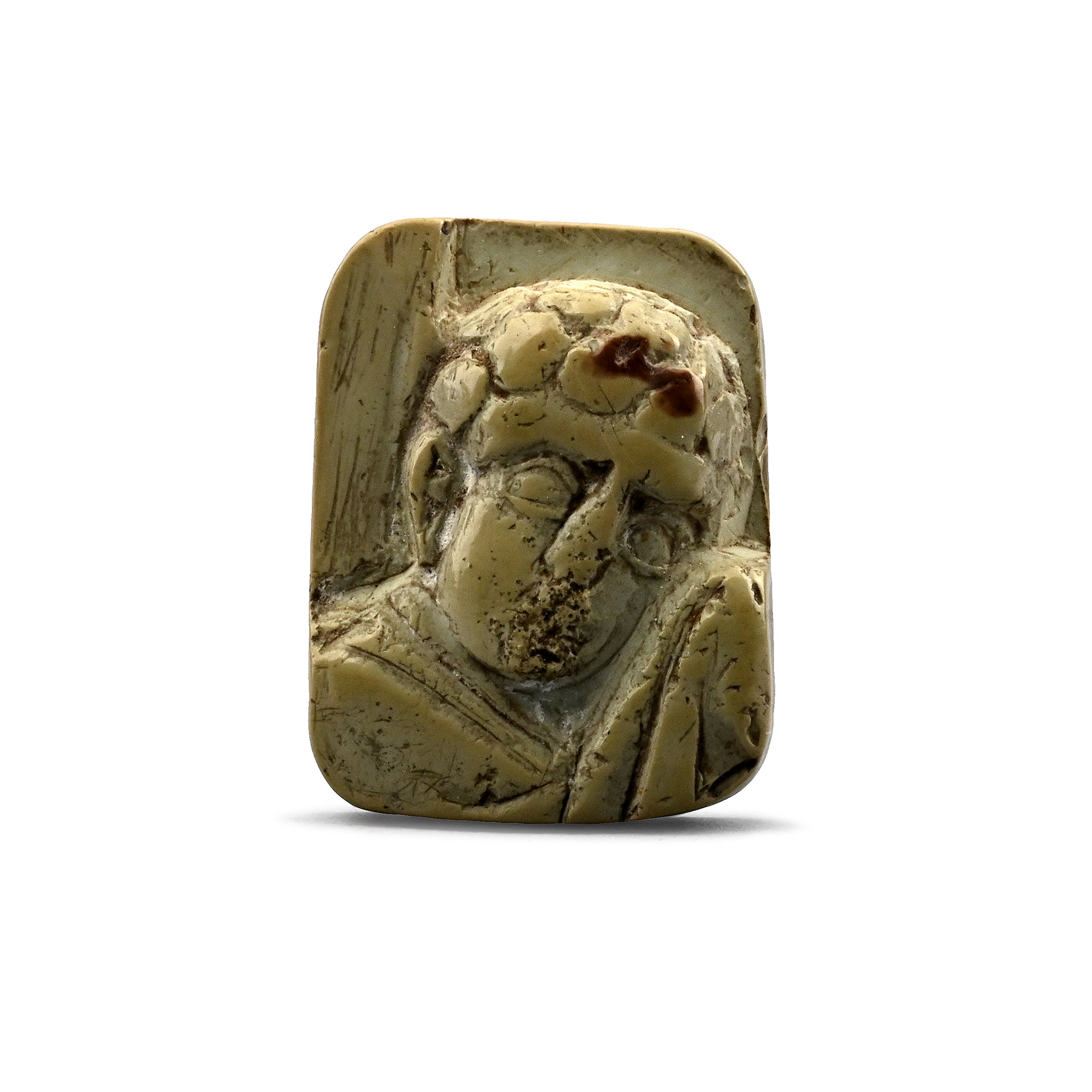
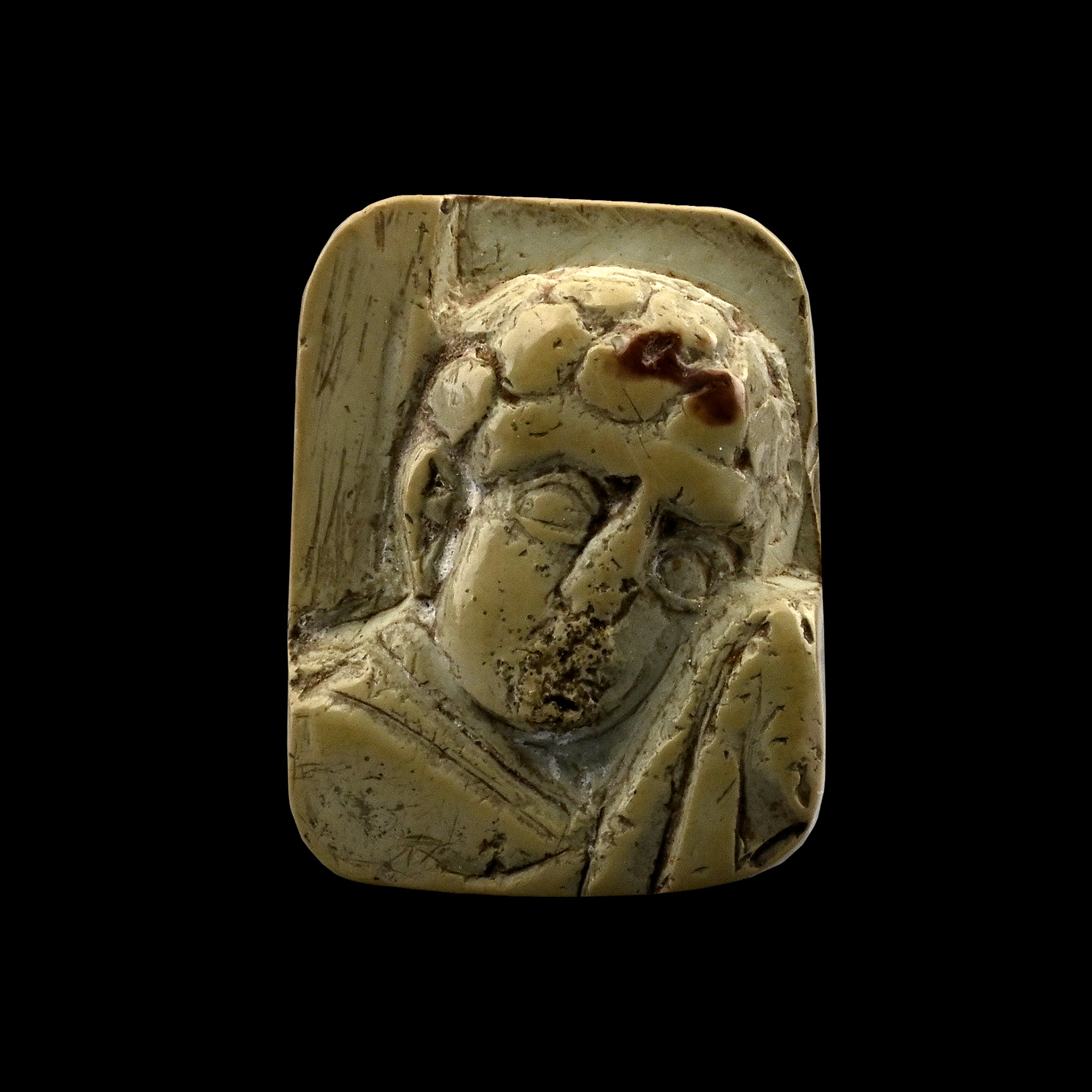
Byzantine Steatite Mount with Saint John the Theologian
12TH CENTURY A.D. OR LATER
3/4 in. (2.52 grams, 19 mm).
Showing a bust of a man dressed in a cloak and with his head turned to look over his right shoulder, possibly depicting St John; rectangular in plan with rounded corners.
ProvenanceAcquired from Artemis Gallery, 2003.
Private collection, Europe.
TimeLine Auctions follows a vetting process to ensure the authenticity and legality of all items, reinforcing our commitment to integrity and responsible trading. Each antiquity, antique, and coin lot undergoes thorough examination by a vetting committee of at least ten external specialists, professional trade association members, scientists, and archaeologists: Our Vetting Process
AUCTIONS:
TimeLine is a leading auction house specialising in antiquities, ancient art, collectables, natural history, coins, medals, and books. Our auctions offer museums, collectors, historians, and enthusiasts the opportunity to acquire unique and historically significant pieces.
LOT 0217
Byzantine Steatite Mount with Saint John the Theologian
Estimate £600 - 800€700 - 930 (for guidance only)$810 - 1,080 (for guidance only)
-
.jpg)
Eastern Byzantine Amethyst Gemstone of a Male Bust with Cross in Gold Ring
4th-5th century A.D. or earlierSold for (Inc. bp): £2,860
Intaglio with bearded profile bust facing left with a small cross to the shoulder; set into a later hollow-formed gold ring. 9.56 grams, 32.00 mm overall, 20.72 x 16.55 mm internal diameter (approximate size British P, USA 7 1/2, Europe 16.23, Japan 15)
Acquired on the European art market. Private collection, England. This lot has been checked against the Interpol Database of stolen works of art and is accompanied by search certificate number no.13137-249543. -
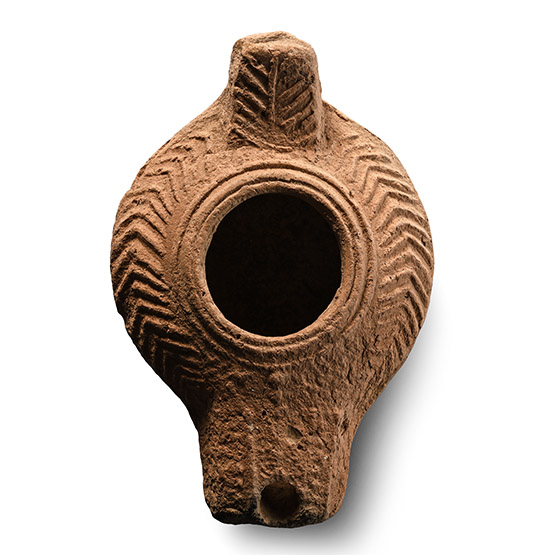
Byzantine Terracotta Slipper Oil Lamp
6th-8th century A.D.Sold for (Inc. bp): £46
Broad slipper-shaped type with square-ended stub nozzle, broad shoulder with herringbone detailing, discus with ribbed border to the filler-hole, ribbed reflector, and basal ring to the underside. 80 grams, 10.9 cm
Ex Israeli collection, 1980s. -
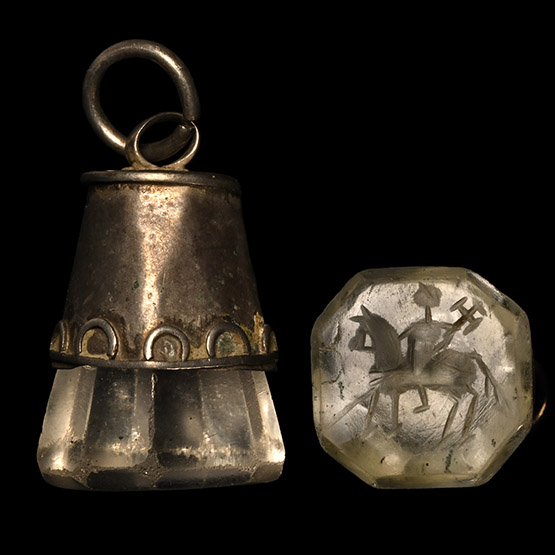
Byzantine Rock Crystal Stamp Seal in Silver Pendant with Military Saint on Horseback
Circa 6th-7th century A.D.Estimate: £1,600 - 2,000 (+bp*)
Opening Bid: £800
With a tapering octagonal body, the military saint on horseback holding a long spear, the horse wearing a detailed harness; set in a conical silver frame with suspension loop and crenellated edge. 7.9 grams, 30 mm
From an old New Zealand private collection. Acquired on the New Zealand art market circa 2014. Property of a New Zealand legal professional. Accompanied by an academic report by Dr Raffaele D’Amato. This lot has been checked against the Interpol Database of stolen works of art and is accompanied by search certificate number no.12327-223721.
The motif of a saint on horseback was common in the Romano-Christian culture of the 6th-7th centuries. The figure of a saint symbolised protection of the local church or monastery and its community, and could also be related to the priest leader of the community, as their personal seal.
