
Loading, please wait...


LOT 0215
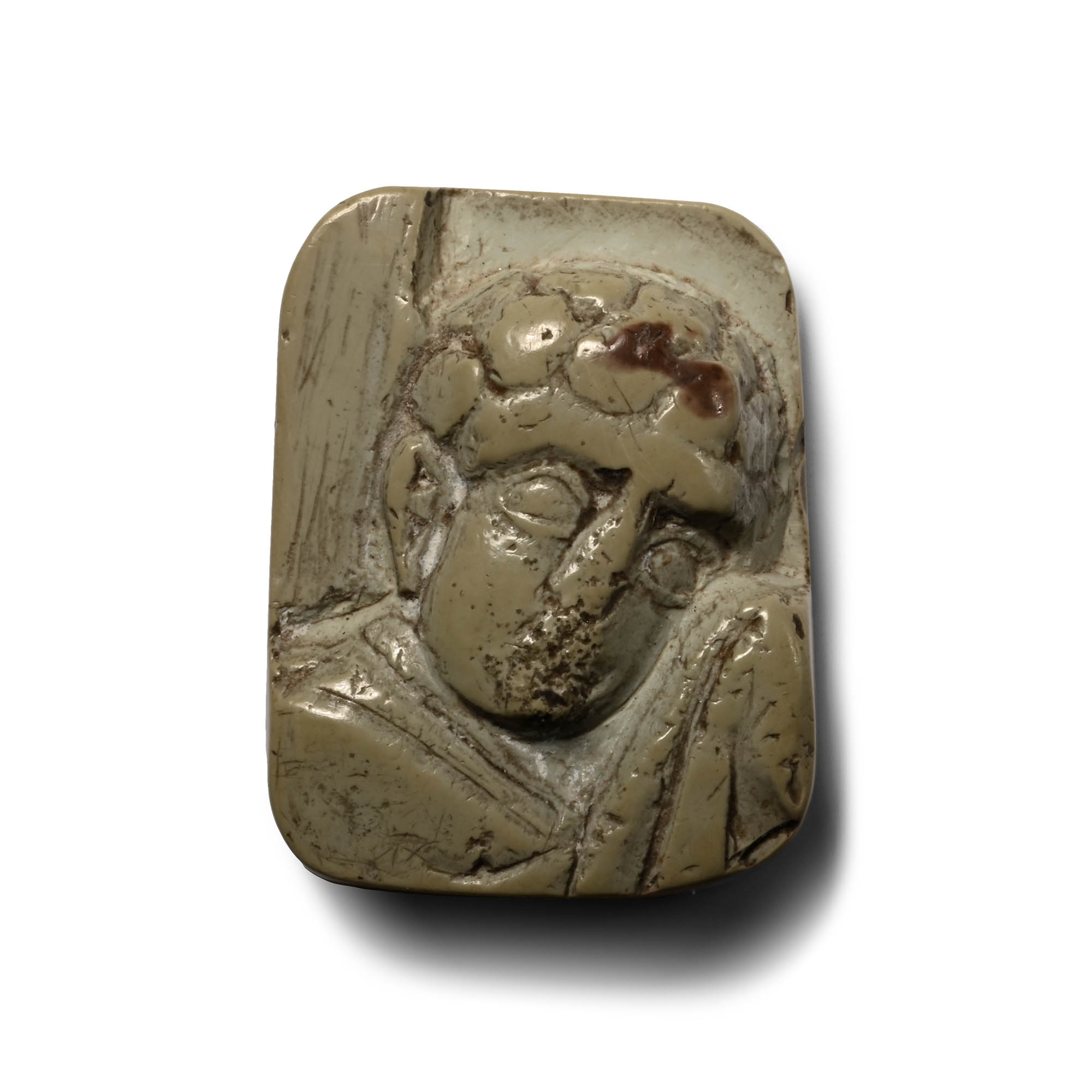
Byzantine Steatite Mount with a Saint
12TH CENTURY A.D.
3/4 in. (2.52 grams, 19 mm).
Showing a bust of a man dressed in a cloak and with his head turned to look over his right shoulder; rectangular in plan with rounded corners.
ProvenanceAcquired from Artemis Gallery, 2003.
Private collection, Europe.
TimeLine Auctions follows a vetting process to ensure the authenticity and legality of all items, reinforcing our commitment to integrity and responsible trading. Each antiquity, antique, and coin lot undergoes thorough examination by a vetting committee of at least ten external specialists, professional trade association members, scientists, and archaeologists: Our Vetting Process
AUCTIONS:
TimeLine is a leading auction house specialising in antiquities, ancient art, collectables, natural history, coins, medals, and books. Our auctions offer museums, collectors, historians, and enthusiasts the opportunity to acquire unique and historically significant pieces.
LOT 0215
Byzantine Steatite Mount with a Saint
Estimate £800 - 1,000€930 - 1,160 (for guidance only)$1,080 - 1,350 (for guidance only)
-
Byzantine Gold Strap End with Facing Figure
Circa 7th-8th century A.D.Estimate: £500 - 700 (+bp*)
Opening Bid: £250
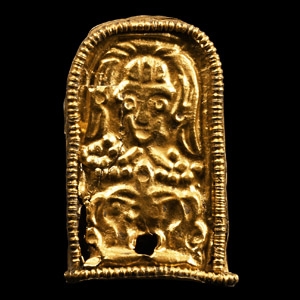
The hollow-formed, tongue-shaped body adorned with a filigree border, repoussé figure with pellets on the torso and serpents framing the head. 7.40 grams, 39 mm
Acquired 1990s-early 2000s. East Anglian private collection.
The beautiful horsemen burials found in the Avar necropolis of central Europe date to the last third of the 7th century A.D. and the early 8th century A.D. show wealth and pomp. This type of belt elements, although present in the Avar graves, were most likely produced in the workshops of the Eastern Roman Empire, from where they reached the Avar lands as imperial gifts or spoils of war. They could be simple fastenings for belts, or part of multiple belts, to which sabres and knives were attached, commonly used among Avars, Bulgars and Romans during the 6th -7th centuries A.D. -

Byzantine Bronze Stamp Seal with Inscription
6th-8th century A.D.Sold for (Inc. bp): £1,300
Formed as a fist with transverse hole, Greek legend to the flat end. 8.3 grams, 22 mm
From the collection of a gentleman, acquired on the London art market in the 1990s. -
Byzantine Bronze Patrix Die for a Belt Mount
6th-7th century A.D.Sold for (Inc. bp): £65
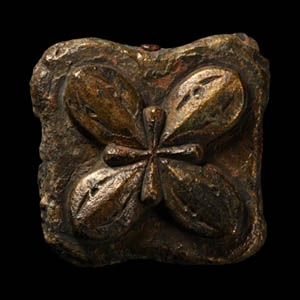
Comprising a quatrefoil modelled in high-relief with equal-armed cross to the centre, on a lozengiform base. 42.4 grams, 37 mm
Acquired in the 1980s. From the collection of a London antiquarian.
