
Loading, please wait...
LOT 0216
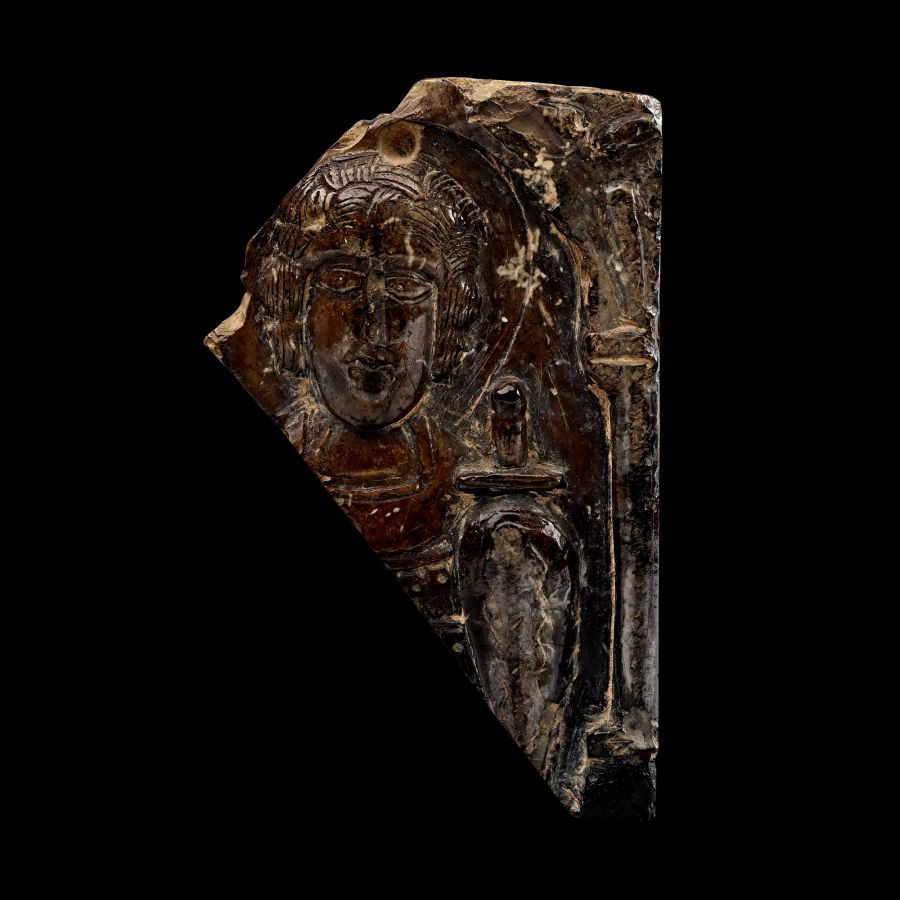
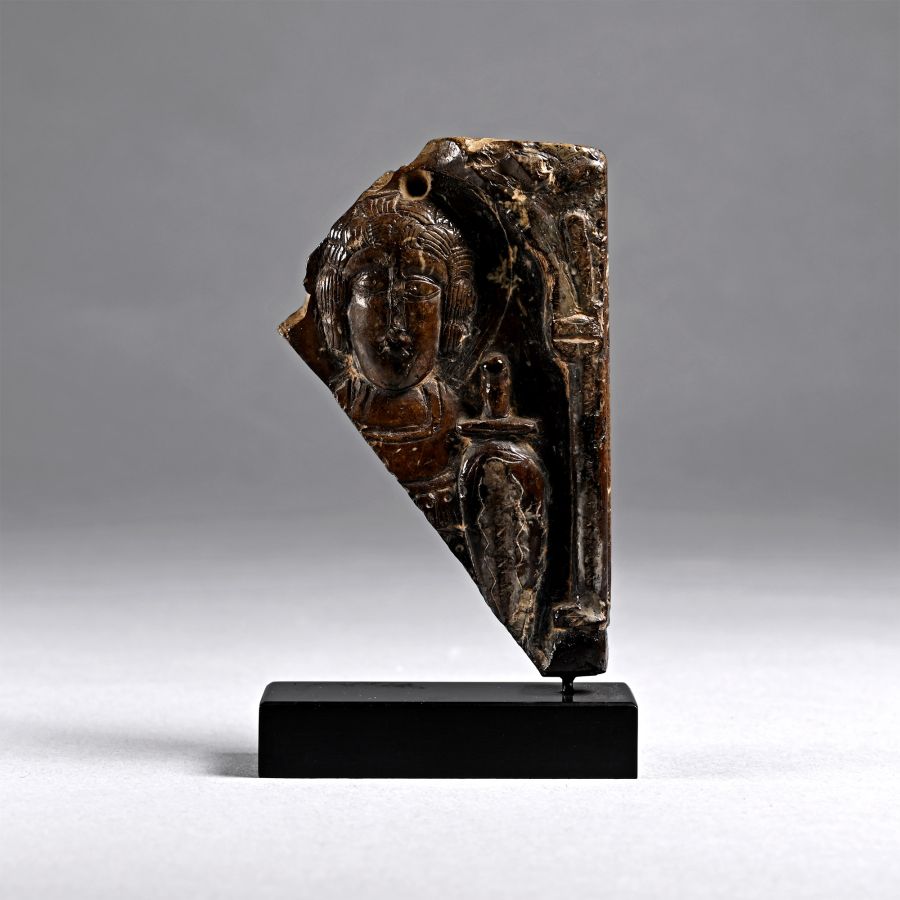
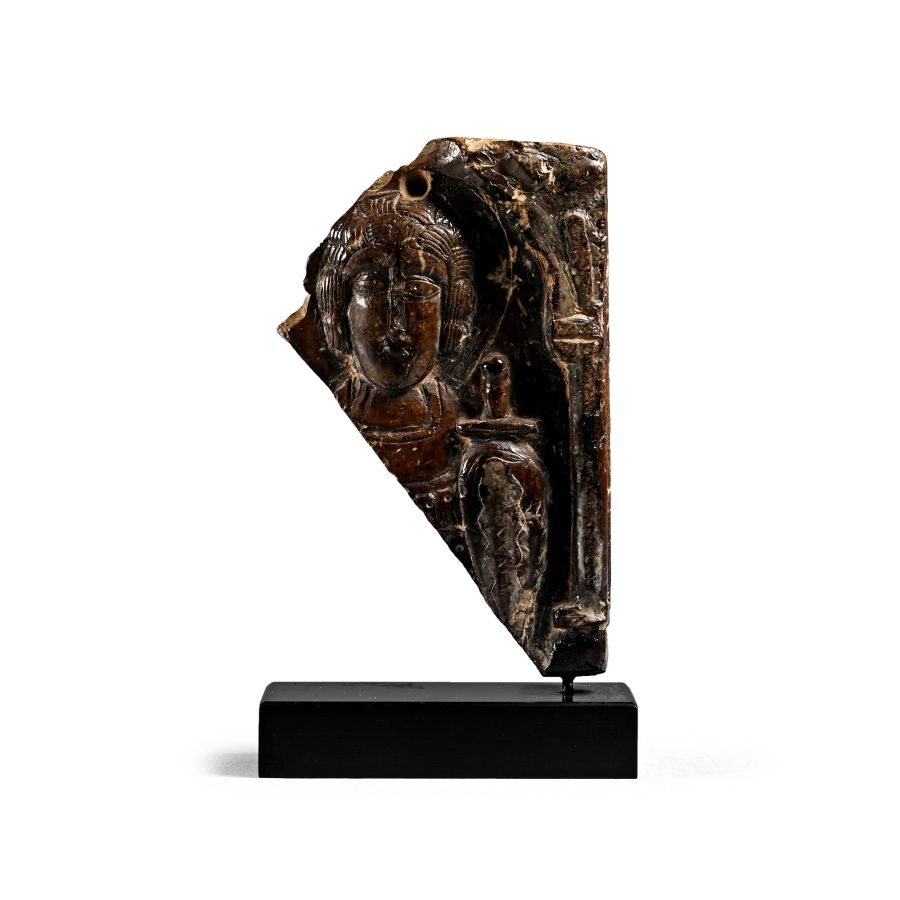
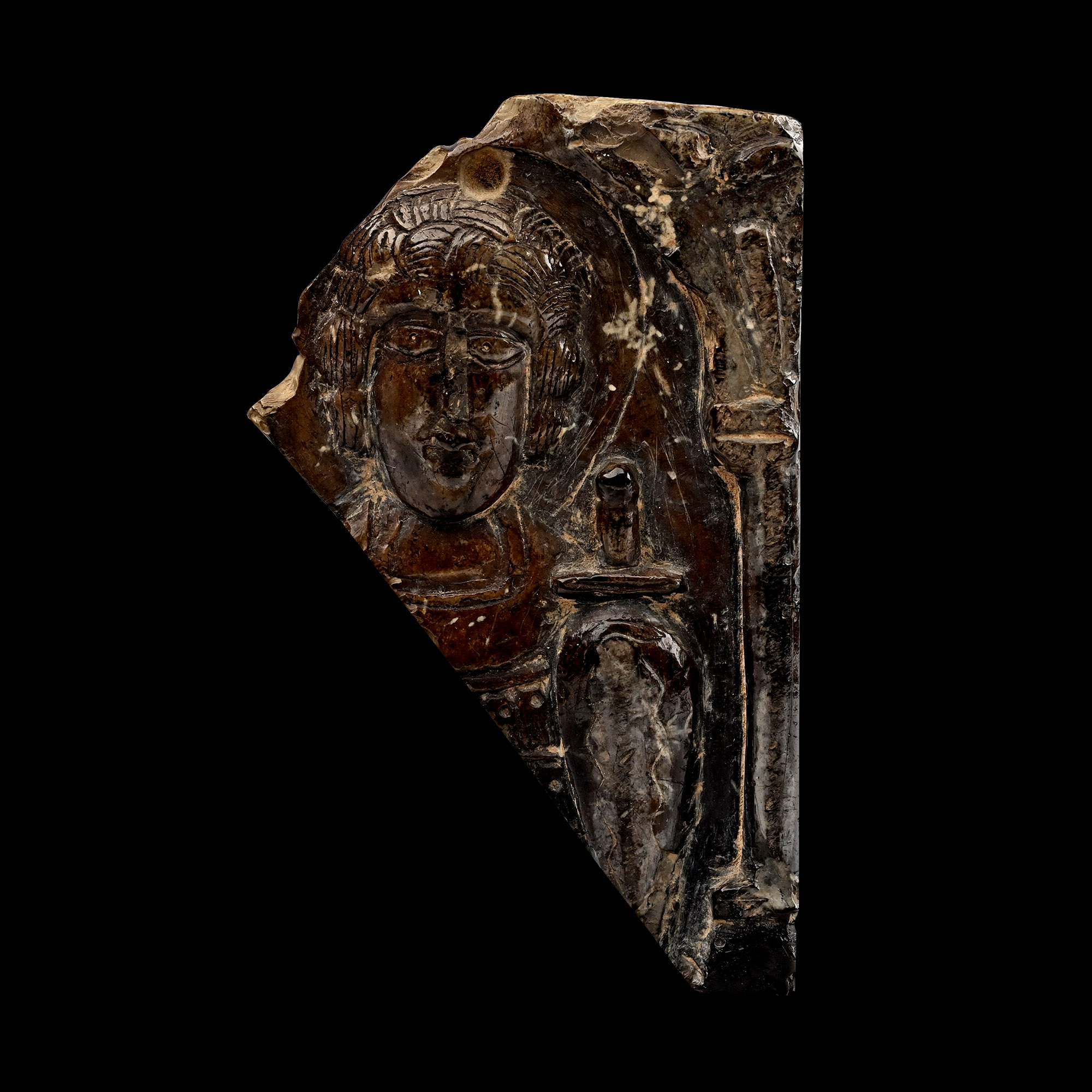
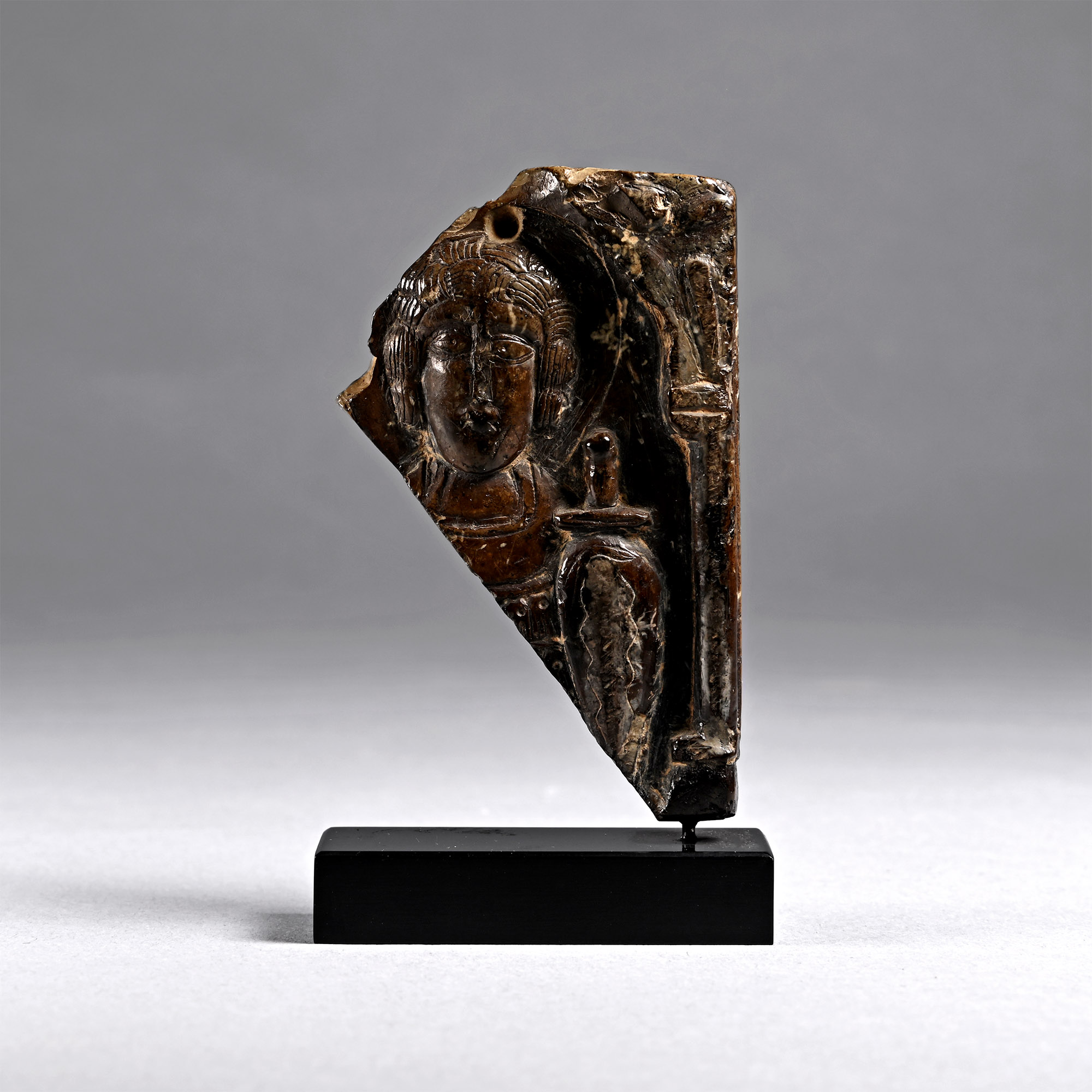
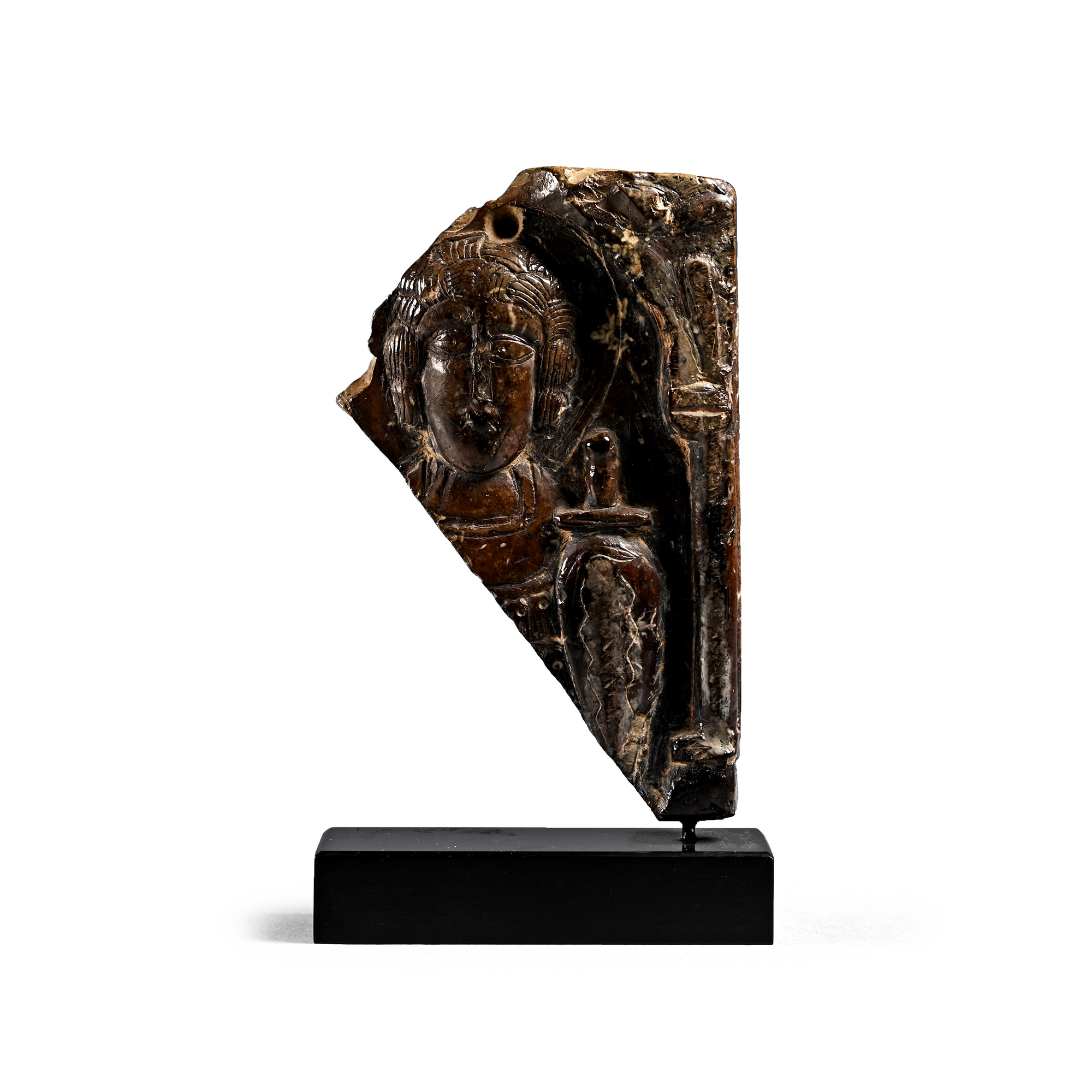
Byzantine Steatite Icon with Military Saint
10TH-12TH CENTURY A.D.
2 3/4 in. (60 grams total, icon: 72 mm high).
Fragment of an icon depicting a facing saint modelled in the half-round within an arch; an ellipsoid low-relief face with hatched collar-length hair, lentoid eyes with pointillé pupils flanking a long nose; wearing a lamellar cuirass (klivanion); stylised sword (spathion) to the shoulder with lobe pommel, piriform blade with hatched median bar and undulations to the flanks (simulating damascening); arch resting on a balustered column with shallow fixing socket above the saint's head; mounted on a custom-made stand.
ProvenanceJacques and Henriette Schumann collection, Paris, France.
with Christie's, Paris, France, 30 September 2003, no.248.
European private collection.
Accompanied by a copy of French passport no.061301, dated 3 September 2003.
Accompanied by an academic report by Dr Raffaele D'Amato.
This lot has been checked against the Interpol Database of stolen works of art and is accompanied by a search certificate number no.12690-234660.
This lot has been cleared against the Art Loss Register database, and is accompanied by an illustrated lot declaration signed by the Head of the Antiquities Department, Dr Raffaele D'Amato.
Cf. for similar Chichurov, I.S., Byzantine Cherson, catalogue of exhibition,, Moscow, 1991, figs.83, 84; cf. also Kalavrezou-Maxeiner, I., Byzantine Icons in steatite, Wien, 1985, pls. 8 (Athos, Vatopedi Monastery), 11 (Louvre, Saint Demetrios), 15 (Cherson, Saint Demetrios), 21 (Cherson, Saints Theodore, George and Demetrios), 28 (Moscow, Historical Museum).
FootnotesJacques and Henriette Schumann were distinguished Parisian collectors known for their discerning taste and passion for antiquities and decorative arts. Their collection, assembled over several decades, reflected a deep appreciation for cultural heritage and historical significance. Works from their collection have been included in major European auctions and are recognised for their provenance and quality.
CONDITIONTimeLine Auctions follows a vetting process to ensure the authenticity and legality of all items, reinforcing our commitment to integrity and responsible trading. Each antiquity, antique, and coin lot undergoes thorough examination by a vetting committee of at least ten external specialists, professional trade association members, scientists, and archaeologists: Our Vetting Process
AUCTIONS:
TimeLine is a leading auction house specialising in antiquities, ancient art, collectables, natural history, coins, medals, and books. Our auctions offer museums, collectors, historians, and enthusiasts the opportunity to acquire unique and historically significant pieces.
LOT 0216
Byzantine Steatite Icon with Military Saint
Estimate £8,000 - 10,000€9,280 - 11,600 (for guidance only)$10,800 - 13,500 (for guidance only)
-
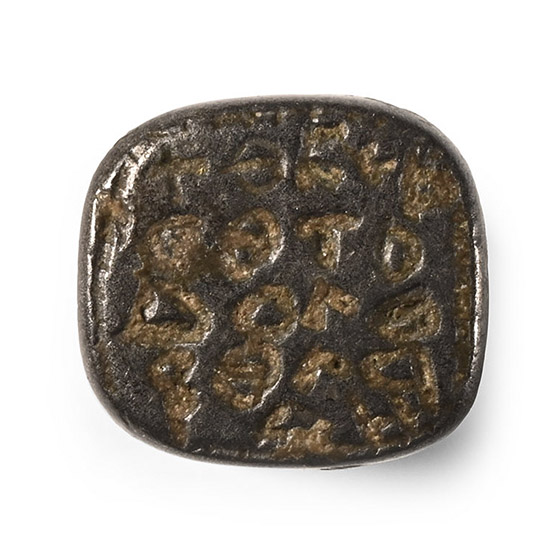
Byzantine Seal Matrix with Inscription
Circa 11th-12th century A.D.Estimate: £120 - 170 (+bp*)
Opening Bid: £67
With inscription '+ΘKEB / OΘTO / ΔΟΛΟ / ΤΘΛΑ' for 'ΘΕΟΤΟΚΕ ΒΟΗΘΕI ΤΩ ΔΟΥΛΩ ΤΟΥ ΘΕΟΥ ΛΑΔΕ' (Mother of God, help Lades, the servant of God). 13.1 grams, 18 mm
From an important collection formed before 1988, London and Geneva.
The stamp seals that have survived in large numbers from Byzantium are objects a few centimetres high and conical in shape, featuring a sealing surface at the lower end and a pendant at the upper end. They served the same function as signet rings and were used to seal everyday objects, primarily for personal purposes, using wax and other soft materials. -
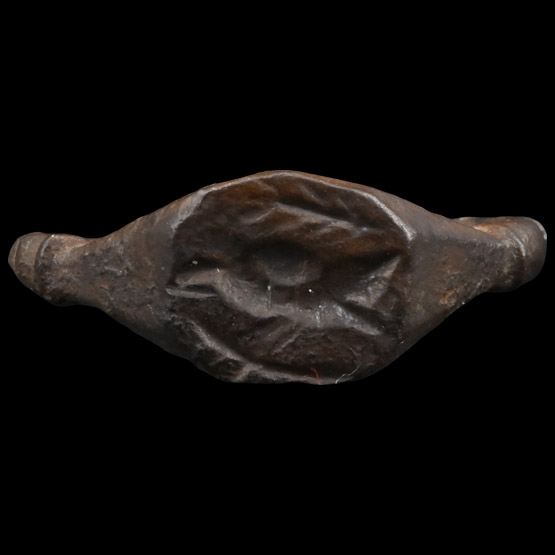
Byzantine Bronze Ring with Dove
12th-15th century A.D.Sold for (Inc. bp): £26
With slender hoop and baluster to each shoulder, ellipsoid bezel with incuse perching bird motif. 5.12 grams, 25.42 mm overall, 21.22 mm internal diameter (approximate size British U, USA 10, Europe 22.52, Japan 21)
Ex German art market, 2000s. Acquired from an EU collector living in London. From the collection of a Surrey, UK, gentleman. -
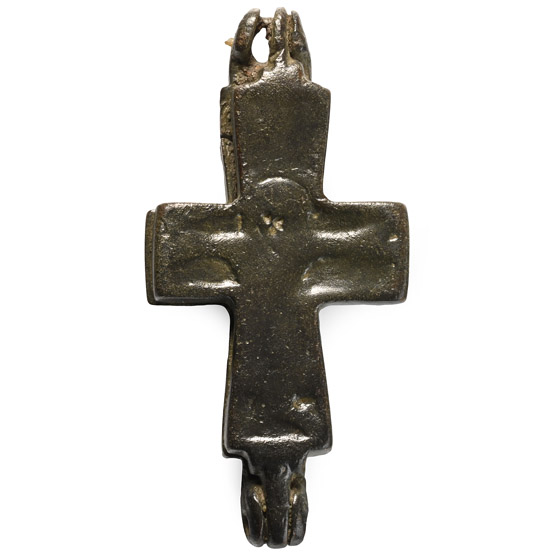
Byzantine Bronze Reliquary Cross Pendant
10th-12th century A.D.Sold for (Inc. bp): £52
Enkolpion with hinged loop, nimbate figure in orans pose to obverse, Corpus Christi to reverse; usage wear. 13.79 grams, 45 mm
Ex German art market, 2000s. Acquired from an EU collector living in London. From the collection of a Surrey, UK, gentleman.
