
Loading, please wait...
LOT 1114
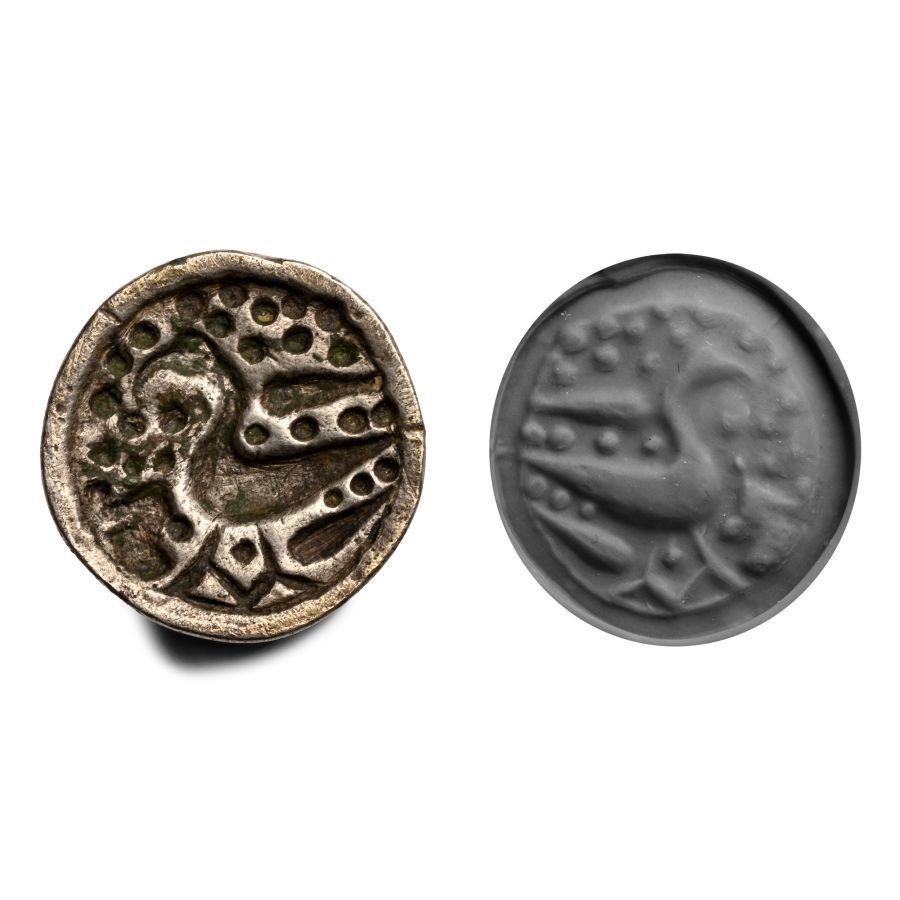
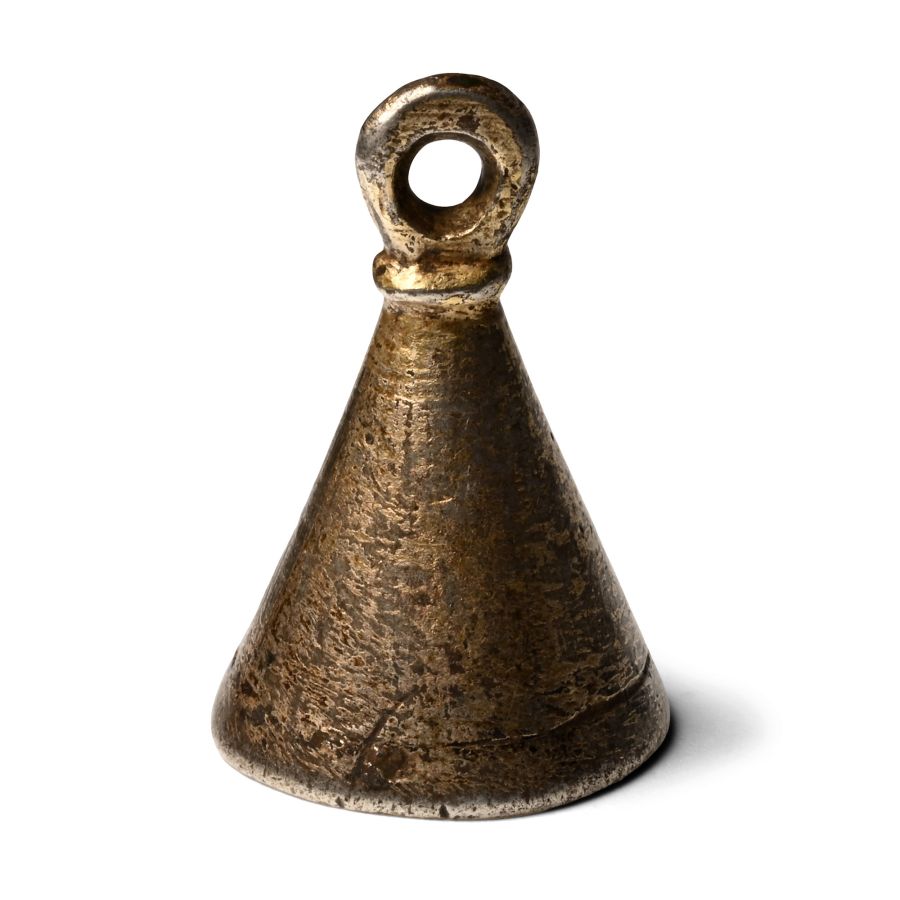
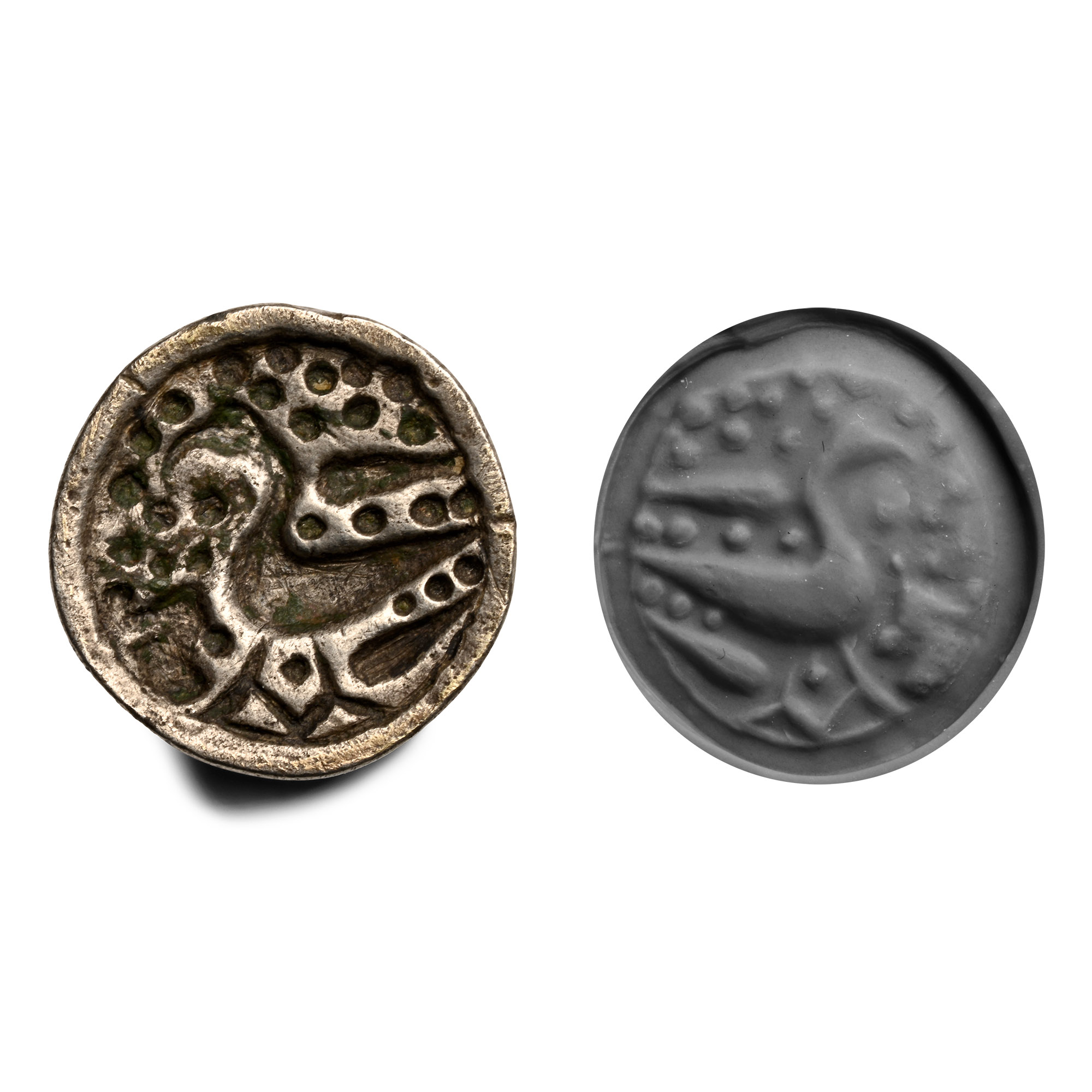
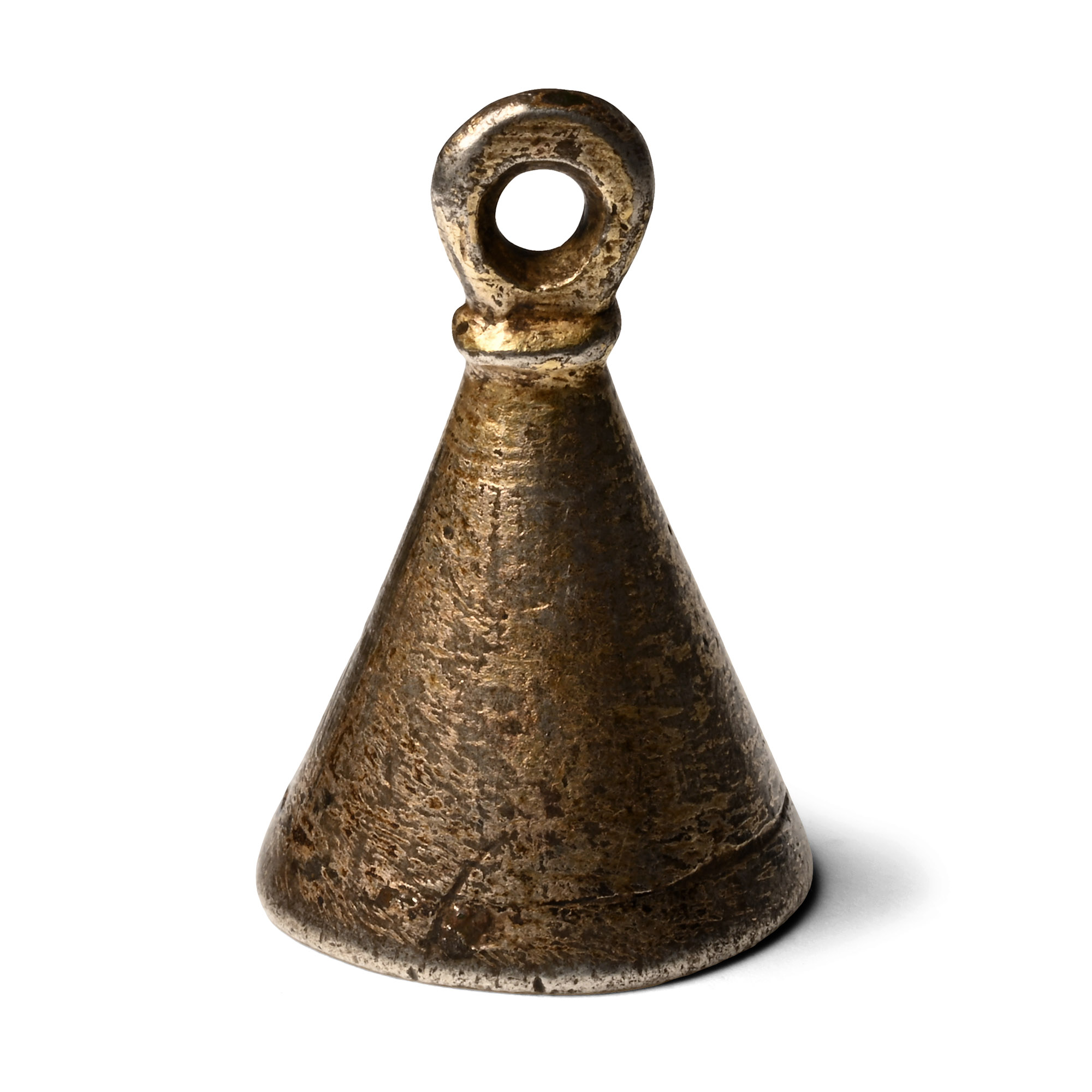
Byzantine Silver Stamp Seal with Bird
6TH-8TH CENTURY A.D.
1 in. (11.7 grams, 24 mm).
Conical body with integral loop above, underside with a standing bird with hooked beak, pelletted field.
ProvenancePrivate collection, UK.
CONDITIONTimeLine Auctions follows a vetting process to ensure the authenticity and legality of all items, reinforcing our commitment to integrity and responsible trading. Each antiquity, antique, and coin lot undergoes thorough examination by a vetting committee of at least ten external specialists, professional trade association members, scientists, and archaeologists: Our Vetting Process
AUCTIONS:
TimeLine is a leading auction house specialising in antiquities, ancient art, collectables, natural history, coins, medals, and books. Our auctions offer museums, collectors, historians, and enthusiasts the opportunity to acquire unique and historically significant pieces.
LOT 1114
Byzantine Silver Stamp Seal with Bird
Estimate £100 - 140€120 - 160 (for guidance only)$140 - 190 (for guidance only)
-
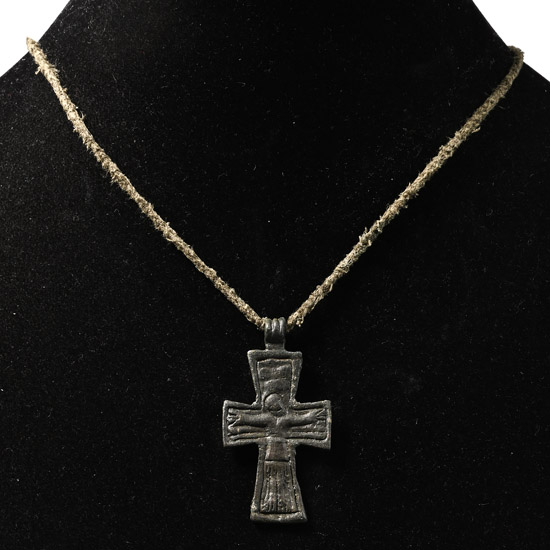
Byzantine Bronze Cross Pendant
Circa 10th-12th century A.D.Sold for (Inc. bp): £221
Expanding cross pendant with integral ribbed loop and a low-relief Corpus Christi on the obverse, suspended from a later fabric cord. 11.3 grams total, pendant: 53 mm
Acquired at the York Fair. Property of a Lancashire, UK, collector. -
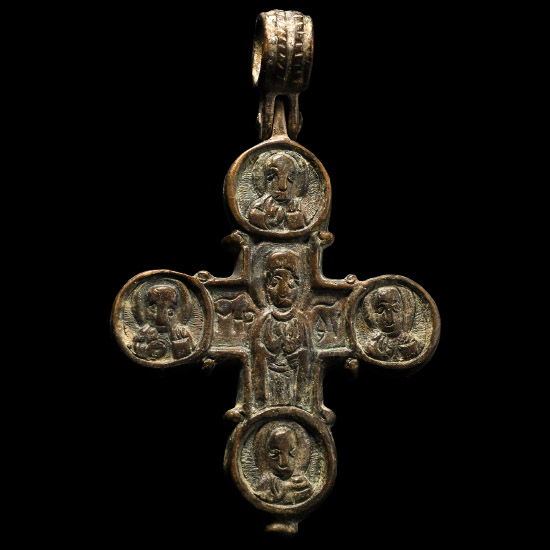
Large Byzantine Bronze Cross Pendant with Christ and Saints
Circa 10th-12th century A.D.Sold for (Inc. bp): £286
Obverse: central facing nimbate figure of Mary with 'MHP ΘV' legend, facing nimbate bust in each of the roundels; reverse with cruciform void and pellets; hinged loop with ropework detailing. 43.1 grams, 88 mm
From the private coin collection of a West London, UK, gentleman, formed since the mid 1980s. -
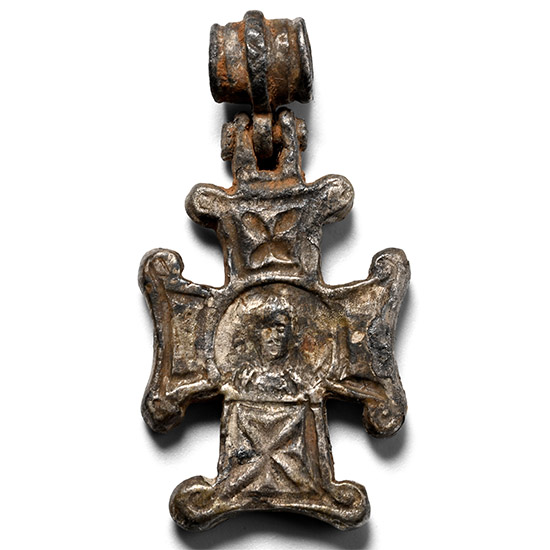
Byzantine Silver-Gilt Cross Pendant
Circa 10th-12th century A.D.Estimate: £200 - 300 (+bp*)
Opening Bid: £100
The cross with an articulated loop and an X-motif above and below a central panel with a facing bust. 5.93 grams, 30 mm
Ex German art market, 2000s. Acquired from an EU collector living in London. From the collection of a Surrey, UK, gentleman.
