
Loading, please wait...
LOT 0777
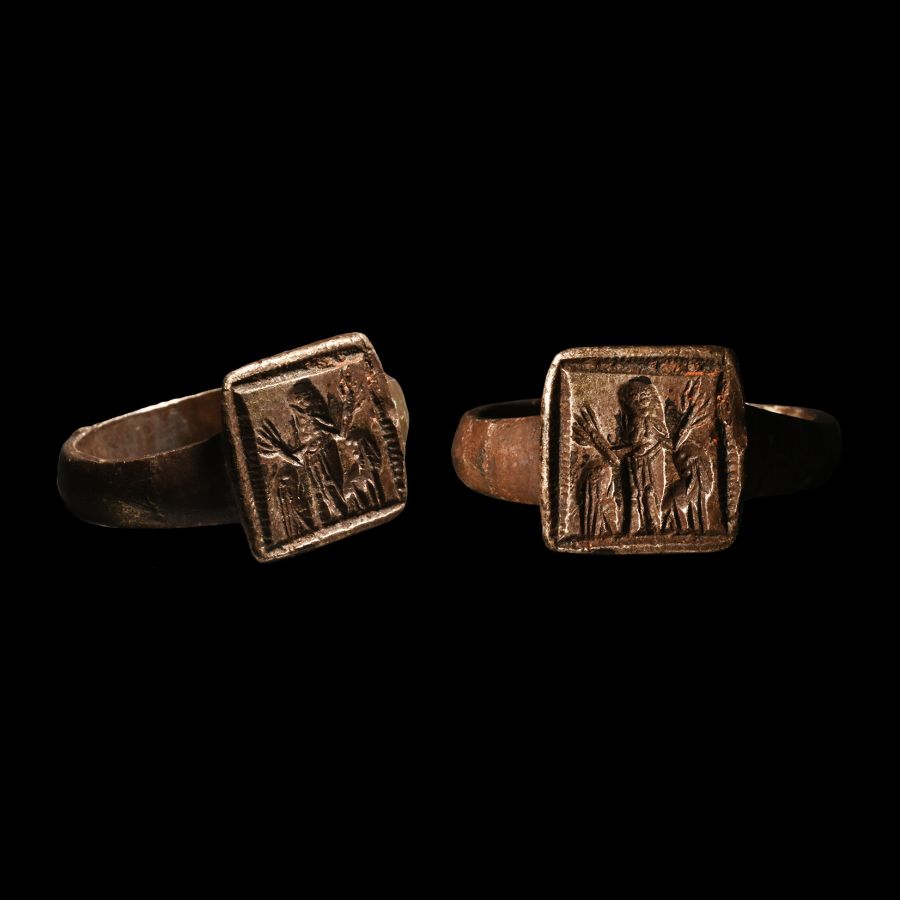
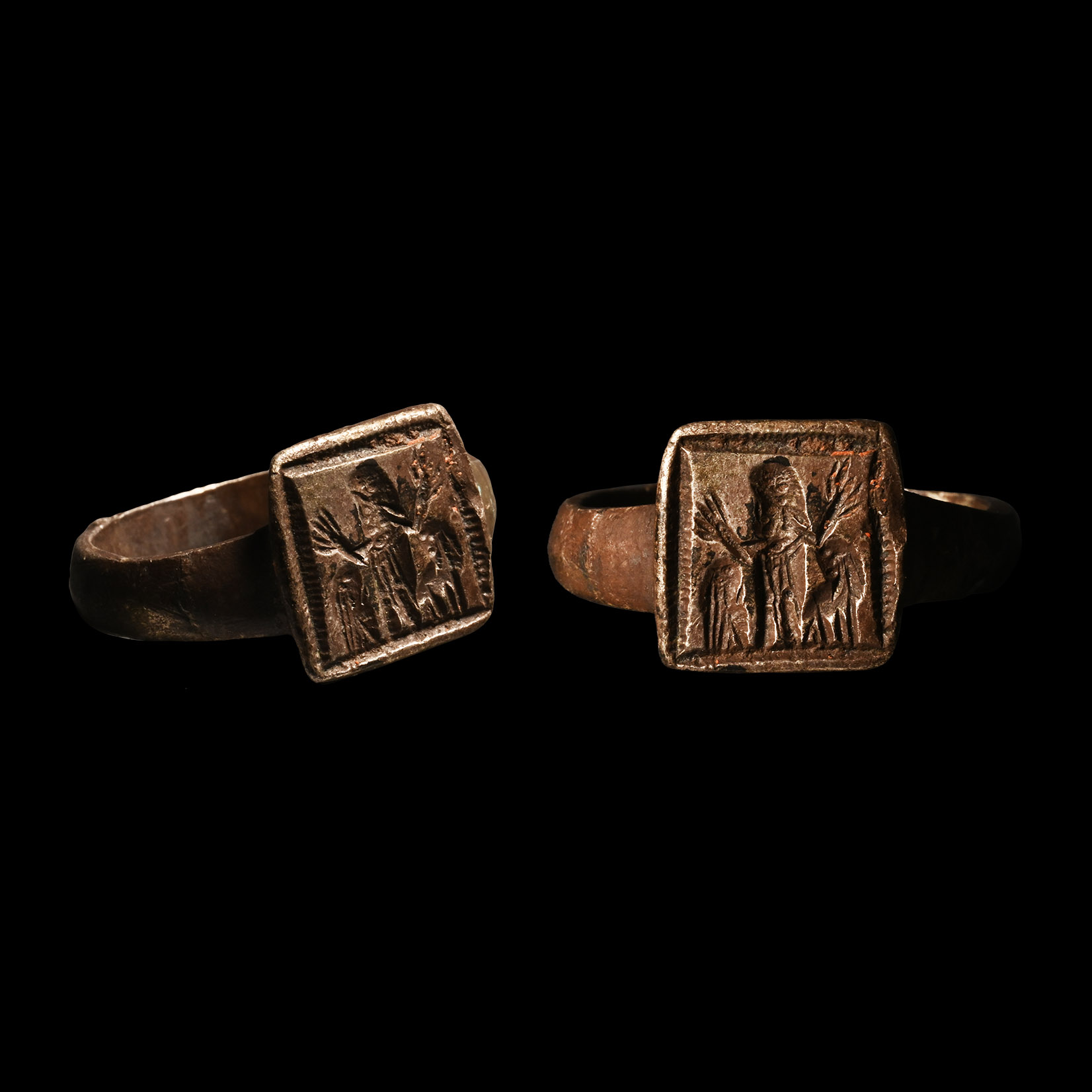
Byzantine Silver Ring with Saint
6TH-8TH CENTURY A.D.
7/8 in. (4.41 grams, 22.27 mm overall, 18.61 mm internal diameter (approximate size British P, USA 7 1/2, Europe 16.23, Japan 15)).
With square plaque, incuse Daniel in orans pose flanked by two lions. [No Reserve]
ProvenanceFrom a UK private collection, before 1980.
LiteratureCf. Chadour, A.B., Rings. The Alice and Louis Koch Collection, volume I, Leeds, 1994, item 478, for type.
CONDITIONTimeLine Auctions follows a vetting process to ensure the authenticity and legality of all items, reinforcing our commitment to integrity and responsible trading. Each antiquity, antique, and coin lot undergoes thorough examination by a vetting committee of at least ten external specialists, professional trade association members, scientists, and archaeologists: Our Vetting Process
AUCTIONS:
TimeLine is a leading auction house specialising in antiquities, ancient art, collectables, natural history, coins, medals, and books. Our auctions offer museums, collectors, historians, and enthusiasts the opportunity to acquire unique and historically significant pieces.
-
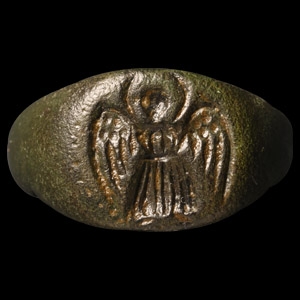
Byzantine Bronze Ring with Angel
Circa 6th-8th century A.D.Sold for (Inc. bp): £247
With a D-section hoop and expanding shoulders, the bezel with a facing nimbate angel with spread wings. 5.34 grams, 22.04 mm overall, 17.87 mm internal diameter (approximate size British P, USA 7 1/2, Europe 16.23, Japan 15)
From the collection of a High Wycombe, Buckinghamshire, UK, gentleman, circa 2000. -
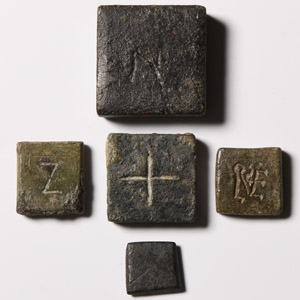
Byzantine Bronze Trade Weight Collection
Circa 8th-12th century A.D.Sold for (Inc. bp): £78
Group of tabular weights with markings including incised cross, monogram 'Z', 'N', NE monogram and others. 43.9 grams total, 10-20 mm
Ex Simmons Gallery, London E11, UK, in the 1990s. From a North London collection. -
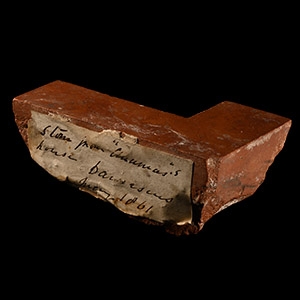
Byzantine Red Marble Fragment from the House of Ananias in Damascus
Circa 6th century A.D.Sold for (Inc. bp): £598
Corner piece with polished face; an old handwritten label to the side reading 'Stone from "Ananiani's" house Damascus May 1861'. 182 grams, 82 mm
Found Damascus, Syria, in May 1861. UK private collection. Property of a Nottinghamshire gentleman. With a late 19th century handwritten identification label attached.
The Chapel of San Anania is a religious building located in a two-room crypt in Damascus, approximately four meters below the current street level, reachable by descending a staircase of twenty-three steps from the courtyard of a house that traditionally is attributed to Ananias, the Christian martyr who helped Saul (who became Paul the Apostle), baptised him and helped him hide and leave Damascus, after he had attracted the hatred of the Jews who had organised his killing. It is an apse of an Eastern Roman basilica from the 5th-6th century, cited several times by Arab historical sources such as al-Mussalabeh (of the Holy Cross), brought to light by the excavations carried out by the count Eustache de Lorey.
