
Loading, please wait...
LOT 0990
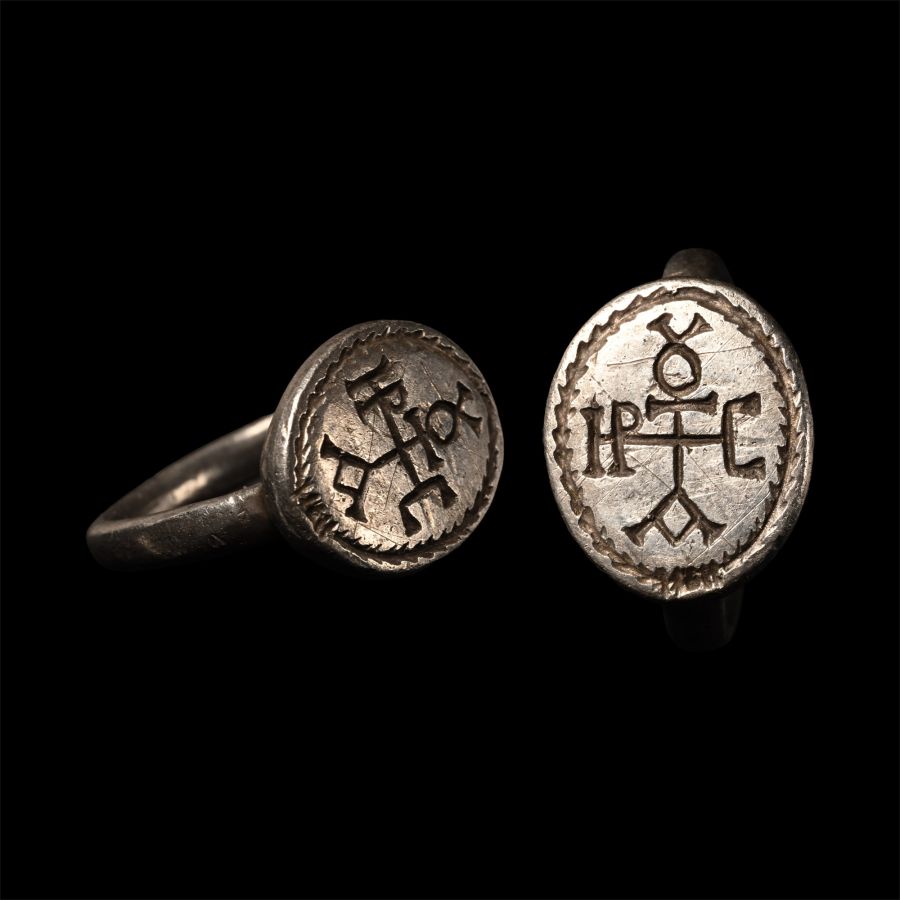
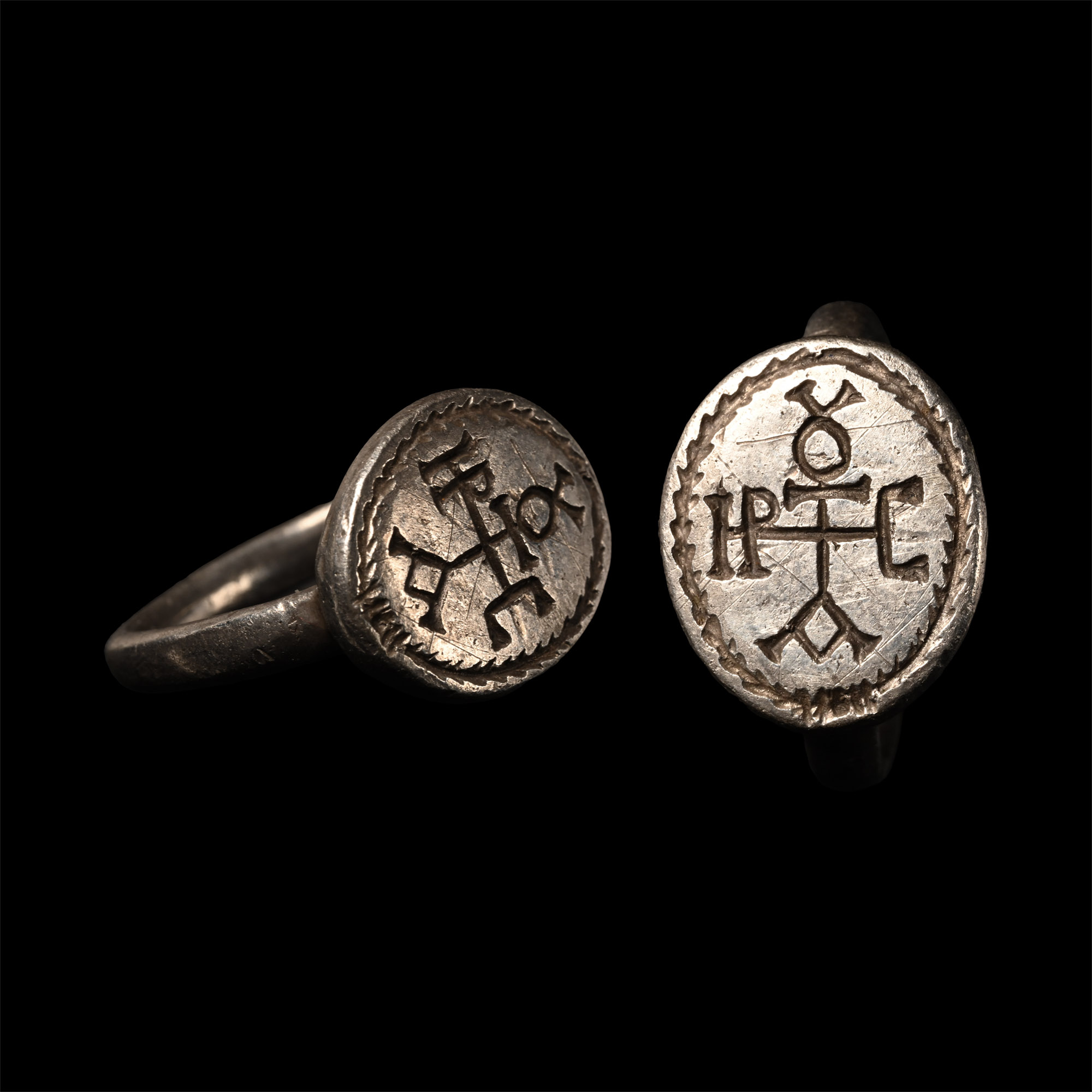
Byzantine Silver Ring with Monogram
6TH-7TH CENTURY A.D.
7/8 in. (7.37 grams, 22.05 mm overall, 17.33 mm internal diameter (approximate size British N, USA 6 1/2, Europe 13.72, Japan 13)).
Ellipsoid bezel with wreath border, monogram formed from 'ΩΗΡΑΤC'.
ProvenanceUK private collection before 2000.
Acquired on the UK art market.
Property of a London gentleman.
This lot is accompanied by an illustrated lot declaration signed by the Head of the Antiquities Department, Dr Raffaele D’Amato.
TimeLine Auctions follows a vetting process to ensure the authenticity and legality of all items, reinforcing our commitment to integrity and responsible trading. Each antiquity, antique, and coin lot undergoes thorough examination by a vetting committee of at least ten external specialists, professional trade association members, scientists, and archaeologists: Our Vetting Process
AUCTIONS:
TimeLine is a leading auction house specialising in antiquities, ancient art, collectables, natural history, coins, medals, and books. Our auctions offer museums, collectors, historians, and enthusiasts the opportunity to acquire unique and historically significant pieces.
-
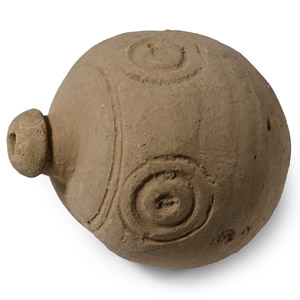
Byzantine 'Greek Fire' Ceramic Fire Bomb or Hand Grenade
9th-11th century A.D.Sold for (Inc. bp): £85
A large bulbous missile with domed filler-hole and impressed circle-and-dot motifs to the shoulder. 730 grams, 13.5 cm
From an important specialist collection, London, UK, 1990s onwards. Accompanied by an academic paper by military specialist Dr Raffaele D'Amato, dated 15 July 2019 and titled 'Eastern Roman Empire - Greek Fire Bomb or Hand Grenade (μεσαίον kακάβιον) 9th-11th century AD'. This lot is accompanied by an illustrated lot declaration signed by the Head of the Antiquities Department, Dr Raffaele D’Amato. -
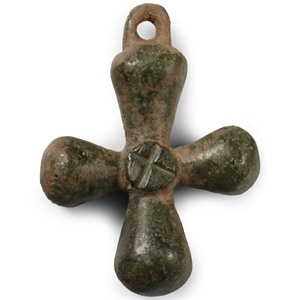
Byzantine Bronze Cross Pendant
10th-12th century A.D.Sold for (Inc. bp): £117
Equal-arm type with saltire on a central disc panel and four radiating bulbous arms. 38.39 grams, 45 mm
Ex German art market, 2000s. Acquired from an EU collector living in London. From the collection of Surrey, UK, gentleman. This lot is accompanied by an illustrated lot declaration signed by the Head of the Antiquities Department, Dr Raffaele D’Amato. -
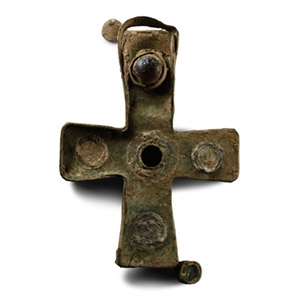
Byzantine Bronze Reliquary Cross Pendant
Circa 8th-10th century A.D.Sold for (Inc. bp): £13
Hollow-formed sheet-bronze enkolpion with cells to the angles (two remaining), five large cells to the obverse with inset cabochon (one remaining). 42 grams, 94 mm
Acquired on the German art market pre 1998. This lot is accompanied by an illustrated lot declaration signed by the Head of the Antiquities Department, Dr Raffaele D’Amato.
