
Loading, please wait...
LOT 1129
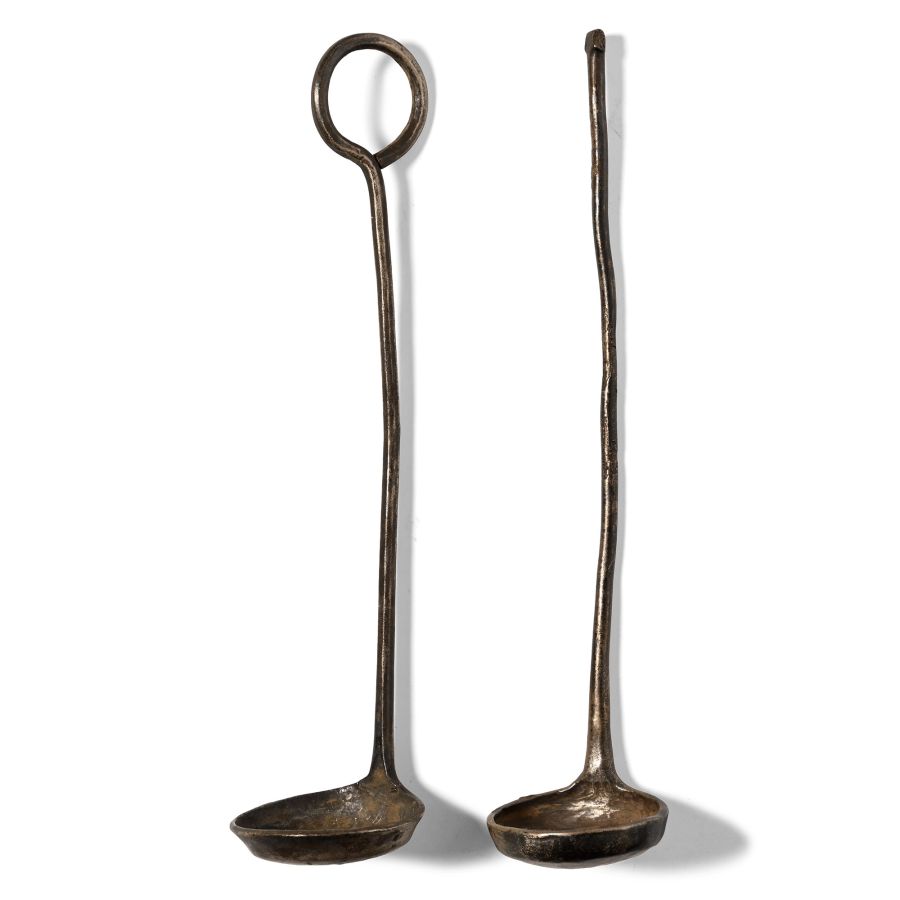
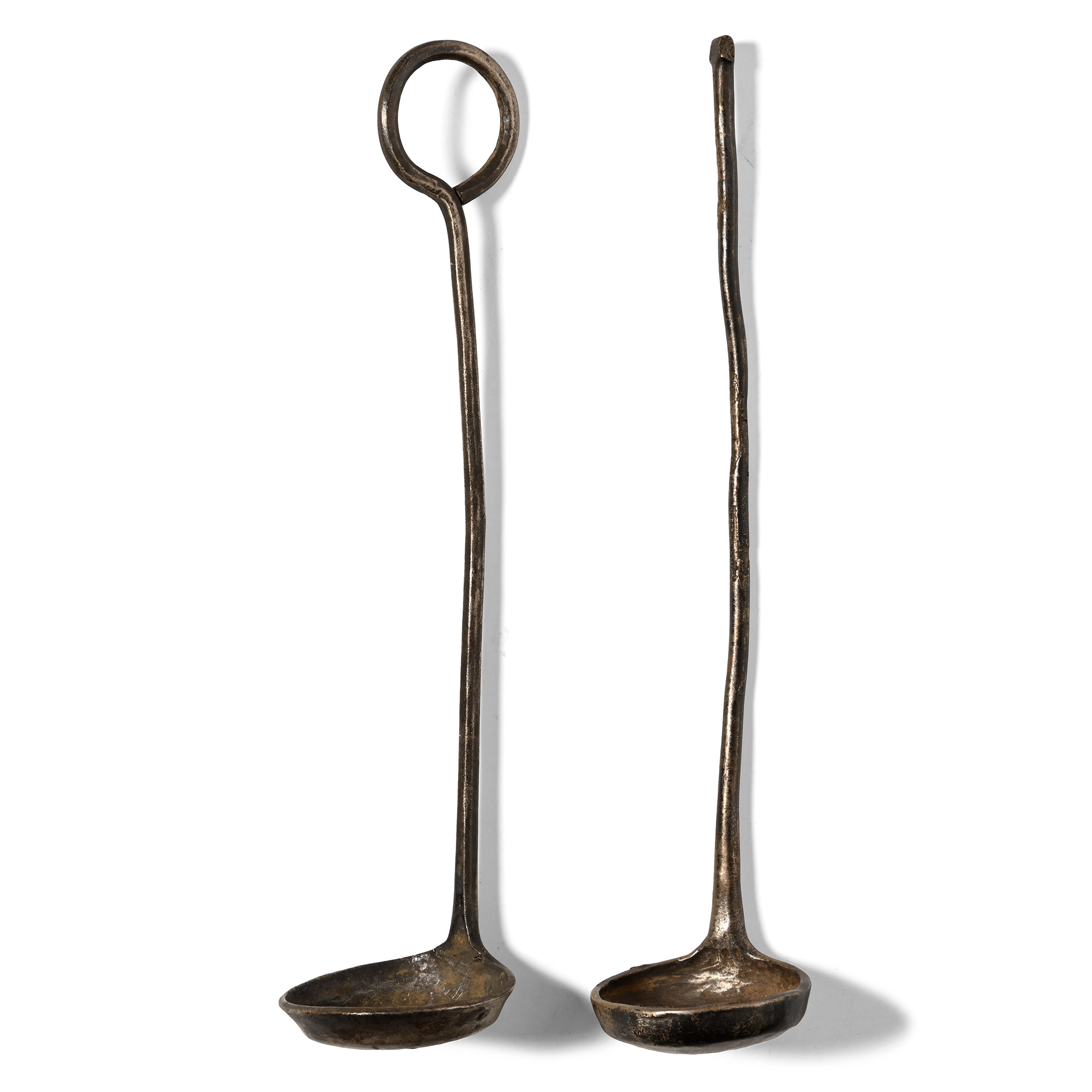
Byzantine Silver Priest's Ladle Pair
CIRCA 10TH-13TH CENTURY A.D.
6 3/8 - 6 1/2 in. (58.3 grams total, 16.2-16.5 cm).
Each with a shallow discoid bowl and flared rim, round-section shank; one with an integral suspension ring. [2]
ProvenanceEx property of a London gentleman; part of a Mayfair collection formed in the 1970s and 1980s.
Private collection, Suffolk, UK.
TimeLine Auctions follows a vetting process to ensure the authenticity and legality of all items, reinforcing our commitment to integrity and responsible trading. Each antiquity, antique, and coin lot undergoes thorough examination by a vetting committee of at least ten external specialists, professional trade association members, scientists, and archaeologists: Our Vetting Process
AUCTIONS:
TimeLine is a leading auction house specialising in antiquities, ancient art, collectables, natural history, coins, medals, and books. Our auctions offer museums, collectors, historians, and enthusiasts the opportunity to acquire unique and historically significant pieces.
-
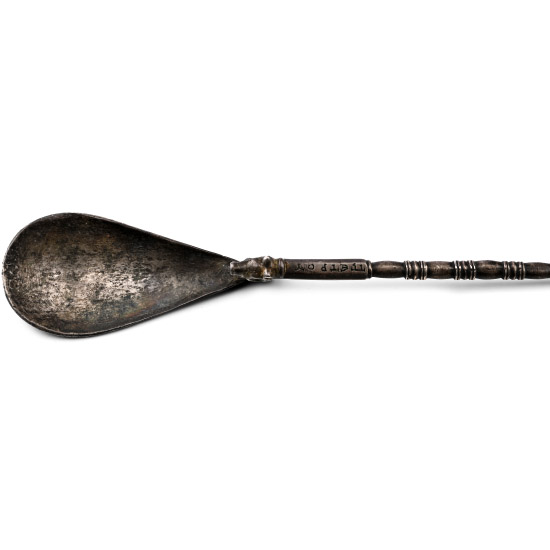
Late Byzantine Silver Spoon with 'St Peter' Inscription on the Handle
Late 6th-8th century A.D.Sold for (Inc. bp): £910
Featuring a large, shallow piriform bowl, stepped junction with a boar's head above, a hexagonal-section stem extending from behind the boar's neck bearing a Greek inscription 'TTETPOY' (of Peter); a balustered handle with a cuboid, striated finial. 60.77 grams, 21.5 cm
Acquired on the UK art market. Private collection, Surrey, UK.
The inscription suggests that the spoon may have had a liturgical purpose, associated with the Holy Communion. Still today in the Orthodox Church, the Body and Blood of Christ are dispensed with similar liturgical objects. The name Peter can be associated with the church, or simply with the owner of the liturgical artefact. -
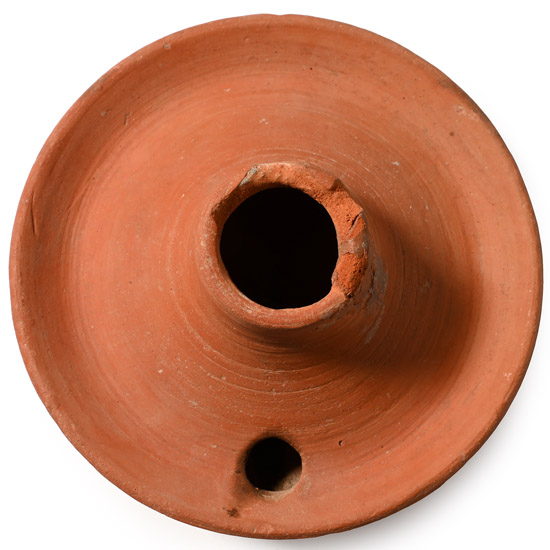
Byzantine Terracotta Discoid Oil Lamp
Circa 6th-8th century A.D.Sold for (Inc. bp): £33
Circular lamp with raised flange on the rim, short conical neck and a low basal ring. 181 grams, 95 mm
From an important collection of lamps, Germany, 1970s. -
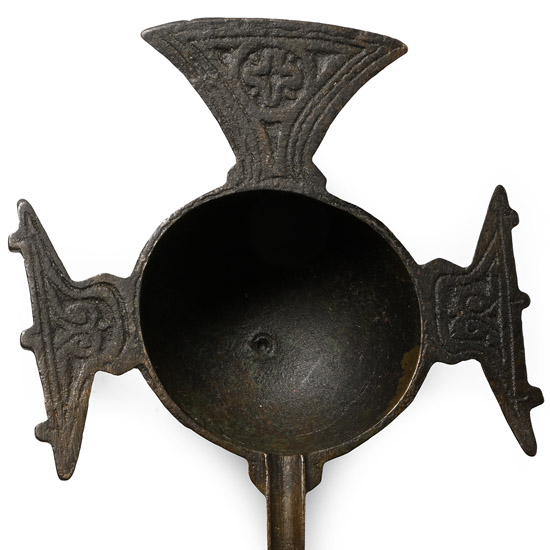
Byzantine Bronze Oil Lamp
Circa 7th-10th century A.D.Sold for (Inc. bp): £247
Formed as a stylised bird with a hemispherical body, U-shaped nozzle forming the head, two projecting wings with incised decoration, and a large flaring tail forming the handle with a central cross motif, three stub legs on the underside. 65.9 grams, 12 cm
From an important collection of lamps, Germany, 1970s.
