
Loading, please wait...
LOT 1052
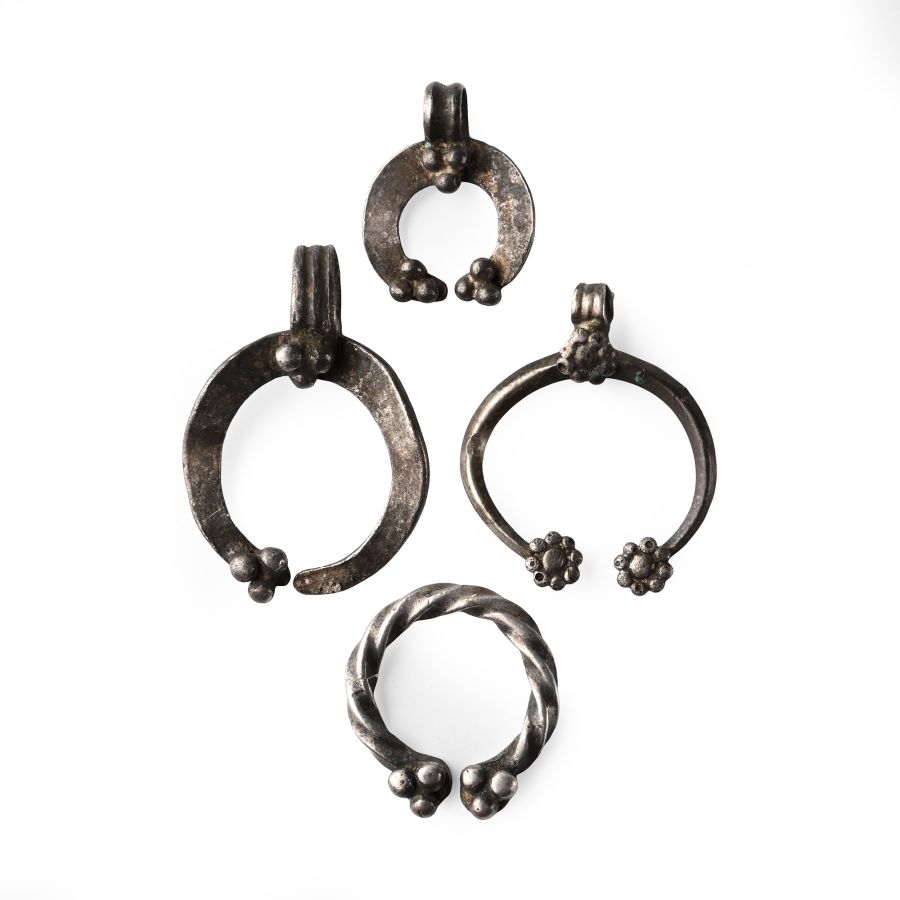
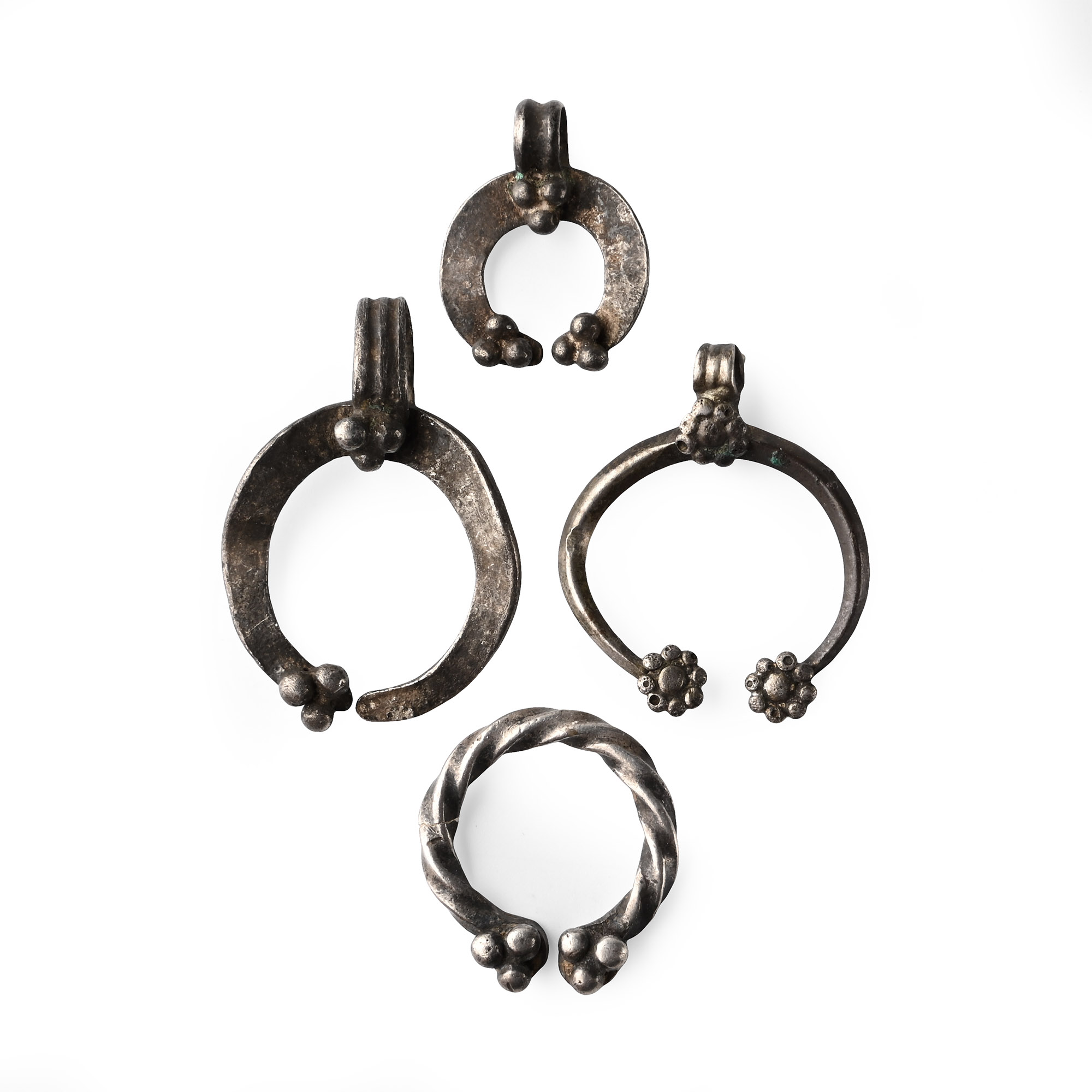
Byzantine Silver Pendant Collection
7TH-11TH CENTURY A.D.
3/4 - 1 1/4 in. (8.6 grams total, 18-30 mm).
Comprising of four penannular pendants with applied pelletted decoration; three with attachment loops. [4, No Reserve]
ProvenanceUK private collection before 2000.
Acquired on the UK art market.
Private collection, London, UK.
This lot is accompanied by an illustrated lot declaration signed by the Head of the Antiquities Department, Dr Raffaele D'Amato.
TimeLine Auctions follows a vetting process to ensure the authenticity and legality of all items, reinforcing our commitment to integrity and responsible trading. Each antiquity, antique, and coin lot undergoes thorough examination by a vetting committee of at least ten external specialists, professional trade association members, scientists, and archaeologists: Our Vetting Process
AUCTIONS:
TimeLine is a leading auction house specialising in antiquities, ancient art, collectables, natural history, coins, medals, and books. Our auctions offer museums, collectors, historians, and enthusiasts the opportunity to acquire unique and historically significant pieces.
-
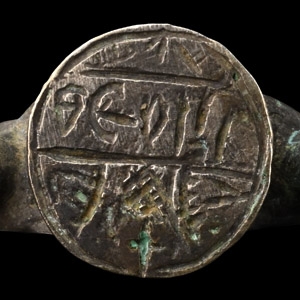
Eastern Byzantine Silver Inscribed Ring
13th-15th century A.D.Sold for (Inc. bp): £182
Comprising a broad hoop and panel to each shoulder with trumpet-shaped spur and incised asterisk motif; discoid bezel with retrograde legend 'ΘΕΑΙ[..]' and hatched field. 10.56 grams, 25.38 mm overall, 18.27 mm internal diameter (approximate size British N, USA 6 1/2, Europe 13.72, Japan 13)
Ex German art market, 2000s. Acquired from an EU collector living in London. From the collection of a Surrey, UK, gentleman. This lot is accompanied by an illustrated lot declaration signed by the Head of the Antiquities Department, Dr Raffaele D'Amato. -
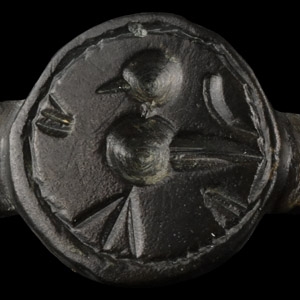
Byzantine Bronze Ring with Bird
6th-8th century A.D.Sold for (Inc. bp): £169
With flared D-section shoulders, discoid bezel with intaglio bird motif. 5.89 grams, 23.32 mm overall, 19.28 mm internal diameter (approximate size British N 1/2, USA 6 3/4, Europe 14.35, Japan 13)
Ex German art market, 2000s. Acquired from an EU collector living in London. From the collection of a Surrey, UK, gentleman. This lot is accompanied by an illustrated lot declaration signed by the Head of the Antiquities Department, Dr Raffaele D'Amato. -
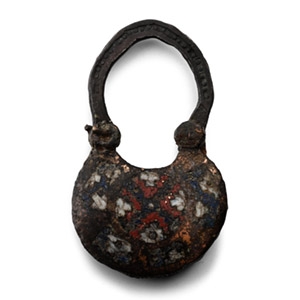
Byzantine Enamelled Bronze Bifacial Temple Ring
11th-12th century A.D.Sold for (Inc. bp): £111
Crescentic with bifacial motif of saltire cross, panels of blue, red and yellow enamel; flat hoop with pelletted decoration; possibly Kievan Rus workmanship. 13 grams, 42 mm
From the private collection of a London gentleman, from his grandfather's collection formed before the early 1970s. This lot is accompanied by an illustrated lot declaration signed by the Head of the Antiquities Department, Dr Raffaele D'Amato.
