
Loading, please wait...
LOT 0976
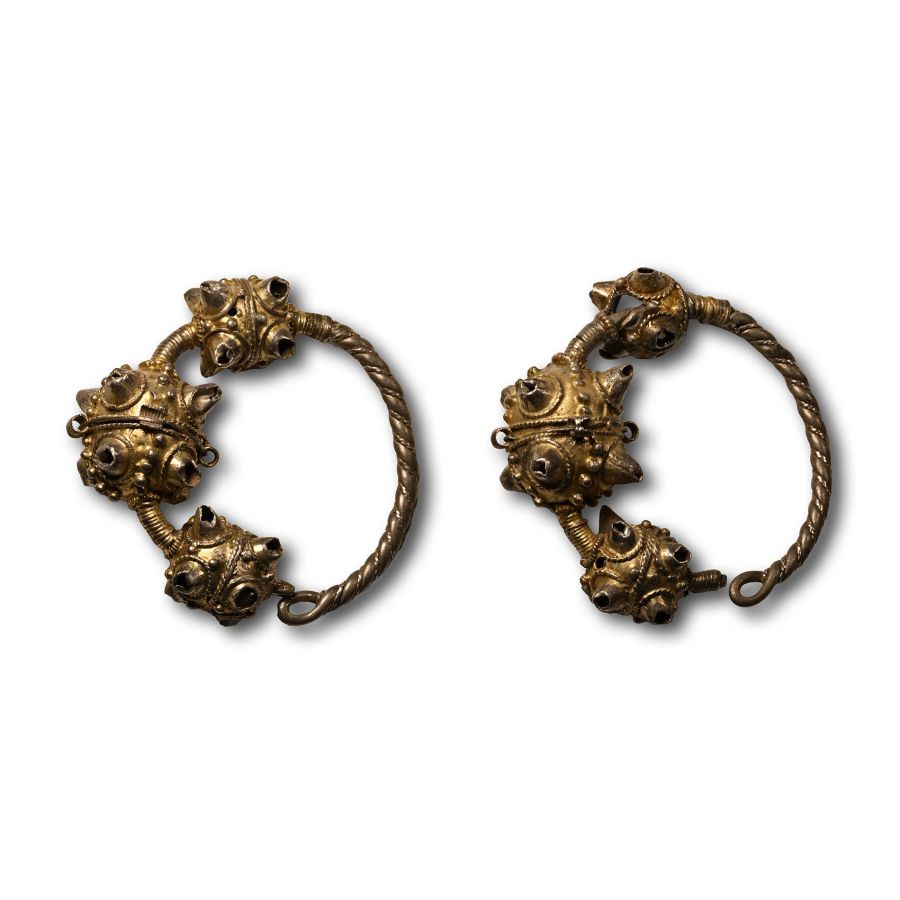
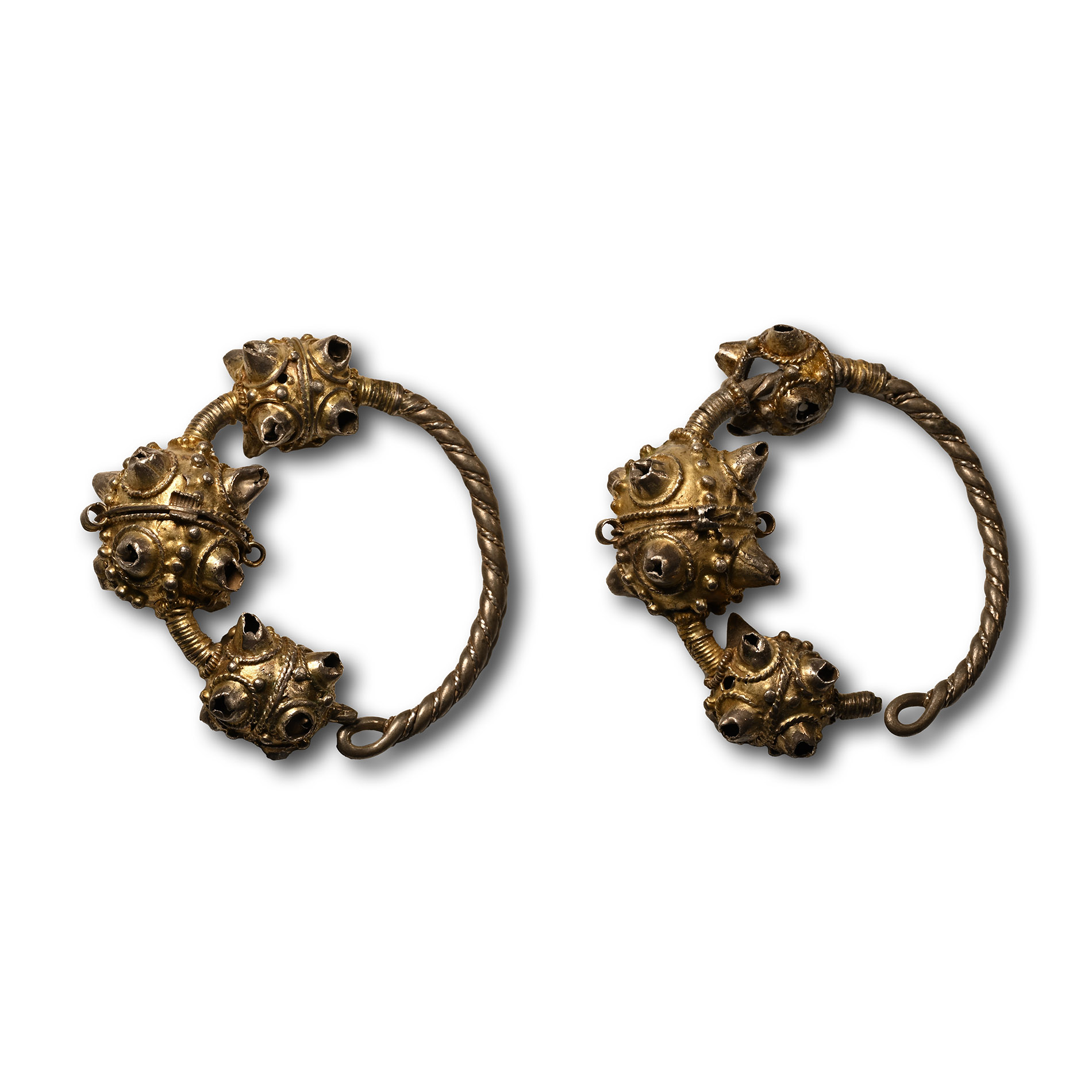
Byzantine Silver-Gilt Temple Ring Pair
9TH-12TH CENTURY A.D.
2 in. (19.5 grams total, 48-49 mm).
Hollow-formed with applied filigree collars to shank and base of horns, bulbs with horns and granule clusters; one bulb detached. [2, No Reserve]
ProvenanceAcquired in the 1980s.
From the collection of a London antiquarian.
See Entwistle, C. & Adams, N., Intelligible Beauty, Recent Research into Byzantine Jewellery, London, 2010, for discussion; Sedov, B.B., Finno-Ugri i Balti v Epokhi Srednevekovija, Moscow, 1987, pl.LXXI(9), for type.
CONDITIONTimeLine Auctions follows a vetting process to ensure the authenticity and legality of all items, reinforcing our commitment to integrity and responsible trading. Each antiquity, antique, and coin lot undergoes thorough examination by a vetting committee of at least ten external specialists, professional trade association members, scientists, and archaeologists: Our Vetting Process
AUCTIONS:
TimeLine is a leading auction house specialising in antiquities, ancient art, collectables, natural history, coins, medals, and books. Our auctions offer museums, collectors, historians, and enthusiasts the opportunity to acquire unique and historically significant pieces.
-
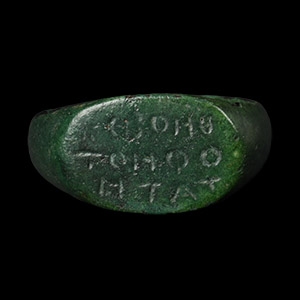
Byzantine Bronze Ring with 'Lord Help the Bearer' Inscription
6th-8th century A.D.Sold for (Inc. bp): £338
With a D-section hoop expanding at the shoulders, oval bezel with Greek inscription. 4.64 grams, 22.82 mm overall, 19.21 mm internal diameter (approximate size British Q 1/2, USA 8 1/4, Europe 18.12, Japan 17)
Ex German art market, 2000s. Acquired from an EU collector living in London. From the collection of Surrey, UK, gentleman. -
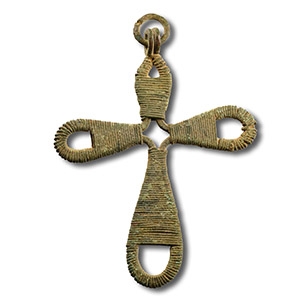
Post Byzantine Bronze Cross Pendant
15th-16th century A.D.Sold for (Inc. bp): £65
Formed as a wire rod in a cruciform design of four looped arms, with tightly-wound wire forming the panels and external loops; suspension loop and ring. 7.1 grams, 63 mm
Acquired on the London art market in the late 1980s-1990s. From the family collection of an East London, UK, gentleman. -
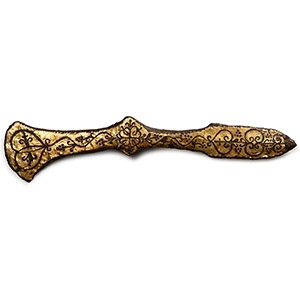
Byzantine Gold Inlaid Ceremonial Axe Head
Circa 9th-12th century A.D.Sold for (Inc. bp): £11,700
A miniature tzikourion comprising a crescentic blade with long neck, flared socket and leaf-shaped blade to the rear; gilt surface with reserved florid and tendril detailing, stylised cross to the flared socket. 28.88 grams, 10.9 cm
Private collection formed in Europe in the 1980s. Westminster collection, central London, UK. Accompanied by an academic report by Dr Raffaele D’Amato. This lot has been checked against the Interpol Database of stolen works of art and is accompanied by search certificate no. no.12340-225024.
It is possible that this axe was used as a status symbol for officers or their family. The axe was known to be a symbol of the Varangian Guard who protected the emperor.
