
Loading, please wait...
LOT 1096
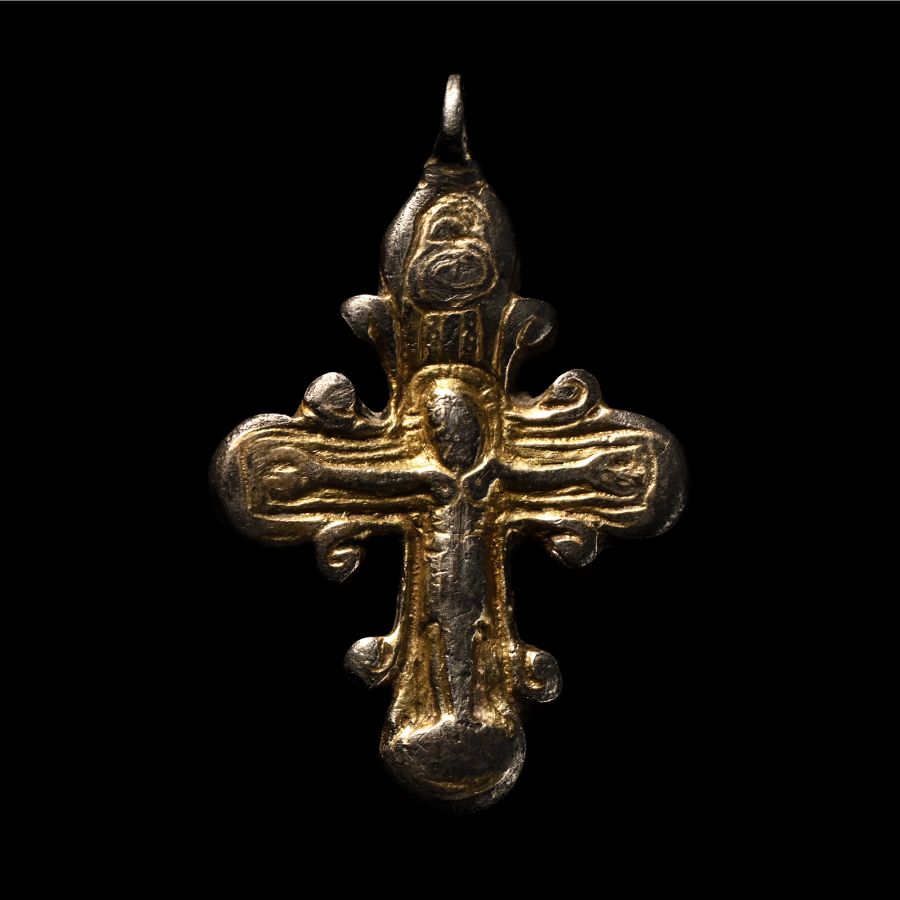
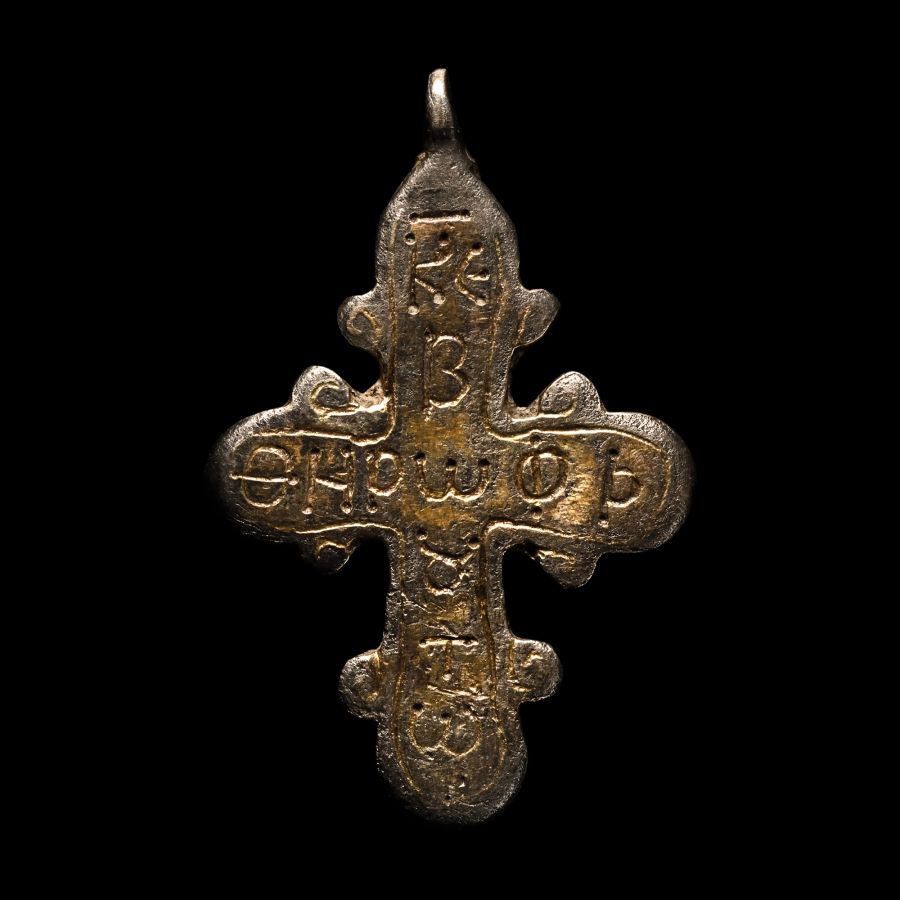
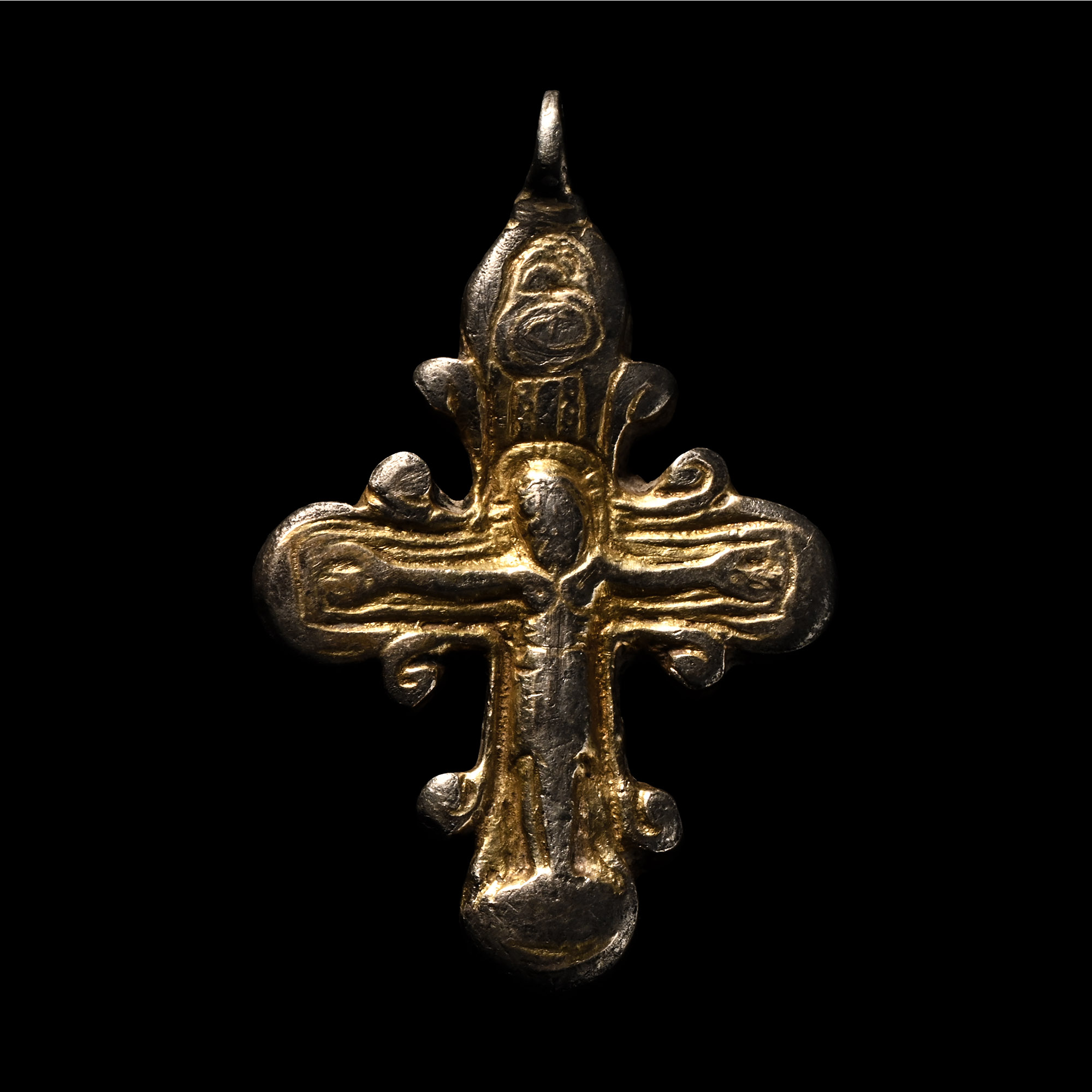
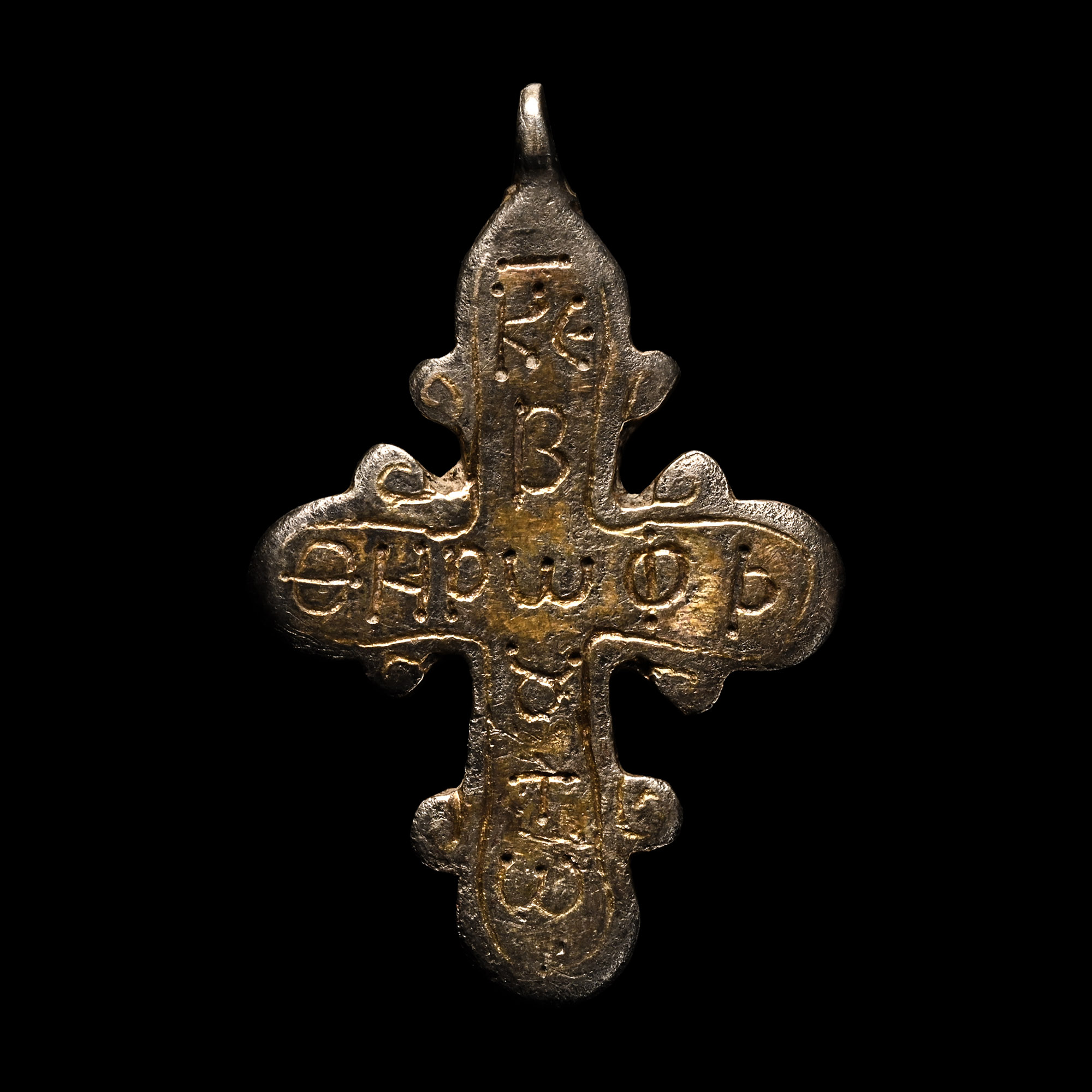
Byzantine Silver-Gilt Inscribed Pectoral Cross Pendant
CIRCA 12TH-13TH CENTURY A.D.
1 5/8 in. (11.2 grams, 40 mm).
Cross pommee type with moulded detailing; obverse: Corpus Christi reserved on gilt field; reverse: legend with pointillé detailing 'KEBEHPωφPαΤω'. [No Reserve]
ProvenanceFrom a London, UK, private collection since the 1990s.
CONDITIONTimeLine Auctions follows a vetting process to ensure the authenticity and legality of all items, reinforcing our commitment to integrity and responsible trading. Each antiquity, antique, and coin lot undergoes thorough examination by a vetting committee of at least ten external specialists, professional trade association members, scientists, and archaeologists: Our Vetting Process
AUCTIONS:
TimeLine is a leading auction house specialising in antiquities, ancient art, collectables, natural history, coins, medals, and books. Our auctions offer museums, collectors, historians, and enthusiasts the opportunity to acquire unique and historically significant pieces.
-
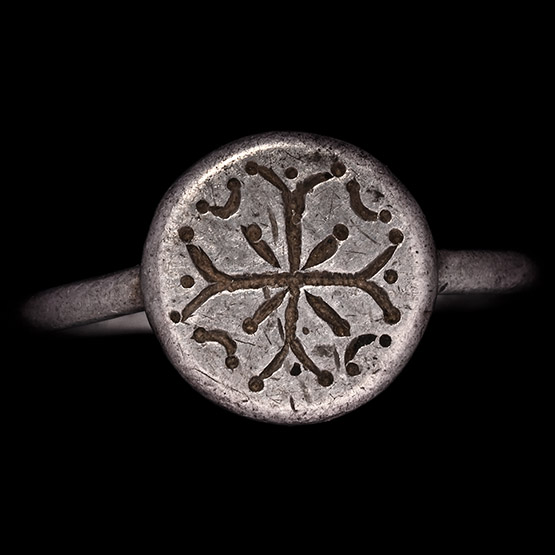
Byzantine Silver Ring with Cross
5th-7th century A.D.Sold for (Inc. bp): £169
Discoid bezel with incuse cross fourchee, interstitial saltire. 3.83 grams, 24.35 mm overall, 20.70 mm internal diameter (approximate size British R 1/2, USA 8 3/4, Europe 19.38, Japan 18)
UK private collection before 2000. Acquired on the UK art market. Private collection, London, UK. -
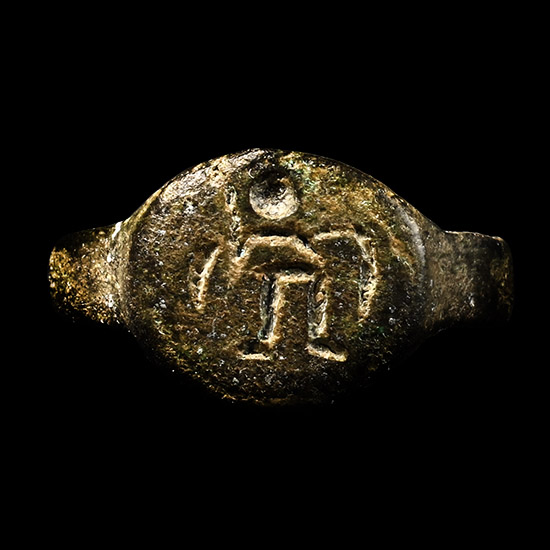
Byzantine Bronze Ring with Warrior Saint
11th-12th century A.D.Sold for (Inc. bp): £46
Slender hoop with discoid bezel showing a stylised warrior holding a long spear. 3.78 grams, 21.23 mm overall, 17.16 mm internal diameter (approximate size British M 1/2, USA 6 1/4, Europe 13.09, Japan 12)
Acquired on the UK and EU art market before 2000. From the private collection of a Surrey, UK, gentleman.
These banded rings, made of bronze sheet with a flattened ellipsoidal head, could be decorated with geometric or animal ornaments executed by shallow carving. In this circumstance, the bezel is decorated with a stylised image, most probably of Archangel Michael, who was asked for protection and blessing. -
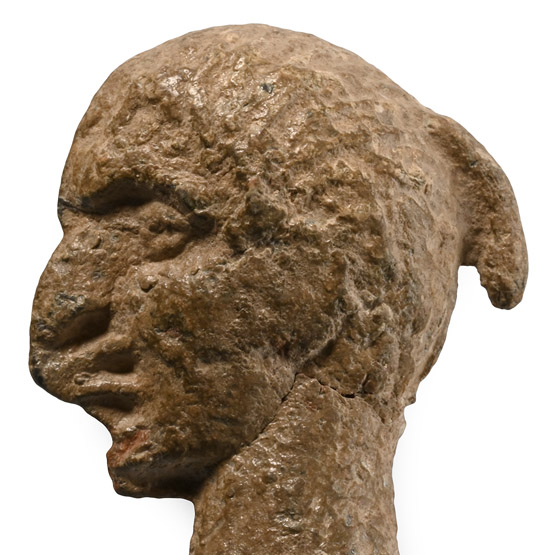
Byzantine Lead Pilgrim's Head Holy Water Ampulla
Circa 6th-8th century A.D.Sold for (Inc. bp): £20
Moulded ampulla formed as a head with a short pointed beard, aquiline nose, scalplock; open to the underside of the neck. 26.18 grams, 37 mm
Ex German art market, 2000s. Acquired from an EU collector living in London. From the collection of a Surrey, UK, gentleman.
