
Loading, please wait...
LOT 1332
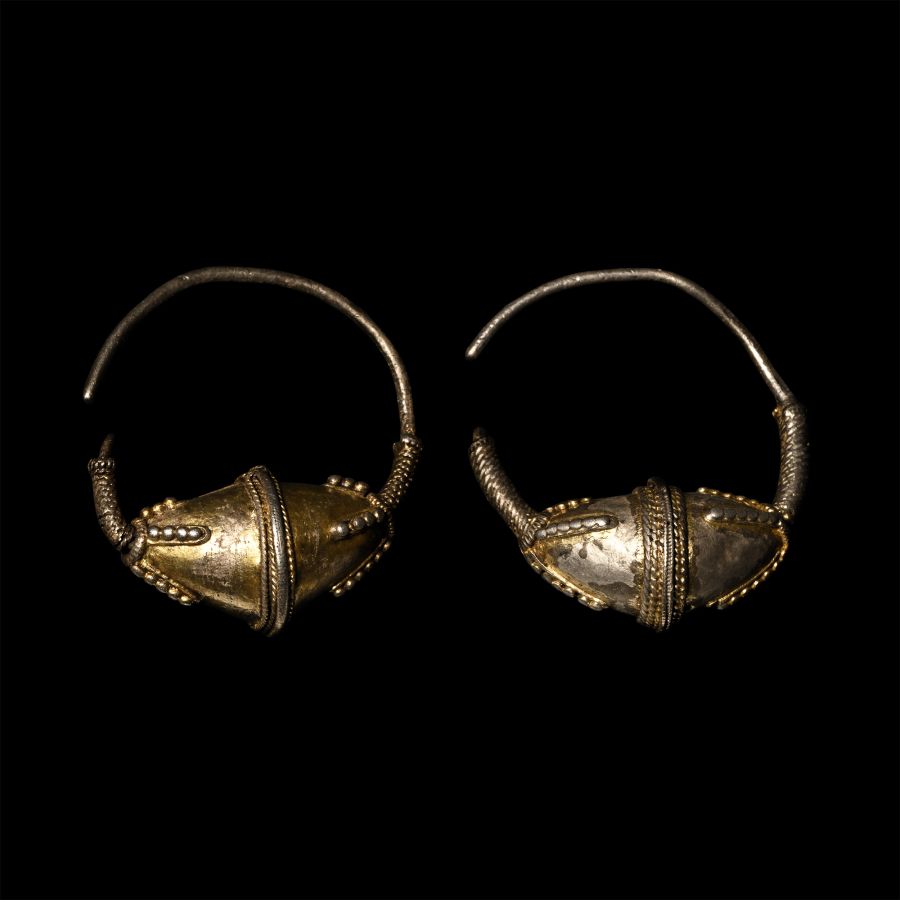
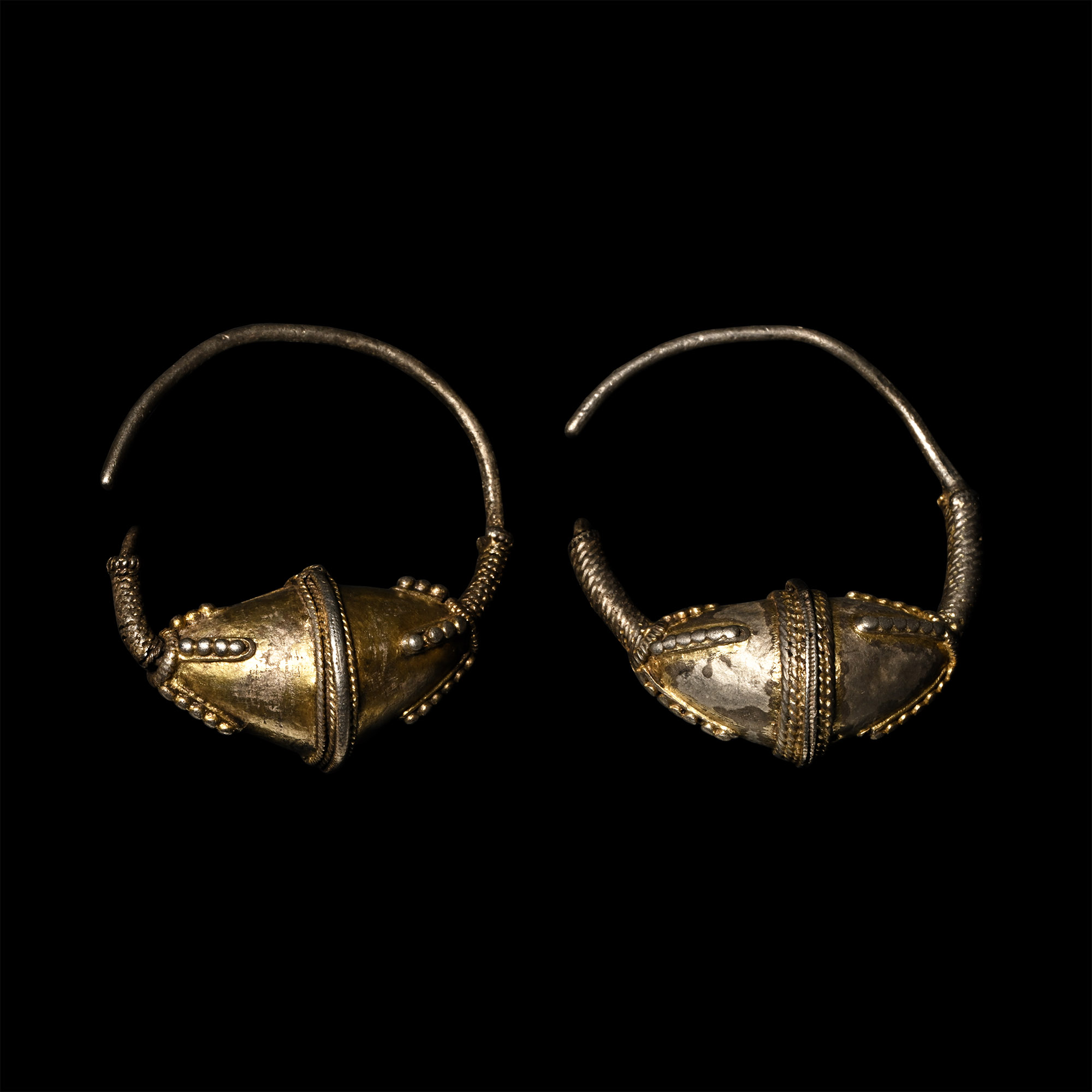
Byzantine Silver-Gilt Earring Pair
6TH-10TH CENTURY A.D.
1 3/8 in. (9.54 grams total, 35-36 mm).
A matched pair with round-section hoops and decorative 'bulbs' featuring medial ropework collars, with applied beads and collars of 'ropework' to both ends. [2]
ProvenanceEx German art market, 2000s.
Acquired from an EU collector living in London.
From the collection of a Surrey, UK, gentleman.
TimeLine Auctions follows a vetting process to ensure the authenticity and legality of all items, reinforcing our commitment to integrity and responsible trading. Each antiquity, antique, and coin lot undergoes thorough examination by a vetting committee of at least ten external specialists, professional trade association members, scientists, and archaeologists: Our Vetting Process
AUCTIONS:
TimeLine is a leading auction house specialising in antiquities, ancient art, collectables, natural history, coins, medals, and books. Our auctions offer museums, collectors, historians, and enthusiasts the opportunity to acquire unique and historically significant pieces.
-
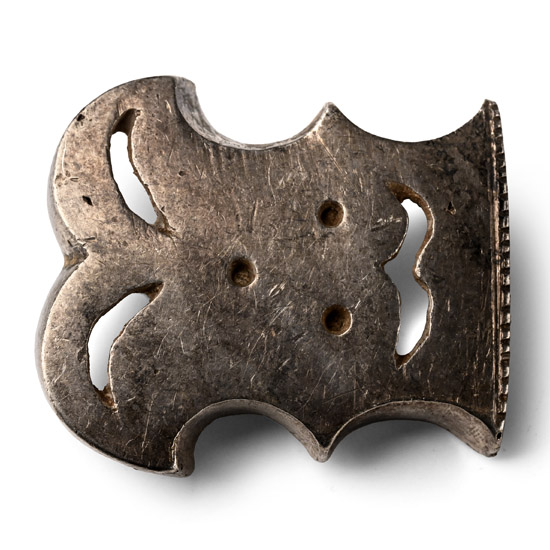
Byzantine Silver Bearded 'Hidden Face' Belt Mount
6th-7th century A.D.Sold for (Inc. bp): £46
Of Martinkova type with lobed outer edge, scooped sides and notched band at the inner edge; openwork circle and crescent motifs. 34.18 grams, 40 mm
Acquired on the UK art market before 2000. Property of an Essex, UK, gentleman. -
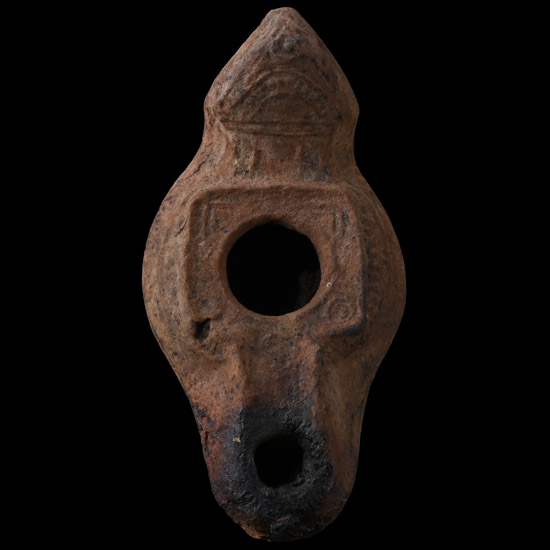
Byzantine Period Terracotta Oil Lamp with Triangular Handle
Circa 5th-7th century A.D.Sold for (Inc. bp): £59
Circular body with a wide nozzle, filler hole with a raised square border with a band of pellets below, a wide triangular handle at the rear with three raised vertical bands behind, and a low basal ring. 93.6 grams, 10.1 cm
From the collection of a Yorkshire, UK gentleman, items collected in the Holy Land in the 1960s. -
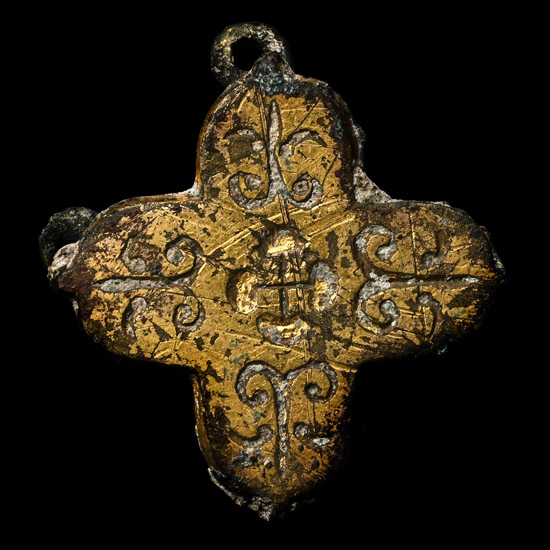
Byzantine Gilt Bronze Decorated Cross Applique
8th-10th century A.D.Estimate: £100 - 140 (+bp*)
Opening Bid: £50
Each of the four lobes with an emerging foliate decoration flanking a central cross, attachment loops on the underside. 9.82 grams, 33 mm
From the collection of a gentleman, acquired on the London art market in the 1990s.
